You’ve just inherited a vintage pocket watch or bought a classic fob chain online, but now comes the confusing part: how do you actually wear it? The elegant weight of a carved seal fob, the satisfying clink of metal links against your pocket, the sophisticated silhouette it creates across your waistcoat. This accessory speaks to an era when timekeeping was as much about style as precision. Yet wearing a pocket watch fob today requires knowing the right techniques, whether you’re dressing for a formal event or adding vintage flair to casual wear.
This guide covers everything you need to know about how to wear a pocket watch fob with confidence, from traditional waistcoat methods to modern adaptations. You’ll learn which chain types suit different occasions, step-by-step attachment processes, styling tips that work with modern wardrobes, and common mistakes to avoid. By the end, you’ll be ready to wear your fob whether you’re stepping into a boardroom or a speakeasy.
Choose the Right Fob Chain
The type of chain you select determines where and how you’ll wear your pocket watch. Each fob style serves a specific purpose, from formal symmetry to casual utility. Understanding the options helps you make the right choice for your wardrobe and occasion.
Match Chain to Occasion and Attire
Different chains work better with different clothing styles and events. Consider your typical outfit when selecting a fob.
- T-Bar (Albert) Chain: Best for waistcoats. Threads through a buttonhole for secure, elegant wear.
- Double Albert Chain: Ideal for formal events. Spans both sides of the vest with a central fob for balance.
- Single Albert Chain: Minimalist and practical. One end secures via T-bar, the other holds the watch.
- Belt Bar or Bolt Ring Chain: Perfect for jeans or trousers without a waistcoat.
- Leather Fob Strap: Offers a rugged, industrial look. Popular in railroad and fraternal styles.
Pro Tip: If you’re new to fobs, start with a Single Albert chain. It’s versatile, easy to use, and works with most pocket styles.
Check Chain Length and Fit
Chain length significantly impacts both function and appearance. Getting this right prevents damage and ensures comfortable wear.
- Standard lengths range from 14 to 20 inches.
- For waistcoat wear, a 16 to 18 inch chain typically drapes cleanly between pockets.
- For necklace styling, 15 inches or more is ideal to avoid a choker-like fit.
- Too short: The chain pulls taut and risks damaging fabric.
- Too long: The chain sags or tangles during movement.
Visual Cue: When worn, the chain should lie flat and straight, not twisted or bunched.
Wear With a Waistcoat (Classic Style)
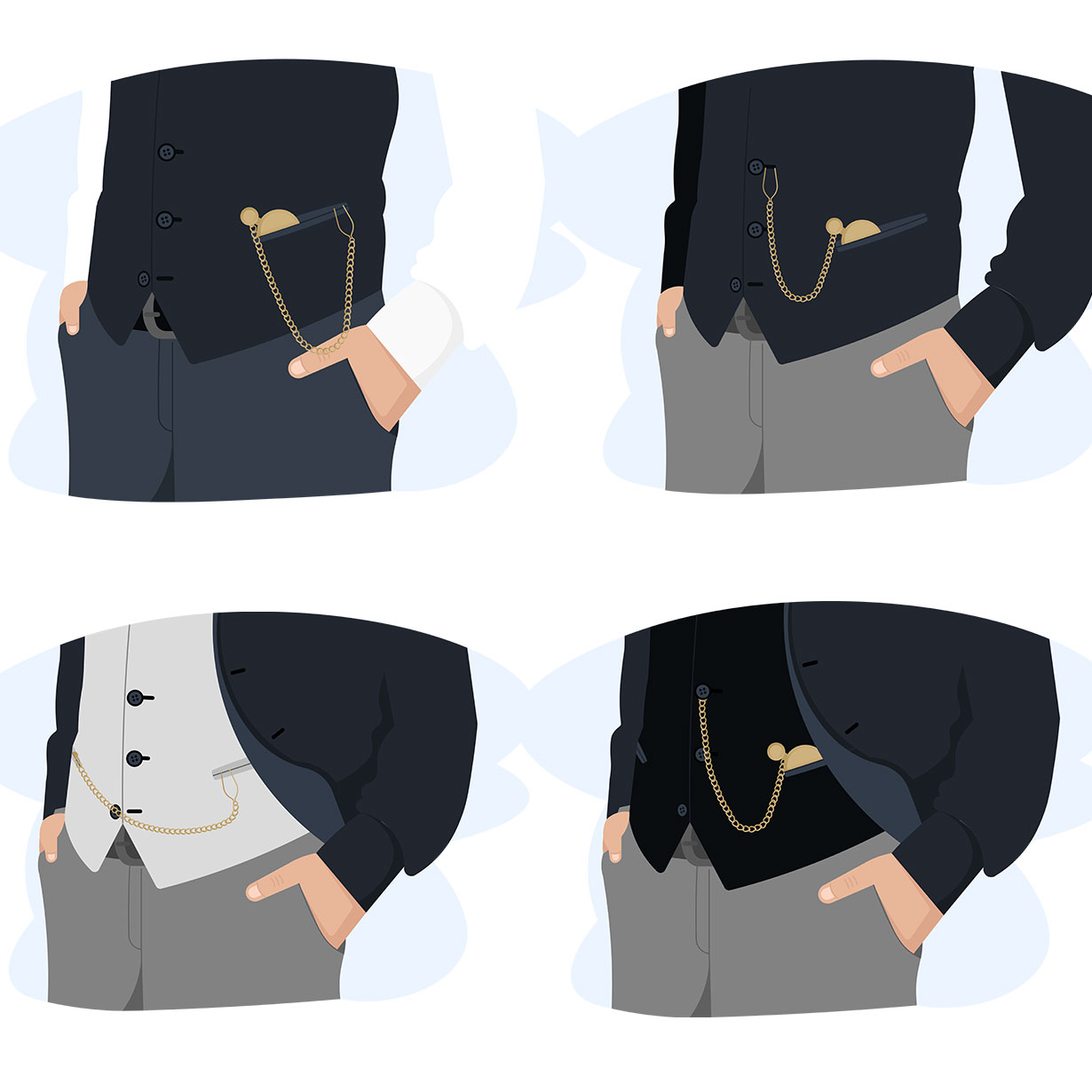
The waistcoat remains the traditional home for the pocket watch fob. This classic method provides the most elegant presentation and keeps your watch secure throughout the day.
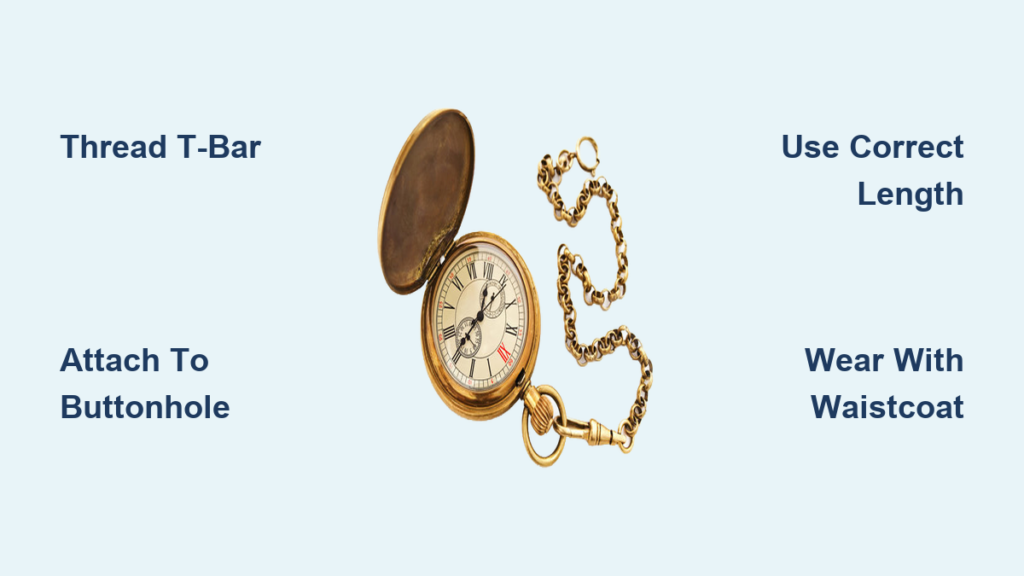
Thread the T-Bar Through a Buttonhole
Proper attachment ensures your watch stays secure while maintaining a polished silhouette. Follow these steps for traditional waistcoat wear.
- Locate the center buttonhole on your waistcoat.
- Slide the T-bar through the hole, ensuring it lies flat against the fabric.
- Let the chain drape naturally across the front of the vest.
- Attach the spring ring clasp to the bow (top loop) of the pocket watch.
- Place the watch in the left or right lower pocket.
Right-Handed Tip: Most wearers keep the watch in the left pocket so the right hand can easily open and wind the mechanism.
Use a Double Albert for Formal Events
Formal occasions call for the most sophisticated fob presentation. The Double Albert creates visual balance and allows for decorative elements.
- Use a Double Albert chain with ends in both front pockets.
- Attach the watch to one side and a fob or tool (like a cigar cutter) to the other.
- Add a central drop fob, such as an engraved medallion, for additional elegance.
Avoid Sagging: The chain should be taut. A heavy fob helps counterbalance the watch’s weight and prevents the chain from shifting.
Wear Without a Waistcoat (Modern Adaptation)
You don’t need a three-piece suit to wear a fob. Modern adaptations allow you to incorporate this accessory into contemporary wardrobes.
Attach to Jacket Lapel Buttonhole
A two-piece suit lacks waistcoat buttonholes, but you can still wear a fob elegantly using the jacket’s lapel.
- Insert the T-bar or bolt ring into the lapel buttonhole of your jacket.
- Let the chain run down to the trouser or jacket pocket.
- Place the watch in the breast pocket or front pants pocket.
Styling Note: This look is less formal but still sharp when paired with a crisp shirt and tie.
Secure to Belt Loop for Casual Wear
Jeans and casual trousers offer several options for fob attachment. The belt loop method provides security without requiring formal attire.
- Use a belt bar chain or bolt ring to attach the fob to a belt loop.
- Loop a leather fob strap through the belt and connect to the watch bow.
- Keep the watch fully in the pocket with the fob hanging outside.
Ideal Pairing: Dark wash jeans, button-down shirt, and blazer. Avoid t-shirts or hoodies.
Position the Watch Correctly
Proper watch positioning protects your timepiece and ensures comfortable wear. Many newcomers make mistakes that lead to damage or loss.
Keep It Fully Inside the Pocket
One of the most common mistakes is letting the watch dangle halfway out. This exposes the timepiece to damage and creates an awkward silhouette.
- Always tuck the watch completely inside the pocket.
- This prevents scratches from keys, coins, or rough fabric.
- It also reduces the risk of snagging or accidentally dropping the watch.
Exception: Half-out positioning is acceptable only in photos or fashion shoots, not for everyday wear.
Use a Protective Pouch
Vintage and engraved timepieces require extra protection. A pouch adds a layer of defense against everyday wear and tear.
- Slip the watch into a soft leather or velvet pouch before pocketing.
- This is especially important for vintage or engraved timepieces.
- The pouch prevents tarnishing and surface damage from fabric friction.
Add a Decorative Fob (Style Upgrade)

A fob isn’t just functional, it’s a personal statement. Adding decorative elements transforms a simple timekeeping accessory into a meaningful accessory.
Attach a Seal, Charm, or Tassel
Different fob styles convey different personalities and histories. Choose elements that reflect your style or heritage.
- Seal Fobs: Engraved with initials or family crests. Made from carnelian, bloodstone, or agate.
- Swivel Fobs: Rotate to display multiple designs. Lay flat when worn.
- Charms: Railroad emblems, Masonic symbols, or antique lockets.
- Tassels: Add a touch of flair. Often clipped to a short drop chain.
How to Attach: Most fobs have a spring clasp or large loop. Simply clip or thread onto the chain.
Balance Weight and Design
In Double Albert configurations, the fob serves a functional purpose beyond decoration. Proper balance prevents the watch from pulling loose.
- A heavy charm on one side prevents the watch from shifting.
- The fob acts as a counterweight to the watch.
- Avoid overloading. One or two fobs maximum for a clean look.
Repurpose as Fashion Jewelry

Pocket watch chains have experienced a renaissance as standalone jewelry. Modern wearers increasingly treat these chains as necklaces and bracelets rather than purely functional accessories.
Wear as a Necklace
Vintage-style necklaces made from fob chains offer unique character that mass-produced jewelry cannot match.
Method 1: Direct Wear
– Fasten the clasp to form a loop.
– Wear as a short choker or collar necklace (15 inches or more).
– The T-bar or fob becomes the pendant.
Method 2: With Extension Chain
– Add a delicate curb or rope chain to increase length.
– Mix metals or styles for a custom look.
– Taylor Swift famously wore her citrine fob chain using this method.
Pro Tip: Have the chain professionally resized for a perfect fit.
Wrap as a Bracelet
Shorter chains work beautifully as chunky vintage bracelets. This approach suits steampunk and heritage fashion enthusiasts.
- Wrap the chain two to three times around the wrist.
- Use the spring clasp to secure by clipping to different links.
- Add small charms for a personalized antique look.
Style Vibe: Steampunk, heritage, or industrial fashion.
Match Metals and Outfits
Coordination between your fob chain and other accessories creates a polished, intentional look. Mismatched metals undermine the sophistication you’re trying to achieve.
Coordinate with Other Accessories
Your fob chain should harmonize with your other metallic accessories, not compete with them.
- Gold chain? Pair with gold cufflinks, rings, and watch case.
- Silver or platinum? Match to silver tie bar, lapel pin, or belt buckle.
- Avoid mixing metals unless it’s a deliberate fashion choice.
Rule of Thumb: Your fob chain should harmonize, not clash, with other metallic elements.
Choose the Right Attire
Fob chains elevate certain styles while looking out of place in others. Understanding what works helps you dress appropriately.
Wear With:
– Three-piece suits
– Waistcoats and dress shirts
– Dark denim and structured jackets
– Turtlenecks or button-downs
Avoid:
– Light-washed or distressed jeans
– T-shirts, hoodies, athletic wear
– Overly casual or sporty outfits
Maintain and Care for Your Fob
Regular maintenance keeps your fob looking its best and prevents premature wear. A well-maintained chain can last generations.
Clean and Store Properly
Proper cleaning and storage extend the life of your fob while maintaining its appearance.
- Wipe metal chains with a soft jewelry cloth after wear.
- Use mild cleaner for silver or gold. Avoid harsh chemicals.
- Clean leather straps with saddle soap and condition regularly.
Storage: Keep in a lined box or soft pouch to prevent scratches and tangling.
Inspect for Wear
Regular inspections catch problems before they become serious. Monthly checks are usually sufficient for moderate wear.
- Check spring rings, bolt rings, and leather buckles monthly.
- Look for weak links, fraying, or loose clasps.
- Repair or replace damaged parts early. Don’t wait for a break.
Vintage Note: Many antique dealers offer restoration services for heirloom pieces.
Avoid Common Mistakes
Learning what not to do saves you from embarrassing fashion missteps. These common errors can undermine even the most carefully chosen fob.
Don’t Use a Neck Chain Like a Pendant
Hanging a fob from a separate necklace deviates from traditional etiquette and looks unintentional.
- Don’t hang the fob from a separate necklace like a regular pendant.
- Exception: Only acceptable in fashion-forward or artistic contexts.
Don’t Ignore Chain Length
Improper length causes practical problems and visual awkwardness.
- Too short creates tension and strain on fabric.
- Too long leads to sagging and tangling.
- Fix: Resize or choose a chain that fits your body and clothing.
Don’t Overload with Fobs
Restraint maintains elegance. More is not always better when it comes to decorative elements.
- One elegant fob is enough. Two at most if balanced.
- Too many creates a cluttered, outdated look.
Don’t Wear with Inappropriate Attire
The context matters. A gold Albert chain with a hoodie creates visual dissonance.
- Mismatched outfits undermine the sophistication of the fob.
- Reserve fobs for smart, coordinated outfits.
Final Tips for Styling Success
These additional pointers help you refine your approach and develop personal style confidence.
- Start Simple: Begin with a Single Albert chain and leather pouch.
- Experiment: Try wearing the chain as a necklace or bracelet.
- Customize: Add a monogrammed fob or extension chain for personal flair.
- Verify Authenticity: For vintage chains, check hallmarks (Birmingham, 18k) and material quality.
- Respect the Occasion: Use Double Alberts for formal events, leather straps for casual.
Frequently Asked Questions About Wearing a Pocket Watch Fob
What is the proper way to attach a pocket watch to a fob chain?
The attachment method depends on your chain type. For T-bar chains, slide the T-bar through a buttonhole, then clip the spring ring to the watch bow (the loop on top of the case). For bolt ring chains, attach the ring directly to the belt loop or buttonhole, then connect to the watch bow. Always ensure the connection is secure before wearing.
Can I wear a pocket watch fob without a waistcoat?
Yes, modern adaptations allow several options. You can thread the T-bar through a jacket lapel buttonhole, attach a belt bar chain to a trouser belt loop, or wear the chain as a necklace. These methods work well with two-piece suits, jeans, and casual trousers.
How long should a pocket watch chain be?
Standard chains range from 14 to 20 inches. For waistcoat wear, 16 to 18 inches provides clean draping. For necklace styling, 15 inches or longer prevents a choker-like fit. The chain should lie flat without pulling taut or sagging excessively.
What is the difference between a Single Albert and Double Albert chain?
A Single Albert has one long chain for the watch and a short T-bar end, requiring only one buttonhole. A Double Albert features two equal-length chains extending from a center point, with one end in each pocket. The Double Albert is more formal and creates symmetrical balance across a waistcoat.
Can I wear a pocket watch fob as everyday jewelry?
Yes, many people wear fob chains as necklaces or bracelets for casual occasions. Dark denim, button-down shirts, and structured jackets pair well with fob chains. Avoid athletic wear, t-shirts, and light-washed jeans. Leather fob straps work particularly well for casual, everyday wear.
Key Takeaways for Wearing Your Pocket Watch Fob
Wearing a pocket watch fob successfully comes down to choosing the right chain type for your attire, ensuring proper attachment and positioning, and coordinating metals with your other accessories. Whether you opt for a traditional T-bar chain with a waistcoat or adapt the look for modern casual wear, the key is confidence and attention to detail. Start with a versatile Single Albert chain if you’re new to fobs, then experiment with decorative fobs and alternative styling as you become more comfortable. A well-chosen pocket watch fob transforms an ordinary outfit into something distinctive, carrying a piece of horological heritage into your daily life.