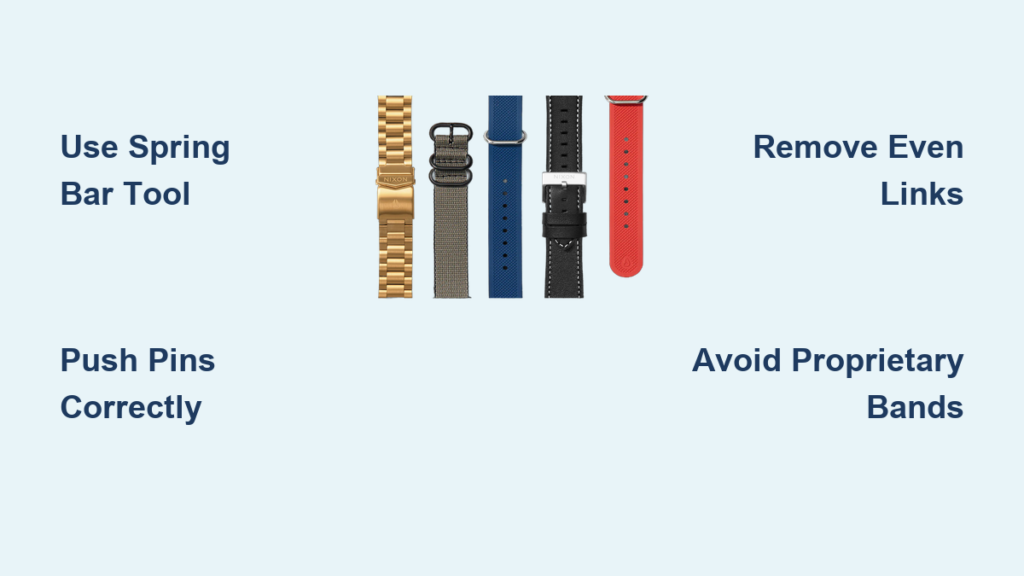
A properly fitted Nixon watch sits snugly on your wrist without slipping or pinching, yet many new owners find their band too loose or too tight out of the box. The good news is that most Nixon watches can be adjusted for a perfect fit, but here is the catch: Nixon uses multiple band types, each requiring a different method. From sliding clasp mesh bands to tricky proprietary links, using the wrong technique can damage your watch or leave you with a sore finger. This guide breaks down exactly how to adjust every type of Nixon watch band using the correct tools and techniques.
Adjust Nixon Milanese Mesh Band with Sliding Clasp
Nixon Milanese mesh bands feature a sliding clasp mechanism that allows for tool assisted micro adjustments without removing links. This band type is commonly found on modern Nixon digital and hybrid watches, and the adjustment is fully reversible.
Use the Included Spring Bar Tool
Nixon includes a spring bar tool in the packaging of all mesh band models. This small, flat tool is essential for lifting the clasp. Never use a knife or nail, as these can scratch the clasp or slip and damage the watch.
Slide Clasp for Perfect Fit
Place the watch on your wrist and pinch the mesh where it naturally tightens. Note which retention pocket aligns with the clasp. Then lay the watch on a soft cloth and insert the spring bar tool into the notch on the clasp side. Gently lever the clasp upward to disengage it from the mesh. Slide the clasp up or down to your target pocket. Press it back down firmly until it clicks into place. Test the fit and repeat if needed.
Pro Tip: You can make multiple micro adjustments. The mesh will not stretch over time, so your fit stays consistent.
Fix Nixon Metal Bracelet with Cotter Pins
Solid metal link bracelets on models like the 51-30 and Time Teller require cotter pin removal to resize. This is a permanent adjustment, so measure carefully before removing links.
Check Link Arrows First
Flip the watch over and inspect the back of the links. Look for small arrows near the pin holes, as they show the direction to push the pin out. If no arrows are visible, look for the split end of the pin and push from the solid side instead.
Remove Links with Pin Pusher
Secure the band in a watch holder or hold firmly by hand. Align the pin pusher with the solid end of the pin. Tap gently with a small hammer until the pin clears the link. Pull it out with flat nose pliers. Remove the link and set the pin aside, as it can be reused if undamaged. Repeat for additional links, removing evenly from both sides.
Reinsert Pins Flush and Secure
Line up the links and insert the pin from the solid end. Tap gently with the hammer until both ends are flush. Use a pointed punch tool if the split end resists seating. Check for protrusions, as these can irritate your skin.
Warning: Over tightening can bend the pin. Apply even, light pressure.
Handle Proprietary Nixon Bands

Some Nixon models, like the 53-30, use folded links or X joints that are not designed for DIY adjustment. These bands often require special tools and carry a high risk of damage.
Avoid DIY on Folded Link Models
Folded links are crimped or riveted, not removable with standard tools. Attempting to force them can permanently deform the band. Users report that even experienced hobbyists struggle with these designs.
User Feedback: “They are a pain in the butt. Lots of proprietary methods making it difficult to adjust and difficult to customize.” – Stepper
Pop Out X-Links or U-Clips
Some Stretchband models use X-shaped links or U-clips that can be manually released. Inspect joints for removable X-links or U-clips. For X-links, apply gentle twisting force at the joint to pop it out. For U-clips, use tweezers or a fine pick to pry the clip upward. Remove desired links, then snap them back in during reassembly.
User Tip: “Depending on how it stretches, you can pop out the X links by gently applying torque.” – om-4
Essential Tools for Adjustment

Using the right tools prevents damage and makes the job faster. Here is what you actually need for each band type.
Must-Have Tools by Band Type
Milanese mesh bands require a spring bar tool, which is included with purchase, and a microfiber cloth is helpful but optional. Metal link bracelets with cotter pins require a pin pusher, hammer, flat nose pliers, and optionally a watch band holder and punch tool. Proprietary link bands require no tools for DIY, as professional service is recommended. Stretchband models with X or U clips require tweezers and a fine pick, with a magnifying glass helpful for visibility.
Never Use: Nails, knives, or pliers without padding, as these scratch stainless steel and slip easily.
Common Mistakes to Avoid
Even small errors can ruin a band or injure you. Avoid these frequent pitfalls to ensure a successful adjustment.
Pushing Pins the Wrong Way
Always follow the arrow direction stamped on the links. Pushing against it can jam or bend the pin, making reassembly impossible.
Removing Uneven Links
Take the same number of links from each side to keep the clasp centered. Asymmetry looks unprofessional and affects comfort.
Leaving Pins Protruding
A pin that sticks out can cut your skin or catch on clothing. Always verify both ends are flush after reassembly.
Forcing Proprietary Links
If a link does not move easily, stop immediately. Forcing it will likely damage the band, and professional help should be sought instead.
When to See a Professional
Some situations call for expert help. Do not risk ruining your watch by attempting DIY repairs in these scenarios.
Get Help If Your Model Uses Proprietary Bands
Your model is a 53-30 or other proprietary design. You do not have the right tools. The watch is under warranty, as DIY may void it. It is a limited edition or high-value piece. You have tried and failed and do not want to compound the error.
Good News: Most jewelers charge $5 to $10 to adjust a Nixon band, often faster and safer than DIY.
Model-Specific Adjustment Guide
Not all Nixon watches are the same. Use this quick reference to determine the best approach for your specific model.
Time Teller uses cotter pin links with standard removal via pin pusher, rated medium difficulty and DIY recommended. The 51-30 uses cotter pin links with standard removal, rated medium difficulty and DIY recommended. The 53-30 uses folded or proprietary links that are not user-serviceable, rated high difficulty and DIY not recommended. Milanese Mesh models use a sliding clasp repositionable with the included tool, rated low difficulty and DIY recommended. Stretchband models use X-links or U-clips that can be popped out with tweezers, rated medium difficulty and DIY recommended with caution.
Final Fit Check Tips
After adjustment, always verify your work before wearing the watch regularly. Wear the watch and move your wrist to check if it slips or binds. Verify that the clasp closes securely. Run your finger along the inside of the band to ensure no sharp edges or protruding pins are present. Confirm timekeeping is not affected, which is rare but possible if the case was stressed during adjustment.
Pro Tip: Adjust in small steps. It is easier to remove another link than to fix an over-shortened band.
Prevent Future Fit Issues
Once you have achieved the right size, keep it that way with proper maintenance. Clean the band regularly with a damp cloth to prevent grime buildup that affects clasp function. For metal bands, inspect pins every 6 months for looseness. Store the watch flat or on a roll, and do not let it dangle off a nightstand.
Key Takeaways for Adjusting Your Nixon Watch Band

Adjusting a Nixon watch band is doable if you know your model and use the right method. Sliding clasp mesh bands are the easiest and only require the included spring bar tool. Cotter pin metal bracelets are manageable with proper tools and patience, though they require permanent link removal. Proprietary designs like the 53-30 should be left to professionals, as DIY attempts often cause damage. When in doubt, a $10 trip to the jeweler saves time, pain, and potential damage. Always start with the included tools, follow directional arrows on links, and prioritize safety over speed.
Frequently Asked Questions About Adjusting Nixon Watch Bands
Can I adjust my Nixon watch band myself?
Yes, depending on the band type. Milanese mesh bands with sliding clasps and metal bracelets with cotter pins are DIY-friendly with the right tools. Proprietary bands like those on the 53-30 should be left to professionals.
What tools do I need to adjust a Nixon metal bracelet?
You will need a pin pusher tool, a small hammer, flat nose pliers, and optionally a watch band holder and pointed punch tool. A soft cloth protects the watch during work.
How do I know which direction to push the cotter pins?
Look for small arrows stamped on the back of the links near the pin holes. These arrows indicate the correct ejection direction. If no arrows exist, push from the solid end toward the split end.
Why does my Nixon watch band have protruding pins after adjustment?
The pins were not fully seated during reassembly. Use a hammer and punch tool to tap them flush on both sides. Protruding pins can cause skin irritation and should be addressed immediately.
Can I adjust a Nixon 53-30 band at home?
No. The 53-30 uses folded proprietary links that are not removable with standard tools. Attempting DIY adjustment risks permanent damage. Visit a professional jeweler instead.
How much does professional Nixon band adjustment cost?
Most jewelers charge $5 to $10 for band adjustments. This is often faster and safer than DIY, especially for complex band types.