A stainless steel watch strap that fits poorly can ruin an otherwise perfect timepiece. Too loose, and your watch slides around with every movement. Too tight, and it pinches or restricts circulation. The good news? Most metal bracelets are designed to be adjusted for a snug, one-finger fit—but doing it right requires knowing your strap’s type, using the correct tools, and following precise steps. This guide shows you how to adjust a stainless steel watch strap safely and effectively, whether you’re working with pushpins, screws, or modern micro-adjust clasps.
Identify Your Strap Type First
Before removing any links, determine how your stainless steel bracelet is constructed. The adjustment method depends entirely on the fastening system, and using the wrong technique can damage your band permanently.
Common Strap Types at a Glance
• Pushpin (Split Pin) Links: Found on Seiko, Tissot, Citizen
• Screw-Fastened Links: Used by TW Steel, Festina, some H-links
• Micro-Adjust Clasps: Rolex Easylink, Omega Glidelock
• Sliding Mechanism Bands: Older Casio, vintage Seiko
• Mesh (Milanese) Straps: Infinite slide-fit adjustment
• Stretch (Expansion) Bands: Internal springs, no removable links
Pro Tip: Flip the watch over and inspect the inner side of the links. Look for arrows, screws, or stamped markings—they tell you what kind of system you’re dealing with.
Check for Micro-Adjustment Before Removing Links
Many users jump straight into link removal, only to discover later their clasp already allows fine-tuning. Always check for micro-adjustment systems first, as they can save you from unnecessary disassembly.
How to Find Hidden Adjustments
Flip Open the Clasp
Open the folding clasp fully and look inside for a lever, sliding rail, or small notches on an extension arm.
Use a Spring Bar Tool
Insert the tool into a tiny rectangular hole near the lock. Gently lift or push to release the mechanism, then slide the band forward to shorten or backward to lengthen.
Adjustment Ranges by System
| System | Adjustment Range | Increments |
|---|---|---|
| Rolex Easylink | +5 mm | One-click extension |
| Omega Glidelock | Up to +20 mm | Continuous slide |
| Tudor Micro Adjust | 3–6 positions | ~2–4 mm per notch |
Expert Note: These systems let you adapt to seasonal swelling, clothing thickness, or activity changes without altering the band itself.
Remove Equal Links for Balanced Fit
If micro-adjustment isn’t enough, you’ll need to remove links. But symmetry matters for both comfort and aesthetics.
Why Balance Is Critical
Removing more from one side causes the clasp to sit off-center, leading to discomfort and uneven wear. It also affects the watch’s aesthetics and long-term durability.
Step-by-Step: Balanced Link Removal
- Wear the watch with the clasp closed and estimate how many links must go.
- Remove half from the left side and half from the right side.
- Example: Need to remove 4 links? Take 2 from each side.
- Keep extra links and pins—they’re useful for future resizing.
Warning: Never remove links near the clasp unless the design allows it. Some models have fixed end links that cannot be removed.
Use the Right Tools for Pushpin Links

The most common stainless steel bracelets use split pins—small metal rods pressed into link tubes. Removing them requires precision and the right equipment.
Essential Tools
• Pin pusher tool (threaded plunger type)
• Soft cloth or mat
• Fine-tipped pliers
• Magnifying glass
• Eye protection (pins eject forcefully)
How to Remove a Split Pin
Step 1: Locate the Arrows
Turn the band over and find links with tiny arrows stamped inside. Arrows show the direction the pin should be pushed out.
Step 2: Position the Band
Place on a soft surface and ensure clearance under the pin exit side (about 5 mm). Align the pin hole with the pusher tool.
Step 3: Eject the Pin
Insert the tool from the side opposite the arrow. Turn the plunger clockwise to apply pressure until the pin starts sliding out. Use pliers to pull it the rest of the way.
Caution: Wear safety glasses. Pins can fly out unexpectedly and cause injury.
Step 4: Reinsert Correctly
Insert the rounded end first, pushing in against the arrow direction. The split (grooved) end must face the arrow when fully seated. Tap gently with a plastic hammer to make it flush.
Common Mistake: Forcing the pin in the wrong way damages the link or pin permanently.
Adjust Screw-Fastened Links Safely

Some bands use tiny screws instead of pins. These are easier to reassemble but easy to strip if you use the wrong technique.
Required Tools
• Precision screwdriver (1.5–2.5 mm)
• Magnetic mat (to catch screws)
• Magnifier
Step-by-Step Screw Adjustment
Step 1: Identify Screws
Look for small Phillips or flathead screws on both sides of removable links.
Step 2: Hold One Side Steady
Use one screwdriver to prevent rotation and prevent internal damage during unscrewing.
Step 3: Unscrew the Other Side
Turn counterclockwise slowly and place the screw on the magnetic tray immediately.
Step 4: Remove Link and Reconnect
Pull the link apart once both screws are out. Reinsert screws from outside to inside and tighten evenly—do not over-tighten.
Pro Tip: Tape over the screw head before turning to reduce slipping and scratching.
Resize Mesh (Milanese) Straps Easily
Milanese straps offer infinite adjustability, making them the easiest type to resize without tools for initial setup.
How to Adjust a Mesh Band
Step 1: Open the Clasp
Flip open the folding clasp and expose the locking clip at the base.
Step 2: Release the Lock
Insert a spring bar tool into the rectangular hole and gently lift the metal clip securing the band.
Step 3: Slide to Fit
Slide the mesh portion through the clasp and align the engraved line on the band with the clasp slot. Too loose means slide inward; too tight means pull outward.
Step 4: Re-Lock the Clip
Release the tool so the clip snaps back and test by pulling gently on the band.
Key Rule: Always align the engraved mark. Misalignment increases the risk of accidental opening.
Avoid DIY on Fragile or Complex Systems
Not all stainless steel straps are DIY-friendly. Some mechanisms require professional tools and expertise.
Sliding Mechanism Bands
Found on older Festina, Casio, and vintage Seiko models, these use interlocking grooves and levers. They are prone to bending or misalignment, so professional help is recommended.
Stretch (Expansion) Bands
Used in Lorus, Swatch, and budget models, these contain internal springs with no removable links. If loose over time, springs are likely worn and replacement is the only option.
Recommendation: Seek professional help for sliding mechanisms and stretch bands.
Know Brand-Specific Quirks
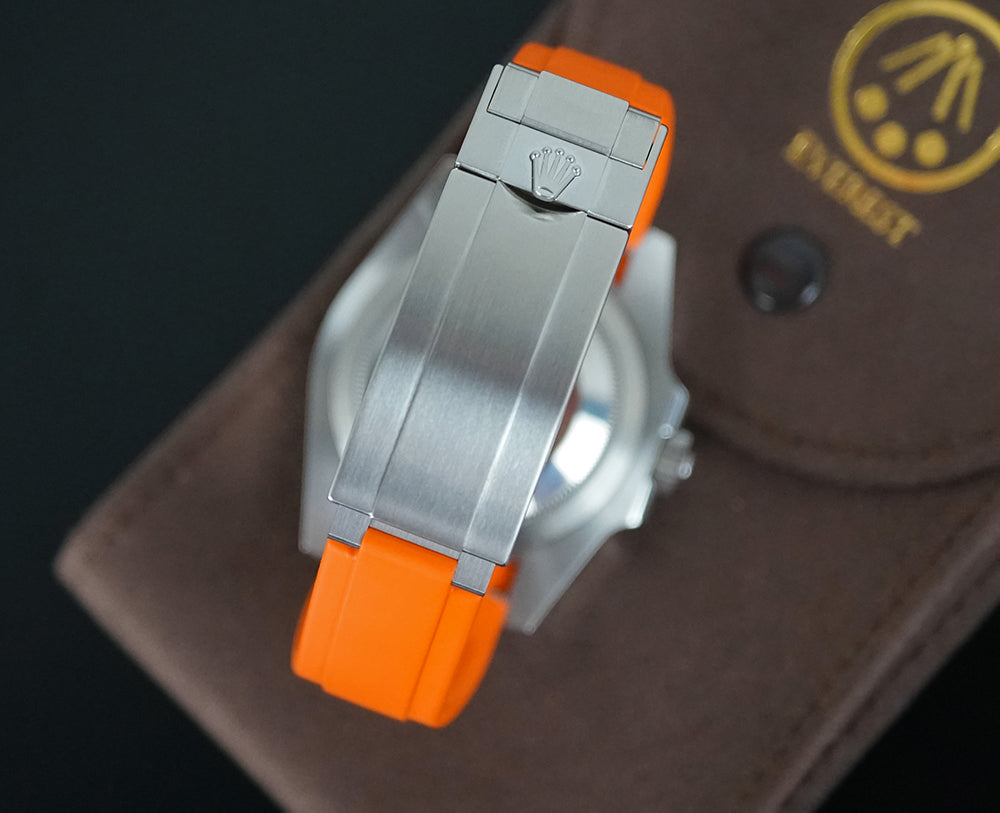
Different brands use unique systems that affect how you should approach adjustment.
Seiko and Citizen: Pin-in-Tube Design
Some models house pins in tiny metal tubes, making reinsertion extremely difficult. The high risk of losing the tube means these are best left to professionals.
TW Steel and H-Link Models
These use visible screws, making adjustment straightforward with the correct screwdriver. Avoid over-tightening—stripped threads are common mistakes.
Rolex, Omega, Tudor: Smart Clasps
Easylink, Glidelock, and Quick Release systems reduce the need for frequent link removal. However, initial sizing may still require professional adjustment, and DIY risk may void warranty.
Final Advice: For high-value watches, always consider authorized service centers.
Use a Watch Adjustment Kit
Improvised tools increase the risk of damage. A dedicated kit provides everything you need for safe, effective adjustment.
Recommended Kit Includes
• Pin pusher with adjustable plunger
• Spring bar tool (dual-ended)
• Precision screwdrivers (Phillips and flat)
• Fine-tipped pliers
• Plastic hammer
• Magnifying glass
• Magnetic tray
Top Choice: Mastersintime.com offers complete kits ideal for beginners and enthusiasts.
DIY Alternatives Not Recommended
Push pins, nails, or paperclips can scratch or bend components. They lack control and safety features, increasing the chance of injury or permanent damage.
Measure Your Wrist First
Guessing leads to over-removal. Measuring before you start ensures you remove the right number of links.
How to Measure Accurately
- Wrap a flexible tape around your wrist bone where the watch sits.
- Ensure snug but not tight placement.
- Standard range: 6.5 to 8 inches (16.5–20.3 cm).
- No tape? Use a paper strip, mark the length, and measure with a ruler.
Rule of Thumb: One finger should fit between the clasp and your wrist when closed.
Extend a Too-Short Band
If your strap is too short after adjustment, you have limited options.
Option 1: Order Extra Links
Possible only if the watch is new. Contact the retailer and specify your wrist size. Links may be manufacturer-specific and not always available.
Option 2: Switch Strap Type
NATO straps are fully adjustable and durable. Leather or rubber options come in various lengths. Note that cutting or modifying may void return policies.
Prevent Common Mistakes
Even experienced users make errors that could be avoided with proper knowledge.
Mistake: Pushing Pin the Wrong Way
This causes pins to jam or break. Always follow arrow direction stamped on the link.
Mistake: Forcing Components
Resistance means misalignment. Stop, recheck hole alignment, and verify pin orientation before proceeding.
Mistake: Losing Tiny Parts
Work over a tray or magnetic mat and label containers for pins and screws to prevent loss.
Mistake: Over-Tightening Screws
This strips threads and weakens connections. Tighten just until snug.
Maintain Your Strap Long-Term
A well-adjusted band lasts longer with proper care and regular inspection.
Cleaning Tips
Wipe with a soft cloth weekly and use mild soapy water for deep cleaning. Dry thoroughly—moisture causes corrosion.
Inspection Routine
Check pins and screws monthly for looseness, wobbling, or rust. Ensure the clasp locks securely.
Storage Advice
Keep the watch flat or on a watch stand and avoid pressure that could bend links.
When to See a Professional
DIY isn’t always the best choice. Know when to seek expert help.
Get Help If You Have
• A luxury watch (Rolex, Patek, Audemars)
• A band using pin-in-tube or sliding mechanisms
• Uncertainty about the process
• Active warranty coverage
Free Services Exist
Mastersintime.com offers free shortening when you purchase. Provide your wrist size, and they’ll store leftover links. A €5 fee applies if you return the watch with custom shortening.
Smart Move: Take advantage of free professional services if you’re hesitant about DIY.
Safety First: Protect Yourself and Your Watch
Metal bands involve small, high-force parts that require careful handling.
Must-Do Safety Steps
• Wear eye protection—pins eject at speed
• Work on a clean, well-lit surface
• Use a soft cloth to prevent scratches
• Keep children and pets away
• Store tools safely after use
Never use knives, hammers, or excessive force.
Final Fit Check
After adjustment, test thoroughly to ensure comfort and security.
How to Test
- Close the clasp securely.
- Slide one finger under the band—it should fit comfortably.
- Shake your hand—the watch should stay stable.
- Move your wrist up and down—no rotation or flopping.
- Wear for 10 minutes—ensure no pinching occurs.
Too tight? Revisit micro-adjust or add a half-link. Too loose? Remove one more link or use clasp fine-tuning.
Frequently Asked Questions About Adjusting Stainless Steel Watch Straps
How do I know if my watch has a micro-adjustment clasp?
Open the folding clasp and inspect the interior. Look for a lever, sliding rail, or small notches on an extension arm. Many users overlook these hidden features.
Can I adjust a stainless steel strap without tools?
Mesh (Milanese) straps offer tool-free adjustment by sliding. Other types require a pin pusher or screwdriver. Attempting adjustment with improvised tools risks damage.
What happens if I remove links from only one side?
Removing links from only one side causes the clasp to sit off-center, leading to discomfort, uneven wear, and aesthetic issues. Always remove equal numbers from both sides.
Is it safe to adjust a luxury watch strap myself?
Luxury watches like Rolex or Omega often have micro-adjust systems, but DIY adjustments may void warranty. For high-value timepieces, authorized service centers are recommended.
How many links should I remove for a proper fit?
Measure your wrist first. A properly fitted band allows one finger between the closed clasp and your skin. Remove links incrementally and test the fit after each removal.
Can I make my stainless steel band longer if it’s too short?
You can order extra links for new watches if available. Otherwise, switching to a NATO, leather, or rubber strap offers more sizing flexibility.
Key Takeaways for Adjusting Your Stainless Steel Watch Strap
Adjusting a stainless steel watch strap requires knowing your mechanism type, using proper tools, and following precise steps. Always check for micro-adjustments first, as many modern clasps offer hidden fine-tuning that eliminates the need for link removal. Remove equal links from both sides to maintain balance and symmetry, and always follow arrow directions when inserting or removing pins. Screw-connected bands are easier to reassemble than pushpin types, while sliding mechanisms and stretch bands are best left to professionals. Use dedicated tools—never improvise with household items that could damage your watch. For luxury timepieces, authorized service centers ensure precision and preserve warranty coverage. With the right knowledge and tools, you can achieve a comfortable, secure fit that enhances both function and style.