A scratched watch face can ruin an otherwise pristine timepiece. Whether it is a vintage Timex with a cloudy acrylic dome or a sleek Apple Watch with fine webbing across the screen, scratches are a common frustration. The good news is that most minor scratches can be removed at home affordably and safely if you know your watch crystal type and use the right method.
The key to success lies in one simple rule: match the fix to the material. Acrylic crystals respond brilliantly to polishing, mineral glass needs precision, and sapphire requires professional treatment. Applying the wrong technique can leave your watch worse off. This guide covers exactly how to restore clarity to your watch face based on proven methods and real-world testing.
Identify Your Watch Crystal Type Before Treating
Before touching any polish, confirm what kind of watch face you have. Using the wrong method can cause irreversible damage, so identification is the critical first step.
How to Tell Acrylic from Glass
Acrylic crystals are soft and easily scratched but highly repairable. Glass types, including mineral, Hardlex, and sapphire, are harder but far less forgiving. Here is how to tell them apart.
Use the fingernail test. Lightly drag your nail across the scratch. If it catches, the scratch is deep. Acrylic scratches often feel shallow, while glass scratches that catch are likely beyond DIY repair.
Use the sound test. Tap the crystal gently with a key. Acrylic makes a dull thud, while glass rings sharply.
Check visually. Acrylic has a warmer, slightly flexible feel. Glass is cold, rigid, and reflects light more sharply.
Check manufacturer specs. Vintage Timex is likely acrylic. Rolex or Apple Watch Ultra is sapphire. Standard Apple Watch uses Ion-X glass.
When in doubt, skip DIY and consult a watchmaker. One wrong move on a sapphire crystal can cost hundreds to fix.
Fix Acrylic Watch Scratches Fast
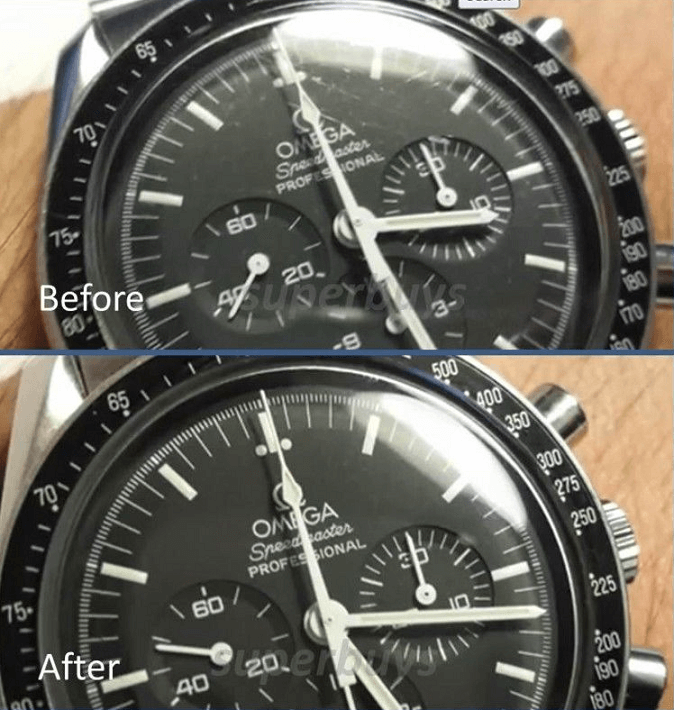
Acrylic crystals are the easiest to repair. With the right product, most surface scratches vanish in under a minute. Polywatch is the gold standard for this task.
Use Polywatch for Instant Results
Polywatch is a micro-abrasive polish designed specifically for watch crystals. It gently sands the surface, leveling out scratches without removing too much material.
Apply Polywatch in these steps.
Clean the face. Wipe with a dry microfiber cloth to remove all dust and oils.
Protect the bezel. Apply painter is tape around the edges to prevent accidental polishing of the case or dial.
Apply a pea-sized drop. Place directly on the scratch. Do not overspread.
Buff in small circles. Use a clean cotton pad or microfiber cloth with firm, even pressure in tight circular motions.
Inspect after 30 seconds. Most minor scratches disappear quickly. Continue for up to 3 minutes for deeper marks.
Wipe clean and buff dry. Remove residue with a fresh cloth and finish with a dry section for a glossy shine.
A Timex Marlin scratch vanished in 40 seconds. Swatch and 1980s Timex models achieved like-new clarity in under 3 minutes.
Why Toothpaste Fails on Watch Faces
Despite viral hacks, toothpaste is not a reliable fix for watch scratches. It contains uncontrolled abrasives like silica and baking soda that can leave a hazy finish. Whitening agents may degrade plastic or painted surfaces. In side-by-side tests, Polywatch outperformed toothpaste by a wide margin.
Toothpaste might work only on very shallow acrylic scratches, and only if you use plain white, non-gel, non-whitening toothpaste. Apply to the scratch with a fingertip, rub gently in circles for 1 minute, then wipe off with a soft damp cloth. Always test on a small area first.
One user reported cloudiness after using toothpaste, fixed only by reapplying Polywatch.
Restore Mineral Glass with Diamond Paste
Mineral glass is harder than acrylic but can still suffer surface scratches, especially from sand or metal. Diamond lapping paste comes in coarse, medium, and fine grits. Use a progressive approach, starting with medium grit to reduce moderate marks, then finishing with fine grit for clarity.
Apply diamond paste using a soft cloth or felt pad. Use a tiny drop on the scratch and buff in small circles with light pressure. Wipe clean after 2 to 3 minutes. Repeat with finer grit if needed.
Success rate is 70 to 80 percent improvement on light mineral glass scratches. Deep grooves may require professional resurfacing.
Never Polish Sapphire at Home
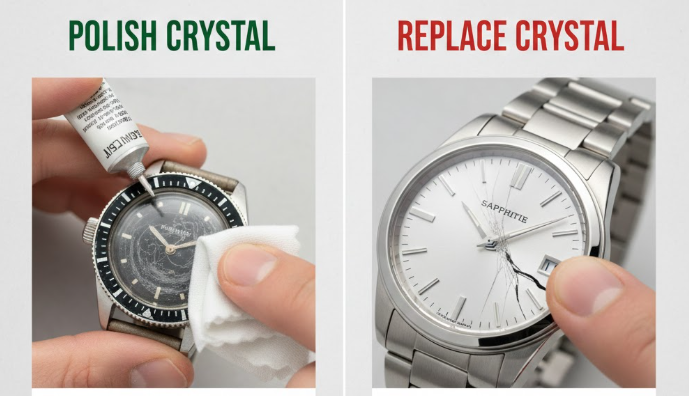
Sapphire crystals rate 9 on the Mohs scale and are nearly scratch-proof. When damaged, they are nearly impossible to fix without professional tools. DIY attempts risk heat damage that can crack the crystal or damage internal seals. Improper technique leaves permanent haze. Polishing can strip anti-reflective coatings, reducing readability.
Your only options are professional polishing done by jewelers with diamond-impregnated wheels, or crystal replacement, which costs $50 to $200 depending on brand.
One Apple Community contributor warned, “I would be very reluctant to try having it buffed. The heat of buffing also could be an issue.”
Apple Watch Scratch Solutions

Polishing is not recommended for Apple Watch screens, especially non-Ultra models with Ion-X glass.
Ion-X Glass on Standard Models
Ion-X glass has low scratch resistance and is prone to everyday wear. No effective polish exists, and DIY methods risk damaging touch sensors or bezel seals. The best fix is applying a curved glass screen protector. It hides existing scratches and prevents new ones. Most Apple Watch owners choose protectors over polishing, with 90 percent reporting improved appearance instantly.
Sapphire on Apple Watch Ultra
Apple Watch Ultra uses sapphire, which is extremely durable and rarely scratches. Polishing is possible only by experts due to high risk from sealed electronics and sensor proximity. Avoid DIY attempts. If scratched, consult Apple or an authorized repair center.
Note that AppleCare+ does not cover cosmetic scratches unless they affect functionality.
When to Call a Professional
Some situations demand professional help to preserve safety and value.
Deep scratches that catch your nail are too far gone for surface polishing. Attempting DIY may spread damage or create uneven areas.
Cracked or chipped crystals compromise water resistance and structural integrity. Replace immediately.
High-value or vintage watches deserve professional restoration. A cheap polish kit is not worth risking a $2,000 Rolex.
Uncertain crystal type means you should stop and consult a watchmaker before proceeding.
Try Headlight Kits for Large Acrylic Faces
For big, domed acrylic crystals like those on vintage divers or pilot watches, a headlight restoration kit can deliver professional-level results. These kits include multiple polishing pads with 1000 to 3000 grit, abrasive compounds, and UV-protective sealant.
Start with the lowest grit pad and keep the surface slightly damp to prevent overheating. Use gentle circular motions with no pressure. Progress through each grit level and finish with the UV sealant to protect against future scratches.
Apply a thin coat of high-quality wax after polishing for added protection.
Prevent Future Scratches
Once your watch is clear, keep it that way by taking preventive measures.
Apply a screen protector. Available for flat and curved crystals, these films are easy to install, replaceable, and nearly invisible. They are ideal for Apple Watch, smartwatches, and high-use timepieces.
Store it right. Use a soft pouch or watch box. Keep away from keys, coins, and tools. Never toss it in a drawer with other metal objects.
Avoid high-risk activities. Remove your watch during gardening where sand is abrasive, gym workouts with weights and bars, and DIY projects involving concrete or metal.
Clean after wear. Wipe with a dry microfiber cloth to remove dust and grit. Tiny particles cause micro-scratches over time.
Cost Comparison for Watch Scratch Repair
Here is a breakdown of costs for different repair methods.
Polywatch DIY costs £12 to £15 and works best for acrylic scratches.
Diamond paste costs around £20 and works for light mineral glass.
Headlight kit costs £15 to £30 and works for large acrylic surfaces.
Professional buffing costs £20 to £50 and suits acrylic or mineral when unsure.
Crystal replacement costs £50 to £300 or more and is needed for sapphire or deep damage.
Apple Watch repair costs £99 to £349 for out-of-warranty models.
Screen protector costs £10 to £20 and works for prevention on all types.
For cheap watches, DIY is cost-effective. For luxury or sentimental pieces, professional service pays off.
Frequently Asked Questions About Watch Face Scratches
Can I remove scratches from a plastic watch face at home?
Yes. Minor scratches on plastic or acrylic crystals can be effectively treated at home using Polywatch scratch remover. Apply with a microfiber cloth using firm circular motions for 2 to 3 minutes.
What is the best DIY method for acrylic watch crystals?
Polywatch scratch remover is the best option. Apply a pea-sized amount directly to the scratch and buff in small circular motions with a clean microfiber cloth. Most minor scratches disappear in under a minute.
Does toothpaste work on watch scratches?
Toothpaste is risky and generally not recommended. It contains uncontrolled abrasives that can leave a hazy finish. If you must try it, use plain white non-gel non-whitening toothpaste and test on a small area first.
Can I fix scratches on my Apple Watch screen?
For standard Apple Watch models with Ion-X glass, no effective polish exists. Apply a curved glass screen protector to hide scratches. For Apple Watch Ultra with sapphire, professional polishing is possible but risky.
How much does professional watch crystal repair cost?
Professional buffing costs £20 to £50. Crystal replacement ranges from £50 to £300 or more depending on brand and model. Apple Watch screen replacement costs £99 to £349 out of warranty.
Can I prevent scratches on my watch face?
Yes. Use a screen protector, avoid high-risk activities, store in a soft pouch or watch box, and clean regularly with a dry microfiber cloth to remove abrasive particles.
Key Takeaways for Removing Watch Face Scratches
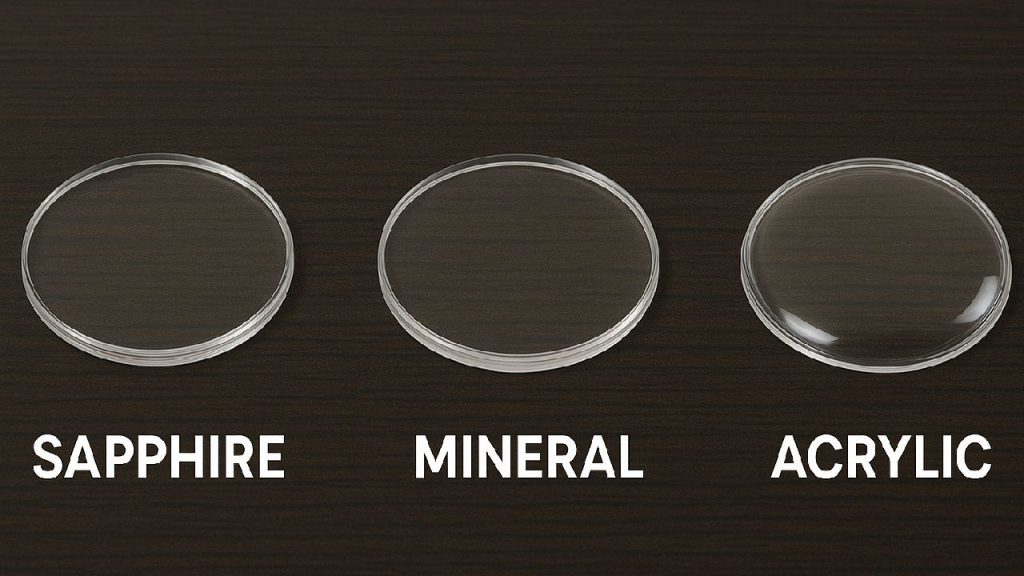
Success depends on identifying your crystal type first. Acrylic responds to Polywatch, mineral glass may improve with diamond paste, and sapphire requires professional treatment. Never attempt to polish sapphire or Ion-X glass at home.
For acrylic watches, Polywatch delivers fast results, often removing minor scratches in under a minute. Test any method on a small area first, and always protect the bezel with tape during polishing.
Prevention beats repair every time. Use screen protectors, store your watch properly, and remove it during high-risk activities. A scratch-free watch is not just about looks, it is about pride in your timepiece.