A stiff leather watch strap can turn a stylish timepiece into a daily discomfort. Whether it is fresh out of the box or a vintage find, new leather often resists bending, digging into your wrist and refusing to conform. The good news is that softening a leather watch strap is a solvable challenge with the right methods. This guide delivers proven, step-by-step techniques backed by material science and professional leather care principles. You will learn how to safely accelerate the break-in process using conditioners, mechanical methods, heat, and strategic wear habits without risking damage.
From immediate fixes to long-term maintenance, you will discover what actually softens leather and what does not, which products to trust, and when replacement makes more sense than restoration.
Identify the Cause of Stiffness
Before applying any softening method, understand why your strap is stiff. Applying the wrong treatment can damage glue, darken the leather permanently, or weaken fibers.
Check Leather Type and Tanning Method
Different leathers respond differently to softening. Vegetable-tanned leather is dense and firm, breaks in slowly but develops a rich patina. Chrome-tanned leather is softer from the start and common in OEM straps. Oil-tanned leather like Latigo is naturally pliable and moisture-resistant, needing minimal conditioning.
Use a magnifying glass to examine the grain. If it has a smooth, uniform surface, it is likely top-grain or corrected grain, more receptive to conditioners. Full-grain shows natural marks and pores and benefits most from oils and wear.
Assess Thickness and Cut
Thicker straps in the 6 to 7 ounce range take longer to soften than thin 3 to 4 ounce dress straps. Shoulder and back leather is stiffer and more durable. Belly cut is more flexible but less robust. Grain direction matters too, as straps cut parallel to the grain bend more easily than cross-grain cuts.
Inspect Construction Quality
Hand-stitched straps tolerate aggressive softening with oils and manipulation. Glued or bonded layers risk delamination with oils or heat. Padded straps feel rigid due to internal foam, and softening requires time and pressure.
If the strap feels like cardboard, a common complaint about OEM Hamilton or Tissot straps, it may be low-grade genuine leather with poor fiber structure. In this case, replacement may be better than repair.
Use Leather Conditioners Safely
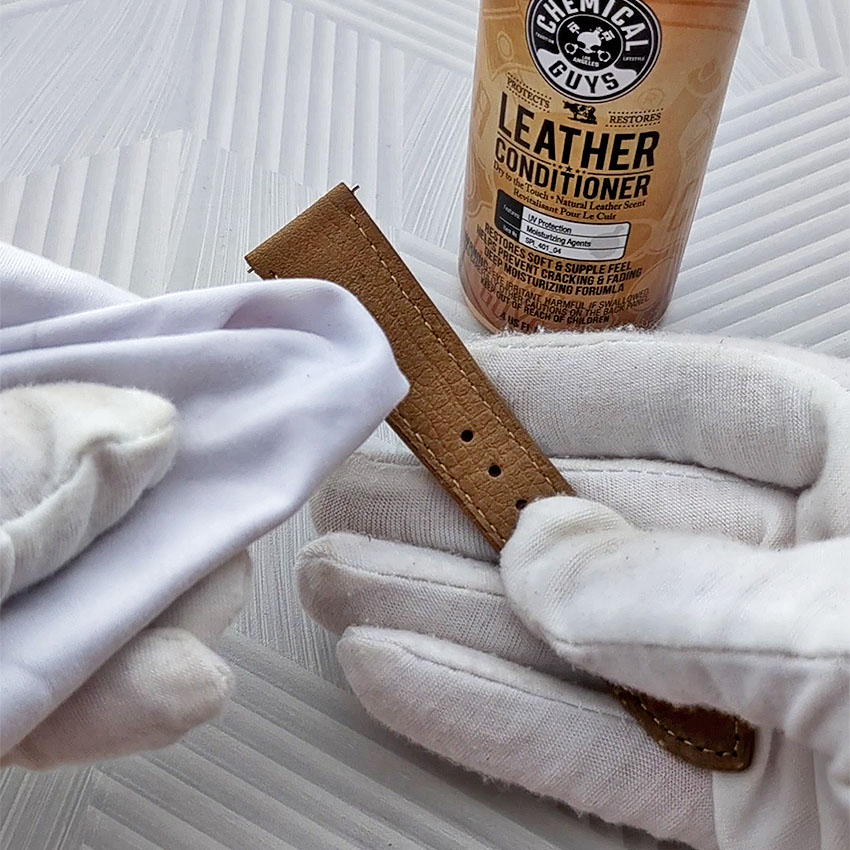
Conditioning is the most effective, low-risk way to restore suppleness to dry, stiff leather.
Choose the Right Conditioner
Not all conditioners are equal. Pick one that matches your leather needs.
Bick 4 works on all leathers and is color-safe with no darkening risk. Fiebing’s Leather Lotion absorbs fast and will not discolor. Lexol is budget-friendly and widely available but may cause slight darkening. Saphir Renovateur offers premium restoration at moderate cost. Obenauf’s LP provides deep moisture but causes significant darkening, so use on dark leathers only.
Avoid Burt’s Bees, water-based lotions, and silicone sprays. These clog pores or degrade leather over time.
Apply Conditioner Correctly
Remove the strap from your watch first. Clean by wiping with a damp microfiber cloth and mild soap, then let dry completely. Apply a patch test under the buckle. Use a soft cloth or Q-tip to rub conditioner into stiff areas, focusing on lugs, center, and underside. Wait 15 to 30 minutes for absorption and reapply if dry. Buff lightly and air-dry overnight. Shape while soft by bending around a water bottle or your wrist.
Pro tip: Conditioning after a 10-minute wear session, when leather is warm, boosts absorption significantly.
Apply Natural Oils for Deep Penetration

Natural oils penetrate deeper than synthetic conditioners, ideal for thick or dry leather.
Best Oils for Softening
Neatsfoot oil is animal-based and excellent for conditioning but may darken. Mink oil deeply moisturizes and adds water resistance with slight darkening. Lananin comes from sheep’s wool and is gentle with a non-greasy finish. Coconut oil works but use sparingly as it can go rancid over time. Cherry Tree Oil is equestrian-grade and effective but darkens.
User-tested feedback confirms that mink oil works a treat on gloves, boots, and watchbands.
Oil Application Steps
Patch test on an inconspicuous area first. Apply a pea-sized amount with a soft cloth. Massage in gently using circular motions. Let sit overnight for full absorption. Buff excess with a dry cloth.
Warning: Avoid hydrogenated vegetable oils. They oxidize and turn rancid, damaging leather over time.
Perform Manual Flexing Techniques
Mechanical softening breaks down rigid fiber bonds quickly, like stretching stiff muscles.
Dowel Method
This saddlery technique is used by leatherworkers to soften harnesses and saddles. Use a smooth dowel, marker, or pipe with 1 to 2 inch diameter. Turn the strap inside-out to work on the rough flesh side. Wrap the flesh side around the dowel. Pull the strap back and forth firmly 10 to 20 times. Repeat on different sections.
This works because flexing the inner layer stresses fibers without scuffing the outer surface.
Coiling and Twisting Routine
Tightly coil the strap in one direction and hold for 10 seconds before releasing. Repeat in the opposite direction. Gently stretch and twist during flexing. Do 5 to 10 minutes daily during idle time like watching TV or commuting.
Think of it like deep-tissue massage. Consistent pressure changes structure over time.
Use Heat to Accelerate Softening
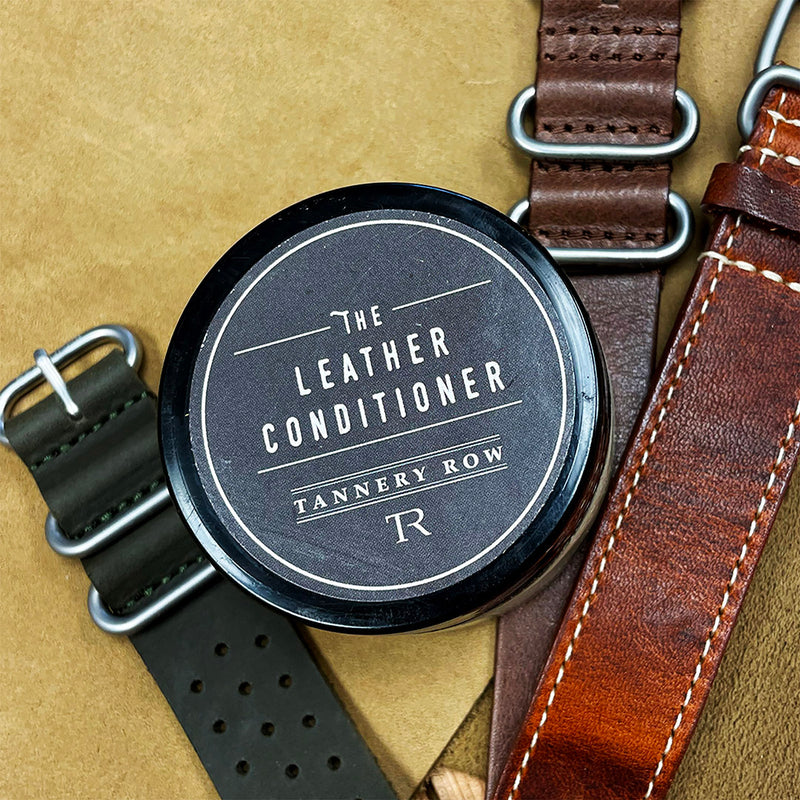
Heat opens leather pores, helping conditioners and oils absorb faster.
Hairdryer Method
Apply a small amount of conditioner or oil first. Set the hairdryer to low heat. Warm the strap for 30 to 60 seconds while massaging in the product. Let cool and absorb for 1 to 2 hours.
User tip from forums: Gently heat and massage to simulate continuous wear.
Risks of Overheating
High heat can dry out leather or cause cracking. Avoid high heat on thin or glued straps. Never use direct flame or heat guns.
Try the Hot Water Soak
A fast but risky method for water-resistant leathers.
Safe Soak Procedure
Use very hot but not boiling water. Soak for 1 to 2 minutes only. Remove and dry on your wrist, letting it conform to your shape. Allow to air-dry naturally for 8 to 12 hours.
When to Avoid This Method
Skip the hot water soak on glued or bonded straps, as water weakens adhesives. Avoid on vintage or fragile leather that may warp or crack. Do not use on coated finishes that may peel.
Only attempt if the strap is labeled water-resistant. This is not for everyday use.
Avoid Risky DIY Methods
Some popular hacks do more harm than good.
Methods to Skip
Petroleum jelly deeply penetrates but permanently darkens leather and may weaken glue. Shaving cream contains lanolin for temporary softening, but residue buildup is possible. Spit or saliva has minimal effect and is unhygienic. Urine is a humorous military myth with high risk of odor and salt damage.
Bottom line: Stick to proven, leather-safe products.
Store to Maintain Softness
Proper storage keeps your strap shaped and supple between wears.
Pre-Shape with Cylindrical Objects
Wrap the strap around a water bottle, watch roll, or pillow. Insert one keeper through the other to lock the curve. Leave for 24 or more hours.
User tip: Keep it secured around the pillow from the watch case. Over time the strap will conform to the roundish shape, making it more comfortable.
Ideal Storage Conditions
Avoid sunlight and heat that causes drying and fading. Use breathable fabric pouches, not plastic. Add silica gel packets to control moisture.
Replace When Necessary
Sometimes softening is not worth the effort, especially with low-quality OEM straps.
Signs to Replace
Replace the strap if it feels like cardboard or cracks under pressure. Swap it out if it is made of bonded leather prone to delamination. Consider replacement if glue is already failing or stitching is brittle.
Top Aftermarket Strap Brands
Hirsch offers premium leather that is durable with varied softness. Fluco provides ready-to-wear softness with consistent quality. Barton Straps are comfortable, affordable, and have wide selection. Tuns and Martu are superior to most OEM straps. Colareb from Italy is handmade with high craftsmanship. Harpy Leather VN on Etsy offers custom-fit, personalized design.
Cost note: Replacement straps start at $15, often cheaper than risking damage to a $500 watch.
Special Cases: Vintage and Glued Straps
Handle these with extra care, as some straps cannot be safely softened.
Vintage or NOS Straps
These are often brittle from age. They may have dry stitching or oxidized glue. Use light conditioning only with Bick 4 or Fiebing’s Lotion. Avoid soaking or mechanical stress. Consider display-only use if fragile.
Expert warning: Rehydrating vintage leather is like rehydrating cardboard. It cracks at stress points.
Glued vs. Hand-Stitched
Glued straps require avoiding oils and water due to risk of layer separation. Hand-stitched straps can handle deep conditioning and flexing.
Rule of thumb from enthusiasts: No more glued straps need apply after losing a vintage Omega strap to glue failure.
Maintain Softness Long-Term
Once softened, keep it that way with a simple care routine.
Monthly and Annual Tasks
Wipe down the strap weekly with a microfiber cloth. Deep clean every 6 months with Saphir Reno’Mat. Condition every 6 to 12 months with Bick 4 or Fiebing’s. Apply water repellent every 6 to 12 months with Nikwax or Collonil. Inspect stitching monthly for visual check.
Cost-effective tip: A $10 bottle of Bick 4 lasts years with proper use.
Real-World Softening Timeline
Daily wear takes 2 to 8 weeks for permanent results. Conditioner plus flexing shows results in 1 to 3 days, lasting for weeks. Oil treatment works in 1 to 2 days with effects lasting months. Hot water soak takes effect in 1 hour but lasts only days without maintenance.
Expert insight: It can take up to two weeks to fully break in your strap, but the comfort is worth it.
Frequently Asked Questions About Softening Leather Watch Straps
Does conditioning a leather watch strap darken the color?
Some products like Obenauf’s LP and mink oil may darken leather slightly. Color-safe options like Bick 4 and Fiebing’s Leather Lotion minimize this risk. Always patch test on the underside before full application.
How long does it take to soften a new leather watch strap?
With daily wear, most straps soften within 2 to 8 weeks. Thin leather in the 3 to 4 ounce range takes 1 to 2 weeks. Thick leather at 6 to 7 ounces may need 4 to 8 weeks or longer.
Can I use coconut oil to soften my watch strap?
Coconut oil works but use very small amounts. It can go rancid over time and may cause issues with prolonged use. Lighter options like Bick 4 or Fiebing’s are safer for watch straps.
Is the hot water soak method safe for all leather straps?
No. The hot water soak is only safe for water-resistant leathers. Avoid on glued or bonded straps, vintage leather, or straps with coated finishes. Water can weaken adhesives and cause warping.
Why does my OEM watch strap feel like cardboard?
Many OEM straps use low-grade genuine or bonded leather with poor fiber structure. These materials do not break in well and may never become comfortable. Replacement with a quality brand like Hirsch or Fluco is often the best solution.
Can I speed up the break-in process safely?
Yes. Combine daily wear with manual flexing and conditioning. Use the dowel method on the flesh side. Apply Bick 4 or conditioner after warm wear sessions. This combination accelerates softening safely.
Key Takeaways for Softening Your Leather Watch Strap
Softening a leather watch strap is not about brute force. It is about working with the material using gentle conditioning, consistent wear, and smart mechanical shaping. Avoid shortcuts that risk darkening, delamination, or warping. For stiff OEM straps, replacement with a high-quality brand like Fluco or Hirsch Liberty often delivers faster comfort than trying to salvage poor-quality material.
The most effective method remains daily wear, as your body’s natural oils and heat gradually break down fibers. Supplement with light conditioning every 6 to 12 months and store the strap on a cylindrical object to maintain its shape. With proper care, your leather strap will evolve into a supple, personalized companion that ages beautifully, one wear at a time.