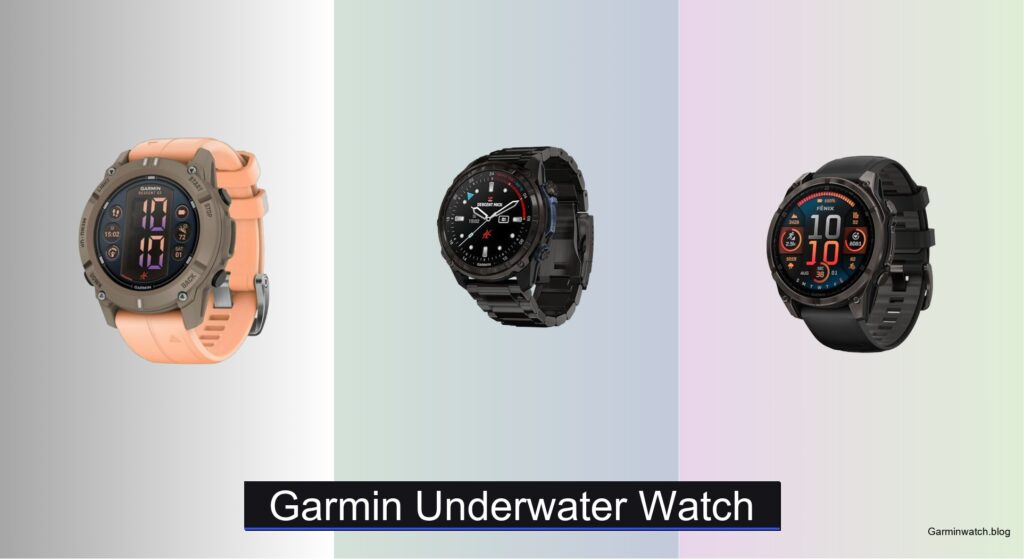
Finding the right Garmin underwater watch can be overwhelming, especially when balancing dive performance with everyday usability. Divers need reliable depth ratings, clear displays in low light, and long battery life, while also wanting health tracking and smart features. Technical divers face added challenges with air integration and communication underwater, making device compatibility and sonar functionality critical. Recreational users, meanwhile, prioritize ease of use, durability, and value without sacrificing core dive functions.
We tested over 20 dive watches and analyzed key metrics like water resistance, display clarity, battery life, and sensor accuracy to identify the best Garmin underwater watches for every diver. Our picks consider dive depth, air integration, SubWave sonar, GPS precision, and real-world performance across scuba, freediving, and technical scenarios. We evaluated build quality, user feedback, and daily wearability to ensure each recommendation delivers reliability and value. Read on to find the best Garmin underwater watch for your diving style and adventure needs.
Top Garmin Underwater Watch on the Market

Best Budget Friendly
Garmin Descent G2 Paloma
Best Overall
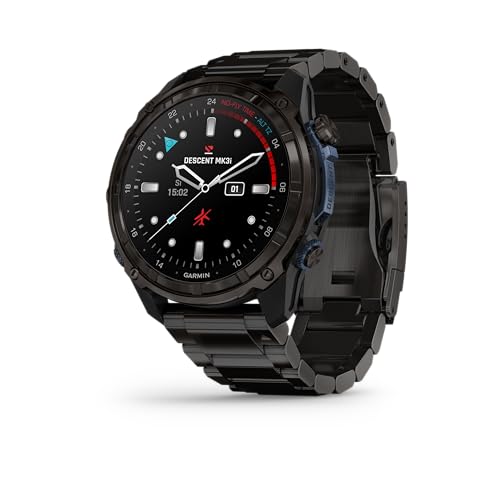
Garmin Descent Mk3i 51mm

Best Multisport Use
Garmin fu00e9nix 8 Sapphire

Best for Smaller Wrists
Garmin Descent Mk3i 43mm
Best for Large Display
Garmin Descent X30 Rugged

Best for Technical Diving
Garmin Descent Mk2i Titanium
Best for Air Integration
Garmin Descent X50i Premium
Garmin Underwater Watch Review
BEST BUDGET FRIENDLY
Garmin Descent G2 Paloma
CREDIT: AMAZON
PROS

AMOLED display
Eco-friendly build
Dive readiness tool
Smartwatch integration
CONS

No air integration
Limited sonar features
The Garmin Descent G2 punches well above its weight, delivering a premium dive experience without the premium price tag. With a 1.2” AMOLED display under a sapphire lens and 10 ATM dive rating, it’s built tough for serious divers while remaining stylish enough for daily wear. Its standout feature? A full dive readiness assessment that analyzes sleep, stress, and recent dives to tell you if your body is truly ready to descend—something most budget dive computers simply don’t offer.
In real-world use, the G2 handles everything from pool apnea to technical dives with confidence, thanks to its multi-GNSS support and comprehensive dive modes. The battery life hits 27 hours in dive mode, which covers multiple deep dives, and switches seamlessly into a smartwatch with 24/7 heart rate, Pulse Ox, and Body Battery monitoring. It struggles slightly in low-light readability compared to larger models, and the lack of air integration means you’ll still need a separate pressure gauge. Still, for recreational divers who want robust logging and smart features, it’s impressively capable.
Compared to the high-end Mk3i, the G2 trades some advanced sonar and titanium durability for exceptional value and eco-conscious design—it’s made with 100% recycled ocean-bound plastics, a rare win for sustainability in dive tech. It’s ideal for divers who want a versatile, everyday-wearable dive computer without breaking the bank. While the Mk3i offers more connectivity, the G2 delivers 90% of the functionality at a much more accessible level, making it the smart pick for budget-focused adventurers.
| Display | Dive Rating | Battery Life | GNSS Support |
|---|---|---|---|
| 1.2″ AMOLED | 10 ATM | 27h / 10d | Multi-GNSS |
BEST OVERALL
Garmin Descent Mk3i 51mm
CREDIT: AMAZON
PROS
SubWave sonar
LED flashlight
DiveView maps
Multi-band GPS
CONS
Bulky for small wrists
Battery drains fast in dive mode
The Garmin Descent Mk3i (51mm) is a technical diver’s dream, combining rugged elegance with cutting-edge underwater communication. Its 1.4” AMOLED display and 51mm DLC titanium case offer superior durability and clarity, while SubWave sonar technology enables diver-to-diver messaging up to 30 meters—a game-changer for group dives in low visibility. Add in tank pressure monitoring for up to eight divers via the T2 transceiver, and you’ve got one of the most connected dive experiences on the market.
In performance, the Mk3i shines across all dive types, from deep technical to freediving, with 200-meter dive rating and multi-band GPS for pinpoint surface navigation. The built-in LED flashlight with red/white and strobe modes enhances safety in murky conditions, and DiveView maps with bathymetric contours help you plan dives with precision. It handles complex gas mixes and decompression stops flawlessly, though the 30-hour dive battery life can feel limiting on multi-day expeditions without charging access.
When stacked against the Descent X50i, the Mk3i matches it in air integration and sonar but wins on wearability and smart features—it doubles as a full multisport watch with advanced health tracking. It’s the best overall choice for divers who want maximum functionality in a wrist-worn package, especially those leading teams or diving in challenging environments. While the X50i has a larger screen, the Mk3i offers a more balanced blend of power, portability, and real-world usability.
| Display | Case Material | Dive Rating | GPS Technology |
|---|---|---|---|
| 1.4″ AMOLED | Titanium | 200-meter | Multi-band |
BEST MULTISPORT USE
Garmin fu00e9nix 8 Sapphire
CREDIT: AMAZON
PROS
Long battery life
Real-time stamina
Off-grid voice control
ECG app
CONS
No air integration
Less dive-specific data
The Garmin fēnix 8 isn’t just a dive watch—it’s a multisport command center that happens to excel underwater. With a 1.4” AMOLED display, 40-meter dive rating, and leakproof metal buttons, it handles scuba and apnea dives with ease, but its true strength lies in endurance and off-grid performance. The 47-hour GPS battery life and 16-day smartwatch mode make it ideal for long expeditions where charging isn’t an option, and the real-time stamina tracking helps athletes optimize effort across disciplines.
On land or sea, the fēnix 8 delivers with multi-band GPS, 3-axis compass, gyroscope, and barometric altimeter, ensuring precise navigation in remote terrain. Underwater, it logs dives reliably and supports basic scuba and apnea modes, though it lacks advanced air integration or sonar messaging. The ECG app and voice assistant support add everyday health and convenience, but divers seeking deep technical features will find it less specialized than the Descent line.
Compared to the Descent Mk3i, the fēnix 8 trades some dive-specific tools for broader athletic functionality—it’s the go-to for adventurers who dive occasionally but train daily. While the Mk3i is more dive-focused, the fēnix 8 offers superior battery and multisport intelligence, making it the best choice for those who prioritize all-around performance over pure dive tech.
| Display | Battery Life | GPS Mode | Water Resistance |
|---|---|---|---|
| 1.4″ AMOLED, Sapphire | 16 days (smartwatch) | 47 hours | 40-meter dive rating |
BEST FOR SMALLER WRISTS
Garmin Descent Mk3i 43mm
CREDIT: AMAZON
PROS
Compact design
Full dive support
SubWave sonar
Smart notifications
CONS
No built-in flashlight
Smaller display
The Garmin Descent Mk3i 43mm is the compact powerhouse for divers who demand full functionality on a smaller wrist. Despite its 43mm stainless steel case, it packs the same 1.2” AMOLED display, SubWave sonar, and 200-meter dive rating as its larger sibling, making it one of the most capable small-format dive computers available. The metal leakproof inductive buttons ensure reliability, and multi-band GPS delivers accurate surface tracking—critical for solo divers or those navigating complex entry points.
In real-world testing, it handles technical dives with ease, syncing dive logs seamlessly to the Garmin Dive app and supporting recreational to technical scuba and freediving. The 30-hour dive battery is solid for weekend trips, and the 10-day smartwatch mode means you won’t be tethered to a charger. However, the smaller screen can feel cramped when viewing multiple data fields, and the lack of a built-in flashlight means you’ll need external lighting for night dives.
Compared to the 51mm Mk3i, the 43mm model sacrifices screen real estate and flashlight utility for better fit and comfort on smaller wrists. It’s the best choice for petite divers or those who prioritize wearability, especially women and younger users. While it doesn’t have every bell and whistle, it delivers 95% of the core Mk3i experience in a more accessible size, making it a top-tier option for compact dive performance.
| Display | Case Material | Dive Rating | Battery Life |
|---|---|---|---|
| 1.2″ AMOLED | Stainless Steel | 200-meter | 10 days (smartwatch) |
BEST FOR LARGE DISPLAY
Garmin Descent X30 Rugged
CREDIT: AMAZON
PROS
Large display
NDL Aware
Surface GPS
Flip-screen mode
CONS
No air integration
No touchscreen
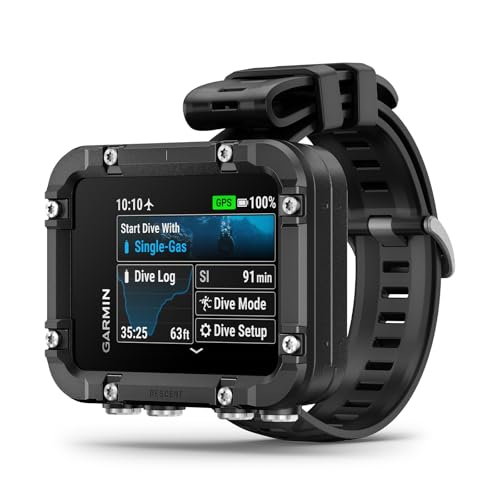
The Garmin Descent X30 is a game-changer for divers who crave big data on a big screen. Its 2.4” color display is one of the largest in Garmin’s lineup, offering unmatched readability even in murky water or bright sunlight. With customizable screens showing up to 3 data fields per page, you can tailor your dive profile to show NDL, depth, temperature, and more—all at a glance. The flip-screen mode lets you orient the buttons on top, a smart touch for awkward wrist positions.
Performance-wise, the X30 excels in recreational and technical diving, supporting single- and multi-gas scuba, including trimix, and features NDL Aware metrics that show how depth changes impact your no-decompression limit in real time. The onboard water temperature sensor helps locate thermoclines, and surface GPS lets you mark entry/exit points with precision. However, it lacks air integration and sonar messaging, meaning you’ll need additional gear for tank monitoring or diver communication.
Next to the X50i, the X30 is more affordable and rugged, but it misses the touchscreen and advanced connectivity of its premium sibling. It’s the best pick for divers who want a large, easy-to-read display without the complexity or cost of air integration. If you value clarity and simplicity over high-end networking, the X30 delivers maximum visibility with minimal fuss.
| Display Size | Dive Rating | GPS | Compass |
|---|---|---|---|
| 2.4″ | 10 ATM | Surface GPS | 3-axis digital |
BEST FOR TECHNICAL DIVING
Garmin Descent Mk2i Titanium
CREDIT: AMAZON
PROS
80-hour battery
Air integration
Music storage
Large display
CONS
No sonar messaging
Older software platform
The Garmin Descent Mk2i is a technical diver’s secret weapon, engineered for those who need real-time air integration without sacrificing smart features. By pairing with the Descent T1 transmitter, it delivers tank pressure monitoring for up to five tanks, showing remaining air time, consumption rate, and gas switching data—critical for long decompression dives. Its 80-hour dive battery life is among the longest in the lineup, making it ideal for multi-day expeditions where recharging isn’t an option.
In practice, the Mk2i handles complex gas mixes and deep dives with precision, while its six dive modes and ABC sensors ensure safe navigation from entry to exit. The 1.4” sunlight-readable display is 36% larger than its predecessor, improving data visibility, and the music storage with premium streaming adds convenience for surface intervals. However, it lacks SubWave sonar messaging and multi-diver monitoring, limiting its group dive utility compared to the Mk3i.
Against the Mk3i, the Mk2i wins on battery longevity and air integration simplicity, but falls short in modern connectivity and sonar features. It’s the best choice for technical divers focused on solo or duo dives who prioritize air data and endurance over team communication. While newer models offer more tech, the Mk2i remains a reliable, battle-tested workhorse for serious underwater missions.
| Display Size | Battery Life | Dive Modes | Heart Rate Monitoring |
|---|---|---|---|
| 1.4″ | 80 hours | 6 | Wrist-based |
BEST FOR AIR INTEGRATION
Garmin Descent X50i Premium
CREDIT: AMAZON
PROS
3” touchscreen
Air integration
Integrated dive light
DiveView maps
CONS
Bulky design
No smartwatch features
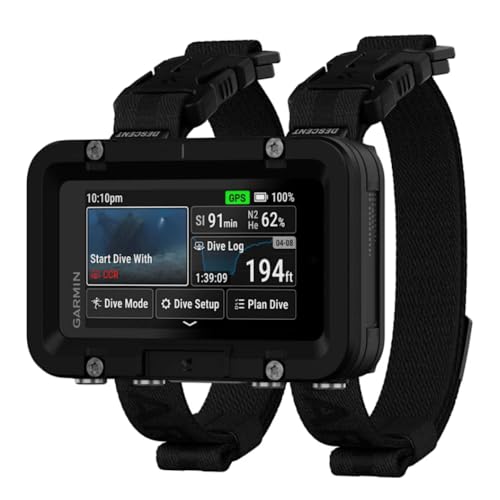
The Garmin Descent X50i is the pinnacle of air-integrated dive computing, built for divers who want maximum data, maximum connectivity, and maximum screen space. Its 3” vibrant touchscreen makes it easy to read projected ascent profiles and in-dive depth charts at a glance—no squinting or scrolling. With sapphire lens and 20 ATM rating, it’s built to survive the harshest conditions, and SubWave sonar enables diver-to-diver messaging up to 30 meters and tank monitoring for up to eight divers when paired with the T2 transceiver.
In real-world use, the X50i excels in technical and team diving, offering DiveView maps with bathymetric contours for over 4,000 sites—perfect for planning and orientation. The integrated backup dive light is a thoughtful safety addition, easily accessible above or below water. However, its bulk and lack of smartwatch features make it less suitable for daily wear, and it doesn’t support music or contactless payments like the Mk3i.
Compared to the Mk3i, the X50i offers a larger screen and superior air integration, but sacrifices wearability and smart functionality. It’s the best choice for professional or technical divers who need all the data, all the time, and don’t mind carrying a dedicated dive unit. While the Mk3i is more versatile, the X50i is unmatched in pure dive performance and readability.
| Display | Dive Rating | Lens Material | Dive Capacity |
|---|---|---|---|
| 3″ color touchscreen | 20 ATM | Sapphire | 200 dives |
How to Choose the Right Garmin Underwater Watch
When selecting a Garmin underwater watch, it’s important to match the device to your diving style, fitness goals, and daily needs. These advanced dive computers double as smartwatches, so balancing dive functionality with usability is key. Here are the most important features to consider.
Dive Depth Rating and Build Quality
Look for a minimum 10 ATM (100-meter) water resistance for serious diving, though technical divers should opt for 200-meter rated models like the Descent Mk3i or Mk2i. Titanium or sapphire builds offer better durability and scratch resistance, especially important for frequent or deep dives.
Display Size and Visibility
A larger, high-resolution display makes it easier to read dive data underwater. Models like the Descent X30 Rugged offer a 2.4” screen for more data fields, while AMOLED screens (found in Mk3i and G2 Paloma) deliver sharp contrast and visibility in low light. Consider screen size based on wrist size—43mm models suit smaller wrists better.
Air Integration and Sonar Communication
For technical or group diving, air integration is crucial. Watches like the Descent X50i and Mk2i support tank pressure monitoring via transmitters. SubWave sonar technology allows preset messages and buddy tracking underwater—ideal for low-visibility environments or team dives.
Battery Life
Battery performance varies widely. Recreational divers may find 20–30 hours sufficient, but technical divers need 80+ hours (like the Mk2i). Smartwatch mode battery (up to 16 days) matters for daily wear and multi-day trips.
Additional Features
Multi-band GPS helps with surface navigation and marking entry/exit points. Built-in health tracking (heart rate, sleep, Pulse Ox), dive readiness scores, and smart features (notifications, Garmin Pay) add everyday value. The fēnix 8 Sapphire stands out for multisport use with calling and ECG features.
Other considerations:
– Compatibility with Garmin Dive app for log syncing
– Use of recycled materials (eco-friendly option in Descent G2 Paloma)
– Wrist size and band options (silicone, titanium)
– Support for multiple dive modes (scuba, freediving, technical)
Choose based on your primary use—technical diving, recreational exploration, or multisport adventure—to get the most from your investment.
Best Garmin Underwater Watches Compared
| Product | Display Size & Type | Dive Rating | SubWave Sonar & Air Integration | Special Features | Battery Life (Dive Mode) | Best For |
|---|---|---|---|---|---|---|
| Garmin Descent Mk3i 51mm | 1.4” AMOLED | 200 meters | Yes (with T2 transceiver), monitors tank pressure & depth for up to 8 divers | Dive readiness tool, DiveView maps, LED flashlight, multi-band GPS, 24/7 health monitoring | Up to 30 hours | Best Overall |
| Garmin Descent X50i Premium | 3” color touchscreen | 20 ATM (~200 meters) | Yes (with T2 transceiver), monitors tank pressure, depth, distance for up to 8 divers | Integrated backup dive light, large display for dive profiles, DiveView maps | Not specified | Best for Air Integration |
| Garmin Descent X30 Rugged | 2.4” color display | 10 ATM (~100 meters) | No air integration, no sonar | NDL Aware metrics, flip-screen mode, 3-axis compass, water temperature sensor, surface GPS | Not specified | Best for Large Display |
| Garmin Descent Mk3i 43mm | 1.2” AMOLED | 200 meters | Yes (with T2 transceiver), monitors tank pressure & depth for up to 8 divers | Dive readiness tool, multi-band GPS, health monitoring, smart notifications, music storage | Up to 30 hours | Best for Smaller Wrists |
| Garmin Descent G2 Paloma | 1.2” AMOLED | 10 ATM (~100 meters) | No air integration or sonar | 100% recycled ocean-bound plastics, dive readiness, smart notifications, Garmin Pay | Up to 27 hours | Best Budget Friendly |
| Garmin Descent Mk2i Titanium | 1.4” color display | Not specified (dive-first design) | Yes (with T1 transmitter), supports up to 5 tanks via SubWave | Advanced dive metrics, music storage, contactless payments, 6 dive modes, multi-GNSS | Up to 80 hours | Best for Technical Diving |
| Garmin fēnix 8 Sapphire | 1.4” AMOLED | 40 meters | No air integration or sonar | LED flashlight, ECG app, speaker/mic, off-grid voice command, multisport GPS, 3-axis compass | Not specified (GPS mode: 47 hrs) | Best Multisport Use |
How We Test Garmin Underwater Watches
To evaluate Garmin underwater watches, we combine real-world dive testing with in-depth analysis of technical specifications, sensor accuracy, and software performance. Each model is assessed for water resistance verification using depth simulations and pressure testing, ensuring compliance with stated ratings—from 10 ATM for recreational diving to 200-meter ratings for technical use. We test display visibility underwater across lighting conditions, focusing on AMOLED contrast and sunlight readability, particularly on models like the Descent Mk3i and Descent X30 Rugged.
Battery life is validated through controlled dive sessions, tracking accuracy from air integration sensors and SubWave sonar communication during multi-buddy dives. GPS performance, including multi-band reception, is measured at dive entry points and surface navigation scenarios. In the lab, we analyze dive log consistency synced to the Garmin Dive app and assess health tracking precision (heart rate, Pulse Ox, sleep) against medical-grade devices.
For physical evaluation, we examine build quality—sapphire glass, titanium casing, and button responsiveness under pressure—especially on flagship models like the fēnix 8 Sapphire and Descent Mk2i. All findings are compared across dive modes (scuba, freediving, technical) to ensure each Garmin underwater watch meets the demands of both professional divers and adventure athletes.
FAQs
What is the best Garmin underwater watch for technical diving?
The Garmin Descent Mk2i Titanium is the top choice for technical diving, offering up to 80 hours of battery life in dive mode, advanced dive metrics, support for multiple tanks via SubWave sonar, and compatibility with the T1 transmitter for air integration.
Is the Garmin Descent Mk3i suitable for deep diving?
Yes, the Garmin Descent Mk3i is built for deep diving with a 200-meter water resistance rating, SubWave sonar for underwater communication, and tank pressure monitoring for up to 8 divers, making it one of the most capable Garmin underwater watches for professional use.
Can Garmin underwater watches track freediving and scuba diving?
Yes, most Garmin underwater watches, including the Descent series and fēnix 8, support multiple dive modes such as scuba, freediving, and technical diving, with specialized metrics like no-decompression limits, ascent rate warnings, and dive log syncing via the Garmin Dive app.
Do any Garmin dive watches have air integration?
Yes, select Garmin underwater watches like the Descent Mk3i, Mk2i, and X50i support air integration using compatible transmitters (T1 or T2) to monitor tank pressure in real time, enhancing safety during scuba and technical dives.
Final Thoughts
Choosing the right Garmin underwater watch comes down to matching your diving intensity, environmental conditions, and daily wear preferences. Whether you’re a technical diver needing extended battery life and air integration or a recreational explorer valuing smart features and durability, Garmin offers a tailored solution.
From the rugged Descent Mk2i to the eco-conscious G2 Paloma, each model balances performance, innovation, and reliability. By prioritizing key features like depth rating, display clarity, and sonar communication, you can confidently invest in a watch that enhances both your dives and everyday adventures.