You’re not just buying a watch, you’re choosing a companion for every run, hike, workout, and recovery. With dozens of models across Garmin’s 2026 lineup, it’s easy to feel overwhelmed. But here’s the truth: every Garmin watch is built for a purpose. The Forerunner 55 won’t help you navigate a mountain trail. The Fenix 8 Pro is overkill for tracking sleep and steps. This guide cuts through the noise, using real-world testing, user feedback, and deep technical analysis to match you with the right Garmin based on your lifestyle, budget, and goals.
We’ll compare battery life, display types, health sensors, GPS accuracy, and smart features across seven product lines. You’ll learn which models offer ECG and skin temperature tracking, which ones last weeks on a single charge, and which watches actually deliver turn-by-turn navigation. Whether you’re a beginner runner, elite triathlete, outdoor adventurer, or wellness-focused user, this is your definitive Garmin watch guide.
Forerunner Series: Best for Runners
Garmin’s Forerunner line dominates the running world. These watches are engineered for training precision, race strategy, and recovery insight, not flashy smartwatch features. The lineup spans from entry-level simplicity to elite performance tools.
Forerunner 55: Entry-Level GPS Power
Perfect for first-time runners, the Forerunner 55 delivers core running metrics without complexity. It includes basic GPS tracking, step counting, sleep monitoring, and Garmin Coach, a free app-based training plan for 5K, 10K, or half-marathon goals.
Key specifications:
* Battery: 20 hours GPS / 2 weeks smartwatch mode
* Display: Memory-in-Pixel (MIP), always visible, low power
* Weight: 39g
* No music, no maps, no Garmin Pay
Despite its simplicity, GPS accuracy rivals higher-end models. A full marathon drains just 21% battery, making it reliable for long-distance training.
Best for: Beginners, casual runners, small wrists. Skip if: You want music, maps, or advanced analytics.
Forerunner 165: Budget AMOLED Upgrade
The Forerunner 165 is the sweet spot for intermediate runners who want a bright AMOLED display without breaking the bank.
Key specifications:
* Price: £249 / $300
* Battery: 19 hours GPS / 11 days smartwatch
* Features: Suggested Workouts, adaptive training plans, breadcrumb navigation
Runner’s World testing showed its GPS and heart rate accuracy matched the $750 Forerunner 965. However, it lacks offline maps and ECG/skin temperature sensors (uses Elevate V4).
Music version adds onboard storage but cuts battery to 7 days.
Best for: Runners wanting AMOLED under £250. Skip if: You need offline maps or health depth.
Forerunner 570: All-Around Runner’s Watch
The Forerunner 570 brings dual-band GPS, Training Readiness, and Triathlon Coach, making it ideal for serious runners.
Key specifications:
* Battery: 18 hours GPS / 10 days smartwatch
* Features: Auto Lap at known race markers, music storage, voice assistant
* Garmin Pay: Yes
It introduces full training load balance analytics, helping prevent overtraining. Unlike the 165, it includes color maps and navigation tools.
Best for: Marathoners, triathletes, data-driven runners. Skip if: You need ultra-long battery or LTE.
Forerunner 965 and 970: Elite Performance Tools
For advanced athletes, the Forerunner 965 and 970 offer touchscreen plus buttons, dual-band GPS, and running economy metrics.
Key specifications:
* 965 Battery: 26 to 42 hours GPS / 23 days smartwatch
* 970 Battery: 30 hours GPS / 26 days
* Display: AMOLED with touchscreen
* Maps: Full-color, downloadable, turn-by-turn
Both support Training Status, Race Predictor, and Recovery Time. The 970 adds built-in mapping and slightly better battery.
Best for: Elite runners, multiday race training. Skip if: You have small wrists (no S-size available).
Fenix and Epix: Top Outdoor Watches
Built for extreme environments, the Fenix and Epix series are for hikers, climbers, and adventurers who demand navigation, durability, and multi-week battery life.
Fenix 7 Pro: Premium Outdoor Powerhouse
The Fenix 7 Pro combines sapphire glass, solar charging, and Elevate V5 sensor (ECG plus skin temp) in a MIL-STD-810H rugged chassis.
Key specifications:
* Battery: Up to 57 hours GPS / 54 days smartwatch (solar-assisted)
* Navigation: ClimbPro, route planning, back-to-start
* Size options: 43mm, 47mm, 51mm (S/M/L)
It’s ideal for mountaineering, sailing, and off-grid hiking. The microLED display on the Fenix 8 is brighter, but the 7 Pro remains a top seller.
Best for: Hikers, climbers, outdoor professionals. Skip if: You want LTE or satellite SOS (get Fenix 8 Pro instead).
Fenix 8 Pro: Satellite SOS and LTE
The Fenix 8 Pro is Garmin’s most advanced outdoor watch, featuring LTE, satellite connectivity, and Garmin Messenger.
Key specifications:
* Battery: 10 days (microLED), 27 days (AMOLED)
* Emergency features: SOS, LiveTrack, inReach integration
* Display: microLED (4,500 nits), visible in direct sunlight
This is the only Garmin with two-way emergency messaging via satellite. Critical for solo adventurers or remote expeditions.
Best for: Solo trekkers, emergency-ready users. Skip if: You don’t need satellite (overkill for city use).
Epix Gen 2 Pro: AMOLED for Outdoor Use
Visually identical to Fenix but with a larger, crisper AMOLED display, the Epix Pro appeals to users who want touchscreen plus buttons and color clarity.
Key specifications:
* Battery: 24 to 57 hours GPS / 16 to 30 days smartwatch
* Features: Same as Fenix 7 Pro, minus solar on base model
Ideal if you prioritize map readability over battery. Solar version extends life significantly.
Best for: Users who want touchscreen plus outdoor toughness. Skip if: You need LTE (not available on Epix).
Venu Series: Health and Lifestyle Focus
If you care more about sleep, stress, and daily wellness than marathon pacing, the Venu line is your best choice.
Venu 4: Best Health Tracking Watch
The Venu 4 is Garmin’s most advanced wellness-focused model, equipped with multi-band GPS, Elevate V5 sensor, Health Status alerts, and Training Readiness.
Key specifications:
* Battery: 17 hours GPS / 12 days smartwatch
* Features: ECG, skin temperature, HRV status, Body Battery, menstrual tracking
* Smart features: Speaker/mic, Garmin Pay, music storage
It logs caffeine, alcohol, and water intake, then shows how they affect your sleep and HRV. The Morning Report gives a daily wellness snapshot.
Best for: Women’s health, stress management, fitness plus style. Skip if: You want ultra-long battery or navigation.
Venu X1: Luxury Design and Big Display
The Venu X1 pushes design boundaries with a 2-inch AMOLED screen, titanium case, and 8mm ultra-thin profile.
Key specifications:
* Battery: 16 hours GPS / 8 days smartwatch
* Features: Full-color maps, flashlight, premium finish
* Weight: 48g
It’s the largest display in Garmin’s lineup, perfect for media and map viewing. But battery suffers due to screen size.
Best for: Style-conscious users, big-screen lovers. Skip if: You need long battery or rugged build.
Instinct 3: Rugged and Reliable
The Instinct 3 AMOLED is built to survive, tested to MIL-STD-810H standards for shock, water, and extreme temperatures.
Key specifications:
* Battery: 40 hours GPS / 24 days smartwatch
* Display: 1.2-inch AMOLED (non-touch)
* Weight: 50g
* Waterproof: 100m
It includes breadcrumb navigation, incident detection, and live tracking, but no offline maps or music.
Dubbed “the new G-Shift” by Reddit users, it’s a stripped-down Fenix for those who want core tools without complexity.
Best for: Outdoor workers, military, budget Fenix alternative. Skip if: You need maps or LTE.
Vivoactive 6: Everyday Fitness Tracker
The Vivoactive 6 is the jack-of-all-trades, ideal for casual users who want 80-plus sports modes and animated workouts without high cost.
Key specifications:
* Price: £279.99 / $300
* Battery: Up to 11 days
* Features: Body Battery, stress tracking, menstrual cycle, animated yoga/stretching guides
But it lacks a barometric altimeter and multi-band GPS, so elevation and location accuracy are weaker.
Best for: Gym users, walkers, low-impact athletes. Skip if: You need precise GPS or climbing data.
Specialized Models: Golf, Diving, and Kids
Garmin makes watches for specific activities beyond general fitness. These niche models serve serious enthusiasts.
Approach S70: Best Golf Watch
The Approach S70 acts as a virtual caddie, offering club suggestions, wind data, and green views.
Key specifications:
* Battery: 16 days
* Features: HR tracking, Body Battery, 43,000-plus courses
* Price: £499 / $650
Lower-end models like the S12 (£179) offer basic distance tracking and 15-week battery, ideal for budget golfers.
Best for: Serious golfers, course strategy. Skip if: You don’t play regularly.
Descent Mk3: Dive Computer and Watch
The Descent Mk3 is a professional dive computer with tank pressure monitoring (up to 8 tanks) and sonar networking.
Key specifications:
* Price: £1,100 to £2,500 (with T2 transceivers)
* Depth: 200m
* Features: Built-in flashlight, dive logging, air integration
Used by technical divers worldwide. Not for casual snorkeling.
Best for: Technical divers, underwater explorers. Skip if: You don’t dive.
Bounce 2: Best Kids’ Watch
The Bounce 2 is the only Garmin with LTE calling, GPS, and music for kids.
Key specifications:
* Age: 10 plus
* Battery: 2 days (with LTE)
* Features: Swim-proof, parental controls, geofencing
Parents can track location and set safe zones.
Best for: Teen safety, active kids. Skip if: You need long battery.
Feature Deep Dive: What Matters Most
Understanding the technical differences between Garmin models helps you make an informed decision. These core features directly impact your daily experience.
Elevate V5 vs V4 Sensor
The sensor inside your watch determines what health data you can track.
- V5 (ECG plus Skin Temp): Available on Venu 3/4, Fenix 7 Pro, Epix Pro
- V4 (HR only): Available on Forerunner 965, Venu 3 (non-V5), Fenix 6
ECG helps detect atrial fibrillation. Skin temperature tracks nightly trends for illness or cycle insights.
Prioritize V5 if health monitoring is key to your decision.
GPS Accuracy: Dual-Band vs Standard
Your GPS mode affects how accurately the watch tracks your position, especially in challenging environments.
- Dual/Multi-Band GPS: Available on Forerunner 265/570/965, Fenix 7/8, Venu 4
- Standard GPS: Available on Forerunner 55, 165
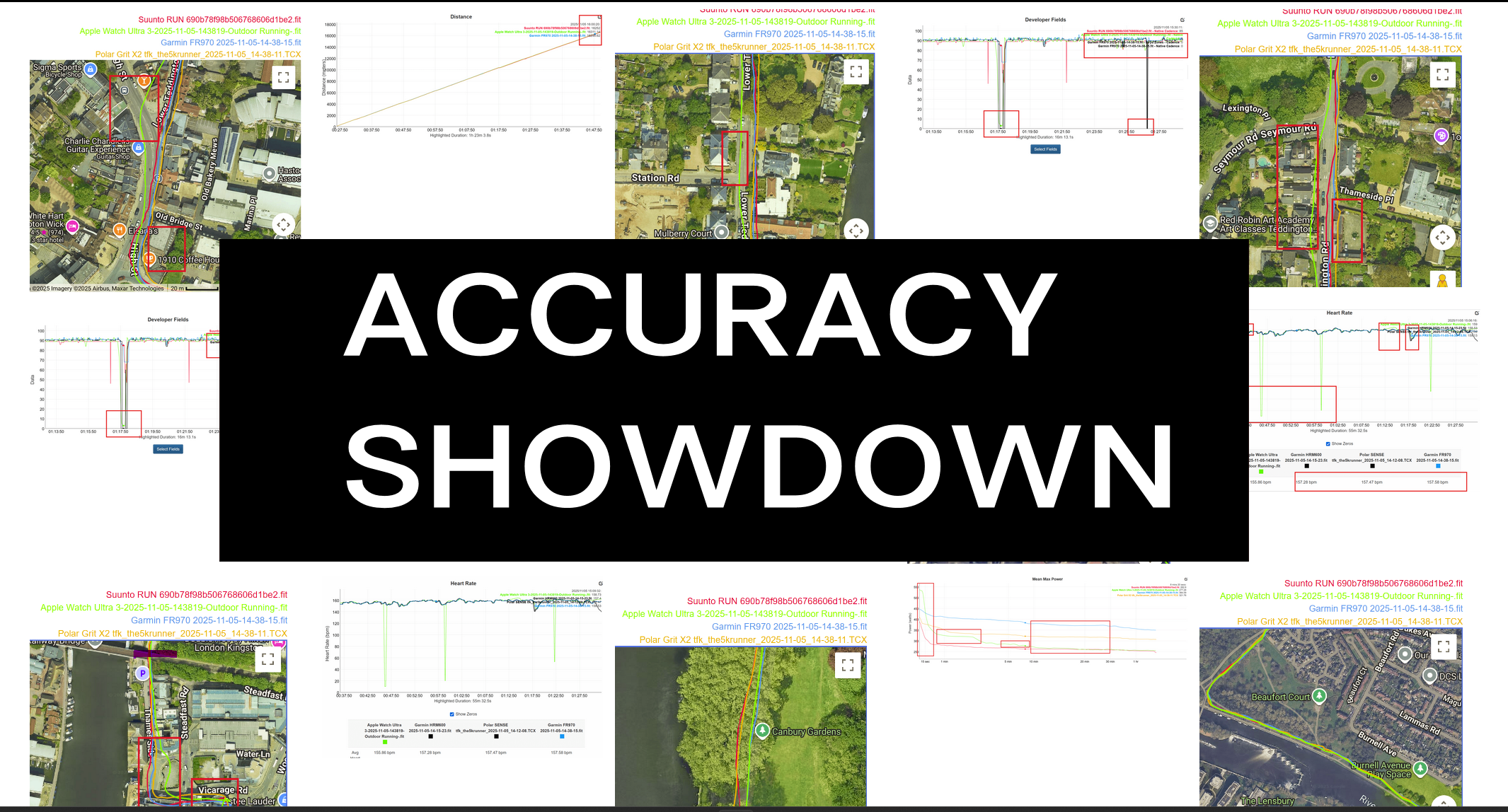
Dual-band reduces signal bounce in urban canyons and forests. Real-world tests show approximately 30% better accuracy with dual-band systems.
Choose dual-band for trail running or city use where accuracy matters most.
Display Types: AMOLED vs MIP

Your display choice affects visibility and battery life significantly.
| Type | Pros | Cons | Models |
|---|---|---|---|
| AMOLED | Bright, colorful, touch (some) | Shorter battery | Venu, Forerunner 165+, Epix |
| MIP | Always visible, sunlight-readable, long battery | Lower contrast | Forerunner 55, Enduro, Instinct non-AMOLED |
Choose AMOLED for style and media consumption. Choose MIP for battery longevity and outdoor visibility.
Battery Life: Real-World Expectations
Battery life varies dramatically between models, especially when using GPS.
- Forerunner 55: 20 hours GPS / 2 weeks smartwatch
- Venu 4: 17 hours GPS / 12 days smartwatch
- Fenix 8 Pro: 62 to 145 hours GPS / 27 to 145 days (solar)
- Enduro 3: Up to 120 hours GPS / 60 days smartwatch
Solar models gain approximately 30% extra life in full sun. Not a magic fix, but helpful on long hikes.
Software and App Insights
Your Garmin watch is only as good as the software powering it. Understanding the app ecosystem helps you get the most from your device.
Garmin Connect: Free and Powerful
The Garmin Connect app is free and essential. It provides comprehensive data analysis and training tools.
Core features:
* Body Battery and Stress Tracking
* Sleep Score with advanced reports
* Training plans (Garmin Coach)
* VO2 Max and Recovery Time
The app syncs seamlessly with both iOS and Android devices.
Garmin Connect+: Is It Worth It?
- Cost: $70/year
- Features: AI insights, live strength tracking, performance dashboard
Most testers say the paid version is not worth it. The free version covers 95% of what users need.
Skip Connect+ unless you’re a pro coach or data scientist who needs advanced analytics.
Who Should Buy Which Garmin
Matching your priorities to the right model ensures you get the most value from your purchase.
By Use Case
| Need | Best Model |
|---|---|
| First-time runner | Forerunner 55 |
| Marathon training | Forerunner 570 |
| Ultrarunning/hiking | Enduro 3 or Fenix 8 |
| Daily wellness | Venu 4 |
| Women’s health | Venu 4 or Lily 2 |
| Luxury wear | Marq Adventurer or Fenix 8 Pro |
| Diving | Descent Mk3 |
| Kids’ safety | Bounce 2 |
By Budget
| Budget | Top Pick |
|---|---|
| Under £200 | Forerunner 55 |
| £200 to £300 | Forerunner 165 or Vivoactive 6 |
| £300 to £500 | Venu 4 or Instinct 3 |
| £500 plus | Fenix 8, Forerunner 970, Venu X1 |
By Wrist Size
- Small wrists: Choose S models (Forerunner 265S, Venu S, Fenix Pro S)
- Large wrists: 47mm-plus (Fenix, Forerunner 965, Venu X1)
Note that Forerunner 965 and Enduro 3 have no small size option.
Garmin vs Apple Watch: Who Wins
Comparing Garmin to Apple Watch helps you decide which ecosystem fits your life better.
| Factor | Garmin | Apple Watch |
|---|---|---|
| Battery | Days to weeks | 1 to 3 days |
| Running Analytics | Best-in-class | Good |
| Navigation | Full offline maps | Limited |
| Smart Features | Basic (Pay, notifications) | Best (apps, Siri, ecosystem) |
| Durability | Rugged, MIL-STD tested | Fragile (glass, aluminum) |
| Platform | iOS and Android | iOS only |
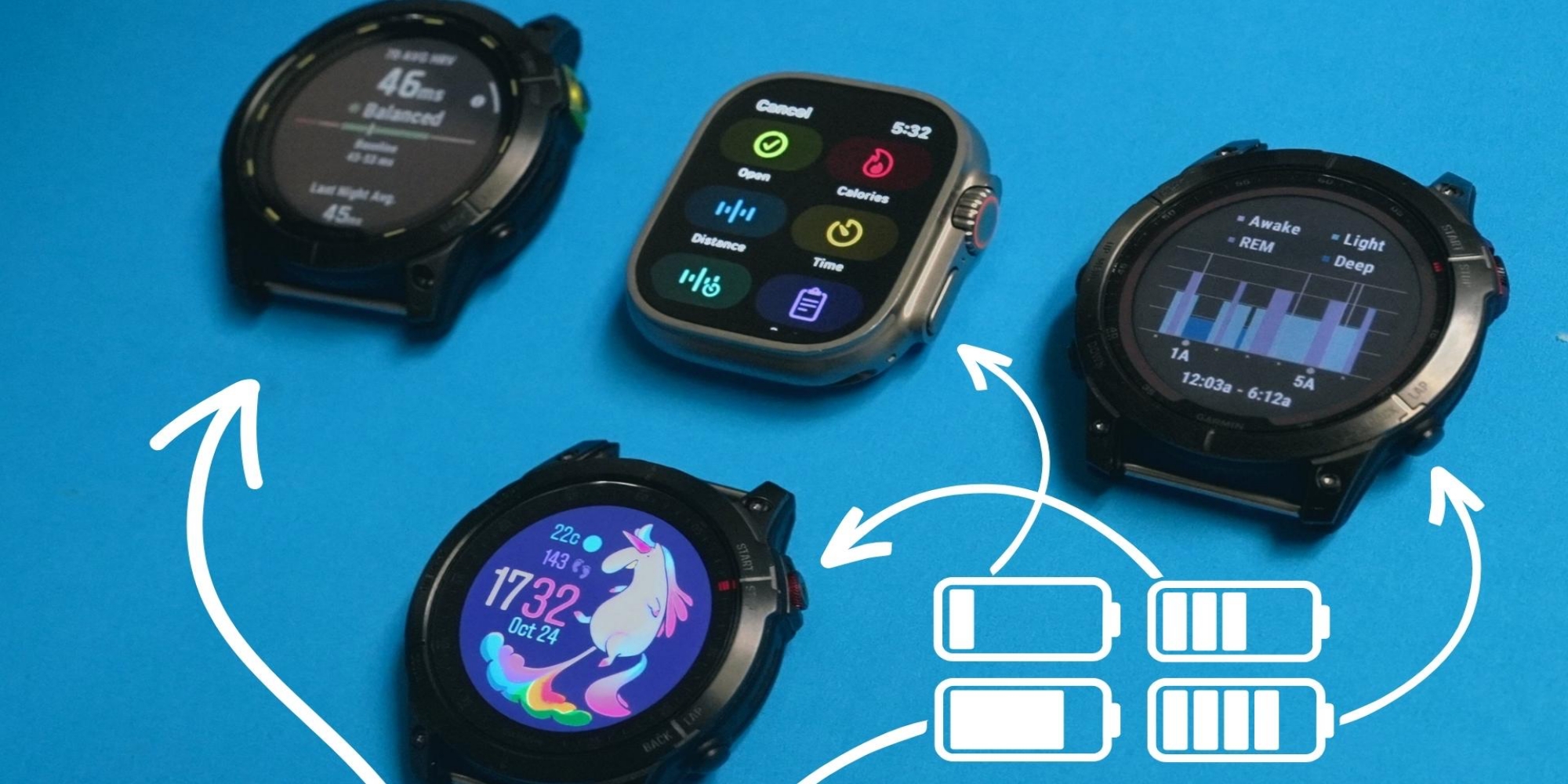
Choose Garmin for sports, battery, and navigation. Choose Apple for apps, calls, and smartwatch experience.
Key Takeaways for Finding Your Perfect Garmin Watch
No single Garmin does everything, but every model excels in its niche. The Forerunner series leads for runners, with the 55 perfect for beginners and the 570 or 965 for serious athletes. The Fenix and Epix lines dominate outdoor adventures, with the Fenix 8 Pro offering satellite SOS for remote explorers. The Venu 4 stands out for health tracking, featuring ECG and comprehensive wellness tools. Match your priorities, whether running, health, adventure, or style, and you’ll find a watch that lasts for years, not days. Consider your budget, wrist size, and must-have features before purchasing, and you’ll make a decision you’ll be happy with for the long run.
Frequently Asked Questions About Garmin Watches
Which Garmin watch is best for beginners?
The Forerunner 55 is the best Garmin watch for beginners. It offers reliable GPS tracking, basic health metrics, and free Garmin Coach training plans at an affordable price. The simple interface makes it easy to use without overwhelming new runners.
How long do Garmin watches typically last?
Garmin watches are built to last 5 to 7 years with proper care. The rugged construction, including MIL-STD-810H ratings on many models, ensures durability. Software updates typically continue for several years after purchase.
Is Garmin Connect app free?
Yes, Garmin Connect is completely free. It provides extensive features including workout tracking, sleep analysis, training plans, and social features. The optional Garmin Connect+ subscription ($70/year) adds AI insights but is not necessary for most users.
Which Garmin watch has the best battery life?
The Enduro 3 has the best battery life, lasting up to 120 hours in GPS mode and 60 days in smartwatch mode thanks to solar charging. The Fenix 8 Pro with solar also offers exceptional battery life, ranging from 27 to 145 days depending on usage.
Can Garmin watches track sleep?
Yes, all Garmin watches track sleep automatically. Advanced models like the Venu 4 provide detailed Sleep Scores, sleep stages, and HRV analysis. The Venu series offers the most comprehensive sleep tracking with Sleep Coach and Morning Report features.
Do Garmin watches work with iPhone and Android?
Garmin watches work with both iPhone and Android. The Garmin Connect app is available on both platforms, and most smart features like notifications, Garmin Pay, and music control function identically across operating systems.