If you’ve ever taken off your automatic watch after a long day, only to find it stopped the next morning, you understand the frustration of this common scenario. This leads to the essential question: how long can an automatic watch last without movement? The answer determines not just how long your timepiece keeps ticking, but also what happens when it stops and how to ensure it serves you for decades. Understanding the power reserve, risks of inactivity, and proper maintenance transforms a stopped watch from a problem into a manageable situation.
This comprehensive guide covers exactly how long automatic watches run without motion, what occurs when they stop, proper storage techniques, and critical maintenance steps. Whether you rotate multiple timepieces or store a watch for years, you’ll learn how to keep your automatic watch running like new.
Power Reserve Duration for Automatic Watches
The power reserve represents the amount of time your automatic watch continues running after being removed from your wrist. This duration varies significantly based on the movement’s engineering, current condition, and how fully wound the watch was when you stopped wearing it.
Standard Power Reserve Ranges
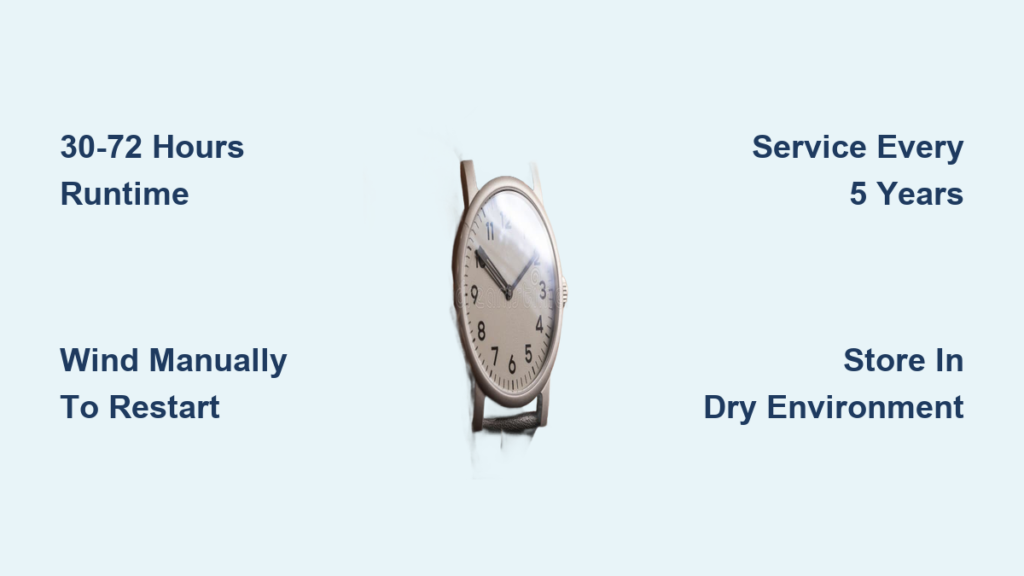
Most automatic watches will keep running for 30 to 72 hours without any motion when fully wound. Here’s what to expect across different quality tiers:
- Entry-level models typically provide 34 to 44 hours of runtime
- Mid-range and luxury watches offer 38 to 70 hours
- High-performance calibers can reach 72 to 120 hours
A fully wound watch hits the upper end of its range, while one taken off with partial wind may stop much sooner. Always wind your watch manually before extended storage to maximize idle time.
What Determines Power Reserve Length
Several factors influence how long your automatic watch runs without movement:
- Mainspring quality: Larger springs made from advanced alloys store more energy and resist fatigue over time
- Escapement efficiency: High-performance designs waste less energy, extending runtime significantly
- Friction levels: Well-lubricated movements with low-friction components run longer and more smoothly
- Complications present: Date, chronograph, or moon phase functions consume extra power, shortening the reserve
- Movement age: Dried oils or worn gears reduce efficiency, even when the watch appears visually fine
Popular Movement Power Reserve Examples

| Movement | Power Reserve |
|---|---|
| Rolex Caliber 3235 | ~48 hours |
| Omega Co-Axial 8800 | 60-72 hours |
| Seiko 6R35 | ~70 hours |
| Tudor MT5601 | ~70 hours |
| Oris Calibre 400 | 120 hours |
| ETA 2824-2 | 38-42 hours |
These figures assume the watch was fully wound and remains in good working order. Age and lack of servicing can reduce actual performance by 10-15%.
What Happens When Your Automatic Watch Stops
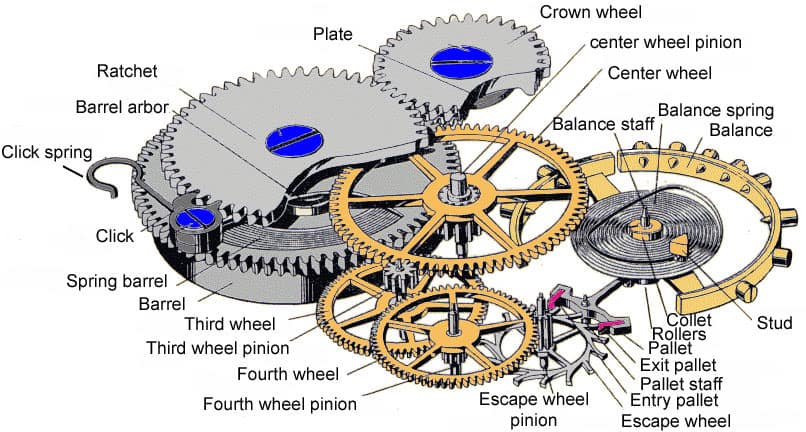
When the mainspring finally runs down, your watch stops. This is completely normal behavior, not a malfunction or sign that something is broken.
Immediate Effects of Watch Inactivity
- The balance wheel halts completely, ending all timekeeping
- The escapement locks, freezing the entire gear train in place
- All hands and complications stop moving
- The movement enters a rest state where no damage occurs
Stopping does not harm the movement in any way. Mechanical watches are specifically designed to pause safely and resume operation when wound again.
How to Restart a Stopped Watch
Follow these steps to bring your watch back to life:
- Manually wind the crown by turning it clockwise 20-30 times until you feel resistance
- Secure the crown by pushing it in fully or screwing it down to maintain water resistance
- Set the time and date, avoiding adjustment between 9 PM and 3 AM to prevent gear damage
- Wear the watch normally or place it on a winder to keep it wound
- Monitor accuracy over 2-3 days; deviations exceeding 10 seconds daily suggest service is needed
Some watches run slightly fast or slow after long storage, but this typically stabilizes with regular wear.
Long-Term Risks of Not Wearing Your Automatic Watch
While short breaks from wearing your watch are harmless, months or even years of inactivity introduce genuine risks that threaten the movement’s health, even when the watch sits unused.
Lubricants Degrade Over Time
Synthetic oils used in watch movements degrade within 3-5 years, even without motion. This creates several problems:
- Dry pivots increase friction on delicate internal parts
- Congealed oils form sticky residues that impede smooth movement
- First start-up after years of inactivity can cause accelerated wear on components
The watchmaker insight is clear: it’s not wear that kills watches, it’s loss of lubrication.
Seals and Gaskets Deteriorate
Rubber gaskets dry out, crack, and shrink when not worn regularly. This leads to:
- Loss of water resistance, increasing moisture risk
- Humidity causing fogging under the crystal
- Internal rust forming on gears and movement plates
- Contaminated lubricants affecting component health
Additional Long-Term Concerns
The rotor may stiffen from lack of motion, reducing winding efficiency when you finally wear the watch again. Perpetual calendars and moon phases require precise resetting, and mistakes during this process can damage delicate mechanisms. If left fully wound for decades, the mainspring may develop a permanent bend that reduces elasticity and power output, though modern alloys make this increasingly rare.
How Watch Winders Affect Watch Longevity
A watch winder keeps automatic watches wound during storage by rotating them periodically, simulating wrist motion.
When a Winder Makes Sense
Watch winders prove beneficial in these situations:
- Complex watches with perpetual calendars or moon phases stay properly set
- Infrequently worn pieces remain ready to wear at any moment
- Multiple watch collections reduce constant resetting
- Lubricant distribution keeps oils circulating throughout the movement
Winders work best for high-value or complicated watches worn less than once monthly.
Potential Downsides to Consider
- Unnecessary wear accumulates from added micro-cycles to the movement over decades
- Poorly programmed winders can stress the system through overwinding
- No substitute exists for professional service; winders don’t clean or re-lubricate
- Continuous energy use provides limited benefit for simple time-only watches
Winder Best Practices
Choose programmable models with adjustable turns per day, setting rotation to 650-900 TPD in intermittent cycles. Match rotation direction to your specific movement requirements. Inspect the watch every six months rather than assuming everything remains fine. For simple three-hand watches, manual winding every few weeks often proves better than constant winder use.
Proper Storage Methods for Automatic Watche
Proper storage prevents damage during extended idle periods and preserves your investment.
Ideal Storage Environment
Maintain these conditions for optimal preservation:
- Temperature between 15-25°C (59-77°F)
- Humidity below 50% relative humidity
- No exposure to direct sunlight, heat sources, or cold drafts
Correct Storage Positioning
Store the watch crown-up or on its side to reduce stress on the crown mechanism. Rotate the position monthly to prevent lubricants from pooling in one area.
Protection and Maintenance During Storage
Use a soft pouch, watch box, or case to prevent dust and scratches. Add silica gel packets or anti-tarnish strips to absorb excess moisture. Keep the watch at least six inches away from phones, speakers, and electronics to avoid magnetic field exposure.
Essential Storage Habits
Always secure the crown fully, whether pushed in or screwed down, to maintain seal integrity. For watches not on a winder, wind manually every 3-4 weeks with 10-15 turns and let it run for a few hours to circulate lubricants. For decades-long storage, store the watch unwound to reduce mainspring stress.
Essential Maintenance for Long-Term Watch Health
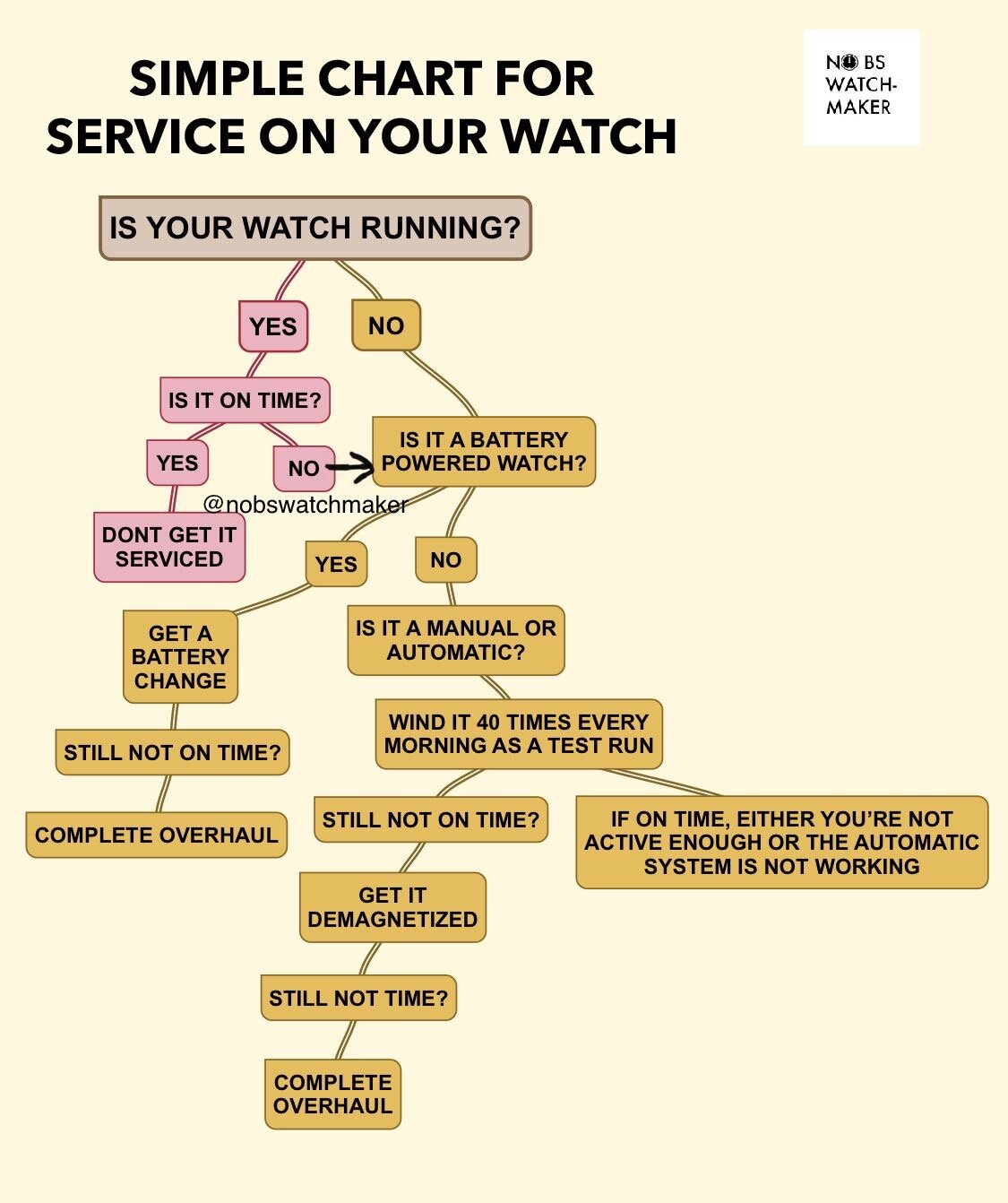
How long your watch lasts depends far less on how much you wear it and far more on consistent maintenance.
Service Intervals You Must Follow
| Service Type | Frequency | What’s Included |
|---|---|---|
| Check-up | Every 3-5 years | Inspection, cleaning, water resistance test, oil top-up |
| Full Overhaul | Every 7-10 years | Full disassembly, cleaning, re-lubrication, part replacement, regulation |
Why Infrequent Use Demands More Care
Daily wearers benefit from natural oil circulation throughout the movement. Rarely worn watches miss this benefit entirely, making scheduled service even more critical. A $500 Seiko with regular service can easily outlast a neglected $10,000 Rolex. The rule is simple: if it’s been over five years since the last service, schedule a check-up regardless of how much you’ve worn it.
Steps to Restart a Long-Idle Watch
For watches stored for more than 2-3 years, follow this cautious restart protocol to avoid damaging degraded components.
Cautious Restart Process
- Inspect visually for fogging, rust, or stuck hands; if moisture is present, do not wind and seek a watchmaker immediately
- Manually wind the crown gently, turning 20-30 times clockwise and stopping if resistance feels abnormal
- Set time and date, avoiding the date change window near midnight
- Wear the watch or place on a winder and let it run for 24-48 hours while monitoring for smooth operation
- Track accuracy daily for 3-5 days; deviations exceeding 10 seconds daily signal the need for professional service
- Schedule professional service, especially if the last service was more than five years ago
Warning: Running a degraded movement without servicing can damage the balance staff or gear train, leading to costly repairs.
Frequently Asked Questions About Automatic Watch Lifespan
Can you overwind an automatic watch?
No. Modern automatic watches feature a slipping clutch that disengages when fully wound. Manual winding beyond 30 turns is unnecessary but not harmful under normal conditions.
Do automatic watches need batteries?
No. Automatic watches are mechanically powered through motion and manual winding. Only quartz watches require battery replacement.
How often should I service my automatic watch?
Schedule a check-up every 3-5 years and a full service every 7-10 years. This timeframe is based on age, not wear, meaning even unworn watches require maintenance.
What should I do if my automatic watch stops?
Manually wind the crown 20-30 times, secure the crown properly, then wear the watch or place it on a winder. If the watch doesn’t resume operation, seek professional service.
Are automatic watches less accurate than quartz?
Yes. Quartz watches typically deviate by ±15 seconds per month, while automatic watches vary by ±5 to ±30 seconds per day. COSC-certified chronometers achieve ±4 to +6 seconds daily.
Can an automatic watch last a lifetime?
Absolutely. With proper care and maintenance, an automatic watch can last your entire life and be passed down as a family heirloom for generations.
Key Takeaways for Maximizing Your Watch’s Lifespan
An automatic watch can sit idle for days to years without immediate harm, but longevity isn’t about avoiding use. It’s about smart maintenance and proper storage. The movement will stop when the power reserve depletes, but this is normal and expected behavior.
The critical points to remember are straightforward. Most automatic watches run 30-72 hours without movement, with premium models reaching 120 hours. Stopping doesn’t damage the movement, but lubricant degradation does, even in unworn watches. Store your watch in dry, stable conditions away from magnets with the crown secured. Service every 3-5 years for check-ups and every 7-10 years for full overhauls, regardless of wear frequency.
A watch’s lifespan is 90% maintenance and 10% usage. With proper care, your automatic watch can last 50+ years, with many examples exceeding 100 years when properly maintained. The movement may stop, but with consistent care, it will keep ticking for generations to come.