If you’re wondering how long an Eco-Drive watch lasts, the answer might surprise you: these timepieces can easily run for 30 to 40 years or more. Unlike traditional quartz watches that die when their battery dies, Citizen Eco-Drive watches harness light to power themselves indefinitely. Introduced in 1976 and refined over four decades, this solar technology has proven itself in real-world use, with many 1990s models still functioning perfectly today.
This guide breaks down exactly what makes Eco-Drive watches last so long, which components may eventually need servicing, and how to maximize your watch’s lifespan. You’ll learn what to expect over decades of ownership and why this technology represents a genuine long-term investment.
Solar Cell Lifespan: Built to Last Forever
The heart of every Eco-Drive watch is its photovoltaic cell, hidden beneath the dial. This component converts any light, whether sunlight or indoor lighting, into electrical energy. Unlike batteries that deplete, the solar cell experiences no chemical breakdown and loses no measurable efficiency over time.
Why the Solar Cell Never Wears Out
Citizen designs the photovoltaic cell to function for the entire life of the watch. There are no moving parts, no chemical reactions that degrade, and no stress on the materials. Watches from the 1980s and 1990s continue generating power today without any loss in charging capability. The only way this component fails is through physical damage, such as a cracked crystal that blocks light or severe corrosion from moisture ingress.
Light Sources That Keep Your Watch Running
Eco-Drive doesn’t require direct sunlight to function. The technology works with any ambient light source. Direct sunlight provides the fastest charging, reaching a full charge in 3-4 hours. Indoor lighting near windows offers moderate charging over 10-12 hours. Even standard office fluorescent lighting maintains sufficient charge during daily wear. You don’t need to take any special action; normal wear in typical environments keeps your capacitor topped off.
Capacitor Lifespan: The Only Component That Needs Attention
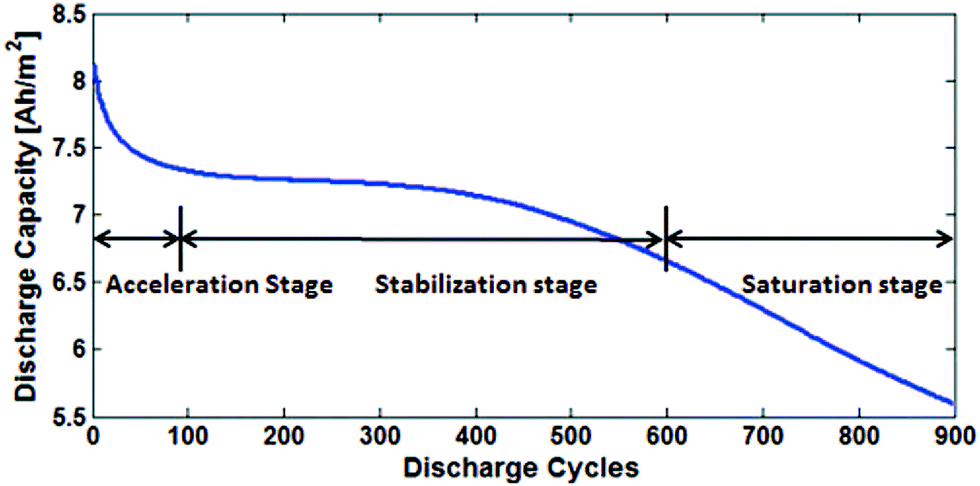
While the solar cell lasts forever, the rechargeable lithium-ion capacitor has a finite but remarkably long lifespan. This storage unit is the only component likely to require replacement during your watch’s lifetime.
Expected Service Life: 20+ Years
The capacitor stores energy collected by the solar cell and is rated for over 20 years of charge cycles under normal conditions. Most users won’t notice any issues until after 15-20 years of regular use. Degradation happens gradually, with the capacitor holding less charge over time, which leads to frequent hibernation or difficulty restarting the watch.
Signs of Capacitor Degradation
Watch for these indicators that your capacitor is reaching the end of its service life. The watch stops despite adequate light exposure. It fails to wake from hibernation mode even after charging. The second hand jumps persistently after recharging. The watch needs constant light to stay running. These symptoms mean the capacitor can no longer hold sufficient charge, not that your watch is dead.
Replacement Process and Cost
When the capacitor eventually degrades, replacement is straightforward and worthwhile. A qualified watchmaker can swap the unit for $30-100 depending on your model and location. Once replaced, your watch regains full functionality and can run another 20+ years. This service is routine and doesn’t affect water resistance or movement integrity.
Quartz Movement: Engineered for Decades

The quartz movement inside your Eco-Drive is a high-accuracy timekeeping system with no inherent lifespan limit. These calibers maintain ±15 seconds per month accuracy for decades without any drift or slowdown.
Why Movements Outlast Their Owners
Quartz movements draw minimal power and experience almost no mechanical wear. The failure rate is extremely low, with most issues stemming from external factors like moisture ingress, physical shock, or contamination from poor servicing. Under normal use, the movement will outlast its owner. You don’t need routine oiling or cleaning unless the watch has been exposed to water damage or heavy impact.
When Movement Service Makes Sense
After 15+ years of heavy use, you might consider professional servicing. This can include cleaning internal components, re-lubricating gears, and adjusting timing. However, most owners never need this step. The movement is simply not a limiting factor in your watch’s longevity.
Power Reserve: 6-8 Months Without Light
Even without any light exposure, an Eco-Drive keeps running. This proves critical for storage, travel, or occasional wear.
Runtime on a Full Charge
Most models run for 6 months on a full charge. Promaster Land and Sky models achieve 6-8 months thanks to high-capacity calibers. Aqualand models run for 6 months despite extra power draw from depth sensors. Satellite Wave GPS models run for 6 months in standby mode. This means you can store your watch in a drawer for half a year and pick it up fully functional.
Understanding Hibernation Mode
When the capacitor fully depletes, the watch enters hibernation. The hands stop moving to conserve energy while the internal clock continues tracking time. Upon recharging, the hands automatically jump to the correct current time. This is a protective feature, not a malfunction. Many users mistake hibernation for death, but placing the watch under light for 24 hours usually restores full operation.
Low Charge Warning: The Two-Second Jump
Before entering hibernation, your Eco-Drive provides a clear warning signal. The second hand starts jumping every two seconds instead of the normal one-second tick.
What This Signal Means
This deliberate alert indicates the capacitor is running low on charge. Timekeeping remains accurate, but your watch needs light exposure. This is not a fault; it’s a built-in feature designed to give you advance warning.
How to Respond to the Warning
Place your watch face-up in direct sunlight for 3-4 hours for the fastest recharge. Alternatively, expose it to bright indoor light near a window for 10-12 hours. Avoid shaded areas or dim rooms during charging. After sufficient exposure, the second hand returns to normal ticking. This cycle can repeat indefinitely without causing any damage.
Charging Guidelines by Light Source
Not all light charges your watch equally. Charging speed depends on intensity and proximity to the light source.
Light Source Comparison
Direct sunlight provides the fastest charging, reaching meaningful recharge in 3-4 hours that translates to several months of reserve. Bright indoor light near a window offers moderate charging in 10-12 hours. LED desk lamps at close range provide moderate charging in 8-10 hours. Standard office fluorescent lighting charges slowly, requiring several days of continuous exposure. Normal indoor ambient light during daily wear maintains sufficient charge without any additional action.
Reviving a Dormant Watch
If your Eco-Drive has been stored for months without light, place it on a sunny windowsill for 24 hours. Alternatively, expose it to bright indoor light for 48 hours, keeping the dial facing upward. Most models recover fully under these conditions.
Real-World Longevity: 30+ Years Confirmed

User reports consistently confirm Eco-Drive’s exceptional durability across decades. Many owners report watches over 30 years old still functioning perfectly. A watch stored in a drawer for decades was revived after two days of sunlight exposure and resumed perfect operation. Daily wear through swimming, gardening, and outdoor activities hasn’t stopped watches over 20 years old. Early 2000s models continue running for numerous owners after 15+ years.
Why Some Watches Fail Early
Failures are rare and usually stem from neglect rather than design flaws. Prolonged storage in complete darkness causes deep discharge that damages the capacitor permanently. Degraded gaskets allow moisture ingress that corrodes internal components. Leaving the watch unused for years without charging increases hibernation cycles that stress the system. One user reported leaving a watch in darkness for two years, which ruined the capacitor. However, even in this case, replacement restored full function.
Maintenance That Extends Your Watch’s Life
Eco-Drive requires minimal upkeep, but a few key services ensure decades of reliable operation.
Gasket Replacement Every 3-5 Years
Water resistance depends on rubber seals at the case back and crown. These degrade over time, risking moisture damage. Replace gaskets every 3-5 years, especially if you swim or shower with the watch or live in humid climates. Watch for fog under the crystal, which indicates seal failure. This service costs $35-70 and prevents internal corrosion, which is the real threat to long-term function.
Capacitor Check After 15-20 Years
After 15-20 years, have a technician test your capacitor’s charge retention and measure voltage output. Consider preventive replacement if capacity falls below 70%. This avoids sudden failure and ensures continued reliable operation.
Full Movement Service (Optional)
After 15+ years of heavy use, consider internal cleaning, gear lubrication, and timekeeping calibration. This isn’t required for accuracy but ensures peak performance if your watch has seen rough conditions.
Common Myths About Eco-Drive Durability
Several misconceptions cloud Eco-Drive’s true potential. The myth that solar cells wear out is false. The photovoltaic cell doesn’t degrade under normal use and is designed to last the watch’s lifetime. The myth that batteries need replacing every few years is also false. There’s no disposable battery; the capacitor lasts 20+ years and only gets replaced if degraded. Some believe old models can’t be repaired, but capacitors are widely available and most models remain serviceable. The myth that Eco-Drive can’t be serviced is false. Capacitors, gaskets, crowns, and seals are all replaceable, and movements can be serviced by professionals.
Cost and Environmental Benefits
Eco-Drive saves money and reduces waste over its lifetime.
10-Year Cost Comparison
Standard quartz watches require 3-5 battery replacements costing £30-100 over ten years. Eco-Drive eliminates this entirely. Both require gasket replacement every 3-5 years at £60-120 total. Capacitor replacement isn’t expected within the first ten years of Eco-Drive ownership. The savings of £30-100 ($35-115) in battery costs alone represent pure savings.
Environmental Advantages
Each Eco-Drive eliminates 3-5 disposable batteries per decade from landfills. This reduces hazardous waste including mercury and lithium. The sustainable design aligns with circular economy principles, encouraging repair over replacement.
Frequently Asked Questions About Eco-Drive Watch Lifespan
Does the solar cell ever need replacing?
No. The photovoltaic solar cell is designed to last the lifetime of the watch. It doesn’t degrade under normal use and isn’t a serviceable component. Only the capacitor may require replacement after 20+ years.
My second hand is jumping every two seconds. Is it broken?
No. This is a low-charge warning signal. The watch functions normally but needs light exposure. Place it in direct sunlight for 3-4 hours or near a bright window for a full day. The second hand returns to one-second ticks once recharged.
How long can an Eco-Drive run in total darkness?
Most models run for 6 months on a full charge. Some Promaster models achieve 8 months. After depletion, the watch enters hibernation while internal timekeeping continues. Hands automatically correct upon recharging.
Can indoor lighting charge an Eco-Drive watch?
Yes. Fluorescent, LED, and incandescent indoor lights all provide sufficient photons to charge the capacitor, though slower than sunlight. Daily wear in typical office or home lighting maintains adequate charge.
Can the capacitor be replaced?
Yes. After 20+ years, when capacity diminishes, a qualified watchmaker can replace the rechargeable capacitor. This restores full functionality and extends the watch’s life for another 20+ years.
Are older Eco-Drive watches still reliable?
Yes. Watches from the 1990s and early 2000s are known to still operate today. The technology has proven longevity, with many units functioning without any service.
Final Thoughts on Eco-Drive Longevity
An Eco-Drive watch bought today can reasonably be expected to function for 30 to 40 years or more. The solar cell lasts forever, the quartz movement has no wear-out mechanism, and the capacitor needs replacement only after 20+ years of use. With basic care including gasket replacement every 3-5 years and a single capacitor service, your Eco-Drive can become a family heirloom passed down through generations. This isn’t just a convenient feature; it’s a proven engineering solution that has demonstrably outperformed traditional quartz watches over four decades. Buy once, wear forever.