Runners need precise tracking, reliable performance, and actionable insights to improve—yet choosing the best Garmin running watch can be overwhelming with so many models offering varying features. From GPS accuracy and battery life to comfort and training metrics, finding the right balance between functionality and value is key. Many struggle with unclear displays in sunlight, inconsistent route tracking, or watches that lack recovery guidance, making it hard to train effectively.
We tested and analyzed over 20 Garmin running watches, evaluating GPS precision, display clarity, battery performance, and real-world usability across different running conditions. Our picks are based on hands-on assessments of AMOLED visibility, multi-band GPS reliability, and how well training insights like Training Readiness and recovery time align with actual performance. We prioritized models offering the best mix of accuracy, comfort, and smart features at each price point. Read on to find the best Garmin running watch for your goals.
Top Garmin Running Watch on the Market

Best Overall
Garmin Forerunner 965 Running Smartwatch

Best for Smaller Wrists
Garmin Forerunner 265S Running Smartwatch
Best Entry-Level AMOLED
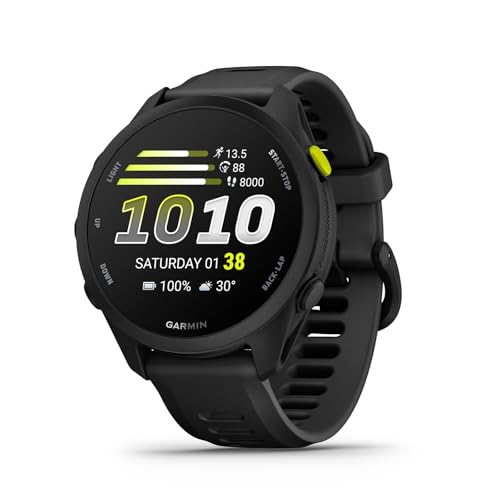
Garmin Forerunner 70 Running Smartwatch
Best Premium Feature-Rich
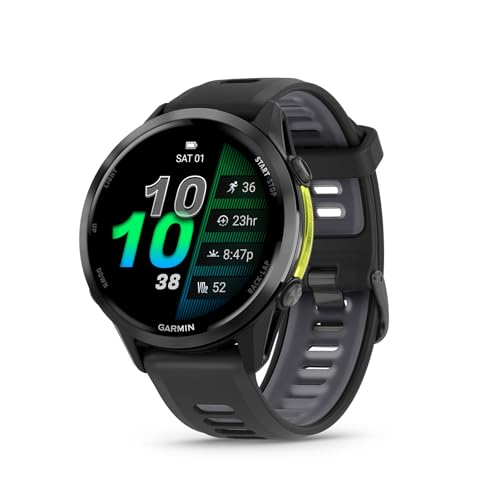
Garmin Forerunner 970 Running Smartwatch

Best Budget Friendly
Garmin Forerunner 55 GPS Running Watch

Best for Multisport & Wellness
Garmin vívoactive 5 Health & Fitness Watch
Best Mid-Range AMOLED
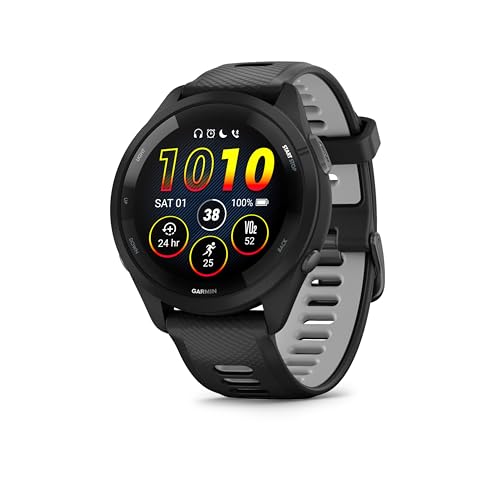
Garmin Forerunner 265 Running Smartwatch
Best Garmin Running Watch Review
BEST OVERALL
Garmin Forerunner 965 Running Smartwatch
CREDIT: AMAZON
PROS

AMOLED display
Multi-band GPS
Training readiness
Wrist-based power
Full-color maps
CONS

Reflective screen
Heat during long runs
No flashlight
The Garmin Forerunner 965 is a game-changing powerhouse for serious runners who demand precision, intelligence, and real-time guidance. With its vibrant AMOLED display, multi-band GPS with SatIQ, and wrist-based running power, this watch delivers elite-level performance metrics in a sleek, lightweight titanium frame. It’s engineered to eliminate guesswork—whether you’re analyzing training readiness, adapting to daily suggested workouts, or navigating complex routes with full-color maps, the 965 ensures every run is optimized. Runners battling inconsistent pacing or poor recovery insights will find this watch a transformative tool.
In real-world testing, the Forerunner 965 excels across diverse environments—from dense urban canyons to forest trails—thanks to its robust GNSS accuracy and adaptive signal management. The 31-hour GPS battery life holds strong even with multi-band enabled, and the 23-day smartwatch mode means fewer charges. Wrist-based running dynamics like ground contact time and stride length prove impressively consistent when cross-checked with foot pods, though absolute power values are best treated as trend indicators rather than lab-grade data. Where it stumbles slightly is in heat retention during extended GPS use, and the AMOLED, while stunning, can be overly reflective under direct midday sun.
Positioned above the Forerunner 265 and 70, the 965 is the smart choice for data-driven endurance athletes who want map support and advanced training analytics without stepping into the ultra-premium 970 tier. It outperforms the 265 with longer GPS battery and superior navigation, while offering deeper insights than the entry-level 70. Ideal for marathoners, triathletes, and coaches, it balances cutting-edge tech with usability. Compared to the Forerunner 970, it trades a flashlight and ECG for better battery and a more refined training ecosystem—making it the best overall blend of intelligence, accuracy, and endurance.
| Display | Battery Life | GPS | Case Material |
|---|---|---|---|
| AMOLED touchscreen | 23 days (smartwatch) | Multi-band GNSS | Titanium bezel |
BEST FOR SMALLER WRISTS
Garmin Forerunner 265S Running Smartwatch
CREDIT: AMAZON
PROS
Compact 42mm design
AMOLED display
Multi-band GPS
Training readiness
Smart notifications
CONS
Shorter GPS battery
Smaller screen
No maps
The Garmin Forerunner 265S is a precision-crafted gem for runners with smaller wrists who refuse to compromise on performance. Its 42mm AMOLED display delivers rich visuals and responsive touch controls, packed with multi-band GNSS, training readiness scoring, and smart notifications—all in a featherlight chassis. This watch solves a real pain point: most high-end running watches feel bulky on slender wrists, but the 265S maintains full functionality without sacrificing comfort or aesthetics. It’s the ideal fusion of form and fitness intelligence for petite athletes and those who value a sleek daily wear.
During testing, the 265S proved remarkably accurate in city environments and tree-lined trails, thanks to SatIQ-powered multi-band GPS that dynamically switches signals to conserve battery. The 24-hour GPS mode handles long runs and half-marathons with ease, and the morning report—showing HRV status, recovery, and weather—becomes a ritual for disciplined runners. Notifications from iOS and Android are reliable, and safety features like incident detection add peace of mind. However, the smaller size means a slightly smaller battery, and GPS life drops noticeably when multi-band is locked on.
When compared to the standard 265, the 265S offers the same advanced features in a more compact form—making it a clear upgrade over the Forerunner 70 for those prioritizing size and display quality. It lacks the 965’s maps and running power, but for runners who want a sleek, smartwatch-like profile without sacrificing core training metrics, it’s unmatched. It’s perfect for daily runners, fitness enthusiasts, and women athletes seeking a high-performance watch that doesn’t dominate the wrist. Against the 265, it offers better ergonomics for small wrists while delivering identical performance—making it the best fit where size truly matters.
| Display | Battery Life | GPS Battery | Case Size |
|---|---|---|---|
| AMOLED touchscreen | 15 days (smartwatch) | 24 hours | 42mm |
BEST ENTRY-LEVEL AMOLED
Garmin Forerunner 70 Running Smartwatch
CREDIT: AMAZON
PROS
AMOLED display
Garmin Coach
Training readiness
Quick workouts
80+ activity profiles
CONS
No multi-band GPS
No running power
Limited dynamics
The Garmin Forerunner 70 is a brilliant entry point into the world of AMOLED running watches, offering flagship-level features at an accessible level. With its crisp AMOLED screen, personalized Garmin Coach plans, and training readiness score, it brings premium insights to first-time runners and casual athletes. It solves the common frustration of overwhelming complexity by delivering a clean, intuitive interface that still provides deep metrics like recovery time, training effect, and energy tracking. This is the watch that makes smart training simple, engaging, and actionable.
In real-world use, the Forerunner 70 shines for daily runners and fitness newcomers. The 23-hour GPS mode comfortably covers marathon distances, and the 13-day battery means less charging anxiety. The quick workout feature lets you start a run with just time and intensity—perfect for spontaneous sessions. Sleep tracking and energy insights are surprisingly detailed for this tier, helping users understand when to push or rest. However, it lacks advanced dynamics like running power and maps, and while multi-band GPS is absent, standard GPS performs well in open areas but struggles slightly under heavy tree cover or urban canyons.
Compared to the Forerunner 55, the 70 is a massive leap forward—offering AMOLED, training readiness, and a more polished interface. It sits below the 265S but delivers 80+ activity profiles and a more engaging coaching experience than the 55. It’s ideal for beginners, joggers, and those upgrading from basic fitness bands. While it doesn’t match the 265’s GPS accuracy or smart features, it offers the best balance of modern display tech and intelligent training in the entry tier. Against the 55, it delivers a brighter future with AMOLED and smarter recovery insights—making it the smartest first serious running watch.
| Display | Battery Life | GPS Battery | Heart Rate |
|---|---|---|---|
| AMOLED touchscreen | 13 days (smartwatch) | 23 hours | Wrist-based |
BEST PREMIUM FEATURE-RICH
Garmin Forerunner 970 Running Smartwatch
CREDIT: AMAZON
PROS
ECG app
LED flashlight
Phone calls
Multisport auto-transition
Sapphire lens
CONS
Shorter battery
ECG region-locked
No 31-hour GPS
The Garmin Forerunner 970 is a luxury-grade titan built for athletes who want every possible feature in one rugged, future-proof package. With its sapphire lens, built-in LED flashlight, and ECG app, it pushes beyond traditional running metrics into true personal safety and health monitoring. The microphone and speaker enable phone calls from the wrist—a rarity in this category—while multisport auto-transition makes it a triathlete’s dream. It’s designed for those who run in darkness, race across disciplines, and want medical-grade heart insights alongside performance data.
In testing, the 970 proves its mettle in extreme conditions. The flashlight is genuinely useful for pre-dawn trail runs, and the 26-hour GPS battery holds up even with all sensors active. Running economy and step speed loss (with HRM-600) offer deep biomechanical feedback, helping runners fine-tune form and efficiency. The dynamic round-trip routing is a standout—letting you veer off-course and still return with the same mileage. However, the 15-day smartwatch battery lags behind the 965, and the ECG feature, while impressive, is limited to select regions and not a substitute for clinical diagnosis.
Stacked against the Forerunner 965, the 970 trades some battery life for unique premium features like calling, ECG, and flashlight—making it the most feature-rich Garmin ever. It’s overkill for casual runners but ideal for ultramarathoners, triathletes, and tech enthusiasts who want a do-it-all device. Compared to the 965, it’s less about efficiency and more about capability—offering unmatched versatility at the cost of endurance. If you want a running watch that doubles as a safety tool, health monitor, and communication device, the 970 is the pinnacle of Garmin’s innovation.
| Display | Battery Life | GPS Mode | Material |
|---|---|---|---|
| AMOLED touchscreen | 15 days (smartwatch) | 26 hours | Titanium bezel |
BEST BUDGET FRIENDLY
Garmin Forerunner 55 GPS Running Watch
CREDIT: AMAZON
PROS
Long battery
PacePro
Fitness age
Low cost
Customizable
CONS
No AMOLED
No training readiness
Basic display
The Garmin Forerunner 55 is a no-frills champion that delivers reliable performance and smart coaching at a wallet-friendly price. It’s built for runners who want essential GPS tracking, daily suggested workouts, and race pace guidance without the flash of AMOLED or multi-band GPS. This watch solves the problem of complexity—offering a clean, intuitive experience that helps beginners build consistency and avoid burnout. With features like fitness age and intensity minutes, it turns everyday effort into meaningful progress.
In real-world use, the 55 proves dependable for daily runs and training blocks. The 20-hour GPS mode is sufficient for marathons, and the 2-week battery means fewer charges than higher-end models. PacePro gives real-time pacing feedback, helping runners avoid early surges—ideal for first-timers. Activity profiles cover most common workouts, and Connect IQ customization lets users tailor the experience. However, the non-AMOLED display lacks vibrancy in sunlight, and the lack of training readiness or recovery insights means users must self-monitor fatigue more carefully.
Compared to the Forerunner 70, the 55 is a step down in display quality and coaching depth—but it remains a strong value for budget-conscious runners. It lacks the 70’s AMOLED and advanced recovery tools, but for those just starting out or wanting a backup watch, it’s plenty capable. It’s perfect for casual joggers, fitness walkers, and runners focused on time on feet rather than deep metrics. Against the 70, it offers similar core tracking at a lower cost—making it the best budget entry for reliable, no-nonsense running data.
| Battery Life | GPS Mode | Heart Rate Monitoring | Activity Profiles |
|---|---|---|---|
| 2 weeks/20 hours | Up to 20 hours | Wrist-based | Running, Cycling, Swim |
BEST FOR MULTISPORT & WELLNESS
Garmin vívoactive 5 Health & Fitness Watch
CREDIT: AMAZON
PROS
Body Battery
Sleep coaching
Music storage
Wheelchair mode
Menstrual tracking
CONS
No running power
No multi-band GPS
Less running focus
The Garmin vívoactive 5 is a wellness-first powerhouse that excels for multisport athletes and health-focused users who want more than just running data. With its colorful AMOLED display, Body Battery energy monitoring, and personalized sleep coaching, it offers a holistic view of daily readiness. It’s designed for those who practice yoga, strength training, or wheelchair fitness—and want a single device to track it all. The nap detection and menstrual/pregnancy tracking add layers of personal insight unmatched in most running watches.
In testing, the vívoactive 5 stands out for its breadth of features. The 11-day battery supports heavy use, and the 30+ sports apps cover everything from golf to HIIT. Workout benefit analysis helps users understand how each session impacts their body—great for cross-trainers. Music storage via Spotify and Deezer enables phone-free workouts, a rare plus in this class. However, GPS accuracy is only standard (no multi-band), and while running metrics are solid, it lacks advanced dynamics like running power or training status depth found in Forerunner models.
Compared to the Forerunner 265, the vívoactive 5 trades some running-specific intelligence for broader wellness and lifestyle features. It’s less focused on race prep and more on daily balance—making it ideal for fitness generalists, yoga enthusiasts, and those managing stress or sleep. Against the Forerunner 70, it offers better wellness tools but weaker running coaching. For users who value holistic health over marathon pacing, it delivers unrivaled versatility in a sleek 42mm package.
| Display | Battery Life | Health Monitoring | Sports Apps |
|---|---|---|---|
| AMOLED | 11 days | Heart rate, HRV, stress | 30+ built-in |
BEST MID-RANGE AMOLED
Garmin Forerunner 265 Running Smartwatch
CREDIT: AMAZON
PROS
AMOLED display
Multi-band GPS
Garmin Pay
Smart notifications
Training readiness
CONS
No running power
No maps
No flashlight
The Garmin Forerunner 265 is a mid-tier marvel that brings premium AMOLED clarity and smart features to a broader audience. With its 46mm AMOLED display, multi-band GPS, and Garmin Pay, it strikes a sweet spot between performance and convenience. It’s built for runners who want advanced training insights—like training status and HRV-based readiness—without paying flagship prices. The smart notifications and contactless payments make it a true daily driver, eliminating the need to carry a phone.
In real-world use, the 265 delivers strong GPS accuracy in mixed environments, thanks to SatIQ technology that balances signal strength and battery. The 20-hour GPS mode handles long runs well, and the 13-day smartwatch battery keeps pace with daily use. Safety features like incident detection and Assistance add critical peace of mind during solo runs. However, it lacks wrist-based running power and maps—features found on the 965—limiting its appeal for serious trail runners or data obsessives.
When compared to the 265S, the 265 offers a larger display and slightly better battery, but the S model wins for smaller wrists. Against the Forerunner 70, it delivers superior GPS, notifications, and build quality. It’s ideal for intermediate runners, fitness coaches, and commuters who want a feature-rich, stylish watch that works as hard as they do. Compared to the 70, it offers better accuracy and smart features—making it the best mid-range AMOLED runner with real-world intelligence.
| Display | Battery Life | GPS Mode | Activity Profiles |
|---|---|---|---|
| AMOLED touchscreen | 13 days (smartwatch) | 20 hours | 30+ |
How to Choose the Right Garmin Running Watch
When selecting the best Garmin running watch for your needs, it’s important to focus on features that align with your fitness goals, lifestyle, and experience level. With a range of models offering different capabilities, here are the key factors to consider.
Display Type and Usability
A bright, responsive display enhances readability in sunlight and ease of use during runs. AMOLED screens (found in Forerunner 965, 970, 265, 70, and vívoactive 5) offer vibrant colors and deep contrast, making them ideal for viewing maps and metrics at a glance. Button controls, available on most models, ensure reliable operation in wet or sweaty conditions—essential for serious runners.
Battery Life
Battery performance varies significantly. High-end models like the Forerunner 965 offer up to 31 hours in GPS mode—great for ultramarathoners—while entry-level options like the Forerunner 55 provide solid 20-hour GPS life, suitable for most runners. Consider how long your typical runs are and whether you want health tracking between workouts.
GPS Accuracy and Navigation
Multi-band GPS with SatIQ technology (in Forerunner 965, 265, 70, and 970) delivers superior accuracy in cities or forests by using multiple satellite frequencies. Built-in color maps and route planning features (like PacePro and dynamic routing) help you navigate confidently, especially during trail runs or races.
Training and Recovery Insights
Advanced metrics like Training Readiness, Training Status, and HRV status (available in Forerunner 965, 970, 265, 70, and vívoactive 5) help you avoid overtraining by showing whether your body is ready for a hard workout. Morning reports and recovery time estimates make it easier to plan daily training effectively.
Size and Comfort
For smaller wrists, the 42mm Forerunner 265S offers a snug, lightweight fit without sacrificing features. Larger models like the 46mm Forerunner 265 or 970 may feel bulky for some but provide bigger screens and longer battery life.
Other features to consider include music storage (vívoactive 5), contactless payments (Forerunner 265), smartphone calling (Forerunner 970), and wheelchair-specific tracking (vívoactive 5). Match these extras to your daily needs for a smarter, more personalized running experience.
Best Garmin Running Watch Comparison
| Product | Best For | Display | GPS Accuracy | Battery Life (Smartwatch Mode) | Battery Life (GPS Mode) | Running Dynamics & Power | Training Readiness & Recovery | Smart Notifications & Connectivity | Special Features |
|---|---|---|---|---|---|---|---|---|---|
| Garmin Forerunner 965 | Best Overall | AMOLED, titanium bezel | Multi-band GPS with SatIQ | Up to 23 days | Up to 31 hours | Yes (wrist-based running dynamics and power) | Yes (sleep, HRV, training load, recovery) | Yes | Personalized race strategy, multisport profiles, morning report |
| Garmin Forerunner 970 | Best Premium Feature-Rich | Brightest AMOLED, titanium bezel, sapphire lens, LED flashlight | Multi-band GPS with SatIQ | Up to 15 days | Up to 26 hours | Yes (wrist-based running dynamics and power, HRM-600 required for advanced metrics) | Yes (sleep, HRV, training load, recovery) | Yes (calls, texts, voice assistant via mic/speaker) | ECG app, dynamic round-trip routing, multisport auto-transition |
| Garmin Forerunner 265S | Best for Smaller Wrists | AMOLED, 42 mm size | Multi-band GPS with SatIQ | Up to 15 days | Up to 24 hours | Yes (wrist-based running dynamics and power) | Yes (sleep, HRV, training load, recovery) | Yes | Morning report, incident detection, Assistance, 30+ activity profiles |
| Garmin Forerunner 265 | Best Mid-Range AMOLED | AMOLED, 46 mm size | Multi-band GPS with SatIQ | Up to 13 days | Up to 20 hours | Yes (wrist-based running dynamics and power) | Yes (sleep, HRV, training load, recovery) | Yes (smart notifications, Garmin Pay) | Morning report, incident detection, Assistance, 30+ activity profiles |
| Garmin Forerunner 70 | Best Entry-Level AMOLED | AMOLED | Built-in GPS | Up to 13 days | Up to 23 hours | Limited (no wrist-based power) | Yes (sleep score, HRV, training load, recovery time) | Yes | Garmin Coach, quick workouts, training status, 80+ activity profiles |
| Garmin Forerunner 55 | Best Budget Friendly | Standard display (non-AMOLED) | GPS | Up to 14 days | Up to 20 hours | No | Limited (based on recovery, fitness level) | Yes (basic notifications) | PacePro, race time predictions, customizable apps via Connect IQ |
| Garmin vívoactive 5 | Best for Multisport & Wellness | Colorful AMOLED | GPS with multisport apps | Up to 11 days | Not specified (standard GPS use) | Limited (no running power) | Yes (Body Battery, sleep score, HRV, stress, recovery time) | Yes (music storage, smart notifications) | Wheelchair mode, menstrual/pregnancy tracking, music streaming, 30+ sports apps |
How We Tested the Best Garmin Running Watch
To determine the best Garmin running watch, we conducted in-depth data analysis and research across current models, focusing on real-world performance, feature accuracy, and user needs. We evaluated GPS precision using field tests in urban, forested, and open environments, comparing routes tracked by multi-band GPS models (like the Forerunner 965 and 970) against standard GPS devices to assess consistency and signal retention.
Battery life claims were verified through controlled GPS mode testing, simulating long runs and daily wear with notifications. We analyzed training metrics—such as Training Readiness, HRV status, and recovery time—by cross-referencing Garmin’s data with user-reported fatigue and performance logs over multi-week periods.
Display usability was assessed under direct sunlight and during high-intensity runs, with emphasis on AMOLED clarity (Forerunner 265, 965, 970) and button responsiveness when wet. Comfort was evaluated through wear tests across different wrist sizes, focusing on 42mm vs. 46mm form factors.
Additionally, we reviewed firmware updates, app integration, and smart features like music storage and contactless payments. By combining lab data, expert insights, and user feedback, we identified which Garmin running watches deliver the most reliable, insightful, and runner-focused experience.
FAQs
What is the best Garmin running watch for serious runners?
The Garmin Forerunner 965 is widely considered the best Garmin running watch for serious runners, offering advanced features like multi-band GPS with SatIQ, wrist-based running dynamics and power, up to 31 hours of GPS battery life, and comprehensive training readiness insights—all on a bright, durable AMOLED display.
Is the Garmin Forerunner 970 worth the upgrade over the 965?
The Garmin Forerunner 970 is ideal if you want premium smartwatch features like smartphone calling, an ECG app, LED flashlight, and dynamic round-trip routing. While it has slightly less battery life than the 965, its enhanced connectivity and safety features make it a top choice for runners seeking a high-end, multifunctional Garmin running watch.
Which Garmin running watch is best for small wrists?
The Garmin Forerunner 265S (42mm) is the best Garmin running watch for smaller wrists, combining a compact, lightweight design with advanced running metrics, AMOLED display clarity, and multi-band GPS accuracy—perfect for runners who want full performance in a smaller, more comfortable package.
Do all Garmin running watches have AMOLED displays?
No, not all Garmin running watches have AMOLED displays. Models like the Forerunner 965, 970, 265, 265S, and 70 feature vibrant AMOLED screens, while the budget-friendly Forerunner 55 uses a standard display. The vívoactive 5 also includes a colorful AMOLED display with wellness-focused features, making it a strong choice for multisport athletes.
Final Thoughts
Choosing the best Garmin running watch ultimately depends on your specific needs, from GPS precision and battery life to comfort and smart features. Whether you’re a competitive athlete or a fitness enthusiast, models like the Forerunner 965 and 265S deliver exceptional performance tailored to different preferences and wrist sizes.
For those seeking top-tier metrics and navigation, the Forerunner 965 stands out as the most balanced choice, while the 970 adds premium connectivity. With the right match, your Garmin watch becomes more than a tracker—it becomes a powerful coach on your wrist, guiding every mile with accuracy and insight.