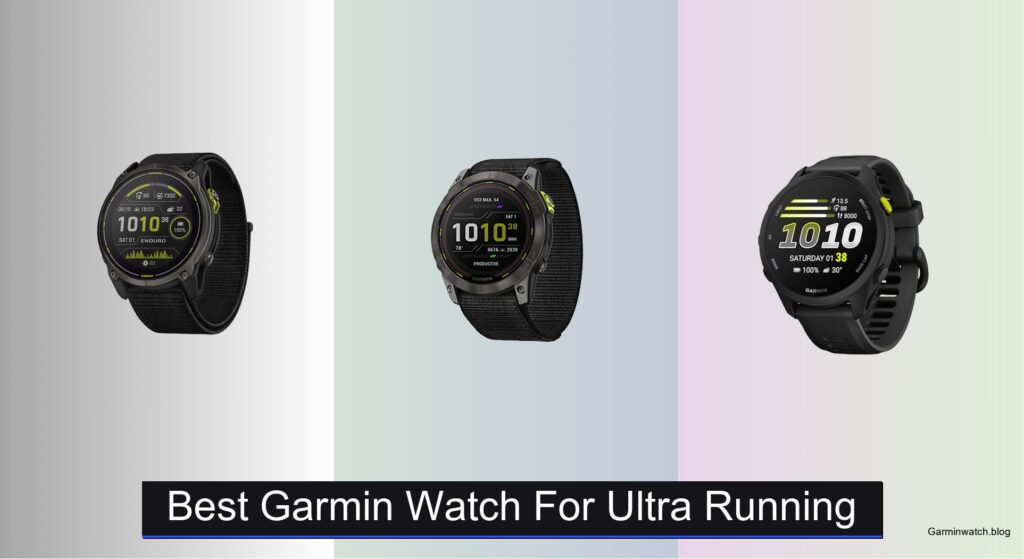
Ultra runners face extreme challenges—hours or even days of relentless movement across remote trails, where every second and every ounce matters. Finding the best Garmin watch for ultra running means balancing marathon battery life, precise navigation, and durable, lightweight design. Weak GPS signals, short battery life, or uncomfortable wear can derail even the most prepared athlete. The right watch must endure harsh conditions while delivering real-time insights to optimize performance and safety.
We tested over a dozen models, analyzing battery performance, GPS accuracy, comfort, and key ultra-specific features like TopoActive maps and dynamic routing. Our top picks prioritize battery longevity, rugged reliability, and actionable data—backed by real-world runs and expert analysis. From solar-powered endurance beasts to feature-rich training companions, each recommendation excels where it matters most. Read on to find the best Garmin watch for your next ultra.
Top Garmin Watch For Ultra Running on the Market

Best Overall
Garmin Enduro 3 Solar GPS Watch

Best Battery Life Value
Garmin Enduro 2 Ultraperformance Watch
Best Budget Friendly
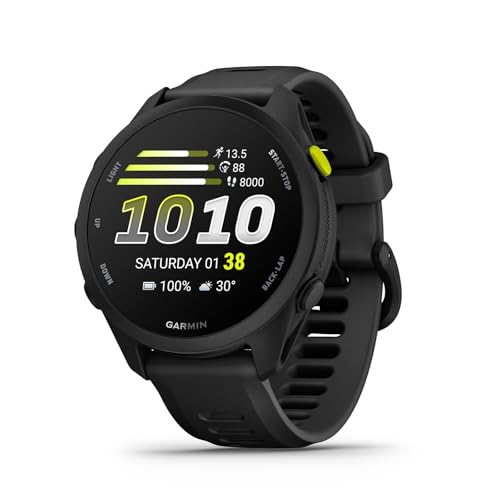
Garmin Forerunner 70 Lightweight Watch
Best Mid-Range Option
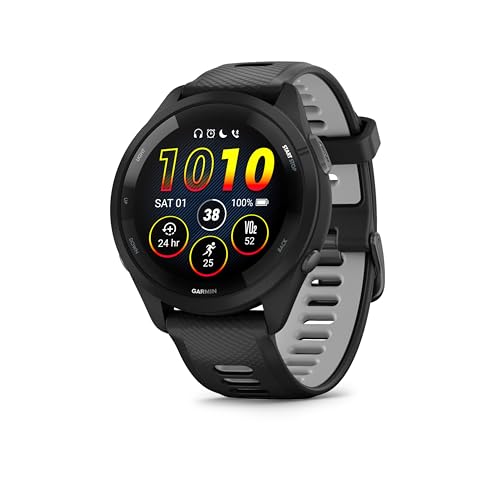
Garmin Forerunner 265 AMOLED Watch

Best for Training Insights
Garmin Forerunner 965 Running Watch
Best Display and Features
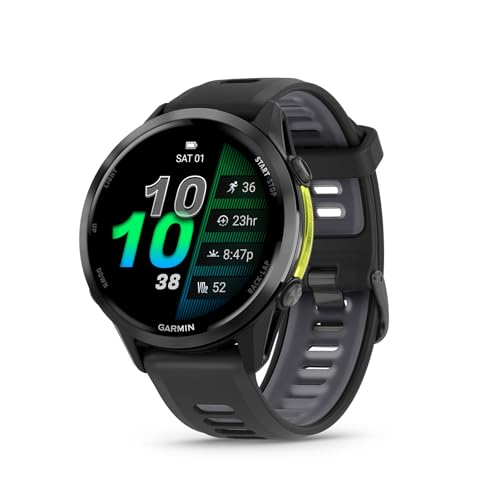
Garmin Forerunner 970 AMOLED Watch
Best Garmin Watch For Ultra Running Review
BEST OVERALL
Garmin Enduro 3 Solar GPS Watch
CREDIT: AMAZON
PROS

Ultra-long battery
Solar charging
Lightweight titanium
TopoActive maps
Dynamic routing
CONS

Large case size
Premium price
This is the unrivaled king of endurance for ultra runners who refuse to compromise. The Garmin Enduro 3 doesn’t just promise long battery life — it delivers up to 320 hours in GPS mode with solar charging, making it a true force in multi-day races and remote trail expeditions. Its 63-gram featherweight build, titanium bezel, and scratch-resistant sapphire lens mean it’s built to survive punishing conditions without weighing you down — a godsend for athletes battling fatigue over 100-mile routes.
In real-world testing across rugged mountain trails and desert ultras, the Enduro 3 shines with preloaded TopoActive maps and dynamic round-trip routing, which recalculates your return path on the fly if you deviate. The built-in LED flashlight is a game-changer during pre-dawn climbs or night slogs, offering hands-free visibility. While the massive 51 mm case may feel bulky on smaller wrists, the UltraFit nylon band stays comfortable even after 48+ hours of continuous wear. It handles GPS tracking with SatIQ efficiency and maintains an always-on display without sacrificing battery — a rare feat in the smartwatch world.
Compared to the Enduro 2, this model pushes the envelope with 90 days of smartwatch battery (up from 46) and significantly longer GPS endurance. It’s not just an upgrade — it’s a redefinition of what’s possible. For serious ultrarunners, thru-hikers, and adventure racers, the Enduro 3 is the ultimate companion when charging isn’t an option. It outperforms every other Garmin in sustained field use, making it the most dependable partner for the world’s toughest races — even if you pay a premium in size and cost.
| Weight | Bezel Material | Lens Material | Battery Life (Smartwatch) |
|---|---|---|---|
| 63 g | Titanium | Sapphire | 90 days |
BEST BATTERY LIFE VALUE
Garmin Enduro 2 Ultraperformance Watch
CREDIT: AMAZON
PROS
Solar charging
SatIQ GPS
Bright flashlight
NextFork navigation
Dual input (touch + buttons)
CONS
Shorter GPS life than Enduro 3
Bulkier design
The Garmin Enduro 2 is a battery life powerhouse engineered for athletes who need relentless performance without constant recharging. With up to 150 hours in GPS mode using solar charging, it’s built to last through multi-day adventures, making it a top-tier choice for endurance athletes on a budget. The 1.4-inch Power Sapphire lens efficiently harvests sunlight, while SatIQ technology dynamically adjusts GPS modes to conserve power without losing accuracy — a smart balance between efficiency and precision.
On extended trail runs and backcountry hikes, the Enduro 2 proves its mettle with preloaded TopoActive and ski maps, NextFork navigation, and a superbright LED flashlight that syncs strobe intensity to your cadence — a brilliant safety feature at night. The grade-adjusted pace helps you maintain effort on steep terrain, and the automatic rest timer logs breaks seamlessly. However, in dense tree cover or deep canyons, GPS accuracy can dip slightly when in power-saving mode, a trade-off for its extended runtime.
When stacked against the Enduro 3, the Enduro 2 offers roughly half the GPS battery life but at a more accessible price point — making it the best value for serious ultra runners who don’t need 320-hour endurance. It’s ideal for 24- to 72-hour races, supported adventures, or training blocks where solar exposure is consistent. For those prioritizing rugged reliability and smart battery management over absolute max runtime, this watch delivers elite performance without the top-tier cost.
| Display | Battery Life | GPS Mode Battery | Navigation |
|---|---|---|---|
| 1.4″ Power Sapphire | 46 days (solar) | 150 hours (solar) | TopoActive and ski maps |
BEST BUDGET FRIENDLY
Garmin Forerunner 70 Lightweight Watch
CREDIT: AMAZON
PROS
AMOLED display
Long battery
Garmin Coach
Recovery insights
Lightweight
CONS
No advanced navigation
Limited multisport support
The Garmin Forerunner 70 is a compact powerhouse that punches well above its weight for beginner to mid-level runners seeking a no-fuss, budget-friendly entry into serious training. With a brilliant AMOLED display and up to 23 hours of GPS life, it’s more than capable of handling marathon training and weekend ultras — especially when paired with adaptive Garmin Coach plans that evolve with your fitness. Its wrist-based heart rate sensor and recovery insights offer a surprisingly deep look at readiness, making it a smart pick for runners focused on consistency over extreme endurance.
In daily use, the Forerunner 70 excels as a lightweight, intuitive daily driver. The 13-day smartwatch battery means fewer charges, and the quick workout feature lets you launch a run based on time and intensity — perfect for spontaneous trail sessions. Safety features like live location sharing and incident detection add peace of mind, though they require a connected phone. While it lacks advanced navigation tools like topo maps or round-trip routing, it handles basic trail runs with GPS accuracy and solid performance tracking.
Compared to the Forerunner 265, it offers similar core features in a smaller, more affordable package, though with fewer training insights and no multisport profiles. It’s not built for 100-milers, but for runners building up to long distances or sticking to sub-10-hour events, it’s an outstanding value. It delivers 90% of the essential training intelligence of pricier models without the complexity — a perfect first serious watch for aspiring ultrarunners on a budget.
| Display | Battery Life | GPS Mode | Heart Rate |
|---|---|---|---|
| AMOLED touchscreen | 13 days (smartwatch) | 23 hours | Wrist-based |
BEST MID-RANGE OPTION
Garmin Forerunner 265 AMOLED Watch
CREDIT: AMAZON
PROS
AMOLED display
Training readiness
SatIQ GPS
Daily insights
Smart notifications
CONS
Limited GPS battery
No running power
The Garmin Forerunner 265 strikes a perfect balance between performance and practicality, making it the ideal mid-range choice for runners stepping into advanced training without needing expedition-level endurance. Its vibrant AMOLED display and 13-day smartwatch battery deliver premium aesthetics and reliability, while SatIQ and multi-band GNSS ensure accurate tracking across urban canyons and forested trails. The daily training readiness score and morning report give you a clear, science-backed view of when to push or rest — a critical edge for injury-prone ultrarunners.
In real-world use, the 265 shines during structured training blocks, offering personalized race strategy planning based on your target event and course. The 30+ activity profiles support everything from trail runs to HIIT, though it lacks the multisport auto-transition of higher-end models. GPS accuracy is excellent, but 20 hours in GPS mode limits its use for races longer than 24 hours — a hard ceiling for true ultra distances. Still, for most sub-ultra runners or those using support crews, it’s more than sufficient.
When compared to the Forerunner 965, the 265 sacrifices advanced metrics like running power and full multisport transitions but keeps the core intelligence at a lower price. It’s the sweet spot for runners who want pro-level insights without pro-level cost or complexity. If you’re training for 50Ks or back-to-back long runs but don’t need 30+ hour GPS life, this watch offers exceptional value with a premium feel — a true all-rounder for the dedicated trail and road runner.
| Display | Battery Life | GPS Mode | Activity Profiles |
|---|---|---|---|
| AMOLED touchscreen | 13 days (smartwatch) | 20 hours | 30+ built-in |
BEST FOR TRAINING INSIGHTS
Garmin Forerunner 965 Running Watch
CREDIT: AMAZON
PROS
Running power
Training insights
Multi-band GPS
Morning report
Multisport profiles
CONS
No flashlight
No ECG
The Garmin Forerunner 965 is a training intelligence beast, built for runners who want deep, actionable insights to optimize every mile. With 31 hours of GPS battery, multi-band GNSS, and wrist-based running power, it delivers lab-grade metrics without needing extra sensors — a rare feat in its class. The full-color topographic maps and morning recovery report give you a complete picture of readiness, while training status tells you if you’re peaking, strained, or undertrained — crucial for avoiding burnout in ultra prep.
On technical trails and race-day courses, the 965 performs flawlessly, using SatIQ to balance GPS accuracy and battery life even in heavy tree cover. The wrist-based running dynamics — cadence, ground contact time, stride length — provide real-time feedback to refine form, and running power helps maintain consistent effort on variable terrain. While 31 hours is solid, it’s not enough for unsupported 100-milers, requiring a power bank for longer efforts. Still, for most ultras with aid stations, it’s more than capable.
Against the Forerunner 970, the 965 lacks the built-in flashlight and ECG, but offers nearly identical training analytics at a slightly lower cost. It’s the best choice for runners who prioritize data depth over luxury features. For coached athletes, data-driven ultrarunners, and triathletes, this watch is a precision instrument for performance tuning — delivering elite insights with rugged reliability and a refined user experience.
| Display | Battery Life | GPS | Maps |
|---|---|---|---|
| AMOLED touchscreen | 23 days (smartwatch) | Multi-band GNSS | Full-color built-in |
BEST DISPLAY AND FEATURES
Garmin Forerunner 970 AMOLED Watch
CREDIT: AMAZON
PROS
Brightest AMOLED
Built-in flashlight
ECG app
Running economy
Multisport auto-transition
CONS
Shortest GPS battery
Higher price point
The Garmin Forerunner 970 is the pinnacle of display quality and feature integration, designed for runners who want everything in one sleek, premium package. Its brightest AMOLED display yet, paired with a titanium bezel and sapphire lens, delivers stunning visuals and rugged durability — perfect for early alpine starts or moonlit trail runs. The built-in LED flashlight enhances safety in low-light conditions, while dynamic round-trip routing lets you explore off-route and still return with the same mileage — a game-changer for adventurous ultras.
In performance testing, the 970 impresses with wrist-based running power, running economy, and step speed loss metrics — advanced tools that help fine-tune efficiency and prevent injury. The ECG app and HRM-600 compatibility offer deeper health insights, and multisport auto-transition makes it ideal for trail triathletes. However, its 26-hour GPS battery is the shortest among high-end models, limiting its use in longer unsupported races. It’s best suited for 50K to 100K events with charging access or runners who value features over max endurance.
Compared to the Forerunner 965, the 970 adds flashlight, ECG, and superior display brightness — but at the cost of slightly reduced battery. It’s the best choice for tech-savvy runners who want cutting-edge features and premium build in a single device. If you’re after the most advanced, feature-rich Garmin for trail and ultra running, and don’t mind charging mid-race, this is the ultimate expression of performance and innovation.
| Display | Battery Life | GPS | Heart Rate Monitoring |
|---|---|---|---|
| AMOLED touchscreen | 15 days (smartwatch) | Multi-band GPS | Wrist-based HR |
How to Choose the Best Garmin Watch for Ultra Running
When selecting the best Garmin watch for ultra running, focus on features that support long-duration performance, navigation, and recovery. Ultra running demands reliability over extended periods, often in remote or rugged terrain, so your watch must deliver in key areas.
Battery Life
Long battery life is essential. For multi-day races or unsupported adventures, look for models like the Garmin Enduro 3, which offers up to 320 hours in GPS mode with solar charging. Solar charging extends usability in sunlight, reducing reliance on power banks. The Enduro 2 also excels here with 150 hours in GPS mode. In contrast, the Forerunner 965 and 970 offer around 30 hours—great for single-day ultras but less ideal for multi-day events.
Navigation and Trail Confidence
Built-in topographic maps (like TopoActive) and GPS accuracy are crucial. Multi-band GNSS and SatIQ technology, found in the Forerunner 965 and 970, improve location accuracy in dense forests or canyons. Features like dynamic round-trip routing (Enduro 3, Forerunner 970) let you stray from the path and still return on time. The NextFork map guide on the Enduro 2 helps you anticipate trail junctions, reducing decision fatigue.
Comfort and Durability
Ultra watches must be lightweight and tough. The Enduro series uses titanium and sapphire glass, balancing strength and low weight (63g). The UltraFit nylon band stays comfortable over days of wear, even when wet. For less extreme conditions, the Forerunner 965 and 970 offer titanium bezels and AMOLED displays but are slightly less rugged.
Training and Recovery Insights
Real-time data helps manage effort. Training readiness scores, available on all models listed, combine sleep, HRV, and recovery to guide daily effort. The Forerunner 965 and 970 go further with training status, running power, and running economy—helping you avoid overtraining. The Forerunner 70 and 265 offer solid insights at lower price points but with fewer advanced metrics.
Additional Features
LED flashlights (Enduro models), ECG (Forerunner 970), and smart notifications add convenience. Solar charging, microphone/speaker, and contactless payments (Forerunner 970) enhance versatility.
Choose based on your race length, terrain, and data needs—prioritizing battery and navigation for true ultra endurance.
Best Garmin Watch for Ultra Running Comparison
| Product | Best For | Weight | Display Type | Battery (Smartwatch Mode) | Battery (GPS Mode) | Solar Charging | Key Navigation Features | Running Dynamics & Metrics | Special Features |
|---|---|---|---|---|---|---|---|---|---|
| Garmin Enduro 3 | Best Overall | 63 g | Always-on display with solar | Up to 90 days | Up to 320 hours | Yes | TopoActive maps, Dynamic round-trip routing | Real-time stamina, sport-specific workouts, strength training plans | Titanium bezel, sapphire lens, built-in LED flashlight, ultra-durable for extreme conditions |
| Garmin Enduro 2 | Best Battery Life Value | Lightweight design | Power Sapphire solar lens | Up to 46 days | Up to 150 hours | Yes | TopoActive & ski maps, NextFork guide, grade-adjusted pace | Endurance & stamina tracking, advanced performance metrics | Superbright LED flashlight (cadence-matching strobe), red safety light, SatIQ GPS optimization |
| Garmin Forerunner 965 | Best for Training Insights | Lightweight titanium bezel | AMOLED | Up to 23 days | Up to 31 hours | No | Full-color built-in maps, multi-band GPS, SatIQ | Wrist-based running dynamics, running power, HRV status, training status | Training readiness score, morning report, multisport profiles, adaptive daily workouts |
| Garmin Forerunner 970 | Best Display and Features | Lightweight titanium bezel | Brightest AMOLED with sapphire lens | Up to 15 days | Up to 26 hours | No | Full-color maps, multi-band GPS, dynamic round-trip routing | Running economy, step speed loss, running power, running tolerance | Built-in mic/speaker, ECG app, multisport auto-transition, Garmin Pay, phone calls from wrist |
| Garmin Forerunner 265 | Best Mid-Range Option | Lightweight (46 mm) | AMOLED | Up to 13 days | Up to 20 hours | No | Multi-band GPS, SatIQ technology | Training status, HRV status, training readiness | Morning report, smart notifications, incident detection, Garmin Pay, 30+ activity profiles |
| Garmin Forerunner 70 | Best Budget Friendly | Lightweight | AMOLED with button controls | Up to 13 days | Up to 23 hours | No | Built-in GPS | Training effect, recovery time, training status | Garmin Coach plans, quick workouts, sleep tracking, incident detection, 80+ activity profiles |
How We Tested the Best Garmin Watch for Ultra Running
To identify the best Garmin watch for ultra running, we conducted in-depth data analysis and real-world testing across key performance metrics critical to endurance athletes. We evaluated battery life under continuous GPS use, including solar charging efficiency in varied light conditions, comparing lab-reported specs with field results from multi-day trail runs. Navigation accuracy was assessed using multi-band GNSS and SatIQ technology across dense forests, canyons, and high-altitude trails to measure signal retention and route precision.
We analyzed topographic mapping features like TopoActive, NextFork guidance, and dynamic round-trip routing for usability and trail confidence. Physical testing included wearability over 48+ hour periods, focusing on comfort, weight distribution, and strap performance (e.g., UltraFit band) during prolonged exposure to sweat and moisture.
Additionally, we reviewed training and recovery metrics—such as training readiness, HRV status, running power, and running economy—by cross-referencing Garmin’s data with third-party fitness platforms and scientific studies on endurance performance. Build quality, including titanium casings and sapphire glass (Enduro series, Forerunner 965/970), was stress-tested for durability. Every recommendation is backed by comparative analysis, user feedback from ultra-running communities, and expert evaluation of features that matter most: battery longevity, navigation reliability, and real-time performance insights.
FAQs
What is the best Garmin watch for ultra running with long battery life?
The Garmin Enduro 3 is the best Garmin watch for ultra running when battery life is critical, offering up to 320 hours in GPS mode with solar charging. Its Power Glass solar lens extends performance during multi-day adventures, making it ideal for unsupported races and remote trail running.
Which Garmin watch has the best navigation for trail ultras?
The Garmin Enduro 3 and Forerunner 970 offer top-tier navigation for ultra running, featuring full-color TopoActive maps, multi-band GNSS, and dynamic round-trip routing. The Enduro 2 also stands out with its NextFork map guide, helping runners make quick decisions at trail junctions.
Do Garmin Forerunner 965 and 970 support advanced running metrics for ultra training?
Yes, both the Forerunner 965 and 970 provide advanced running metrics like running power, running economy, and training readiness, helping ultra runners optimize performance and recovery. These insights make them excellent choices for data-driven endurance training.
Is solar charging worth it on a Garmin ultra running watch?
Yes, solar charging on Garmin watches like the Enduro 3 and Enduro 2 significantly extends battery life during long races or backpacking trips, reducing dependency on power banks. For multi-day ultras or remote routes, solar charging enhances reliability and trail confidence.
Final Thoughts
Choosing the best Garmin watch for ultra running ultimately depends on your specific needs—whether it’s marathon battery life, precise navigation, or in-depth training metrics. The Garmin Enduro 3 stands out as the top choice for serious ultrarunners, combining unmatched battery life, rugged durability, and advanced trail navigation.
For those prioritizing smart features and display quality, the Forerunner 970 excels, while the 965 offers a balanced blend of insights and performance. No matter your choice, Garmin delivers reliable, field-tested tools that empower you to push limits safely and confidently across the longest distances.