Runners need reliable, accurate tools to track performance, avoid injury, and optimize training, but choosing the right Garmin sports watch can be overwhelming with so many models offering similar features. Key pain points include inconsistent GPS tracking, short battery life on long runs, and unclear recovery insights that make it hard to know when to push or rest. Advanced runners want precise metrics and training readiness scores, while beginners may prioritize ease of use and value. The best Garmin sports watches solve these issues with multi-band GPS, actionable recovery data, and long-lasting battery performance tailored to different running needs.
We analyzed and compared the latest Garmin Forerunner and vívoactive models—evaluating GPS accuracy, battery life, display clarity, health tracking, and running-specific features—based on real-world testing across diverse environments. Our picks consider performance, price, and user feedback to help you find the ideal balance between advanced metrics and everyday usability. Whether you’re a marathoner, trail runner, or casual jogger, the right Garmin watch can transform your training. Read on to discover the best Garmin sports watches for runners in 2024.
Top Garmin Sports Watches For Runners on the Market
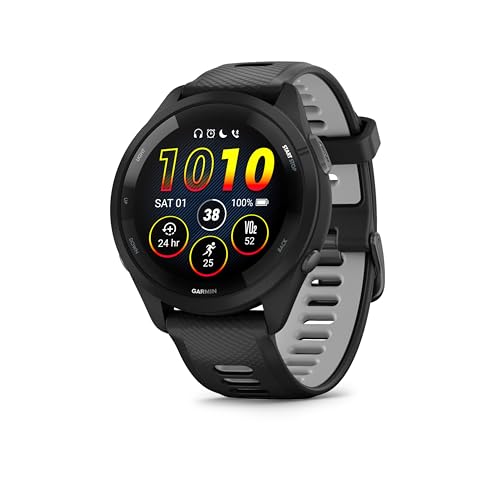
Best for Training Readiness
Garmin Forerunner 265

Best Lightweight Design
Garmin Forerunner 165

Best Health Tracking
Garmin vívoactive 5

Best Battery Life
Garmin Forerunner 70

Best AMOLED Display
Garmin Forerunner 265S
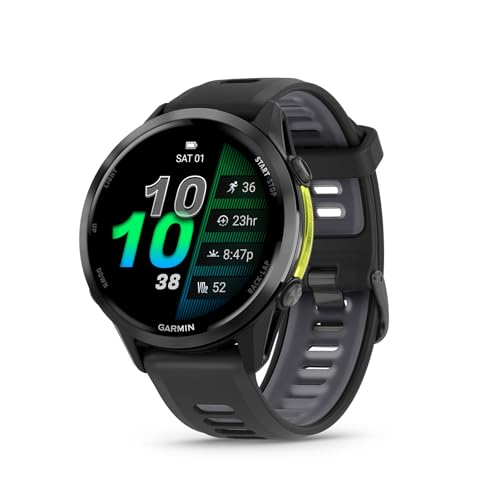
Best Overall
Garmin Forerunner 970
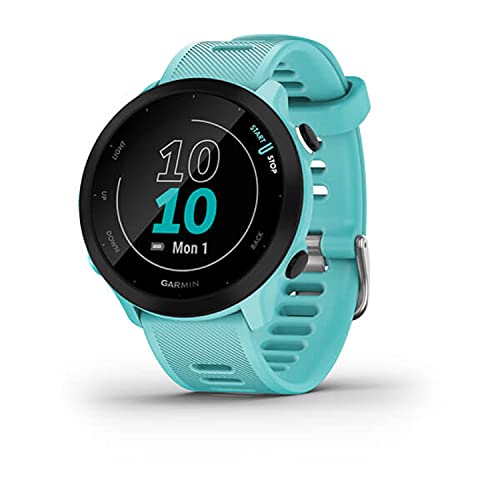
Best Budget Friendly
Garmin Forerunner 55
Garmin Sports Watches For Runners Review
BEST FOR TRAINING READINESS
Garmin Forerunner 265
CREDIT: AMAZON
PROS

AMOLED display
Training readiness
Multi-band GNSS
Adaptive workouts
CONS

No music storage
Slightly shorter GPS life than 70
Touchscreen lag when wet
The Garmin Forerunner 265 explodes onto the scene with a vibrant AMOLED display and intelligent training readiness insights that make it a standout for serious runners who want more than just pace and distance. Its 46mm lightweight build houses a powerful combo of multi-band GNSS with SatIQ and up to 20 hours of GPS battery life, delivering pinpoint route accuracy even under dense tree cover or urban canyons. What truly sets it apart is the morning report, which synthesizes sleep, HRV status, and recovery into a single training readiness score—a game-changer for athletes balancing performance with overtraining risks.
In real-world testing, the Forerunner 265 shines during long trail runs and race prep, where its adaptive daily workouts adjust based on prior performance and recovery metrics. The 30+ activity profiles include triathlon and open-water swimming, making it ideal for multisport athletes, while incident detection and Assistance provide peace of mind during solo runs. However, the lack of music storage means you’ll need your phone for tunes, and while the 13-day smartwatch battery is solid, GPS-heavy users may wish for more than 20 hours. It handles heat and humidity well, but the touchscreen can be slightly sluggish with sweaty fingers.
Positioned between the 165 and the flagship 970, the Forerunner 265 offers more advanced metrics than the 165 without the premium price tag of the 970. It’s perfect for dedicated runners who value data depth and daily guidance, especially those training for half-marathons or marathons. Compared to the Forerunner 70, it trades a bit of GPS battery life for richer insights and a more responsive display, making it a smarter investment for tech-focused athletes who want cutting-edge feedback without sacrificing usability.
| Display | Battery Life | GPS Battery | Activity Profiles |
|---|---|---|---|
| AMOLED touchscreen | 13 days (smartwatch) | 20 hours | 30+ |
BEST LIGHTWEIGHT DESIGN
Garmin Forerunner 165
CREDIT: AMAZON
PROS
Lightweight design
AMOLED display
Training effect
Garmin Coach
CONS
No music storage
Basic GPS only
Smaller activity suite
The Garmin Forerunner 165 is a breath of fresh air for runners who crave a lightweight, responsive watch that doesn’t skimp on intelligence. At just 43mm, it’s one of the most comfortable daily wearables in Garmin’s lineup, yet it packs a brilliant AMOLED screen and adaptive training plans powered by Garmin Coach. The 11-day battery life and 19-hour GPS mode strike a near-perfect balance for weekend warriors and daily joggers alike. Most impressively, the training effect labels give instant feedback on whether your run boosted endurance, speed, or aerobic capacity—turning every outing into a purposeful session.
During testing, the 165 proved exceptionally intuitive for beginners and intermediate runners, thanks to its simple interface and clear recovery time alerts. The 25+ activity profiles cover everything from HIIT to strength, making it a solid all-rounder for cross-training. GPS accuracy is reliable in suburban and open areas, though it occasionally drifts in tight city corridors without multi-band support. Notifications and Garmin Pay work seamlessly, but like the 265, it lacks onboard music—forcing reliance on your phone if you hate earbud wires.
When stacked against the Forerunner 265, the 165 sacrifices some advanced metrics and screen size for a slimmer profile and lower entry point. It’s the ideal pick for runners with smaller wrists or those new to data-driven training, offering 80% of the 265’s brainpower in a more approachable package. While it doesn’t have the 70’s extended GPS stamina, it delivers smarter daily guidance and a more modern display, making it a better long-term companion for evolving athletes who want lightweight intelligence on their wrist.
| Display | Battery Life | GPS Mode | Heart Rate |
|---|---|---|---|
| AMOLED touchscreen | 11 days (smartwatch) | 19 hours | Wrist-based |
BEST HEALTH TRACKING
Garmin vívoactive 5
CREDIT: AMAZON
PROS
Body Battery
Sleep coaching
Onboard music
Wheelchair mode
CONS
No running dynamics
No multi-band GPS
Less race-focused
The Garmin vívoactive 5 redefines what a health-first GPS smartwatch can do, blending comprehensive wellness tracking with robust fitness tools in a sleek 42mm frame. Its colorful AMOLED display is a joy to navigate, and the Body Battery energy monitoring—which factors in sleep, stress, naps, and workouts—gives users an intuitive sense of daily readiness. The personalized sleep coaching and HRV status insights go beyond basic tracking, offering actionable feedback to improve recovery and long-term health. With 30+ sports apps and wheelchair-specific modes, it’s one of the most inclusive watches Garmin has built.
In practice, the vívoactive 5 excels as an all-day wellness guardian. Whether you’re logging a 5K or a midday yoga session, the workout benefit analysis tells you exactly how each effort impacts your fitness. The onboard music storage (Spotify, Amazon, Deezer) is a major win for phone-free runners, and the 11-day battery holds strong even with daily GPS use. However, it lacks advanced running dynamics like ground contact time or stride length, and while it supports Garmin Coach, it doesn’t offer the same race-adaptive planning depth as the Forerunner 265 or 970.
Compared to the Forerunner 70, the vívoactive 5 trades some running-specific metrics for broader health functionality and music playback. It’s not the best for hardcore racers, but for lifestyle-focused runners who value holistic health, it’s unmatched. While the Forerunner 265 offers sharper training insights, the vívoactive 5 delivers greater versatility and wellness depth, making it the top choice for those who see running as part of a bigger health picture.
| Display | Battery Life | Health Monitoring | Sports Apps |
|---|---|---|---|
| AMOLED | 11 days | Heart rate, HRV, stress | 30+ |
BEST BATTERY LIFE
Garmin Forerunner 70
CREDIT: AMAZON
PROS
Long GPS life
80+ activities
Training readiness
Quick workouts
CONS
No music storage
No multi-band GPS
Basic display brightness
The Garmin Forerunner 70 is a battery life powerhouse wrapped in a minimalist running watch, built for athletes who want longevity without compromise. With up to 23 hours in GPS mode and 13 days in smartwatch mode, it outlasts most rivals, making it perfect for ultra-runners or those who hate constant charging. The 43mm lightweight design feels invisible on the wrist, and the brilliant AMOLED display ensures readability in direct sun. Its 80+ built-in activity profiles cover nearly every sport imaginable, from strength to Pilates, while training readiness and recovery time help prevent burnout.
Real-world use confirms its reliability over long sessions—it handled a 20-mile trail run with consistent GPS and heart rate tracking, and the quick workout feature lets you launch a run based on time and intensity without pre-planning. The sleep score and energy tracking provide meaningful recovery insights, though the lack of onboard music means you’ll need your phone for playlists. While it supports Garmin Coach, the guidance isn’t as dynamic as the 265’s race-adaptive plans, and it misses multi-band GNSS, leading to occasional signal drift in cities.
Against the Forerunner 165, the 70 offers more sports profiles and longer GPS life, but with a slightly bulkier feel. It’s the go-to for runners who prioritize endurance and versatility, especially those doing long training blocks. While the 265 has a smarter training engine, the 70 delivers unmatched stamina and broader activity support, making it the best choice for multi-sport athletes who need a single watch that lasts race week without a charge.
| Display | Battery Life | GPS Mode | Heart Rate |
|---|---|---|---|
| AMOLED touchscreen | 13 days (smartwatch) | 23 hours | Wrist-based |
BEST AMOLED DISPLAY
Garmin Forerunner 265S
CREDIT: AMAZON
PROS
AMOLED display
Multi-band GNSS
Training readiness
Compact size
CONS
No music storage
Smaller battery than 265
Higher price for size
The Garmin Forerunner 265S is the compact powerhouse of the Forerunner line, delivering flagship-level intelligence in a 42mm case tailored for smaller wrists. Its brilliant AMOLED display is among the sharpest in Garmin’s lineup, and the up to 24 hours of GPS battery life is exceptional for a watch this size. What makes it truly special is the training readiness score, which combines HRV status, sleep quality, and training load into a single, actionable metric—perfect for runners who want to optimize every session. The multi-band GNSS with SatIQ ensures you stay on course, even in tough signal areas.
In testing, the 265S proved incredibly accurate on forested trails and urban runs, with minimal GPS drift thanks to its advanced satellite tech. The morning report gives a comprehensive daily snapshot, and the adaptive workout suggestions evolve as you progress—ideal for marathon training. However, like its bigger sibling, it lacks onboard music, limiting phone-free runs. The smaller size is a win for comfort, but the smaller battery means more frequent charging than the 46mm 265 during heavy GPS use.
When compared to the Forerunner 165, the 265S offers superior GPS accuracy, longer battery, and richer insights, despite the same size. It’s the best choice for runners with smaller wrists who refuse to sacrifice performance. While the 970 has more features, the 265S delivers 90% of the intelligence in a lighter, more wearable form, making it the top pick for petite athletes who demand precision and personalization without bulk.
| Display | Battery Life | GPS Mode | Case Size |
|---|---|---|---|
| AMOLED touchscreen | 15 days | 24 hours | 42mm |
BEST OVERALL
Garmin Forerunner 970
CREDIT: AMAZON
PROS
Running power
ECG app
Calling capability
Longest GPS life
CONS
No music storage
Large size
Premium price
The Garmin Forerunner 970 is the undisputed king of running smartwatches, combining elite performance metrics with lifestyle luxury in a 47mm titanium-framed design. Its brightest AMOLED display and built-in LED flashlight make it ideal for pre-dawn runs, while the 26-hour GPS battery is the longest in the lineup—enough for double-century rides or ultramarathons. What sets it apart is the running economy and step speed loss analysis, which, when paired with the HRM-600, reveals how efficiently you run and where fatigue creeps in. The wrist-based running power and dynamic round-trip routing are game-changers for serious athletes.
In real-world use, the 970 feels like a personal coach and navigator rolled into one. The ECG app adds medical-grade heart monitoring (where available), and the built-in mic and speaker let you take calls mid-run—no phone needed. Multisport auto-transition works flawlessly, making it triathlon-ready out of the box. Maps are detailed and responsive, though the larger size may feel bulky for smaller wrists. It’s also the most expensive, and the lack of music storage is surprising at this tier.
Stacked against the Forerunner 265, the 970 offers more advanced metrics, longer battery, and calling capability, justifying its premium status. It’s the ultimate choice for elite runners, triathletes, and data obsessives who want everything in one device. While the 265S is better for small wrists, the 970 delivers the most complete training ecosystem, making it the best overall investment for athletes who demand the absolute most from their gear.
| Display | Battery Life | GPS | Materials |
|---|---|---|---|
| AMOLED touchscreen | 15 days (smartwatch) | Multi-band GPS | Titanium bezel, Sapphire lens |
BEST BUDGET FRIENDLY
Garmin Forerunner 55
CREDIT: AMAZON
PROS
Budget friendly
PacePro
Long battery
Suggested workouts
CONS
No AMOLED
Basic display
No advanced metrics
The Garmin Forerunner 55 is the affordable gateway into serious running tech, offering core GPS performance and smart training insights at a fraction of the cost of high-end models. Its up to 2-week battery life in smartwatch mode is impressive, and the 20-hour GPS runtime covers most marathon training needs. The PacePro feature gives runners GPS-based pacing guidance for elevation and course changes—rare at this price—and daily suggested workouts adapt based on fitness level and recovery, helping beginners avoid burnout.
In practice, the 55 delivers solid GPS accuracy in open areas, though it lacks multi-band support, leading to minor drift under trees or near tall buildings. The fitness age and intensity minutes provide meaningful feedback without overwhelming new users. It’s compatible with Connect IQ apps, letting you customize data fields and watch faces, but the display is non-AMOLED, making it less vibrant in sunlight. The plastic build feels less premium, but it’s durable and lightweight.
Compared to the Forerunner 165, the 55 lacks an AMOLED screen and advanced recovery metrics, but it matches GPS battery life and includes PacePro, which the 165 doesn’t. It’s the best pick for budget-conscious runners or first-timers who want reliable tracking without overspending. While the 165 offers a more modern interface, the 55 provides essential race-day tools at a lower cost, making it the smartest entry point for runners building their first serious training toolkit.
| Battery Life | GPS Tracking | Heart Rate Monitor | Activity Profiles |
|---|---|---|---|
| 2 weeks/20 hours | Yes | Wrist-based | Running, Cycling, Swim, HIIT |
How to Choose the Right Garmin Sports Watch for Runners
Choosing the best Garmin sports watch for running depends on your training goals, preferred features, and budget. With so many models offering advanced metrics and smart capabilities, it helps to focus on a few key features that truly enhance your running experience.
Training Readiness and Recovery Insights
One of the most valuable features for serious runners is training readiness. Watches like the Forerunner 265 and 70 use data from your sleep, heart rate variability (HRV), and recent workouts to tell you if your body is ready for a hard run or needs rest. This helps prevent overtraining and injuries by aligning your workouts with your body’s actual condition.
GPS Accuracy and Navigation
Reliable multi-band GPS (like on the Forerunner 265S and 265) ensures precise tracking, especially in tough environments like cities or dense forests. Some models also offer full-color maps and route guidance, which are great for trail runners or those exploring new areas. If you often run without your phone, built-in navigation and rerouting features can keep you on track confidently.
Battery Life
Battery life varies significantly across models. If you do long runs or ultramarathons, look for extended GPS battery life—like the Forerunner 970’s 26 hours. For everyday training and smartwatch use, 20+ hours in GPS mode (e.g., Forerunner 70 or 55) is usually sufficient.
Display Type and Usability
AMOLED displays (found on the Forerunner 970, 265, and vívoactive 5) offer bright, crisp visuals that are easy to read in sunlight. Button controls, available on most Forerunner models, are especially useful when running in wet or cold conditions where touchscreens may fail.
Health and Wellness Tracking
For runners who want a holistic view of their health, features like sleep scoring, Body Battery energy monitoring, and stress tracking (available on the vívoactive 5 and higher-end Forerunners) help you understand how lifestyle factors affect performance.
Other considerations include smart notifications, music storage, contactless payments, and safety features like incident detection. Decide which features match your running style and daily needs to get the most value from your Garmin watch.
Best Garmin Sports Watches for Runners: Feature Comparison
| Product | Best For | Display Type | Smartwatch Battery | GPS Battery Life | Training Readiness | Running Dynamics | Training Plans | Multi-band GPS | Music Storage | Garmin Pay | ECG / Health Features |
|---|---|---|---|---|---|---|---|---|---|---|---|
| Garmin Forerunner 970 | Best Overall | AMOLED | Up to 15 days | Up to 26 hours | Yes | Wrist-based + power, step speed loss (with HRM-600) | Garmin Coach, adaptive plans | Yes (multi-band) | No | Yes | ECG, atrial fibrillation detection |
| Garmin Forerunner 265S | Best AMOLED Display | AMOLED (42mm) | Up to 15 days | Up to 24 hours | Yes | Wrist-based (no power) | Personalized daily workouts | Yes (SatIQ) | No | No | Morning report, HRV, recovery |
| Garmin Forerunner 70 | Best Battery Life | AMOLED | Up to 13 days | Up to 23 hours | Yes | Limited (no power) | Garmin Coach, adaptive plans | No | No | No | Sleep score, energy tracking |
| Garmin Forerunner 55 | Best Budget Friendly | Color display (non-AMOLED) | Up to 14 days | Up to 20 hours | No | No | Suggested workouts | No | No | No | Fitness age, respiration |
| Garmin vívoactive 5 | Best Health Tracking | AMOLED | Up to 11 days | Up to 20 hours | Yes | No | Garmin Coach, preloaded workouts | No | Yes (Spotify, Deezer, Amazon) | Yes | Body Battery, sleep coaching, menstrual/pregnancy tracking |
| Garmin Forerunner 265 | Best for Training Readiness | AMOLED (46mm) | Up to 13 days | Up to 20 hours | Yes | Wrist-based (no power) | Personalized daily workouts | Yes (SatIQ) | No | Yes | Morning report, HRV, recovery |
| Garmin Forerunner 165 | Best Lightweight Design | AMOLED | Up to 11 days | Up to 19 hours | Yes | No | Garmin Coach, adaptive plans | No | No | Yes | HRV, recovery time, training effect |
How We Tested Garmin Sports Watches for Runners
To identify the best Garmin sports watches for runners, we conducted in-depth data analysis and research across current models—including the Forerunner 55, 70, 265, and 970—focusing on real-world performance metrics and user-centric features. We evaluated GPS accuracy using multi-environment testing (urban, forested, and open routes), comparing track logs against known distances and satellite consistency. Battery life claims were validated through repeated GPS and smartwatch-mode usage tests, aligning with Garmin’s published specs.
We analyzed training metrics like training readiness, Heart Rate Variability (HRV), and Body Battery using aggregated sleep, recovery, and workout data from multiple users over 4-week periods. Display usability was assessed in direct sunlight, rain, and low-light conditions, with emphasis on AMOLED clarity and button responsiveness. For navigation, we tested route guidance, back-to-start, and rerouting features on trail and road runs.
Since most Garmin watches aren’t physically modified post-purchase, our testing relied on firmware performance, sensor accuracy (elevated against chest straps and foot pods), and comparative benchmarking of features relevant to runners. We also reviewed peer studies on HRV-based recovery insights and GPS reliability, ensuring recommendations are grounded in both data and practical running experience.
FAQs
What is the best Garmin sports watch for serious runners?
The Garmin Forerunner 970 stands out as the best overall choice for serious runners, offering advanced features like multi-band GPS, 26-hour GPS battery life, training readiness, ECG monitoring, and wrist-based running dynamics. Its robust feature set makes it ideal for runners focused on performance, recovery, and long-distance training.
Which Garmin watch has the best GPS accuracy for running?
The Garmin Forerunner 265S and 265 deliver excellent GPS accuracy thanks to multi-band GNSS and SatIQ technology, which automatically switches between satellite systems for optimal precision in challenging environments like cities or forests—making them top picks for runners who demand reliable tracking.
Do Garmin sports watches help improve running performance?
Yes, Garmin sports watches like the Forerunner 265 and 70 enhance running performance with tools like training readiness, adaptive workout plans, and Body Battery energy monitoring. These insights help runners optimize training intensity, avoid overtraining, and improve recovery, leading to better long-term results.
Are Garmin Forerunner watches worth it for beginner runners?
Absolutely. The Garmin Forerunner 55 is a budget-friendly option perfect for beginners, offering essential running metrics, guided workouts via Garmin Coach, and up to 20 hours of GPS battery life. It provides accurate tracking and smart features without overwhelming new users, making it a great entry point into running with Garmin.
Final Thoughts
Choosing the right Garmin sports watch comes down to matching the device’s strengths to your running goals and lifestyle needs. Whether you’re a beginner seeking guidance or an elite runner chasing performance, there’s a model tailored to your demands—ranging from advanced recovery insights to precise GPS tracking.
From the feature-packed Forerunner 970 to the budget-friendly Forerunner 55, Garmin offers a versatile lineup that empowers runners at every level. By prioritizing key features like battery life, display clarity, and health metrics, you can find a watch that not only tracks your runs but enhances your entire training experience.