You just bought a new watch band but don’t have a spring bar tool. Don’t worry. Changing a watch strap without tools is completely doable, and millions of watch owners do it every day using common household items. Whether you’re upgrading to a sleek leather strap, switching to a sporty NATO, or refreshing a worn rubber band, you can remove and install watch straps safely without specialized equipment. This guide reveals proven, step-by-step methods using items you already have at home, while avoiding scratches, injuries, and lost spring bars.
Know Your Watch Strap Type Before Starting
Before touching your watch, identify the strap type. Not all straps require spring bar removal, and some can be swapped in seconds without any tools at all.
Check for Tool-Free Strap Options
The following strap types don’t require any tools or spring bar removal:
- NATO and Zulu straps: Single-piece bands that slide through both sets of lugs, requiring no spring bar manipulation
- Perlon and FKM rubber straps: Thread through all lugs and remove by hand
- Quick-release systems: Found on modern watches, featuring a lever mechanism that releases the strap with a simple press
These straps can be changed in seconds by simply sliding them out and in. No tools needed for these options.
Standard Spring Bar Straps Require Compression
Most leather, metal, and silicone bands attach via spring bars. These small, spring-loaded pins secure the strap to the watch lugs and require compression to remove. You don’t need a specialized tool. You just need the right technique to compress the spring and release one end from the lug.
Use Dental Floss to Remove Spring Bars

Dental floss is the safest, scratch-free method for removing spring bars. This technique is ideal for luxury watches or beginners who want to avoid any risk of damaging the case or lugs.
How to Remove a Strap with Floss
This method works by using the floss to compress the spring bar without touching the watch case directly. Here’s the step-by-step process:
- Cut a 12-inch piece of waxed dental floss (unwaxed floss is too thin and may break)
- Slide the floss under the spring bar from one side, positioning it between the strap and the lug
- Loop the floss around the end of the spring bar
- Pull both ends upward and outward simultaneously to compress the spring bar into the lug
- The opposite end will pop out of its hole. Slide the strap off
- Catch the spring bar before it flies away. Spring bars are under tension and can launch across the room
Work over a small box or towel to trap loose parts. This prevents losing tiny components.
Why This Method Works
The dental floss compresses the spring bar without making any contact with the watch case or lugs. This eliminates scratch risk entirely. The waxed floss is strong enough to apply steady pressure while sliding smoothly under tight spaces. This method is especially useful for watches with delicate finishes or tight lug gaps.
Try a Flat-Head Screwdriver for Precision
A small flat-head screwdriver is the most effective household substitute for a spring bar tool. This method offers precision and control, making it popular among experienced watch owners.
Remove the Strap Safely
- Place the watch face-down on a microfiber cloth to prevent scratches
- Insert the screwdriver tip between the strap and lug, aligning it with the spring bar end
- Push outward, away from the watch center, to compress the spring bar into the lug
- Once compressed, the other end releases. Slide the strap off immediately
- Retrieve the spring bar and set it aside in a safe place
- Repeat on the opposite side
Apply masking tape to the lugs before using metal tools. This prevents metal-on-metal contact and protects the finish from scratches.
Install the New Strap
- Insert one end of the spring bar into the new strap (if not pre-installed)
- Place that end into the first lug hole
- Use the screwdriver to press the free end inward, compressing the spring
- Slide it into the second lug hole and release
- Listen for the soft click indicating secure placement
- Test by gently pulling the strap to confirm it’s locked in place
With practice, this process takes about 3-5 minutes per side.
Swap Straps Using a Razor Blade
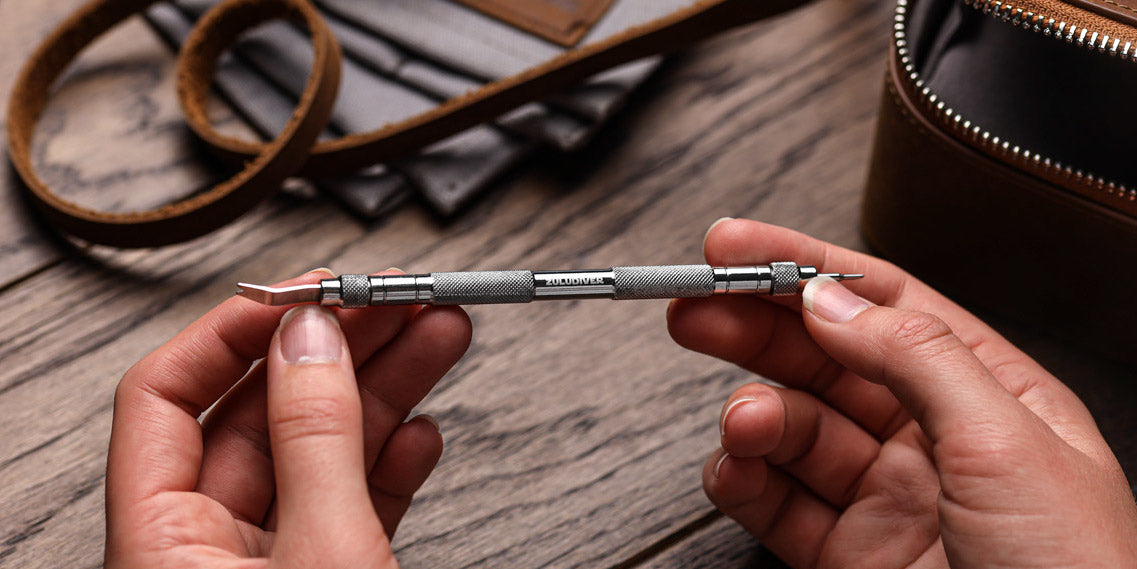
An old or slightly dull razor blade works well for spring bar compression. This method is especially useful if you don’t have a screwdriver available.
Removal Steps
- Lay the watch face-down on a stable surface
- Slide the blade edge between the strap and lug, targeting the spring bar
- Angle the blade toward the spring bar and push outward to compress it
- The opposite end disengages. Remove the strap immediately
- Retrieve the spring bar before it flies away
Use a dull blade rather than a sharp one. Dull blades reduce cutting risk significantly. Avoid sharp razors, as they increase the chance of injury and can accidentally cut through the strap.
Installation Tips
- Hold the spring bar in place with one hand while positioning the strap
- Use the blade to press and guide the free end into the second lug
- Release when both ends snap into place
- Tug gently to verify the strap is secure
A butter knife or credit card can work as alternatives, though these options offer less precision.
Use Tweezers for Control and Precision
Fine-tipped tweezers excel at installation and retrieval tasks, though they’re less effective for removal. Tweezers provide excellent control for delicate work.
Best Uses for Tweezers
Tweezers serve three primary purposes during strap changes:
- Gripping spring bars during reassembly to position them precisely
- Aligning tight-fit lugs on slim watches where fingers can’t reach
- Picking up dropped pins from hard-to-reach spots without losing them
Always use plastic-tipped tweezers to avoid scratching metal components. Metal tweezers can damage finishes even with careful handling.
How to Install with Tweezers
- Insert one end of the spring bar into the first lug
- Use tweezers to grip and compress the other end
- Guide it into the second lug hole while maintaining pressure
- Release once both ends seat properly
- Verify by gently tugging the strap
Combine methods for best results. Many users remove with dental floss and install with tweezers.
Change a Strap Using Your Fingernail
If you have strong, short nails, you can compress the spring bar directly with your fingernail. This technique requires practice but works well for simple swaps.
When This Method Works Best
This approach is most effective under specific conditions:
- On narrow straps (18-20mm width)
- With low-tension spring bars that compress easily
- For quick swaps on casual watches where precision matters less
Technique for Fingernail Installation
- Insert one end of the spring bar into the first lug
- Use your fingernail to press the free end inward, parallel to the spring bar end
- Push downward and slide it into the second hole
- Release and feel for the distinct click
This method won’t work on stiff or wide spring bars (22mm+). The compression force required exceeds what most fingernails can provide.
Step-by-Step: Full Strap Change Without Tools
Follow this complete sequence for a smooth, damage-free strap swap.
Prepare Your Workspace
A proper workspace prevents lost parts and accidental damage:
- Surface: Flat table covered with a soft cloth or towel
- Lighting: Bright, direct light to see small components clearly
- Tools Ready: Have floss, screwdriver, tweezers, and new strap within reach
- Containment: Work over a bowl or box to catch any flying spring bars
Remove the Old Strap
- Identify the spring bar ends at each lug
- Choose your preferred method (floss, screwdriver, or blade)
- Compress one end to release the other from the lug
- Slide the strap off and store the spring bar safely
- Repeat on the opposite side
Keep fingers clear of the spring bar path. These components are under tension and can shoot out unexpectedly.
Install the New Strap
- Insert a spring bar into the new strap if not pre-installed
- Start with the 12 o’clock side (buckle end) for easier alignment
- Insert one end into the first lug hole
- Compress the other end using your chosen method
- Slide into the second hole and release
- Gently tug the strap to confirm it’s secure
The strap should move slightly but not detach. If it feels loose, the spring bar isn’t fully seated.
Avoid Common Mistakes
Even experienced users make errors that can damage watches or lose small parts. Learn from these common pitfalls.
Skipping Case Protection
Metal tools can gouge the lug finish even when you’re careful. Always apply masking tape to the lugs before using screwdrivers or blades. This extra step takes seconds but prevents permanent damage.
Working Over a Sink or Floor
Never work over a sink or hard floor. Lose a spring bar down the drain and you’ll need professional help to retrieve it. Work over a container or light-colored towel that makes small parts easy to spot.
Rushing the Installation
Misaligned spring bars can pop out later, causing the watch to fall. Take your time and listen for the click. If you don’t hear it, the bar isn’t properly seated.
Using a Sharp Knife
A butter knife seems handy but is slippery and imprecise. The high injury risk and potential for scratching make this method last resort only.
Safety First: Prevent Injury and Damage
Protecting your watch and yourself requires attention and preparation.
Protect Your Watch
Three key precautions keep your watch safe:
- Tape the lugs before using any metal tools to prevent scratches
- Avoid excessive force. If something’s stuck, try a different method rather than forcing it
- Match lug width exactly. A 20mm strap on 22mm lugs creates dangerous strain
Protect Yourself
Spring bars can fly off with surprising force. Take these precautions:
- Wear safety glasses when using floss or blades
- Keep fingers clear of the compression path
- Use dull tools to reduce cut risk
- Consider thin gloves for grip and protection
When to Use a Real Spring Bar Tool
While not required, a dedicated spring bar tool offers advantages that make it worth owning.
Benefits of a Proper Tool
A spring bar tool provides several advantages over household alternatives:
- Forked tips grip spring bars securely without slipping
- Better control in tight spaces reduces hand fatigue
- Lower scratching risk due to precision design
These tools cost around $6 and last indefinitely. That’s a small investment for the safety and convenience they provide.
Consider Buying One If
You should consider purchasing a tool if any of these apply:
- You own multiple watches and swap straps regularly
- You value precision and want to minimize risk
- You frequently change straps for different occasions
Many users report that even after trying improvised methods, they still reach for their spring bar tool for speed and confidence.
Compatibility Tips for a Perfect Fit
A great strap fails if it doesn’t fit your watch properly. Check these factors before buying.
Check Lug Width
Measure the distance between your watch lugs in millimeters. Common sizes include 18mm, 20mm, and 22mm. Use a ruler or caliper for accuracy. Don’t guess, as an ill-fitting strap won’t seat properly and may damage the lugs.
Inspect Lug Design
Drilled lugs have holes through the material, making spring bar access easier. Closed lugs require more precise tool alignment. Know your watch’s design before starting.
Choose the Right Strap Material
Each material has specific handling requirements:
- Leather tears easily. Handle gently during installation
- Metal is heavier. Ensure spring bars are fully seated to prevent detachment
- Rubber and nylon are forgiving and ideal for beginners
Final Tips for Success
These additional pointers help ensure successful strap changes:
- Practice on a cheap watch before attempting your valuable timepieces
- Keep spare spring bars on hand. They cost about $1 per pair online
- Clean the lugs before installing a new strap. Dirt prevents proper seating
- Store tools together in a small watch kit for convenience
Frequently Asked Questions About Changing Watch Straps Without Tools
Can I change my watch strap without any tools at all?
Yes, depending on the strap type. NATO, Zulu, Perlon, and quick-release straps require no tools whatsoever. Simply slide them out and in. For standard spring bar straps, you need household alternatives like dental floss, a screwdriver, or a razor blade.
What household items can I use to remove a watch strap?
The most effective household items include a small flat-head screwdriver, waxed dental floss, a dull razor blade, fine-tipped tweezers, or even your fingernail. Each method works by compressing the spring bar to release it from the lug.
Is it safe to use a knife or razor blade to change my watch strap?
A dull razor blade can work safely, but sharp knives should be avoided. The slip risk with sharp blades causes higher injury potential and can cut through straps. Use dull blades and work slowly to minimize danger.
Will I scratch my watch if I don’t use a spring bar tool?
Scratch risk exists with any metal tool, but you can prevent damage. Apply masking tape to the lugs before using screwdrivers or blades. The dental floss method eliminates scratch risk entirely since it never touches the watch case.
How do I know if my watch uses spring bars or a tool-free system?
Examine your watch lugs. If the strap slides through both sets of lugs as one piece, it’s a NATO or similar style needing no tools. If you see small pins connecting the strap to the lugs, those are spring bars requiring compression for removal.
Should I just buy a spring bar tool instead?
While you can absolutely change straps without tools, a spring bar tool costs only about $6 and provides better precision and safety. If you change straps often or own multiple watches, the investment quickly pays off in convenience and peace of mind.
Key Takeaways for Changing Watch Straps Without Tools
Changing a watch strap without tools is practical, fast, and safe when done correctly. The key is preparation: protect your watch with tape, work over a contained area to catch flying spring bars, and choose your method based on your comfort level. Dental floss offers the safest, scratch-free results for removal, while a small flat-head screwdriver provides the most precise control for both removal and installation. Start with tool-free strap types like NATO or quick-release models if you want the easiest experience, then graduate to spring bar changes using the methods above. With a little practice, you’ll be customizing your watch in minutes without needing any specialized equipment.