Changing a watch strap is one of the easiest ways to refresh your timepiece, match it to your outfit, or improve comfort without buying a new watch. Whether you’re switching from a leather band to a rugged NATO or upgrading a worn-out metal bracelet, knowing how to change a watch strap safely and correctly is essential. This guide walks you through every step, tool, and trick you need to do it yourself in minutes.
Essential Tools for Strap Replacement
Having the right tools makes strap changes fast, safe, and scratch-free. Most watches use spring bars, so a few key items will cover nearly every scenario.
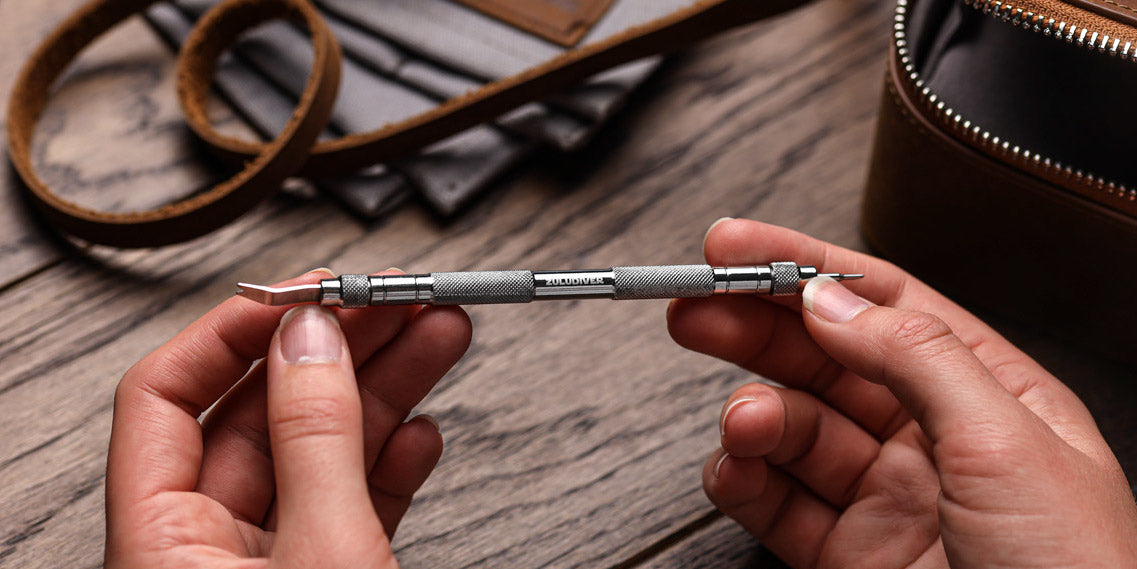
Use a Spring Bar Tool
The spring bar tool is the most reliable way to remove and install spring bars. Its thin, forked tip slips between the strap and lug to compress the spring bar ends. Choose a high-quality metal version because cheap plastic ones can break or slip and risk damage to your watch.
Add Tweezers and a Soft Mat
Keep tweezers handy to grip small spring bars or quick-release pins. Always work on a soft cloth or microfiber mat to protect the watch crystal and case from scratches. A clean, well-lit surface prevents lost parts and mistakes.
Try Dental Floss as a Backup
No tool? Use dental floss as a safe, accessible alternative. It compresses the spring bar without scratching the case. Avoid sharp blades or screwdrivers unless absolutely necessary because they can mar the finish.
Know Your Watch’s Attachment Type

Not all straps attach the same way. Identifying your watch’s system ensures you use the correct method and avoid forcing parts.
Spring Bars: Most Common
Spring bars are metal rods with spring-loaded ends that snap into lug holes. They are found on leather, rubber, NATO, and metal straps, and they require a tool or floss to remove. Match the lug width when buying replacements.
Quick-Release Pins: Tool-Free Swap
Many modern watches use quick-release mechanisms, which are small levers or buttons near the lug. Press or slide it, and the strap pops out. No tools are needed. This system is common on brands like Seiko, Hamilton, and Tissot.
Fixed Steel Pins: Leave It to Pros
Some vintage or luxury watches use solid steel pins instead of spring bars. These do not compress and require a punch tool or professional service. Use open-ended straps that fold over the bar to change the look safely.
Prepare Your Workspace Safely
A clean, organized setup prevents damage and lost parts.
Work on a Soft, Flat Surface
Lay down a microfiber cloth or watch mat on a stable table. Place the watch face-down to protect the crystal. Ensure good lighting so you can see the tiny spring bar ends clearly.
Unbuckle Before You Start
Always unbuckle or unclasp the strap before removal. A tensioned strap can snap off suddenly and fling the spring bar across the room.
Keep Spring Bars Safe
Once removed, place spring bars on a tray or magnetic pad. They are small and easy to lose. Reuse them if undamaged because replacement bars are inexpensive but should not be needed every time.
Remove the Old Strap Correctly
The removal method depends on your watch’s attachment system. Do it right, and you’ll avoid scratches or bent lugs.
Remove Spring Bar Straps
- Insert the forked end of the spring bar tool between the strap and lug.
- Locate the spring bar end and press inward to compress it into the lug.
- While holding it compressed, pull the strap down to release it.
- Repeat on the other side.
- Slide the spring bar out of the old strap for reuse.
Pro Tip: If the tool slips, reposition it to grip the bar’s ridge, not the spring tip.
Remove Quick-Release Straps
- Find the release lever on the back of the strap near the lug.
- Use a fingernail or tweezers to slide or press the lever toward the watch center.
- The strap will disengage. Pull it out gently.
- Repeat on the other side.
No tools are required, and the whole process takes under 10 seconds.
Remove Metal Bracelets
Metal bands use spring bars at the end links. Follow the same removal steps. For easier access, open the clasp first because some have a micro-adjustment spring bar that lets you unfold the bracelet.
Install the New Strap Securely
A loose strap can fall off and damage your watch. Follow these steps to ensure a snug, safe fit.
Insert Spring Bars into the New Strap
- Slide a spring bar into each end of the new strap.
- Push it through until both ends protrude evenly.
- Hold it in place with tweezers if needed.
Warning: Do not use oversized bars because they can damage the lug holes.
Attach the Top Strap First
- Position the shorter end with the buckle at the top lug.
- Insert one end of the spring bar into the lug hole.
- Use the spring bar tool to compress the other end.
- Slide it into the second hole and release. It should snap in.
- Gently tug the strap to confirm it is secure.
Attach the Bottom Strap
Repeat the same process on the bottom lug using the longer strap end. Ensure both spring bars are fully seated. If one end pops out, reinsert and compress properly.
Install a Leather Strap Properly
Leather straps add elegance but need careful handling to avoid creasing or tearing.
Align the Buckle Correctly
The buckle end goes at 12 o’clock. This keeps the watch balanced and the clasp accessible. Insert the spring bar as described. Compress one end, slide it in, and release.
Avoid Over-Tightening
Do not force the strap. If the spring bar will not seat, check whether the lug width is correct, whether the bar is inserted straight, and whether the lugs are bent. A misaligned bar can stress the lugs over time.
Fit a NATO Strap Without Damage
NATO straps are durable and secure, but installation varies by material.
Install a Nylon NATO Strap
- Insert spring bars into the lug holes, not the strap yet.
- Thread the long end of the strap between the spring bar and case at 12 o’clock, top to bottom.
- At 6 o’clock, pass it under the spring bar, bottom to top.
- Pull it back through the floating keeper.
- Adjust the watch so it sits centered.
This method secures the watch even if one spring bar fails.
Install a Leather NATO Strap
Leather can scratch if dragged across the case. Use this no-drag method.
- Remove the existing spring bars.
- Separate the two layers by pulling the long end through the floating keeper.
- Position the strap between the lugs, buckle at 12 o’clock.
- Reinsert the spring bars using the tool.
- Thread the long end back through the keeper.
This keeps the leather clean and scratch-free.
Modify a NATO Strap for Comfort
Customize your strap for a sleeker look or better fit.
Cut a Single-Layer NATO
- Remove the strap and pull the long end through the floating keeper.
- Peel back the second layer to the last seam.
- Cut it off cleanly with sharp scissors.
- Hold a lighter half an inch away from the edge for three to five seconds to seal the nylon.
- Reinstall using the standard method.
Note: This is permanent. Only cut nylon, never leather.
Reposition or Remove the Floating Keeper
On large wrists, the strap tip may not reach the keeper. Slide it off when the strap is removed. Or, reposition it in front of the fixed keeper for better fit. Just remove the buckle first.
Change a Strap Without Tools
No spring bar tool? No problem. Try these safe alternatives.
Use Dental Floss
- Cut a twelve-inch piece of floss.
- Thread it under the spring bar from the back of the lug.
- Pull both ends upward and outward. This compresses the bar.
- As it retracts, pull the strap down.
- Repeat on the other side.
Floss is strong, flexible, and will not scratch.
Try a Credit Card
Slide a thin, flexible card beside the spring bar to depress it. This works in a pinch but is riskier because it can scratch the case or strap. Avoid metal blades unless you are experienced.
Handle Special Watch Designs
Some watches need extra care due to unique lug designs.
Watches with Drilled Lugs
If your lugs have side holes, you can push the spring bar out from the side. Use a slim screwdriver or tool tip to press one end inward. The bar will slide out easily. Installation is the reverse.
Watches Without Drilled Lugs
Most watches require access from between the strap and lug. Use the spring bar tool carefully. Ensure it is fully engaged before pressing because a slipped tool can gouge the case.
Apple Watch and Smartwatches
Apple Watch bands use a push-button release. Press the button on the back of the band and slide it out. Align the new band and slide it in until it clicks. Other smartwatches may use similar quick-release systems, so check the manual.
Maintain Your Strap for Long Life
Different materials need different care to stay looking sharp.
Clean Nylon Straps
• Hand wash with mild soap and water.
• Rinse after swimming to remove salt or chlorine.
• Air dry. Never use a dryer.
• Seal minor frays with a lighter flame held near the edge.
Care for Leather Straps
• Never soak because water causes cracking and discoloration.
• Use pH-balanced leather cleaner sparingly.
• Buff with a soft cloth.
• Let it develop a natural patina. Avoid over-cleaning.
Choose the Right Size and Fit
A strap that is too wide or too short will not fit or look right.
Measure Lug Width Accurately
Use a ruler or caliper to measure the distance between the lugs. Common sizes are 18mm, 20mm, and 22mm. This is the number you need when buying a new strap.
Check Strap Length
Standard straps fit wrists up to 7.5 inches. For larger wrists, buy long straps at 8 inches or more. NATO and rubber straps often come in extended lengths.
When to See a Professional
Some watches are not DIY-friendly.
Seek Help for Fixed Pins or Vintage Watches
If your watch uses solid steel pins, do not force it. Visit a jeweler or watchmaker. Same for tight lugs, delicate vintage models, or luxury timepieces like Rolex or Omega.
Get Free Installation at Retailers
Many watch shops offer free strap changes if you buy the strap from them. This is a great option if you are unsure or lack tools.
Final Tips for Success
• Work slowly because rushing leads to mistakes.
• Check security by gently tugging on the strap after installation.
• Reuse spring bars if they are in good condition.
• Match strap to occasion. Leather for dress, NATO for adventure, metal for durability.
• Rotate straps to extend their life and reduce wear.
Frequently Asked Questions About Changing Watch Straps
How do I change a watch strap without a tool?
Use dental floss, a credit card, or a dull blade to depress the spring bar. Dental floss is the safest and most accessible method.
What is the band release button?
On watches with quick-release mechanisms, this is a small lever or button located at the junction between the strap and the lug. Pressing or sliding it disengages the strap without tools.
Can I replace a strap with steel pins?
Yes, but it is not recommended for DIY. Use open-ended straps that fold over the fixed bar. These come in glued or metal-reinforced styles.
How do I change my watch band size at home?
For metal bands, use a link removal tool to push out the pins holding the links, remove excess links, and reinsert the pins to secure the shortened band. Always follow the manufacturer’s instructions for your specific bracelet.
What tools do I need to change a watch strap?
You need a spring bar tool, tweezers, and a soft mat. Dental floss works as an alternative if you lack tools.
How do I know if my watch uses spring bars or quick-release?
Check the connection point between the strap and lug. Quick-release straps have a small lever or button. Spring bar straps require a tool or floss to release.
Key Takeaways for Changing Your Watch Strap
Changing a watch strap is a simple skill that transforms your timepiece in minutes. With the right tools and technique, you can switch styles confidently whether for fashion, function, or fun. The most important steps are identifying your attachment type, using the correct lug width, and working carefully to avoid damaging the lugs or case. Always check that spring bars are fully seated after installation, and reuse old spring bars if they remain undamaged. Now that you know how to change the strap on a watch, the only limit is your imagination.