A squeaky treadmill, a sluggish belt, or a motor that sounds like it’s working overtime are all clear signs your equipment needs attention. For most non-maintenance-free models, lubricating the treadmill running belt is the single most important upkeep task you can perform. Applying the right 100% silicone lubricant between the belt and deck cuts friction, protects the motor, and delivers a consistently safe workout. Skip this step, and you risk overheating, belt slippage, or permanent damage to internal components.
This guide covers everything you need to know about treadmill belt lubrication. You’ll learn how to confirm lubrication is needed, which products to use (and which to avoid), a safe step-by-step application process, and how to troubleshoot common problems. Whether you own a home treadmill or manage a gym, these proven techniques will keep your machine running like new for years.
Confirm Your Treadmill Actually Needs Lubrication

Before reaching for any product, verify your machine requires manual lubrication. Many modern treadmills are maintenance-free, and adding silicone to these models can void your warranty or cause damage.
Perform the Center Feel Test
Lift one edge of the running belt and slide your hand underneath to touch the center of the deck, where foot strikes are most frequent. If the surface feels dry, sticky, or rough, lubrication is overdue. A properly treated deck feels slick or slightly oily. Always check the center, not just the edges. Lubricant migrates outward over time, so the sides may feel greasy while the middle is dangerously dry.
Listen for Warning Sounds
Squeaking, grinding, or a noticeable increase in motor noise points to high friction. If the belt hesitates underfoot or the motor strains when you start walking, dryness is the likely cause. These sounds typically vanish after proper lubrication. If they persist, the real issue may be misalignment, worn bearings, or a damaged deck.
Review Usage and Time Intervals
Even without symptoms, lubricate every 3 months or after 40 to 90 hours of use, whichever comes first. Heavy users or multi-person households should lean toward the 3-month mark. Some manufacturers recommend every 150 miles. Always check your owner’s manual for model-specific guidance.
Use Only 100% Silicone Lubricant

The wrong product can destroy your treadmill. The only safe choice for standard running belts is pure silicone, never petroleum-based sprays like WD-40.
Why Silicone Is the Standard
Silicone reduces friction without degrading rubber or damaging deck coatings. It stays stable under heat and pressure, ensuring long-lasting performance. Lubricants containing detergents, solvents, or oils dry out the belt, cause cracking, and may corrode electronic components near the motor.
Acceptable Forms and Trusted Brands
Silicone comes in spray bottles with extended nozzles, liquid squeeze bottles, or pre-filled syringes. Reliable brands include Spot On, Godora, and LifeSpan. Wax-based lubricants are acceptable only if your treadmill manufacturer explicitly approves them.
Products and Practices to Avoid
- WD-40 or general-purpose lubricants (degrade rubber and attract dust)
- Motor oil or household oils (cause sludge and belt slippage)
- Lubricating the top of the belt (creates a slipping hazard)
- Over-lubricating (leads to leaks and floor stains)
Prepare the Treadmill Safely
Lubrication requires working close to moving parts and electrical components. Follow strict safety steps to protect yourself and your machine.
Unplug Before Starting
Always unplug the treadmill from the wall outlet before lifting the belt or applying any product. This prevents accidental activation, which could pull your hand into the rollers.
Let the Machine Cool Down
Wait at least 15 minutes after use before beginning. Applying lubricant to a hot deck traps heat and causes uneven spreading. A cooled motor and deck absorb silicone properly.
Protect the Floor and Workspace
Place paper towels, a drop cloth, or disposable mats under the treadmill. Silicone can stain carpets and make hard floors dangerously slippery. Keep children and pets away during the process.
Clean the Belt and Deck First
Dirt, sweat, and old lubricant buildup reduce the effectiveness of fresh silicone. Always clean before applying new product.
Vacuum Under the Belt
Use a vacuum with a hose attachment to remove dust, hair, and debris from the deck surface and along the belt edges. This prevents abrasive particles from grinding between the belt and deck.
Deep Clean if Necessary
For heavy buildup, clean the deck with mineral spirits and a nylon brush. Lift the belt or carefully turn the treadmill on its side (only if your manual permits), wipe the deck thoroughly, then let it dry completely before lubricating. Never use water or household cleaners.
Inspect for Damage
Check the underside of the belt for cracks, fraying, or glazing (a shiny, hardened surface). Examine the deck for deep grooves or warping. If either shows damage, lubrication will not help. Replacement parts are required to avoid motor failure.
Apply Lubricant Correctly
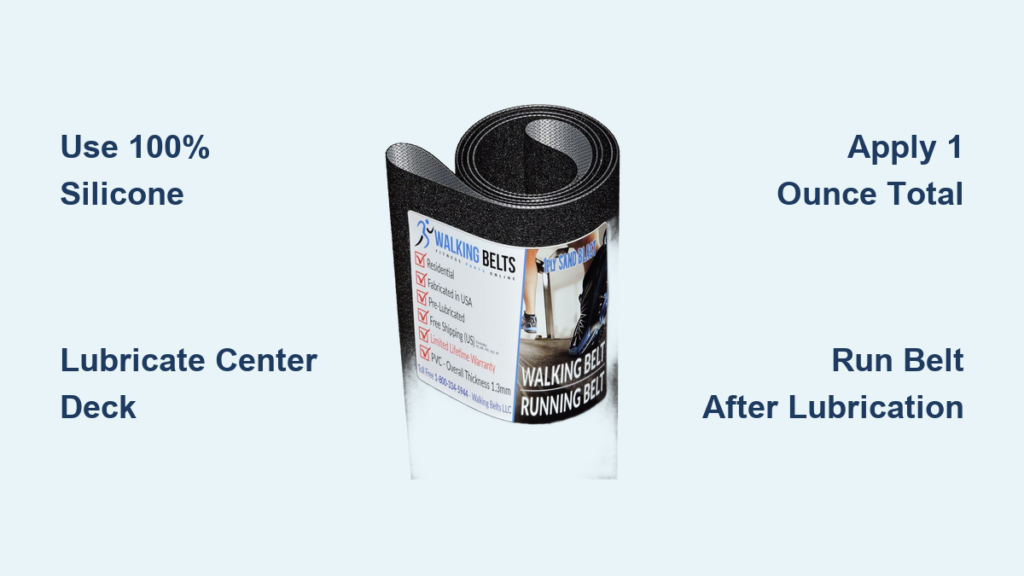
The goal is to deliver 1 ounce (30 mL) of silicone evenly across the center of the deck, where friction is highest. Split the dose: 0.5 oz per side.
Use the Squeeze Bottle Method
Stand to the side of the treadmill. Lift the belt edge and insert the nozzle under the belt toward the center. Apply in a zig-zag or straight line from front to rear, dispensing half the total dose (0.5 oz). Repeat on the opposite side. Avoid spraying near the rollers.
Try the Syringe for Precision
Fill a 30 mL oral syringe with silicone. Plug in the treadmill and set speed to 0.5 mph. Carefully insert the syringe tip under the moving belt and slowly dispense 15 mL per side. The belt’s motion spreads the lubricant instantly. Keep fingers clear at all times and use the syringe’s extension.
Avoid Foam Applicator Kits
Products like Lube-N-Walk use foam pads to wipe lubricant under the belt. While convenient, they often fail to reach the high-friction center zone and provide inconsistent coverage. Direct application works better.
Distribute the Lubricant Fully

After application, the lubricant must spread evenly across the entire belt-to-deck interface.
Run the Belt Empty
Plug in the treadmill and set it to 2 to 3 mph. Let it run for 3 to 5 minutes with no one on it. This allows the belt to absorb and spread the silicone across the full surface.
Walk It In for Final Seating
After the initial run, step on and walk at a slow pace for 2 to 3 minutes. Your weight helps press the lubricant into the deck’s pores and ensures even coverage. Do not run or jog during this phase.
Recheck Belt Tension and Alignment
If you loosened the rear roller bolts earlier, tighten them now with an Allen wrench in quarter-turn increments. Check that the belt runs centered. If it drifts, adjust the tension bolts slightly. Tighten the side it moves toward or loosen the opposite side.
Clean Up and Prevent Future Issues
A few final steps ensure safety and long-term performance.
Wipe Away Excess Lubricant
Check the sides of the belt and the base for leaks. Use a clean microfiber cloth to wipe off any visible silicone. Leftover lubricant can drip onto floors or be tracked into other rooms.
Maintain After Every Use
Wipe down the belt, handrails, and console with a dry or slightly damp cloth after each workout. Sweat and salts degrade materials over time. Regular cleaning prevents buildup and extends the time between deep maintenance.
Follow a Lubrication Schedule
Mark your calendar or set a phone reminder every 3 months. For heavy use, track hours and lubricate every 40 to 90 hours. Consistent maintenance prevents sudden failures and keeps your treadmill running quietly and smoothly.
Troubleshoot Common Problems

Even with proper lubrication, issues can arise. Here’s how to address them.
Belt Still Slipping or Hesitating
If the belt slips after lubrication and tensioning, the belt or deck may be worn out. Look for glazed spots on the belt or deep grooves in the deck. Replacement is required. Lubrication will not restore worn components.
Noise Persists After Lubrication
Squeaking or grinding that remains could mean misalignment, worn roller bearings, or motor issues. Recheck belt centering. If noise continues, stop use and contact a technician.
Circuit Breaker Trips Frequently
This signals the motor is drawing too much current, usually due to extreme friction or a failing motor. Ensure the belt is properly lubricated and not seized. If the problem persists, unplug the unit. Professional repair is needed.
Belt Drifts to One Side
During the run-in cycle, if the belt moves off-center, adjust the rear tension bolts. Make small 1/4-turn adjustments, test-run, and repeat. Never over-tighten, as this can damage the roller shafts.
Know When to Call a Professional
Lubrication is a DIY task, but some signs mean it’s time for expert help.
Watch for Burnt Smells or Scorch Marks
A burning odor or blackened areas under the deck indicate severe friction and potential motor or deck failure. Stop using the treadmill immediately. Continuing can destroy the motor controller or create a fire hazard.
Motor Shuts Off Under Light Load
If the treadmill powers down during slow walking, the motor may be overheating due to friction or electrical failure. Even after lubrication, this symptom requires professional diagnosis.
Visible Damage to Belt or Deck
Cracks, tears, or deep grooves mean replacement is necessary. No amount of lubrication can restore structural integrity. Attempting to use a damaged belt risks sudden failure and injury.
Frequently Asked Questions About Treadmill Running Belt Lubrication
How often should I lubricate my treadmill running belt?
For most home users, lubricate every 3 months or after 40 to 90 hours of use, whichever comes first. Heavy users or commercial settings may need lubrication monthly or even weekly. Always consult your owner’s manual for model-specific intervals.
Can I use WD-40 to lubricate my treadmill belt?
No. WD-40 contains solvents and petroleum additives that degrade rubber, damage deck coatings, and can harm the motor controller. Only use 100% silicone lubricant that is free of detergents and additives.
How much silicone lubricant should I use per application?
The standard dosage is 1 ounce (30 mL) total per application, split evenly between both sides of the belt. For a new belt installation, increase the amount to 2 ounces to ensure full saturation of the fresh interface.
What happens if I over-lubricate my treadmill?
Over-lubrication causes excess silicone to leak onto the floor and possibly onto the top of the belt, creating a slipping hazard. It can also attract dust and debris, leading to buildup under the belt. Stick to the recommended 1 ounce per application.
How do I know if my treadmill is maintenance-free?
Check your owner’s manual or the manufacturer’s website. Brands like NordicTrack, Precor, Life Fitness, and Spirit often feature maintenance-free belts. Adding silicone to these models can void your warranty and cause buildup that reduces traction.
Is it safe to lubricate the treadmill belt while it’s running?
Only with the syringe method, and only at a very slow speed (0.5 mph). Keep your fingers clear of the rollers at all times and use the syringe’s extension tube. For most users, the safer approach is to unplug the machine and apply silicone with the belt stationary.
Key Takeaways for Lubricating Your Treadmill Running Belt

Lubricating your treadmill running belt is a quick, essential task that protects your investment and ensures a safe, smooth workout. Always use 100% silicone lubricant, apply 1 ounce directly to the center of the deck, and run the belt empty to distribute the product evenly. Stick to a schedule of every 3 months or 40 to 90 hours of use, and never skip the safety basics: unplug first, let the machine cool, and inspect for damage before you begin. With consistent care, your treadmill can deliver reliable performance for 10 or more years.
Your next step: Check your owner’s manual today to confirm whether your model requires lubrication, then mark your calendar for the next service date. A 10-minute maintenance session now can save you hundreds of dollars in repairs later.