You’ve invested in a beautiful Cartier timepiece, and now you need to access its internals. Perhaps the battery has died, the watch is running slow, or it needs servicing. The question on your mind is straightforward: how to open a Cartier watch safely? Unlike timepieces with user-friendly battery doors, Cartier watches are engineered for precision and protection, not DIY access. Understanding the proper methods used by certified watchmakers can help you make informed decisions about maintaining your valuable investment.
This guide covers everything you need to know about opening various Cartier models, the specialized tools required, and why professional service is essential. You’ll learn about different case back designs, what happens during professional servicing, and how to protect your watch from unnecessary risks.
Types of Cartier Case Backs
Cartier employs several case back designs across their collection, each requiring specific techniques to open safely. Knowing which type your watch features is the first step toward understanding the access process.
Screw-Down Case Backs
Modern Cartier watches like the Ballon Bleu and Calibre de Cartier feature screw-down case backs designed to maintain water resistance. These backs have either notched edges or smooth surfaces that require specialized tools to rotate.
Watchmakers use a case wrench for notched backs or a vacuum cup holder for smooth surfaces. The back rotates counterclockwise until released, exposing the movement beneath. During reassembly, technicians replace old gaskets and torque the back to exact specifications to preserve the water resistance rating.
Look for grooves around the case back edge. This visual cue indicates a screw-down design that requires professional tools to access.
Snap-Back Case Designs
Vintage and dress-focused models, including older Tank variations, often use snap-back cases. These rely on tension rather than threading to stay sealed, pressed firmly into place during manufacturing.
To open snap-back cases, watchmakers gently insert a case knife or pry tool at the seam between the case middle and back. Even pressure applied around the circumference prevents denting or warping. Rubber or plastic tabs protect the finish during this delicate process.
Applying uneven force risks damaging the case lip, which can make resealing impossible without costly repairs.
Santos Screw-Bezel Access
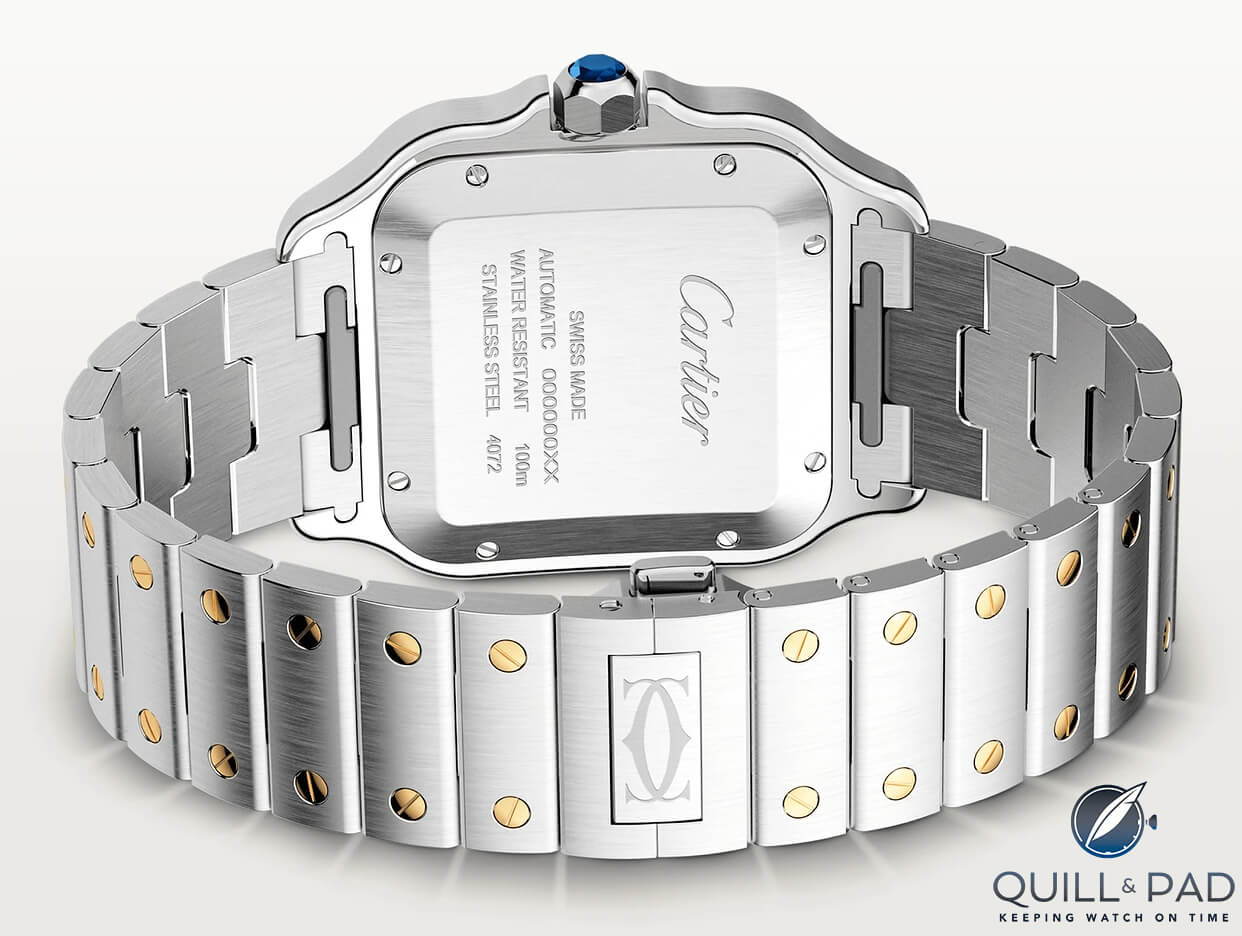
The Santos de Cartier stands apart with visible screws securing the bezel. Most models use T6 Torx screws, though some vintage versions feature proprietary slotted screws.
The opening process involves removing each screw with the correct driver, then lifting off the bezel to expose the dial. Depending on the service needed, the case back may also need removal to access the movement. Always clean screw threads before removal to prevent cam-out, which scars the metal and complicates future servicing.
Display Case Backs on Luxury Models
High-end Cartier pieces like the Rotonde de Cartier sometimes feature sapphire display backs, allowing you to admire the decorated movement. These are almost always screw-down types with a metal ring securing the crystal.
Technicians use vacuum cups or adhesive holders to unscrew the entire back assembly. The sapphire crystal requires careful handling to avoid cracks or scratches. Due to the precision fit, reassembly demands exact torque and fresh gaskets to maintain water resistance.
Tools Needed to Open a Cartier Watch

Professional watchmakers rely on specialized equipment designed for micrometer-level precision. Understanding these tools explains why DIY attempts often fail.
Essential Watchmaker Equipment
Professionals use these critical tools when opening Cartier watches:
A case wrench grips notched screw-down backs securely. A vacuum cup holder works on smooth screw-down surfaces. Case knives and pry tools open snap-back designs without scratching. Torx screwdrivers in T5 and T6 sizes fit Santos bezel screws. A magnetic holder tray keeps tiny screws organized and prevents loss. A dust-free workspace with proper lighting prevents debris from entering the movement.
Why Household Tools Fail
Using pliers, flathead screwdrivers, or improvised tools damages finishes and strips screw heads. These lack the precision of proper watchmaking equipment. Slippage during DIY attempts leaves scratches that devalue the watch and trap moisture, leading to corrosion over time.
A single scratch inside the case back can create pathways for humidity to reach the movement, causing expensive damage.
When a Cartier Watch Should Be Opened
Opening your Cartier should only happen when absolutely necessary and always performed by qualified technicians. Several common scenarios require professional access.
Battery Replacement in Quartz Models
Quartz Cartier watches like the Tank Solo or Ballon Bleu don’t have user-accessible battery doors. The entire case back must be opened to replace the battery.
This seemingly simple task requires proper gasket replacement to maintain water resistance. Technicians also check the crown and stem for wear during the process. A professional battery change takes approximately 20 to 30 minutes.
Movement Servicing for Mechanical and Automatic Watches
Manual-wind and automatic Cartier watches need full servicing every four to six years. This comprehensive process includes disassembling the movement, cleaning and lubricating components, then reassembling and adjusting timekeeping accuracy.
Access begins with case back removal. The watchmaker evaluates the movement for wear, magnetization, or damage. Exposing the movement to air without proper cleaning tools accelerates oil degradation and attracts dust particles.
Dial or Hand Repair
Bent hands or damaged dials require opening the watch, often through the front bezel rather than the case back. The Santos design particularly suits this approach, allowing direct access to the dial train without disturbing case back seals.
Crystal Replacement
Scratched or cracked crystals require removal of either the bezel or case back, depending on the model design. New crystals get pressed or screwed into place, then sealed properly. Attempting crystal replacement without proper tools risks cracking the dial beneath.
Professional Service vs. DIY Attempts
The difference between professional servicing and DIY attempts is stark. Understanding the risks helps you make the right choice for your timepiece.
Why Authorized Service Matters
Cartier recommends servicing at official boutiques or certified watchmakers. These professionals have model-specific training, access to genuine parts and gaskets, and proper calibration tools.
After reassembly, every watch undergoes water resistance testing and accuracy verification. These critical steps cannot be replicated at home. The investment in professional service protects your watch’s performance, value, and longevity.
Risks of Unauthorized Opening
Several serious consequences follow improper opening attempts:
Unauthorized handling voids the warranty immediately. Collectors discount watches with non-Cartier service history. Improperly seated gaskets allow moisture intrusion, rusting internal components. Static electricity or dust can stop mechanical movements permanently.
A quartz Tank that stops working after a DIY battery change often has corroded circuits due to trapped moisture from improper sealing.
Step-by-Step: How Professionals Open a Cartier Watch
While you shouldn’t attempt this at home, knowing the professional process helps you understand what to expect from certified service.
Step 1: Identify the Model and Case Type
The watchmaker references model numbers and technical specifications to determine the correct case back type and required tools. This prevents using wrong techniques on delicate vintage pieces.
Step 2: Prepare the Work Area
The watch receives external cleaning, then moves to a static-free, dust-controlled environment. Tools get laid out systematically, and magnification of 10x to 20x prepares for precision work.
Step 3: Apply the Correct Opening Method
For screw-down backs, technicians attach a vacuum cup, rotate counterclockwise until loose, then lift off while inspecting the gasket condition. For snap-backs, a case knife inserts at the seam, gently twists to pop the back open, and works around the edge evenly. For Santos models, a T6 Torx driver removes bezel screws, then the bezel and crystal lift to access the dial.
Step 4: Inspect Internal Components
Once open, the technician checks for dust or moisture intrusion, gasket wear, movement condition, and magnetization using a gauss meter. All findings get documented before proceeding.
Step 5: Perform Required Service
Whether replacing a battery or servicing the full movement, all work follows Cartier’s technical guidelines. Only original parts and manufacturer-approved lubricants are used.
Step 6: Reassemble and Test
New gaskets install, the case back torques to specification, water resistance tests to rated depth, and function verifies over 24 to 72 hours. The watch leaves the service center performing as well as when new.
Maintenance Tips to Avoid Unnecessary Opening
Preventive care reduces how often your watch needs opening, saving money and protecting value.
Clean Gently and Appropriately
Wipe the case with a soft, dry cloth regularly. Avoid submerging non-water-resistant models. For water-resistant watches, rinse with fresh water after saltwater exposure, but never open the case to dry interior components.
Service on Schedule
Even when running perfectly, internal lubricants dry out over four to six years. Regular servicing prevents premature wear and costly repairs down the line.
Store Properly
Keep your Cartier in a dry, temperature-stable environment. Use a watch box with soft lining to prevent scratches and protect the finish.
Key Takeaways for Opening Your Cartier Watch

There is no safe, user-accessible method to open a Cartier watch. From the screw-down backs of the Ballon Bleu to the Torx-secured bezels of the Santos, every design prioritizes protection and precision over DIY access.
What appears to be a simple screw or seam is actually part of a tightly engineered system requiring expertise to handle properly. If your Cartier needs a battery, repair, or cleaning, send it to an authorized service center. The cost preserves your watch’s performance, water resistance, and resale value.
Attempting to open it yourself might save a few dollars today but could cost hundreds in damage tomorrow. Your Cartier deserves nothing less than professional care.
Frequently Asked Questions About Opening a Cartier Watch
Can I open my Cartier watch to replace the battery myself?
No. Cartier does not design watches with user-serviceable battery doors. The entire case back must be opened by a professional to replace the battery while maintaining water resistance and avoiding damage to the movement or seals.
What tools do professionals use to open a Cartier watch?
Professionals use specialized tools including case wrenches for notched screw-down backs, vacuum cup holders for smooth surfaces, case knives for snap-back designs, and Torx screwdrivers for Santos models. These precision tools prevent damage during opening.
How often should a Cartier watch be serviced?
Cartier recommends servicing every four to six years, regardless of whether the watch is running properly. Regular servicing includes opening the case to clean, lubricate, and inspect the movement, ensuring long-term reliability.
Does opening my Cartier watch void the warranty?
Yes. Any unauthorized opening or non-Cartier service attempt voids the warranty immediately. Always use official Cartier boutiques or certified service centers to maintain warranty coverage and resale value.
What happens if I try to open my Cartier watch with household tools?
Household tools lack the precision needed for watchwork. They can scratch the case, strip screw heads, damage gaskets, and compromise water resistance. Even slight damage affects long-term value and can allow moisture intrusion that rusts internal components.
How do I know what type of case back my Cartier has?
Examine the case back edge. Grooves or notches indicate a screw-down design. A completely smooth edge suggests either a snap-back or a smooth screw-down. The Santos model has visible Torx screws on the bezel. When in doubt, consult a professional or Cartier documentation.