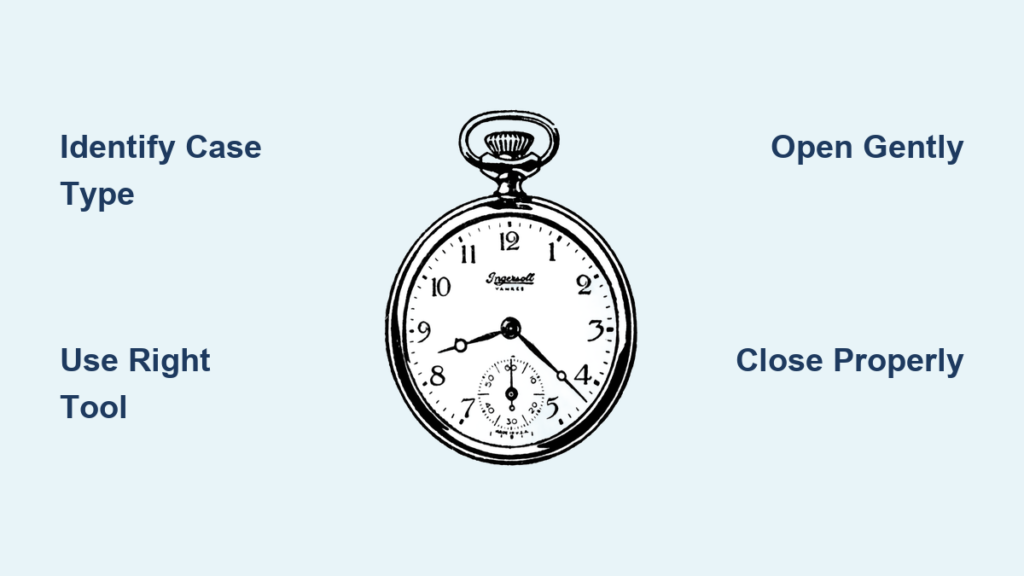
Opening a pocket watch might seem simple, but doing it incorrectly can cause permanent damage. Whether you’re inspecting an heirloom, replacing a battery, or servicing a vintage timepiece, knowing how to open a pocket watch the right way is essential. The method depends entirely on the case type, which varies by era, manufacturer, and design. Forcing the wrong approach can ruin a valuable collectible.
Most pocket watches fall into one of six main categories: swing-out, hunting, snap-open, screw-back, lever-set, or low-cost “dollar” models. Each opens differently. This guide walks you through how to identify your watch’s case and apply the correct, safe opening technique.
Identify Your Pocket Watch Case Type
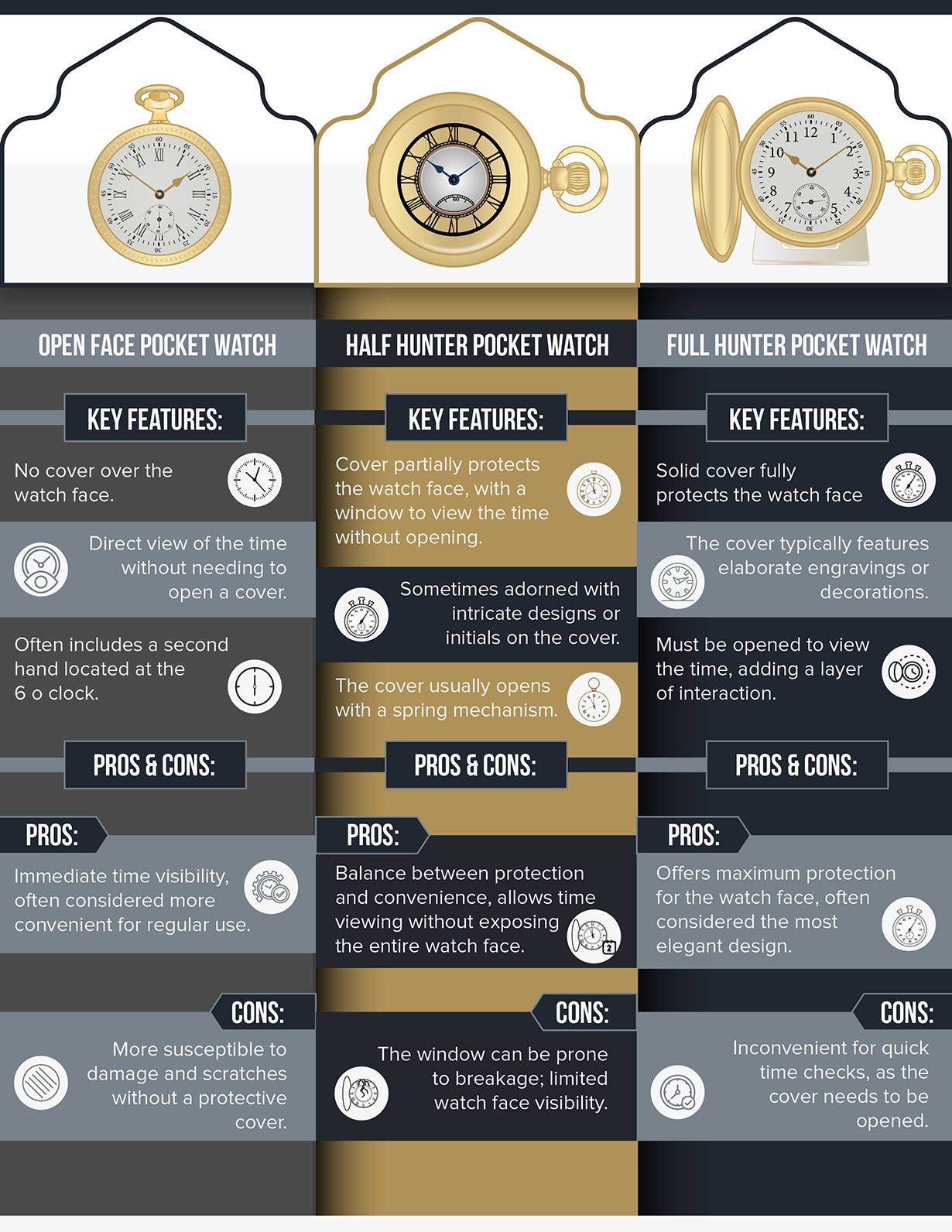
Before applying any tool or pressure, determine your watch’s construction. Opening methods are case-specific. Misidentifying can lead to broken parts or cosmetic damage.
Look for Visual Clues on the Front and Back
Examine both sides under good light. Use a magnifying glass if needed. Key indicators include seams, lips, buttons, hinges, and crown placement.
• Front bezel: Is there a seam? A hinged lid? A release button?
• Case back: Does it have a raised edge, cutout, or flush finish?
• Crown position: At 12 o’clock (open face) or 3 o’clock (hunting)?
• Movement visibility: Can you see the dial without opening?
These details help classify the case and guide your next steps.
Check for Hinges, Buttons, or Seams
• Hinged front cover? Likely a hunting case—press the button to open.
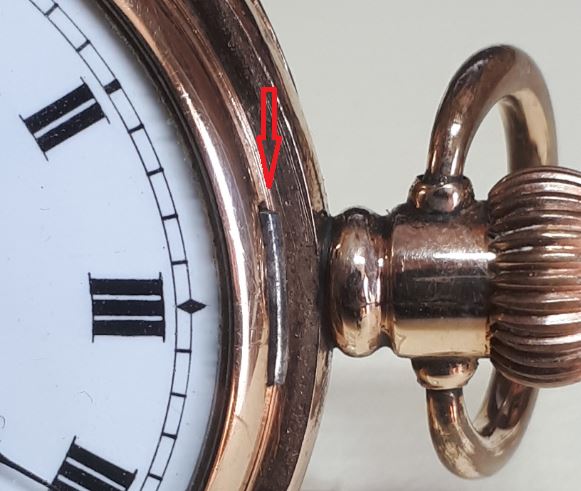
• No front lid, but a small notch at 6 o’clock? Could be a swing-out model.
• Raised lip on the back? Points to a snap-open design.
• Flush seams with no lip? Suggests a screw-type case (front or back).
• Tiny slit at a corner? Common in vintage octagonal snap-open cases.
Never assume all backs unscrew. Many don’t open at all.
Open Swing-Out Pocket Watches Correctly
Swing-out cases are common in American-made Elgin, Waltham, and Hamilton watches from the early 20th century. The back does not open. Only the front swings out.
Find the Release Dimple at 6 O’Clock
Look closely at the front bezel seam near the 6 o’clock position. You should see a small nick, dimple, or notch. This is the release point.
Pull the crown gently first. It may click, indicating the mechanism is ready.
Pry Gently with a Thin Tool
Use a fingernail, dental pick, or razor blade. Insert it into the notch and apply upward pressure. The front assembly will swing out on an internal hinge, revealing the movement.
Do not pry the back. This will damage the case.
Avoid Forcing or Removing the Movement Prematurely
The movement remains attached. If full removal is needed, check for retaining clips or screws inside. Never yank it out.
After inspection, close by aligning the front and pressing until it clicks shut.
Handle Hunting Case Watches with Care
Hunting case pocket watches feature a solid metal lid that protects the crystal. These were popular with equestrians and outdoorsmen.
Locate the Crown-Mounted Release Button
The release is usually on the crown (pendant) itself. Press it firmly while lifting the lid upward. The front cover swings open smoothly.
Some European models have a side-mounted button instead.
Press Button Before Lifting the Lid
Failing to press the button first can break the internal spring latch. If the lid won’t budge, double-check that you’re pressing the release.
Never force it open. Mechanical damage is irreversible.
Close Securely to Protect the Crystal
After use, lower the lid and press gently until it clicks. Ensure the spring latch engages. A loose lid increases risk of crystal damage during storage or transport.
Open Snap-Back Pocket Watches Safely
Snap-back (or friction-fit) cases are common in vintage silver, chrome, and octagonal designs. They open with even pressure around the edge.
Use a Case Opener or Dull Knife Blade
Insert a pocket watch case opener into the raised cutout on the back. Slide it around the circumference to evenly release the snap fit.
No tool? Use the middle of a dull butter knife blade in a corner slit (common on octagonals). Press the back of the blade with your thumb, then twist upward gently.
Never use the tip. It can slip and scratch.
Align the Internal Notch and Teat When Closing
Inside the back, look for a small notch. On the inner rim, find the corresponding teat (protrusion). These must align when closing.
If misaligned, the case won’t snap shut. Rotate the back slightly until they match.
Prevent Damage from Improper Tools
Avoid pliers, screwdrivers, or metal prying tools. They mar the case finish and can deform soft metals like silver or gold fill.
Unlock Screw-Back and Screw-Front Cases
Screw-type cases have flush seams with no lip. They require rotational force, not prying.
Test If the Back Unscrews Counterclockwise
Try turning the back counterclockwise with clean fingers. If it resists firmly but doesn’t spin freely, it may be a screw-back.
If it spins without loosening, it’s likely a screw-front. The bezel must be unscrewed instead.
Use Rubber Grip for Better Traction
Use a rubber jar opener, exercise resistance band, or partially deflated tennis ball. Cut a slit in the ball, insert the watch, and twist your palms in opposite directions.
This provides grip without scratching.
Avoid Cross-Threading During Reassembly
Always start threads by hand. Turn slowly and evenly. Forcing it can cross-thread the case, causing permanent damage.
If resistance is high, stop. Oxidation or dried gunk may require professional cleaning.
Deal with Low-Cost “Dollar” Watch Designs
Early 20th-century dollar watches (like “Manhattan” style) were mass-produced with thin metal cases. They’re fragile and prone to bending.
Pry Open at the Seam with a Utility Knife
Insert a thin blade at the seam and gently twist to separate the halves. Some models require lifting a side stem instead of pulling the crown.
These cases lack precision engineering. Handle with extra care.
Expect Minimal Craftsmanship
No internal dust covers, weak springs, or flimsy hinges. Avoid repeated opening. It accelerates wear.
Due to low value, replacement is often more practical than repair.
Use the Right Tools and Avoid Dangerous Ones
Having proper tools prevents damage and improves success.
Recommended Tools for Each Case Type
• Case opener (wrench): Best for snap-back and screw-back cases.
• Dull knife or butter knife: Safe for prying snap-open cases.
• Rubber grip pad or tennis ball: For screw-type cases.
• Precision screwdriver or razor blade: For swing-out dimples.
• Magnifying loupe: To spot hidden notches and seams.
Never Use Pliers or Vise Grips
These will scratch or crush the case. Even rubber-coated pliers pose risks.
Professional watchmakers use specialized holders and machines, not handheld wrenches.
DIY Alternatives Work in a Pinch
No case opener? Try the tennis ball trick for screw cases or a butter knife for snap-backs. Just avoid sharp edges and excessive force.
Follow a Step-by-Step Opening Procedure
A systematic approach minimizes risk.
Inspect the Watch Under Good Light
Check all sides. Look for seams, buttons, dimples, and lip types. Determine if it’s open face or hunting.
Use a loupe to spot tiny slits or markings.
Determine Case Type Before Acting
Ask yourself these questions:
• Does the front have a lid? It’s a hunting case.
• Is there a notch at 6 o’clock? It’s a swing-out.
• Raised lip on back? It’s snap-open.
• Flush seam? It’s screw-type.
• Thin metal, no features? It’s a dollar watch.
Match your findings to known types.
Try Non-Destructive Methods First
• Press the crown button (hunting).
• Pull the stem (swing-out).
• Test if back unscrews (screw-type).
• Look for a corner slit (octagonal snap-open).
If one method fails, don’t force it. Reevaluate.
Open Slowly and Evenly
Whether prying or unscrewing, apply gentle, consistent pressure. Sudden force risks cracks or deformation.
If stuck, stop. The case may be seized or incorrectly identified.
Test Functionality After Opening
Once open, assess the movement’s condition.
Check the Balance Wheel Movement
Hold the watch dial-down. Give it a quick twist like turning a doorknob. Watch the balance wheel (small oscillating wheel near the mainspring).
• Oscillates? Movement may still work.
• No movement? Balance staff could be broken or gummed up with old oil.
Wind Gently to Test Ticking
If the balance moves, wind the crown clockwise for 4-5 turns. Listen for ticking.
• Ticks steadily? It may run. Don’t overuse without servicing.
• Winds infinitely? Mainspring is likely broken.
Never run a vintage watch long-term without cleaning and oiling. Dried lubricant causes wear.
Close the Case Properly to Prevent Damage
Reassembly is as important as opening.
Align Internal Notches Before Closing
For snap-open and swing-out cases, ensure the notch and teat are aligned. Otherwise, it won’t close fully.
Press Evenly Around the Edge
For snap-cases, press around the perimeter until it clicks. Don’t just push one spot.
Hand-Tighten Screw Cases Only
After aligning threads, tighten gently by hand. Over-tightening can strip threads.
Use rubber grip if needed, but never tools that can slip.
Know When to See a Professional
Some watches shouldn’t be opened at home.
Antique or Heirloom Watches Need Expert Hands
If it’s a family keepsake or valuable collectible, take it to a watchmaker. They have the right tools, workspace, and experience.
Forcing it could destroy sentimental or monetary value.
Damaged, Corroded, or Stuck Cases Require Special Tools
Rust, dents, or previous damage increase risk. Professionals use case-opening machines that apply even pressure without marring.
Lever-Set and Railroad Watches Are High-Stakes
These precision timepieces were built to strict standards. Opening them incorrectly affects accuracy and collectibility.
Leave them to experts unless you’re trained.
Maintain Your Pocket Watch After Opening
Proper care extends life and keeps it running.
Wind Unused Watches Monthly
Even if not worn, wind 2-3 times per month to keep oils distributed. Prevents gumming and wear.
Store in a Dry, Stable Environment
Avoid humidity, temperature swings, and magnets. These harm movement and case.
Think of it like a car. Regular maintenance prevents bigger issues.
Service Frequently Based on Use
• Daily wear: Service every 1 year
• Occasional use: Every 3-5 years
Includes cleaning, oiling, and regulation.
Final Tips for Opening Any Pocket Watch
Success comes from patience and precision.
Start with the Least Invasive Method
Always begin with gentle techniques. Pull the stem, press a button, or test for screw motion. Save prying for confirmed snap-open cases.
Handle by the Edges to Avoid Smudges
Oils from fingers can stain engravings or gold-filled surfaces. Hold the case sides instead.
Document the Interior with Photos
Capture serial numbers, hallmarks, or engravings before closing. Useful for identification, appraisal, or insurance.
Never Rush. Patience Prevents Costly Mistakes
If unsure, stop and research. A few minutes of hesitation can save hundreds in repair costs.
For sentimental or valuable pieces, when in doubt, see a professional.
Frequently Asked Questions About Opening a Pocket Watch
How do I know if my pocket watch is screw-back or snap-open?
Examine the back edge closely. A snap-open case has a raised lip or cutout along the edge. A screw-back case has flush seams with no lip. You can also try turning the back gently. If it spins freely without loosening, it’s likely a screw-front model requiring the bezel to be unscrewed instead.
Can I open a pocket watch without special tools?
Yes, for many case types. A dull butter knife works for snap-open cases. A tennis ball or rubber jar opener provides grip for screw-back cases. For swing-out models, a fingernail or thin blade at the 6 o’clock notch usually suffices. Just avoid sharp metal tools that can scratch or slip.
What happens if I force a pocket watch open?
Forcing can strip threads, crack crystals, break hinges, or deform the case. Once damaged, repair is often costly or impossible. If resistance is high, stop immediately and reassess the case type. For valuable watches, consult a professional rather than risk damage.
Are all pocket watch backs removable?
No. Swing-out cases have permanently sealed backs. The front assembly swings out for access to the movement. Attempting to open the back on these models will damage the case. Always identify the case type before attempting to open any pocket watch.
How do I open an octagonal pocket watch?
Most vintage octagonal pocket watches are snap-open types. Look for a tiny slit at one of the corners. Insert the middle of a dull knife blade into the slit. Press the back of the blade with your thumb, then twist upward gently to release the catch.
Should I attempt to repair my pocket watch myself?
Only if you have proper tools and experience. Basic opening and inspection is manageable for most case types. However, internal repairs, crystal replacement, or movement servicing require specialized skills. For antique, heirloom, or valuable watches, always seek a professional watchmaker.
Key Takeaways for Opening Your Pocket Watch
Opening a pocket watch safely comes down to three things: correct case identification, appropriate tools, and patient technique. Never force a case open. If resistance is high, stop and reassess. The six main case types (swing-out, hunting, snap-open, screw-back, lever-set, and dollar watches) each require different approaches. Use the least invasive method first, and reserve prying for confirmed snap-open cases. For valuable or sentimental pieces, when in doubt, consult a professional watchmaker.