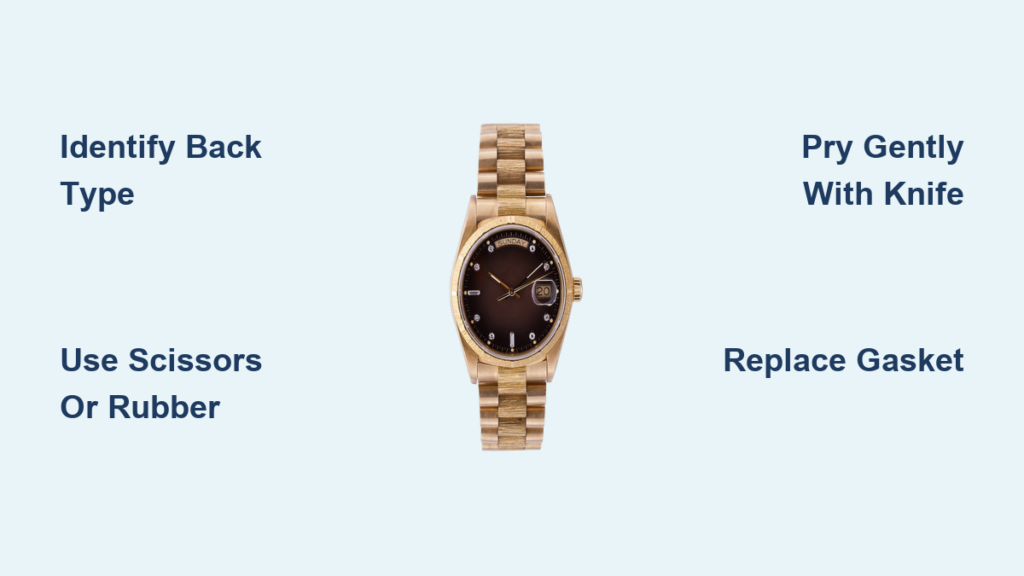
You’re staring at your watch, the battery dead, and no tools in sight. Taking it to a jeweler might cost more than the watch is worth, so you wonder: can I open a watch back without tools? The answer is yes, if you know the right method for your watch type. Millions of people replace watch batteries at home using everyday household items. But one wrong move can scratch the case, strip the threads, or ruin the water-resistant seal. The key isn’t strength, it’s knowing your watch’s case back type and using the correct no-tools technique.
In this guide, you’ll learn exactly how to open a screw-back or snap-back watch without specialized tools, avoid common mistakes, preserve water resistance, and reassemble it safely. Whether you’re using scissors, a rubber ball, or just your fingernail, we’ll walk you through every step so you can save time, money, and your watch.
Identify Your Watch Case Back Type Before Proceeding
Before applying any force, determine your case back type. Using the wrong method risks permanent damage. There are three main types: screw-back, snap-back, and hinged backs.
Screw-Back vs Snap-Back: Spot the Difference
Look for these visual clues to identify your watch type:
- Screw-back: Look for six notches or grooves around the edge. These must be unscrewed counterclockwise. Found in water-resistant watches rated 30m, 50m, or higher.
- Snap-back: Smooth edge with no notches. Held by tension and requires prying, not rotation.
- Hinged or simple back: Often on basic quartz watches. May have a small tab or groove for fingernail access.
Critical Insight: Water resistance does not guarantee a screw-back. Some 50m-rated watches use snap-backs with strong gaskets.
Use a Magnifier for Hidden Details
Low light or small case sizes can hide notches. Use a phone flashlight and camera zoom to inspect the edge closely. Some screw-backs have smooth outer surfaces but are still threaded underneath.
Check for a Gasket or Sealing Ring
Remove the back and look for a black or red rubber ring in a groove. This gasket ensures water resistance. If it’s cracked or missing, your watch won’t stay sealed, even if reassembled correctly.
Open Screw-Back Watches Without Tools
Screw-backs need rotational force, not prying. Use household items that grip or create friction to turn the back counterclockwise.
Use Scissors to Turn Grooved Backs
Best for: Screw-backs with visible notches.
Steps:
- Use metal scissors with sharp, narrow tips.
- Open the blades and insert one tip into a notch.
- Hold the watch firmly and rotate the entire scissors counterclockwise.
- For better leverage, place both tips into opposite notches and twist like a wrench.
- Once loose, finish unscrewing by hand to avoid over-tightening.
Pro Tip: Press the scissors handle down slightly to maintain grip and prevent slipping.
Risk: Slipping can scratch the case. Work slowly and apply steady pressure.
Try Metal Calipers for Better Grip
Best for: Tight or deep-groove screw-backs.
Steps:
- Open a metal caliper and place its jaws into two opposite notches.
- Tighten the locking screw to secure the grip.
- Rotate the entire caliper counterclockwise.
- Remove by hand once loose.
Advantage: Superior control and less likely to slip than scissors.
Limitation: Requires owning calipers, which are less common than scissors.
Twist Off Smooth Screw-Backs with a Rubber Ball
Best for: Screw-backs with no visible notches, smooth flat surfaces.
Tools:
- Stress ball
- Rubber jar opener pad
- Tennis ball wrapped in duct tape
- Mouse pad
Steps:
- Press the rubber surface firmly against the case back.
- Use quick, firm twisting motions counterclockwise.
- The friction should grip and begin unscrewing the back.
- Finish removal by hand.
Alternative: Wrap a wide rubber band around your fingers for extra grip when turning manually.
Why It Works: Rubber creates high friction, like a homemade suction wrench.
User Feedback: This method scores 4 out of 5 stars for safety and effectiveness with no scratches.
Alternative Tools for Screw-Backs
- Needle-nose pliers: Grip two notches and turn counterclockwise. Use cloth padding to prevent marring.
- Flathead screwdriver: Insert into one notch and lever. High slip risk, not recommended.
- Rubber eraser: Press and twist. Less surface contact, works only on loose backs.
Warning: Never hammer or force. Resistance means wrong method or cross-threading.
Open Snap-Back Watches Without Tools

Snap-backs require leverage, not rotation. The goal is to break the compression seal gently.
Pry With a Knife or Razor Blade
Best for: Snap-backs with a small groove or cutout on the case side.
Steps:
- Place the watch face-down on a soft cloth.
- Find the indentation or seam, which is the opening point.
- Insert the edge of a kitchen knife, razor blade, or flat screwdriver into the gap.
- Gently twist the tool like a lever to lift the back.
- Once raised, remove with fingers.
Safety Tips:
- Use minimal force.
- Keep the blade shallow, don’t plunge into the case.
- Work at multiple points if the back resists.
User Hack: A butter knife or straightened paperclip works in a pinch.
Risk: Scratches, bent case, or damaged gasket on thin cases.
Use a Wood Block for Extra Leverage
Best for: Stubborn snap-backs that won’t budge.
Steps:
- Place a small wood block near the case edge as a fulcrum.
- Insert a thin blade into the groove.
- Press down on the blade’s handle to amplify lifting force.
- Pop the back off slowly.
Caution: Too much pressure can deform the case. Use only when gentle prying fails.
Open With Fingernails or Thumbnail
Best for: Low-cost fashion watches with weak seals.
Steps:
- Locate the seam or cutout.
- Insert your thumbnail and apply upward pressure.
- Rotate slightly to break the seal.
Limitation: Won’t work on water-resistant or tightly sealed models.
Real-World Use: Effective on 30% of basic quartz watches according to user reports.
Handle the Battery and Internals Safely
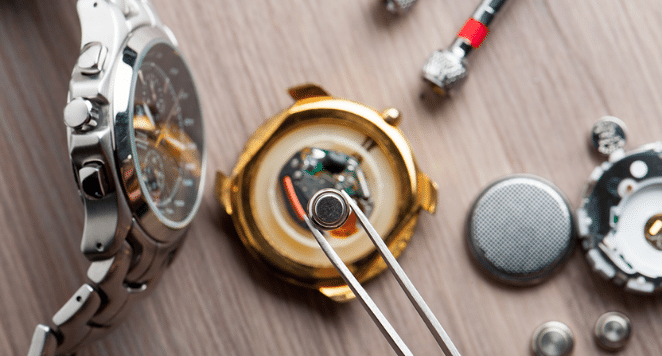
Once open, avoid touching internal parts. Mistakes here can damage the movement permanently.
Never Touch the Movement With Bare Hands
Skin oils can corrode circuits or attract dust. Always handle by the case, not the internals.
Take a Photo Before Removing the Battery
Snap a picture of the battery orientation, the positive side up or down, the battery model number, and any retaining clips or screws. This ensures correct reassembly.
Remove the Old Battery Safely
Use a plastic spudger or toothpick to nudge the battery out. Use non-conductive tweezers to lift it. Avoid metal tools that can short-circuit the movement if they touch other components.
Install the New Battery
- Match the exact model from your photo.
- Insert with correct polarity.
- Press gently into place, don’t force.
Common Types:
- CR2032 (3V, 20mm) is most common.
- CR2025 is thinner with lower capacity.
- SR626SW is 1.55V for small watches.
Cost Tip: Batteries cost $1 to $5 online versus $20 at a jeweler.
Check and Care for the Gasket

The rubber gasket keeps water out. Damaging it ruins water resistance permanently.
Inspect for Damage
Look for cracks, hardness or dryness, and missing sections. If damaged, replace it, don’t reuse.
Clean and Lubricate the Gasket
- Wipe with a dry, lint-free cloth.
- Apply a tiny drop of silicone grease, watch-grade only.
- Never use Vaseline or oil because they degrade rubber.
Fact: A dry gasket loses 70% of its sealing ability over time.
Reassemble the Watch Correctly
Improper reassembly causes leaks, misalignment, or damage.
Screw-Back: Hand-Tighten First
- Align threads carefully, start by hand.
- Screw clockwise until snug.
- Use scissors or calipers to finish, stop when tight.
- Do not over-tighten, which can strip threads or crush the gasket.
Pro Tip: Over-tightening is the number one cause of DIY failure.
Snap-Back: Press Evenly to Seal
- Align the back flush with the case.
- Press down with firm, even pressure around the edges.
- Use a cloth-covered wood block or rubber ball to help seat it.
- Listen for a soft click indicating full seating.
Troubleshoot: If it won’t snap, check for debris or misalignment. Ensure the gasket isn’t pinched. Never hammer it closed.
Final Checks and When to Stop
After reassembly, verify everything works.
Test the Watch Function
- Does it start ticking?
- Is the time accurate?
- Did the hands reset properly?
Some watches need a reset procedure after battery change. Consult the manual if available.
Check the Case Back Seal
- Is it flush with the case?
- No visible gaps or tilting?
- No wobbling when gently pressed?
If not, reopen and reseat.
Avoid Water Exposure
Even if the watch was water-resistant before, DIY reassembly doesn’t guarantee sealing. Avoid swimming, showering, and rain exposure.
Expert Advice: Only professional pressure testing confirms water resistance.
Know When to Call a Professional
DIY is great, but not for every watch.
Seek Help If:
- The back is stuck, stripped, or corroded.
- The watch is luxury, vintage, or dive-rated (200m+).
- You’ve damaged the gasket or case.
- You’re unsure of the back type.
Watchmaker Insight: “I see watches every week with mangled backs from DIY attempts. A $10 battery job turns into a $100 repair.”
Professional service ensures correct gasket replacement, pressure testing, and movement inspection.
Frequently Asked Questions About Opening Watch Backs Without Tools
Can I open any watch back without tools?
Not all watches can be opened without tools. Screw-back watches with deep notches respond well to household items like scissors. Snap-backs can sometimes be pried open with a knife or fingernail. However, luxury watches, vintage pieces, and dive-rated watches (200m+) should always be opened by a professional to avoid damaging the case, gasket, or movement.
What household items can open a screw-back watch?
Metal scissors work well by inserting the tips into the notches and turning counterclockwise. A rubber ball or stress ball creates friction to twist off smooth screw-backs. Metal calipers provide the best grip for deep-groove backs. A rubber jar opener pad or mouse pad also generates enough friction for smooth surfaces.
How do I know if my watch is screw-back or snap-back?
Look at the edge of the case back. A screw-back has six notches or grooves around the outer edge. A snap-back has a smooth edge with no notches. Some screw-backs appear smooth on the outside but still have threads inside, so inspect carefully using a flashlight.
Will opening my watch void the warranty?
Yes, opening a watch back typically voids the manufacturer’s warranty. Most warranties explicitly state that the case must not be opened by anyone other than an authorized service center. If your watch is still under warranty, check the terms before attempting DIY repair.
Can I damage my watch by opening it without tools?
Yes, significant risks exist. Using the wrong method can scratch the case, strip the threads, damage the gasket, or bend the case. Forcing a back open when it resists can cause internal damage to the movement. Working on a hard surface without protection can also scratch the watch face or case.
How do I preserve water resistance after opening my watch?
Inspect the gasket for cracks or dryness and replace if damaged. Apply a tiny amount of silicone grease to the gasket before reassembly. Press the back evenly to ensure a proper seal. Avoid submerging the watch in water unless a professional pressure test confirms the seal is intact.
Key Takeaways for Opening Your Watch Back Without Tools
Opening a watch back without tools is entirely possible and often successful with the right knowledge. Always identify your case back type first, screw-back versus snap-back, because using the wrong method causes most DIY damage.
For screw-backs, use scissors in the notches or a rubber ball for smooth surfaces. For snap-backs, gentle prying with a knife or fingernail works on lightly sealed watches. Never force a back that resists, and avoid over-tightening during reassembly.
Take photos before disassembly, handle the movement carefully, and replace the gasket every two to three years to maintain water resistance. When in doubt, stop and seek professional help. Your watch’s value and function depend on precision, not power.