You have just replaced your watch battery or cleaned the interior of your timepiece, and now comes the tricky part: getting the back cover securely back in place. If your watch has a snap-on case back, it will not screw or click like a jar lid. Instead, it requires even pressure to seal properly. Many people struggle with this step, risking damage to the crystal, misalignment, or water resistance failure. This guide walks you through preparation, proven DIY methods, when to use a press, and how to avoid common mistakes so you can safely reattach a watch back cover without professional help.
Inspect and Prepare the Case Back
Before applying any pressure, proper setup is essential to ensure a secure and damage-free closure.
Check the Gasket Condition
The rubber or silicone gasket creates a watertight seal between the case and the back. If compromised, your watch loses water resistance and may not close fully.
• Look for cracks, flattening, or brittleness on the gasket
• Replace if hardened or deformed, as most replacement gaskets cost under $2
• Lightly lubricate with silicone grease to aid installation and longevity
A damaged gasket is the number one cause of failed seals, because even if the back snaps on, moisture can still enter the case.
Align the Notch with the Crown Stem
Misalignment prevents proper seating and risks damaging the movement inside the watch.
• Find the notch or cutout on the inner edge of the case back
• Position it directly over the crown stem tube, which is the protrusion where the crown extends
• Ensure logos or text are upright when the crown is at the 3 o’clock position
Even a slight misalignment can block full closure, so double-check before pressing down.
Choose the Right Reattachment Method
Not all snap-back cases require the same amount of force. The method you choose depends on how tight the fit is and what tools you have available.
Use Hand Pressure for Loose-Fitting Cases
This method works best for thin dress watches with lower retention force. It requires no special tools.
Apply Even Thumb Pressure
• Hold the watch face-up, gripping the sides gently with your fingers
• Place both thumbs on opposite edges of the case back
• Press down firmly while rotating your thumbs around the perimeter
• Focus extra pressure on any raised section that seems higher than the rest
This works only on loosely fitting backs. There is a high risk of slipping on tight cases, so avoid this method if you feel excessive force is needed.
Try the Palm Press Technique
This technique is recommended by experienced hobbyists because it offers better control and even pressure distribution.
• Lay a soft towel or cloth on a sturdy table
• Place the watch face-down on the fabric with the crystal protected
• Position the case back correctly aligned over the opening
• Use the heel of your palm to deliver a quick, firm push to the center of the back
• Position this action near the edge of a table so your hand moves straight down
The broad surface of your palm reduces slip risk. Success often comes with an audible pop, which indicates the back has seated properly.
Protect the Crystal with a Cap or Disc
Direct pressure on the watch risks cracking the crystal. Use a barrier to spread force safely across the entire surface.
Use a Plastic Bottle Cap
This clever trick comes from DIY watch repair communities and works well for small to medium cases.
• Find a plastic cap, such as from a medicine bottle, that covers the entire case back
• Place it over the case back after you have aligned everything correctly
• Press down with your palm or tap lightly with a rubber mallet
• Never use a metal hammer directly on the watch
The cap distributes pressure evenly and protects the case finish from scratches or dents.
Tap Gently with a Hammer Through the Cap
For tighter fitting cases, a light tap can help persuade the back into place.
• Keep the watch face-down on a towel or soft mat
• Cover the case back with the plastic cap
• Use a light tap with a rubber mallet, not a hard strike
• One or two taps are usually enough to seat the back
Think “persuade” rather than “pound.” Over-tapping can deform the case or damage internal components.
Apply Body Weight for Tight Seals
When hand pressure is not enough, you can leverage your body weight carefully to achieve the necessary force.
Step on a Flat Object Over the Back
This user-tested method uses household items to mimic a professional press.
• Place the watch face-down on carpet or a soft mat to protect the crystal
• Use a flat, round object like a coin, combination lock, or metal washer that is large enough to cover the entire back
• Stand on it gently with one foot, applying gradual pressure through your heel
• Avoid jumping or using sudden force
This mimics the action of a press. Many users report hearing a clear click when the back seats properly.
Make sure the object contacts only the case back and never the crystal or case sides.
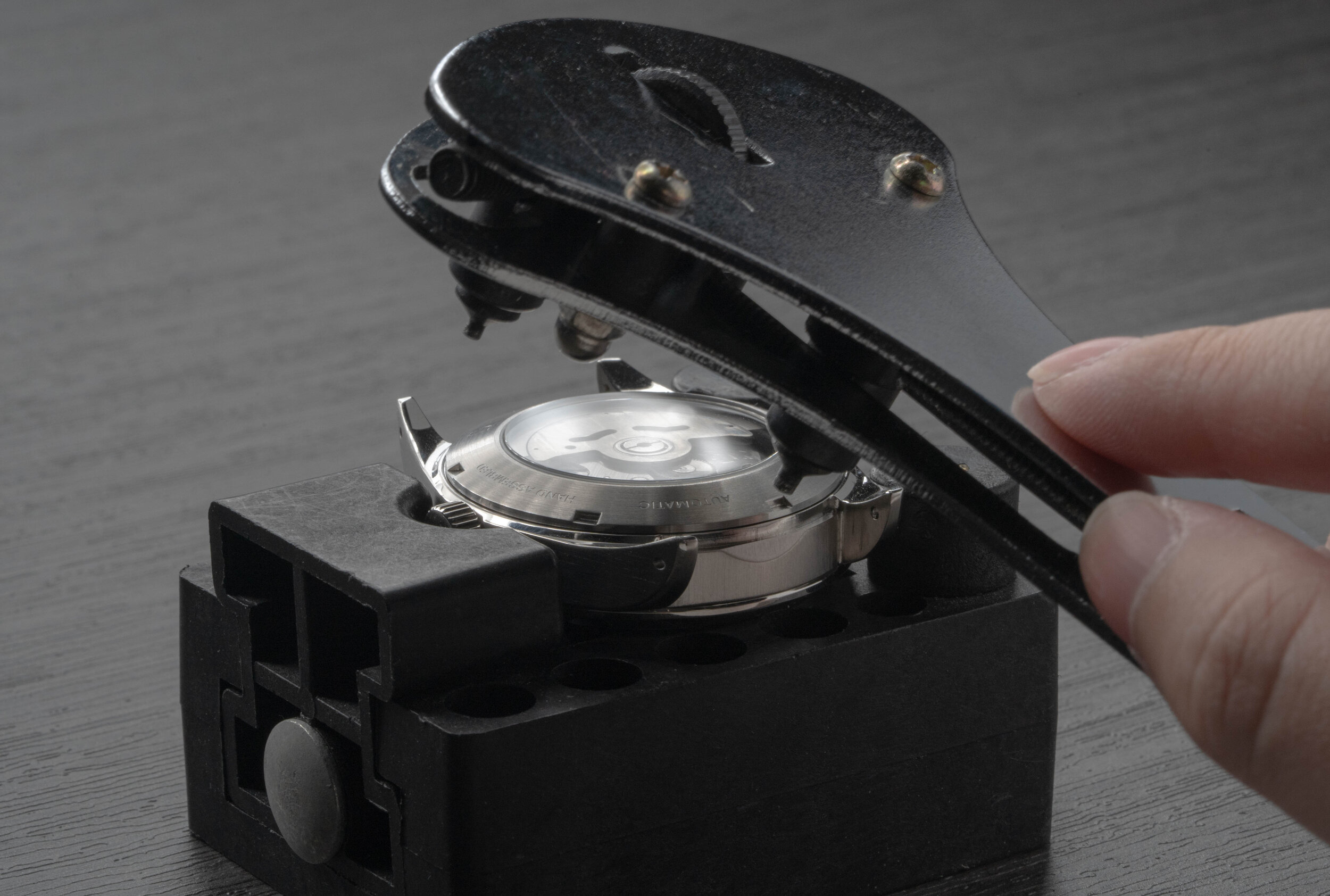
Use a Watch Case Back Press for Best Results
For frequent repairs or high-value watches, a dedicated tool is worth the investment.
Why a Press Beats Manual Methods
A watch case back press delivers even, centered pressure every time. It prevents tilting or sliding during closure and eliminates crystal damage risk entirely.
• Delivers perfectly even pressure across the entire surface
• Prevents tilting or sliding during closure
• Eliminates crystal damage risk
• Required for modern, tightly sealed watches
As users on watch repair forums note, some cases need two tons of force, which is far beyond what is safe to apply by hand.
Buy an Affordable Press Tool
• Search online for watch case back press, watch closing tool, or crystal press
• Prices start at $15 to $20 on Amazon or eBay
• Look for models with adjustable pads and protective inserts
An example is the Closer Crystal Press, which works for both crystals and case backs and includes instructions for use.
Operate the Press Safely
• Place the watch face-down in the press base with crystal protected
• Insert a protective disc over the crystal
• Lower the plunger until it contacts the case back
• Turn the knob slowly until you hear the snap
Slow, controlled pressure ensures proper alignment and prevents damage.
When to See a Professional
If you are unsure about any step, a jeweler can complete this task quickly and cheaply.
Visit a Jeweler for $5 or Less
Most jewelry shops have a press and perform this service as a free or low-cost add-on.
• Takes under a minute, and you can usually wait
• Ideal if the watch is water-resistant or valuable
• Costs around $5 or less at most locations
For $5, why risk breaking a $200 watch? This is a smart choice for infrequent repairs.
Know When to Stop
If the back resists after multiple attempts, stop and assess the situation.
• Recheck alignment of the notch with the crown stem
• Inspect for dents, debris, or obstructions
• Stop if you feel excessive force is needed
Continuing risks permanent case damage. It is smarter to walk to a professional than to ruin your watch.
Troubleshoot Common Problems
Even with proper technique, issues can arise. Here is how to fix them.
Case Back Won Snap In
This usually happens due to misalignment or debris in the groove.
• Remove the back and inspect the groove for obstructions
• Clean out dust, old gasket bits, or lint
• Realign the notch with the stem tube
• Try again with better pressure distribution
One Edge Stays Raised
This indicates uneven pressure was applied during installation.
• Focus your next attempt on the high side specifically
• Use the cap method and press directly over the gap
• Rotate your hand pressure to “walk” the back into place
Back Slides Off During Pressing
This happens when there is a lack of grip or the back is mispositioned.
• Ensure the notch is seated over the stem before applying pressure
• Use a press or vise instead of hand methods
• Apply pressure slowly to prevent shifting
Fear of Breaking the Crystal
This fear is valid if you apply force directly to the glass.
• Always use a protective layer like a towel, plastic cap, or press insert
• Never press on the crystal itself; only apply pressure to the case back
No Pop Sound After Closing
This means the seal may be incomplete.
• Run your fingernail around the edge and feel for gaps
• If the back feels loose, remove it and retry with better alignment
• Avoid exposing the watch to water until you have verified a proper seal
Follow Safety Best Practices
Avoid costly mistakes with these simple but critical rules.
• Never use metal tools directly on the case back, as pliers and screwdrivers can dent or scratch the finish
• Do not tap the edge like a jar lid, because this distorts the case lip and prevents sealing
• Keep the crystal protected by always placing the watch face-down on soft material
• Inspect the seal after closing by checking for gaps, tilting, or visible seams
Compare DIY Methods at a Glance
| Method | Tools Needed | Best For | Risk Level |
|---|---|---|---|
| Hand Thumbs | None | Loose backs | Low |
| Palm Press | Towel, table | Medium fit | Low |
| Bottle Cap and Tap | Cap, mallet | Small cases | Low to Medium |
| Body Weight | Coin, carpet | Tight backs | Medium |
| 3D Disc and Vise | Custom disc, vise | Precision work | Low |
| Watch Press | $15 to $20 tool | All cases | Lowest |
For reliability and safety, a watch press is the top choice, especially if you service watches regularly.
Final Tips for Success
• Always align the notch with the stem, because this step is non-negotiable
• Use a protective cap or disc and never press bare-handed on the watch
• Listen for the snap, because it is your confirmation of successful closure
• When in doubt, see a pro, because a $5 fix beats a ruined watch
As one user wisely noted, knowing when to stop and seek professional help is part of smart watch care.
Frequently Asked Questions About Putting a Watch Back Cover On
What tools do I need to put a watch back cover on at home?
You can use household items like a plastic bottle cap, a soft towel, and a rubber mallet. For best results, a watch case back press tool costs around $15 to $20 and provides even, safe pressure.
How do I know if my watch has a snap-on case back?
Snap-on case backs are smooth on the exterior with no notches for a tool to grip. They often have a small tab or notch on the inner edge to assist with removal. Screw-down backs have visible threads and are not reattached the same way.
Can I use a regular hammer to close a watch back?
No. Never use a metal hammer directly on a watch. Use a plastic cap or protective intermediary, and only tap lightly with a rubber mallet if needed. Direct metal contact can dent or scratch the case permanently.
Why is my watch back cover not snapping in?
The most common reasons are misalignment with the crown stem, debris in the groove, or a damaged gasket. Remove the back, clean everything thoroughly, and ensure the notch is positioned correctly before trying again.
How do I keep my watch water-resistant after closing the back?
Inspect the gasket for cracks or hardening before reattachment. Replace if necessary, and apply a small amount of silicone grease to help maintain the seal. Avoid exposing the watch to water until you have verified the seal is complete.
Should I take my watch to a jeweler instead of doing it myself?
If your watch is valuable, water-resistant, or if you lack confidence in the process, a jeweler can close the back for $5 or less. This is often the safest option for infrequent repairs.
Key Takeaways for Putting Your Watch Back Cover On
Putting a watch back cover on does not need to be stressful when you use the right technique. The most important steps are inspecting the gasket for damage, aligning the notch with the crown stem, and applying even pressure using a protective layer. Choose your method based on how tight the fit is, from simple hand pressure for loose cases to a watch press tool for reliable results every time. When in doubt, a professional jeweler can handle this task quickly and cheaply, saving you from potentially damaging your watch. With the right preparation and method, you can close your watch securely and restore its water resistance with confidence.