You just unboxed your Fitbit Sense and want to start tracking your health, managing stress, and staying connected all from your wrist. But where do you begin? Whether you are upgrading from a basic tracker or trying smartwatches for the first time, the Fitbit Sense offers advanced tools like ECG, stress tracking, and built-in GPS. The key is knowing how to set it up correctly and use its full range of features.
This guide walks you through every step: powering on, pairing with your phone, navigating the interface, using health tools like EDA scans and heart monitoring, tracking workouts, receiving notifications, and more. You will learn how to customize your experience, avoid common setup issues, and get the most from your device whether you own the original Fitbit Sense or the newer Sense 2. Let us get your watch working seamlessly with your daily life.
Power On and Charge Your Fitbit Sense

Before setup, your Fitbit Sense needs power. A low battery can prevent pairing, so charging comes first. Use the proprietary magnetic charging cable included in the box. Align the pins on the back of the watch with the connectors on the cable until it snaps into place magnetically. Plug the USB end into a UL-certified wall charger or a computer USB port for best results.
Charging Differences Between Models
For Fitbit Sense 1st generation, you will see a lightning bolt icon when charging starts. Fast charging gives up to one full day of use in just 12 minutes. For Fitbit Sense 2, a full charge lasts over six days depending on usage, though charging time is longer than the fast charge models.
Wait until the screen lights up or displays a battery icon before proceeding. If the screen stays black, hold the side button for 10 to 15 seconds to force a restart once connected to power.
Pair Your Watch with the Correct App
Which app you use depends on your model. Fitbit Sense and Sense 2 use different apps, and using the wrong one will block setup completely.
Fitbit Sense 1: Use Google Health App
Despite the Fitbit branding, the original Sense uses the Google Health app after Google is acquisition of Fitbit. Download Google Health from the Apple App Store or Google Play Store. Open the app and tap Sign in with Google. Log in to an existing Google account or create a new one. Follow the on-screen prompts to pair your watch and keep your phone close with Bluetooth enabled. The app will detect your device automatically. Confirm the pairing code shown on both screens to complete setup.
Fitbit Sense 2: Use Fitbit App
The newer Sense 2 uses the classic Fitbit app, not Google Health. Install the Fitbit app from your phone app store. Open it and select Set Up a Device. Choose Sense 2 from the list. If not detected, tap Scan to refresh Bluetooth discovery. Enter the code displayed on your watch or confirm the prompt. Once paired, your watch starts syncing health data like heart rate, steps, and sleep.
Fix Common Pairing Issues
If your watch will not connect, restart both devices by power cycling your phone and Fitbit Sense. Make sure Bluetooth is on and not restricted by battery-saving modes. Use the latest version of Google Health or Fitbit app. If previously paired, forget the device in your phone Bluetooth settings before attempting again. Never attempt manual Bluetooth pairing. Only use the official app method.
Navigate Your Fitbit Sense Interface
Once synced, learn how to move around the watch. No touchscreen tutorial is provided, so understanding gestures is essential for daily use.
Master Swipe, Tap, and Press Controls
Swipe up opens Widgets where you can view stats like steps, heart rate, water intake, weather, and mindfulness sessions. Swipe down shows Quick Settings to toggle Do Not Disturb, battery saver, and connectivity. Swipe left or right cycles through active apps and clock faces. Tap selects items or opens apps. Press the side button opens your Favorites menu to launch frequently used apps quickly. Customize what appears in Widgets and Favorites via the app settings.
Use Button Shortcuts Effectively
The side button supports two actions. Double-press launches a preset app like Exercise or Relax. Long-press can trigger another shortcut like flashlight or payments. Change these in Settings on the watch or via the companion app.
Enable Always-On Display
Want to see your stats without lifting your wrist? Go to Settings on your watch, then Display, and toggle Always-On Display on. You will see time, progress rings, and heart rate continuously. Note that this reduces battery life slightly.
Customize Clock Faces and Apps
Make your watch reflect your style and priorities by customizing what you see and use every day.
Choose and Install a Clock Face
From the home screen, long-press to edit the current clock face. Swipe to preview options and tap to select and save. You can also browse and install new clock faces in the Fitbit app under Today, then Account, then Clock Faces for Sense 2. For Sense 1, look in the Google Health app under Devices and then Clocks. Save multiple favorites to switch quickly.
Manage Installed Apps
Add or remove apps based on your needs. From the watch, open the Apps menu, tap and hold an app, then select Remove. From the app, go to Devices and then Apps to install or delete. Popular apps include Spotify Connect and Control, Google Wallet, Relax for guided breathing, Weather, and Timer. Third-party apps may require separate account logins.
Monitor Heart Health with ECG
One of the Fitbit Sense standout features is medical-grade heart monitoring that can check for irregular rhythms.
Take an ECG Reading
The ECG app checks for signs of atrial fibrillation, a common irregular heartbeat. Open the ECG app on your watch and sit still. Place your finger on the top button and hold for 30 seconds while the watch records electrical signals. View results showing either Sinus Rhythm for normal rhythm or AFib Detected. This feature is available only in select countries and is not for users under 22 years old. Results are not a diagnosis, so share them with your doctor. You can export readings from the Google Health or Fitbit app for medical review.
Enable Irregular Rhythm Notifications
Even when not actively taking an ECG, the watch monitors heart rate in the background. Go to Settings on your watch, then Heart Rate, and turn Irregular Rhythm Notifications on. If an unusual pattern is detected over time, you will get an alert. This is useful for catching asymptomatic AFib.
Track Stress with EDA and Relax App
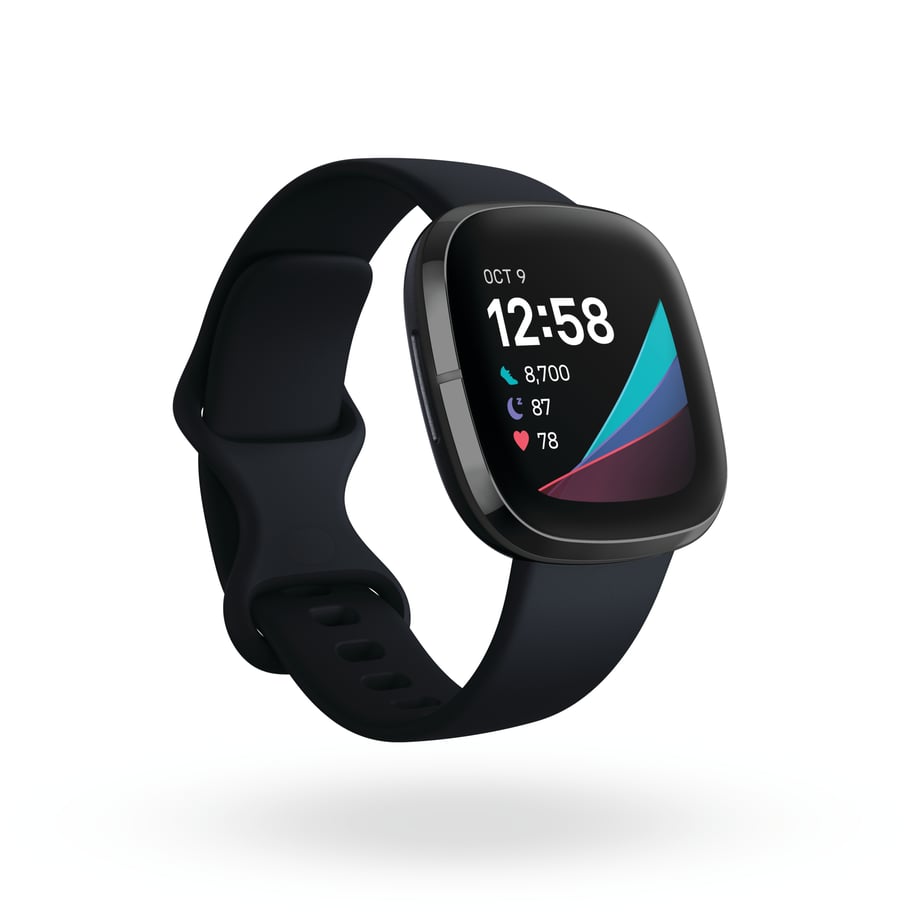
The Fitbit Sense helps you understand how your body responds to daily stress through specialized tools.
Run an EDA Scan
The EDA Scan app measures electrodermal activity, which are tiny changes in skin conductance linked to stress. Sit still and rest your arm comfortably. Open EDA Scan on your watch and place your palm over the watch face. Breathe normally for two minutes. The app logs your response and prompts you to log how you feel. Over time, you will see patterns like high stress during meetings or after poor sleep.
Use the Relax App for Breathing Sessions
Lower stress with guided breathing exercises. Open the Relax app and choose session length between 2 and 5 minutes. Follow the on-screen animation to inhale and exhale slowly. Tap the screen to end early. Use this during breaks, before bed, or after an EDA alert. Schedule automatic Relax reminders in the app to build a daily mindfulness habit.
Analyze Sleep and Temperature Trends
Your wrist provides insights into recovery and overall wellness every night.
View Sleep Score and Stages
Each morning, check your Sleep Score in the app. This is based on total sleep time, restlessness, heart rate variability, and SpO2. Score ranges from 0 to 100, with 90 plus being excellent. Dive deeper to see time spent in light sleep, deep sleep, and REM sleep. Use this to adjust bedtime routines, caffeine intake, or stress levels.
Track Skin Temperature Changes
The watch measures skin temperature at night, comparing it to your personal baseline. In the app, view temperature trends over time. Spikes or dips may indicate illness onset like fever, hormonal shifts like ovulation, or recovery from intense workouts. This is a trend tracker, not a medical thermometer. It detects relative changes, not exact body temperature.
Start and Track Workouts
Whether walking, running, or cycling, the Sense tracks performance with precision using built-in GPS.
Begin a Workout Session
Open the Exercise app on your watch. Scroll to your activity type like Walk, Run, Bike, or Swim. Tap to start. The watch records duration, heart rate, calories, pace for outdoor activities, and route with built-in GPS. For outdoor runs, GPS activates automatically with no phone needed.
Use Active Zone Minutes
Fitbit converts heart rate zones into Active Zone Minutes. Fat Burn zone is 50 to 69 percent of maximum heart rate for moderate effort. Cardio zone is 70 to 84 percent for vigorous activity. Peak zone is 85 to 100 percent for maximum effort. You earn one Active Zone Minute per minute in each zone. Aim for 150 minutes per week for heart health. View daily Active Zone Minutes in the app or on your watch face.
Review Workout History
After finishing, the summary syncs to the app. Check the route map, heart rate graph, pace, calories burned, and zone distribution. Tag workouts with notes like felt strong or low energy to spot patterns over time.
Receive and Respond to Notifications
Stay connected without constantly checking your phone by managing your notification settings.
View Calls, Texts, and Alerts
When paired, your watch displays incoming calls with decline option, text messages, email previews, calendar events, and app alerts like social media or news. Notifications appear as vibrations and screen alerts.
Reply to Messages on Android
If using an Android phone, reply directly from your wrist using preset quick replies like Yes or On my way. You can also dictate a response using voice-to-text. Go to Settings on your watch, then Notifications, then Replies to set up. Note that iOS users can view notifications but cannot reply from the watch.
Sync Calendar and Alarms
Your watch pulls events from your phone calendar. View today agenda in the Agenda app. Set alarms, timers, and reminders using the Alarms and Timer apps on the watch.
Use Smart Features Daily
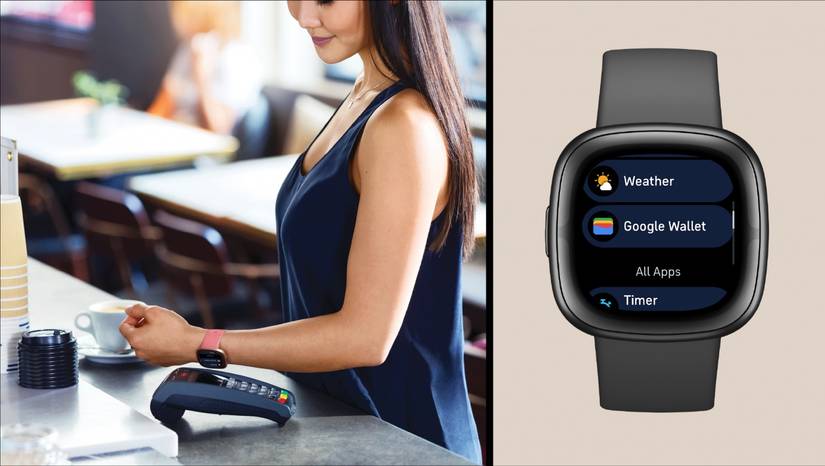
Turn your Fitbit Sense into a productivity and lifestyle tool beyond just fitness tracking.
Make Contactless Payments
Add your card to Google Wallet. Open Google Wallet on your phone and add a supported credit or debit card. On your watch, open the Wallet app and tap to pay. Hold the watch near the terminal with no PIN needed for small purchases. This also works for transit systems in supported cities.
Control Music and Spotify
Control playback from your wrist by play, pause, skip tracks, and adjust volume. This works with most music apps. With Spotify Connect, open the Spotify app on your watch, choose a playlist, and stream from your phone remotely. No need to unlock your phone during workouts.
Find Your Phone Quickly
Misplaced your phone? Use the Find My Phone feature. Open the Utilities app and tap Find My Phone. Your phone rings loudly even on silent. This works as long as Bluetooth is active between devices.
Maintain and Optimize Performance
Keep your Fitbit Sense running smoothly with routine care and proper maintenance.
Charge Regularly and Correctly
Recharge when battery drops below 20 percent. For Sense 1, 12 minutes gives a full day use, perfect for quick top-ups. For Sense 2, aim to charge every six to seven days. Always use the magnetic charger included in the box. Third-party cables may not connect reliably and could damage the device.
Clean Your Watch Properly
Sweat and oils can affect sensor accuracy over time. Wipe the back sensors daily with a soft damp cloth. Clean the band weekly by removing and washing with mild soap if it is fabric or silicone. Avoid submerging leather bands in water.
Update Software Promptly
Firmware updates improve performance and fix bugs. Ensure the companion app is updated. Make sure your phone has Wi-Fi or cellular connectivity. Keep the watch charged above 50 percent. Updates install automatically overnight when the watch is charging.
Understand Limitations and Safety
The Fitbit Sense is powerful, but it is not a medical device and has important restrictions.
Know the Disclaimers
ECG and SpO2 are for wellness tracking only and are not FDA-cleared for diagnosis. Temperature trends detect changes, not exact fever. Heart rate alerts may miss or over-detect irregularities. Never rely on the watch in medical emergencies. If you feel unwell, contact a healthcare provider immediately.
Age and Region Restrictions
ECG is unavailable under age 22. Not all features are available in all countries. Check Fitbit website for supported regions. Features may vary by model and location.
Frequently Asked Questions About Using Fitbit Sense
How do I set up my Fitbit Sense for the first time?
Start by charging your watch using the included magnetic cable. Once you see the battery icon, download the correct app for your model. For Sense 1, use Google Health app. For Sense 2, use the Fitbit app. Open the app, sign in or create an account, and follow the on-screen prompts to pair your watch via Bluetooth.
Can I reply to text messages on my Fitbit Sense?
Yes, but only if you are using an Android phone. Android users can reply using preset quick replies or voice-to-text dictation. iOS users can view notifications but cannot reply directly from the watch.
How does the ECG app work on Fitbit Sense?
Open the ECG app on your watch and sit still. Place your finger on the top button and hold for 30 seconds. The app records your heart electrical signals and displays either Sinus Rhythm for normal rhythm or AFib Detected for atrial fibrillation. Remember that this is for wellness tracking, not diagnosis, and you should share results with your doctor.
How long does the Fitbit Sense battery last?
For Fitbit Sense 1, fast charging provides one full day of battery life in just 12 minutes. For Fitbit Sense 2, a full charge lasts over six days depending on usage. Both models use the proprietary magnetic charger included in the box.
What is the EDA scan feature on Fitbit Sense?
The EDA Scan app measures electrodermal activity, which are tiny changes in skin conductance linked to stress response. Place your palm over the watch face for two minutes while sitting still. The app logs your physiological response and asks you to log how you feel. Over time, this helps you identify stress patterns.
Does Fitbit Sense have built-in GPS?
Yes, the Fitbit Sense has built-in GPS that activates automatically for outdoor activities like running or cycling. You can track your route and pace without carrying your phone.
Key Takeaways for Using Your Fitbit Sense
The Fitbit Sense is more than a fitness tracker. It is a personal wellness hub that combines heart health monitoring, stress management, GPS workouts, and smart notifications in one device. Setting it up correctly by using the right app for your model ensures seamless pairing and data sync from day one.
Mastering the gesture controls and interface navigation lets you access daily stats, notifications, and apps without friction. Take advantage of advanced health features like ECG for heart rhythm checking, EDA scans for stress tracking, and sleep analysis for recovery insights. Customize your clock faces, enable always-on display, and organize your widgets to create a watch that fits your lifestyle.
Use smart features like Google Wallet payments, music control, and calendar syncing to reduce phone dependency. Keep your device charged, cleaned, and updated for optimal performance. Remember that health features are for wellness tracking only and never replace professional medical advice. Set it up correctly, customize it to your lifestyle, and use the data to make better health decisions every day.