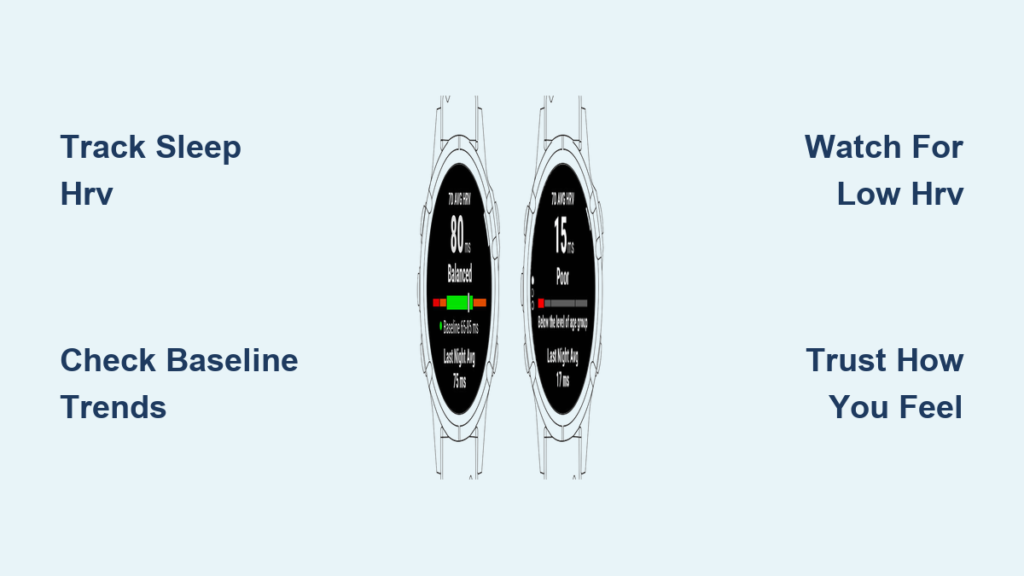
Heart rate variability (HRV) has become a key metric for athletes, fitness enthusiasts, and health-conscious users tracking recovery and readiness. On Garmin watches, HRV isn’t just a number. It is a dynamic indicator of how well your body is coping with stress, training, and rest. By measuring the tiny fluctuations between heartbeats during sleep, Garmin translates this data into actionable insights through its HRV Status feature, helping you decide when to push hard or take a recovery day.
Unlike standalone heart rate, which tells you how fast your heart beats, HRV reveals the balance between your sympathetic (“fight or flight”) and parasympathetic (“rest and digest”) nervous systems. A higher HRV generally indicates better recovery and resilience, while a lower HRV may signal fatigue, illness, or stress. In this guide, you will learn how Garmin measures HRV, how to interpret your HRV Status, which models offer the most accurate tracking, and how to use this data effectively.
How Garmin Measures HRV During Sleep
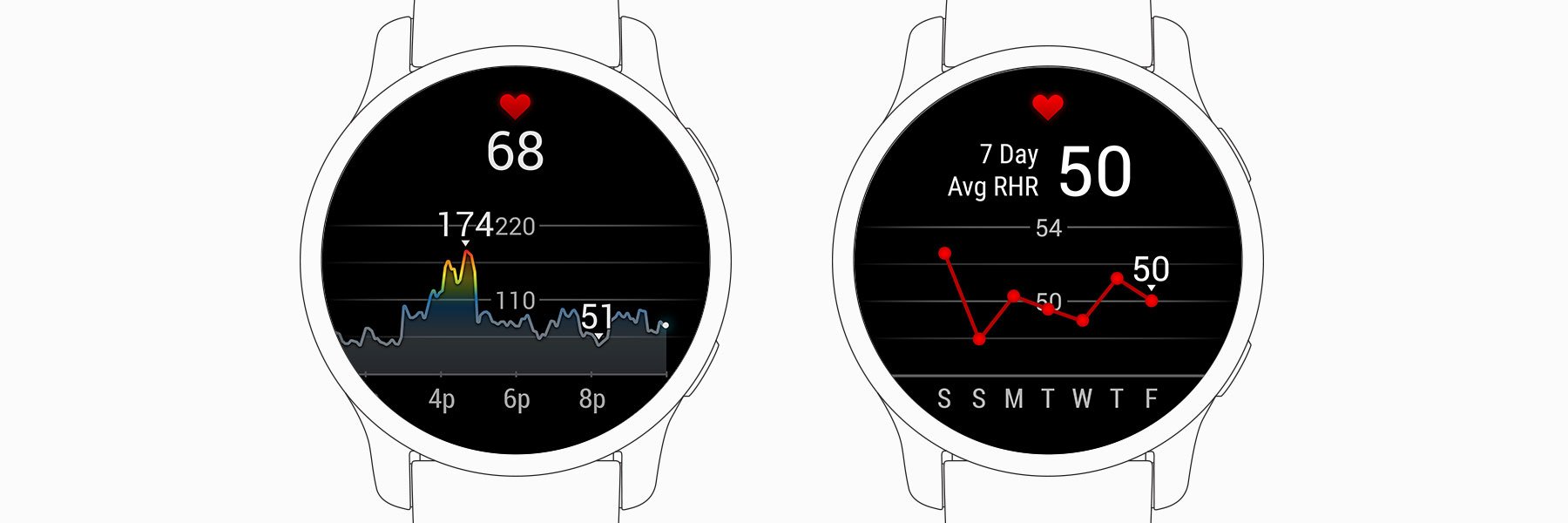
Garmin captures HRV data primarily during sleep, when external influences like movement and mental activity are minimized. This ensures the most accurate reflection of your autonomic nervous system’s resting state. The watch uses its optical heart rate sensor to detect subtle changes in blood flow and calculate the time between each heartbeat in milliseconds.
The system begins generating useful insights after 7 days of continuous use, showing your 7-day HRV average. By day 21, it establishes a stable personal baseline for comparison. This longitudinal approach means that absolute HRV numbers are less important than trends. If your average HRV drops significantly below your baseline, even if it is still within “normal” ranges, you may be under-recovered or stressed.
Gen 4 vs Gen 5 Sensors: Which One to Choose

Most mid-range and high-end Garmin models use Gen 4 optical sensors, including the Forerunner 255 and 265, as well as the fenix 7 series. These provide reliable HRV tracking under normal conditions. However, newer devices like the fenix 8, epix Gen 2 Pro, and Venu 3 feature Gen 5 sensors, which promise improved signal accuracy, especially during low-perfusion states like cold weather or poor circulation.
While real-world differences between Gen 4 and Gen 5 may be subtle, users report more consistent nighttime readings with Gen 5. This is particularly true for those with darker skin tones or lower wrist vascularity, where optical sensors can struggle.
ECG vs Optical HRV: Understanding the Difference
Some Garmin watches now include ECG sensors, such as the Venu 3, fenix 7 Pro, and epix Gen 2 Pro. Unlike PPG, which infers heartbeats from blood flow, ECG measures the heart’s electrical activity directly, offering medical-grade precision. When available, ECG can enhance HRV accuracy by reducing motion artifacts and providing cleaner R-R interval data.
However, ECG is typically used for spot checks, not continuous overnight monitoring. Therefore, optical sensors remain the primary source for nightly HRV on most models. Devices combining both technologies offer the best of both worlds: continuous PPG-based tracking with periodic ECG validation.
Interpreting Your HRV Status on Garmin
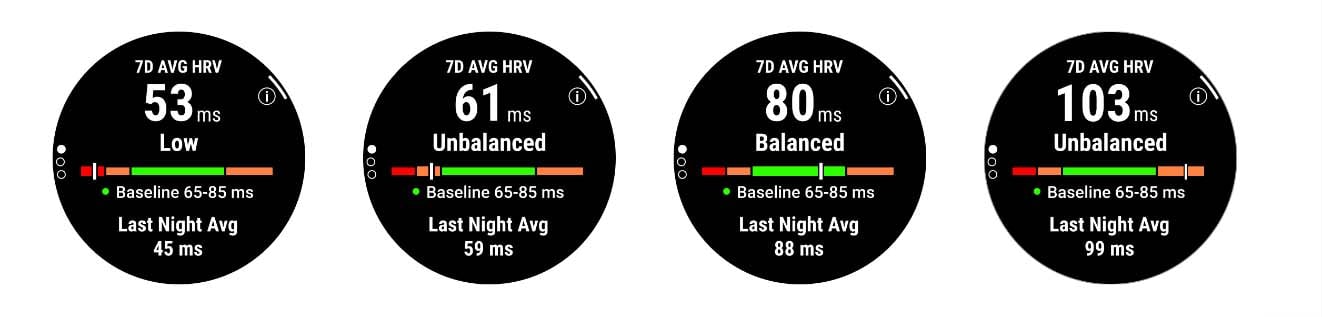
Garmin does not just show raw HRV values. Instead, it categorizes your status based on how your current 7-day average compares to your personal baseline. Understanding these categories helps you make informed decisions about training and recovery.
What Balanced HRV Means for Your Training
A Balanced status means your HRV is within your established range. This indicates your body is managing stress effectively and you are likely well-recovered. It is an ideal time to maintain or gradually increase training intensity. This does not mean “perfect.” It means stable. Even elite athletes do not need peak HRV every day. Consistency matters more than chasing highs.
Understanding Unbalanced HRV Status
An Unbalanced reading occurs when your HRV shifts slightly above or below your baseline. Above baseline may reflect increased parasympathetic activity, but can also indicate reduced sympathetic drive due to fatigue or illness onset. Below baseline is more common and often a red flag. Causes include recent intense workouts, poor sleep quality or duration, alcohol consumption, psychological stress, and early signs of infection even before symptoms appear.
One user reported their HRV dropping sharply before developing flu symptoms, proving that HRV can act as an early warning system.
Low and Poor HRV: When to Prioritize Rest
A Low HRV means your 7-day average is drastically below your personal norm. A Poor status goes further, indicating your HRV falls below age-adjusted population norms. Both suggest significant physiological strain. At this point, Garmin recommends prioritizing rest, hydration, and light activity. Pushing hard increases injury risk and hampers long-term progress.
Training Readiness: Using HRV Effectively
On select models like the Forerunner 265 and 965, Garmin integrates HRV into a Training Readiness Score, which combines HRV trends, sleep quality, recent activity, and stress levels to recommend daily workout intensity. This feature helps identify patterns of overtraining or under-recovery and helps prevent burnout by suggesting rest days.
Despite its sophistication, Training Readiness has critical limitations. It ignores muscular fatigue, so it can suggest a hard VO2 max session the day after intense hiking or manual labor, even if your legs are sore. It has no input from joint pain or injury history and does not account for neuromuscular readiness. One user shared that their Forerunner 955 recommended a 50-minute intense workout the day after extreme physical labor left them barely able to walk. Always trust how you feel over algorithmic advice.
Best Garmin Watches for HRV Tracking

Not all Garmins are equal when it comes to HRV accuracy and features. Here is a breakdown of top models for different needs and budgets.
Forerunner 255 and 955: Reliable Budget Options
Both use Gen 4 sensors and offer reliable nightly HRV tracking. Despite being older models, they deliver consistent trend data. The key differences lie in GPS performance and navigation, not HR accuracy. Neither includes ECG or Training Readiness, but both are ideal for runners who want solid HRV trends without premium pricing.
Forerunner 265 and 965: Premium Running Features
These are upgraded versions with AMOLED displays, ECG support, and Training Readiness. The FR265 works great for road runners, while the FR965 is triathlon-focused with advanced navigation. Both provide full recovery suite including HRV Status and readiness scoring.
fenix 7 Pro, fenix 8, and epix Gen 2 Pro: Flagship Performance
These flagship models feature Gen 5 sensors, ECG, and full integration with Garmin’s recovery ecosystem. The fenix 7 Pro offers the best outdoor multisport watch with top-tier HRV tracking. The fenix 8 uses the latest Gen 5 sensor and is expected to offer best-in-class accuracy. The epix Gen 2 Pro includes a premium AMOLED display, ideal for users wanting detailed recovery analytics. These models suit serious athletes who prioritize data fidelity.
Venu 3 and Instinct 2 Solar: Lifestyle and Entry-Level
The Venu 3 is lifestyle-focused but includes ECG and Training Readiness, great for wellness tracking. The Instinct 2 Solar has a basic design but confirmed HRV functionality. One owner verified readings matched gym equipment within plus or minus 3 bpm. Even entry-level models provide meaningful HRV trends when worn consistently.
Comparing Garmin HRV to Oura, Whoop, and Morpheus
Garmin vs Oura Ring
The Oura Ring uses infrared PPG sensors on the finger, which some argue provides more stable nighttime readings due to better blood flow in the digit. It offers excellent sleep staging and a compact form factor. However, it lacks GPS and must sync with another device for activity tracking. Users report good correlation with Garmin HRV, though algorithms differ.
Garmin vs Whoop
Whoop focuses heavily on HRV and recovery, offering a Recovery Score similar to Garmin’s Training Readiness. Its strengths include deep HRV analysis and strain modeling. Weaknesses include a subscription model and missing muscular fatigue detection like Garmin. Many users switched back to Garmin due to cost and similar limitations.
Garmin vs Morpheus
Morpheus uses a chest-worn ECG strap for clinical-grade HRV measurement. It offers the highest accuracy available for consumers and includes guided recovery programs and 30-day challenges. It is less convenient than wrist-worn devices but ideal for data purists. While chest straps remain the gold standard, Gen 5 Garmin watches with ECG come closer than ever to matching their reliability.
How to Improve Your HRV Naturally
You cannot control all factors affecting HRV, but several lifestyle choices have a measurable impact on your numbers and recovery.
Sleep Optimization Strategies
Increase sleep duration by adding just 30 minutes per night, which can boost HRV. Maintain consistency by going to bed and waking up at similar times each day. Minimize disruptions by keeping the room dark, cool, and quiet. Deep, uninterrupted sleep maximizes parasympathetic activation, the key driver of high HRV.
Nutrition and Hydration Tips
Balance your macros with adequate protein, healthy fats, and complex carbs to support autonomic balance. Micronutrients matter, so ensure you get enough magnesium, potassium, and omega-3s, which influence nervous system function. Stay hydrated because even mild dehydration increases sympathetic tone and lowers HRV.
Stress Management Techniques
Practice box breathing: inhale 4 seconds, hold 4 seconds, exhale 4 seconds, hold 4 seconds, and repeat for 5 minutes. Meditation and mindfulness are proven to increase vagal tone and HRV. Yoga and stretching promote relaxation and parasympathetic dominance. One user reported noticeable HRV improvements within a week of starting daily 10-minute meditation.
HRV Suppressors to Avoid
Alcohol can reduce HRV even the next night after just one drink. Caffeine late in the day delays parasympathetic reactivation. Intense evening workouts can interfere with sleep onset and HRV recovery.
Common HRV Mistakes to Avoid
Comparing Absolute Values Across People
HRV is highly individual. A “good” value for one person might be low for another. Focus on your own trends, not population averages. Young athletes often have 50 to 100 ms RMSSD, while older adults may average 20 to 40 ms. What matters is whether you are trending up or down.
Relying Solely on Algorithms
Garmin’s Training Readiness is helpful but not infallible. Always combine objective data with subjective feedback. Consider how you feel, whether muscles are sore, and if motivation is low. If your HRV is balanced but you are exhausted, listen to your body.
Ignoring Confounding Factors
Many variables influence HRV independently of fitness. These include menstrual cycle phases, medications like beta blockers, travel and circadian disruption, and emotional stress. Track these in a journal to avoid misinterpreting drops in HRV.
Maximizing HRV Accuracy on Your Garmin
Proper Watch Placement and Fit
Wear your watch snug but not tight. You should be able to slip one finger underneath the band. Place the watch higher on the wrist near the ulna bone for better signal. Wear it the same way every night for consistency. Too loose creates motion artifacts, while too tight restricts blood flow and causes false low readings.
Stable Measurement Conditions
Avoid sleeping with your arm under your pillow. Minimize tossing and turning if possible. Keep your hands warm because cold extremities reduce signal quality. For best results, treat your HRV measurement like a nightly ritual.
When to Trust HRV and When to Ignore It
HRV excels at detecting systemic changes like onset of illness often before symptoms appear, chronic overtraining, and major life stress events. However, HRV fails to detect localized muscle fatigue, joint pain, or skill readiness and coordination. Use HRV as one input among many, not the final decision-maker.
Frequently Asked Questions About HRV on Garmin Watches
How accurate is HRV tracking on Garmin watches?
Garmin’s optical HRV tracking is generally reliable for trend analysis. Gen 5 sensors and ECG-equipped models offer improved accuracy, especially for users with darker skin tones or poor circulation. However, chest straps remain the gold standard for clinical-grade precision.
How long does it take for Garmin to establish an HRV baseline?
Garmin begins showing your 7-day HRV average after 7 days of consistent wear. A stable personal baseline is established by day 21, allowing meaningful comparisons between your current status and your normal range.
Can Garmin HRV predict illness?
Yes, many users report HRV dropping significantly before they experience symptoms of illness. One user noted their HRV returned to baseline only after fully recovering from the flu, suggesting HRV can serve as an early warning system for subclinical infections.
Should I change my training based on HRV alone?
No. HRV reflects cardiovascular and autonomic function but cannot detect localized muscle fatigue or joint pain. Combine HRV data with how you feel, perceived exertion, and muscle soreness before making training decisions.
Which Garmin watch has the best HRV tracking?
The fenix 8, epix Gen 2 Pro, and fenix 7 Pro offer the most accurate HRV tracking with Gen 5 sensors and ECG support. However, even Gen 4 models like the Forerunner 255 provide reliable trend data when worn consistently.
Does alcohol affect Garmin HRV readings?
Yes, even one drink can reduce HRV the following night. Alcohol suppresses parasympathetic activity and interferes with recovery metrics. Avoid alcohol before bed for the most accurate HRV readings.
Key Takeaways for Using HRV on Your Garmin Watch
Heart rate variability on Garmin watches offers a powerful, non-invasive way to monitor your body’s response to stress and recovery. When used correctly over time, in context, and alongside self-awareness, it becomes an invaluable tool for optimizing performance and health. Remember that HRV is a signal, not a verdict. A single low night does not mean you are broken, and a high score does not give you permission to crush a marathon.
Choose a Garmin model with Gen 5 sensors and ECG if you want the highest accuracy. Otherwise, even Gen 4 devices like the Forerunner 255 deliver reliable trend data when worn consistently. Combine your HRV data with how you feel. The most advanced algorithm will never replace the wisdom of your own body.