You slip on your watch in the morning, and without pressing a button or replacing a battery, it keeps ticking accurately all day. If it is an automatic watch, this seamless operation is not magic but mechanical genius. Powered entirely by motion, an automatic watch converts your wrist movements into stored energy, regulating its release with surprising precision. No electronics, no external power, just centuries of horological evolution packed into a device smaller than a coin.
At its core, an automatic watch works through a self-winding mechanism driven by a rotor that spins with your arm motion, tightening the mainspring to store energy. This energy flows through a gear train to the escapement, which meters it out in tiny regulated pulses to the balance wheel, ensuring consistent timekeeping. The result is a smooth-sweeping second hand and a timepiece that runs as long as you wear it.
Rotor: The Motion Sensor of Your Watch

The rotor is the engine starter of an automatic watch. Its job is to detect movement and convert it into usable energy. Unlike batteries or manual winding, this system runs on kinetic energy from your daily activities.
How the Rotor Captures Movement
As you move your arm, gravity and inertia cause the rotor, a semi-circular metal weight inside the watch, to pivot or spin freely around its axis. This motion engages the winding mechanism, which translates rotation into torque that winds the mainspring.
Modern rotors offer these key features:
Full 360 degree rotation in modern designs ensures winding from any direction.
Early models like the Harwood bumper only swung about 130 to 180 degrees before hitting spring bumpers.
Todays rotors use ball bearings, introduced by Eterna in 1948, for smoother more efficient spinning.
Types of Rotors and Their Impact

Not all rotors are created equal. The design affects thickness, visibility, and winding efficiency.
Central rotors are found in Rolex, Omega, and Seiko. They rotate around the center of the movement and offer high winding efficiency due to large mass, though they block view of the movement through the case back.
Micro-rotors are compact and off-center, made from dense materials like tungsten. Used by Patek Philippe and Universal Geneve, they enable slimmer profiles with full movement visibility, but their smaller mass means slightly slower winding.
Peripheral rotors are ring-shaped weights that orbit the edge of the movement. Pioneered by Carl F. Bucherer in 2007, they offer completely unobstructed view of mechanics and ultra-thin profiles, though they are expensive to produce and have delicate construction.
Mainspring: The Power Storage Unit
If the rotor is the generator, the mainspring is the battery. It stores mechanical energy and releases it slowly over time, powering the entire watch.
Energy Storage in a Coiled Spring
Housed inside the mainspring barrel, this long strip of specially tempered steel coils tighter as the rotor winds it. When fully wound, it holds enough potential energy to run the watch for 35 to 48 hours in standard models, 70 to 80 hours in extended power reserve movements like MIDO Caliber 80, and up to 120 hours or five days in premium movements.
This duration is called the power reserve, and many watches feature a power reserve indicator on the dial.
Overwinding Protection
One might assume constant motion could damage the mainspring, but a clever innovation prevents this. Invented by Adrien Philippe, co-founder of Patek Philippe, in 1863, the slipping bridle system allows the outer end of the mainspring to slide against the barrel wall when fully wound.
A small expansion spring applies calibrated friction. Once tension exceeds this threshold, the spring slips, and no further winding occurs. This makes the mainspring effectively unbreakable during normal use.
Gear Train: Transferring Power to the Hands
Once energy is stored, it must be delivered to the escapement and hands in a controlled way. That is where the gear train comes in, a series of interlocking wheels that transmit force while reducing speed.
The Four Key Gears
Each wheel in the train plays a specific role in time display. The center wheel drives the minute hand and rotates once per hour. The third wheel connects center and fourth wheels, transmitting motion. The fourth wheel drives the second hand and rotates once per minute. The escape wheel interfaces with the escapement and advances one tooth per beat.
These gears reduce the high-torque output of the mainspring into fine manageable increments, much like a cars transmission shifting down for precision.
Friction Reduction with Jewels
To minimize wear and maintain efficiency, gear pivots sit in synthetic ruby bearings, usually 17 to 25 jewels in total. Rubies are extremely hard and smooth, reducing friction and ensuring long-term reliability and accuracy.
Escapement: The Mechanical Brake
Without regulation, the mainspring would unwind in seconds. The escapement acts as a gatekeeper, releasing energy one tick at a time.
How It Controls Time Flow
The escapement consists of three main parts. The escape wheel is driven by the gear train but held back. The pallet fork locks and unlocks the escape wheel. The impulse jewel is attached to the balance wheel and receives pushes.
Here is how it works. The balance wheel swings and moves the pallet fork. The fork unlocks the escape wheel for a split second. The escape wheel advances one tooth, giving a tiny push to the balance wheel via the impulse jewel. The fork re-locks, waiting for the next swing. This cycle repeats five to ten times per second, creating the familiar tick-tock sound.
Balance Wheel and Hairspring: The Heartbeat of Time
While the escapement regulates release, the balance wheel and hairspring determine how often it releases, setting the watch beat rate.
Oscillation: The Watch Pulse
Together these form a harmonic oscillator, much like a pendulum. The balance wheel is a weighted wheel that swings back and forth. The hairspring is a coiled spring that pulls it back to center.
Each full swing is one oscillation. Common frequencies include 2.5 Hz at 18,000 vibrations per hour found in vintage movements, 3 Hz at 21,600 vph in many older automatics, 4 Hz at 28,800 vph in most modern watches like Rolex and Omega, and 5 Hz at 36,000 vph in high-beat watches like Zenith El Primero.
Higher beat rates improve accuracy by dividing time into smaller units but increase wear and energy use.
Why Accuracy Stays Stable
One of the biggest challenges in watchmaking is maintaining accuracy as the mainspring weakens. The solution is isochronism, the ability of the balance-hairspring system to keep a consistent period regardless of power level.
When fully wound, the stronger impulse causes a larger swing. When nearly unwound, the weaker impulse causes a smaller swing. Yet the time per swing remains nearly identical. This physics-based stability is why mechanical watches keep good time across their entire power reserve.
Winding Mechanisms: How Motion Becomes Power

Not all automatic watches wind the same way. The winding mechanism determines how efficiently rotor motion translates into mainspring tension.
Bidirectional Winding Systems
Most modern watches use bidirectional winding, meaning they harness energy whether the rotor spins clockwise or counterclockwise.
Rolex reversing wheels, introduced in 1950, use two sets of pawl couplings that engage alternately. Known as red wheels due to red lacquer on early models, they are durable and widely copied.
IWC Pellaton winding was invented by Albert Pellaton. It uses a heart-shaped cam to rock a dual-armed lever, with each arm winding in one direction. It is efficient and compact.
Seiko Magic Lever, introduced in 1959, uses just three parts: lever, pinion, and wheel. One arm pulls while the other pushes, regardless of rotor direction. It is so reliable that Seiko 7S26 movements do not even allow manual winding.
Unidirectional Winding
Some watches only wind in one direction, such as ETA 7750 chronograph movements. This simpler design has fewer moving parts and is slightly less efficient but still achieves full winding with normal wear.
Historical Evolution: From Bumper to Peripheral
Automatic watches did not appear overnight. Their development spans over 250 years, marked by key breakthroughs.
In the 1770s, Abraham-Louis Perrelet created the first self-winding pocket watch with a side-weight mechanism. In 1923, John Harwood patented the first automatic wristwatch featuring a bumper rotor that swung about 130 degrees and hit spring bumpers. In 1931, Rolex launched the Oyster Perpetual with the first 360 degree rotating rotor. In the 1950s, bidirectional systems like Pellaton and Magic Lever transformed efficiency. In 2007, Carl F. Bucherer introduced the peripheral rotor, eliminating the central rotor for full visibility and slimness.
Accuracy: How Close to Perfect
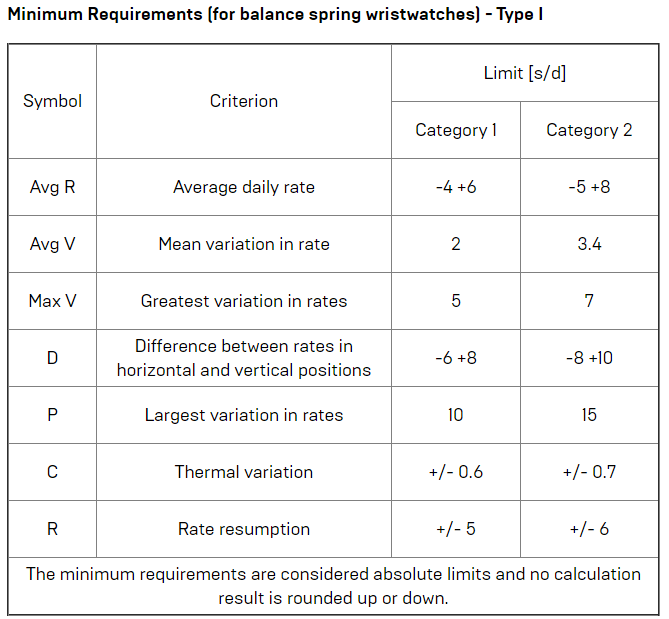
Automatic watches are not as accurate as quartz, but they are impressively precise for purely mechanical devices.
Standard automatic watches typically deviate plus or minus 25 seconds per day. COSC chronometers certified after 15 days of testing range from minus 4 to plus 6 seconds per day. High-end marine chronometers can achieve plus or minus 0.1 seconds per day, though these are rare in wrist-worn watches.
Factors affecting accuracy include position, temperature, magnetism, lubrication, and shock. Modern fixes include silicon hairsprings resistant to magnetism and temperature, Gyromax balance wheels adjustable for precision, and anti-shock systems protecting pivots.
Manual Winding and Non-Wearing Scenarios
Even though they are self-winding, most automatic watches can also be manually wound by turning the crown.
Manual winding helps when the watch has not been worn for days, the wearer has limited mobility, or you want to top off the power reserve. Turn the crown clockwise, usually 20 to 40 turns, until resistance increases. Do not force it.
Some Seiko 7S26 movements cannot be hand-wound and rely solely on rotor motion. If unworn for one to two days, depending on power reserve, the watch stops. To restart, wind manually then set the time.
Automatic vs Manual vs Quartz
Automatic watches use rotor motion as their power source and need winding only if not worn. They are accurate to plus or minus 10 to 25 seconds per day with a sweeping second hand. They require servicing every 5 to 10 years and often appreciate in value.
Manual wind watches use crown winding and need daily attention. They offer similar accuracy and sweeping seconds but have slightly simpler movements. They also require servicing every 5 to 10 years.
Quartz watches use batteries and need no winding. They are accurate to plus or minus 15 seconds per month with a ticking second hand. They require battery replacement every 1 to 5 years and typically depreciate.
Advantages and Disadvantages of Automatic Watches
Automatic watches offer several benefits. They require no battery and run on motion alone. They self-wind with regular wear for convenient operation. They can last generations with proper care. They showcase mechanical beauty through visible gears and craftsmanship. They feature the iconic smooth sweeping second hand. They are sustainable with no electronic waste. They have investment potential, with brands like Rolex and Patek often increasing in value.
However, they are less accurate than quartz though improving with modern technology. They carry higher prices due to precision parts and hand assembly. They need regular wear or a watch winder when stored. They are sensitive to magnetism, though silicon parts help. They require servicing every 5 to 10 years to clean and lubricate.
Care and Maintenance Tips
To keep your automatic watch running smoothly, wear it regularly for at least 8 to 10 hours per day for self-winding. Avoid strong magnets from phones, speakers, and MRI machines. Service the watch every 5 to 10 years to replace dried lubricants and worn parts. Store properly using a watch winder if not worn daily. Check water resistance every two years, especially for dive watches. Do not overwind. Stop when you feel resistance at the crown.
Frequently Asked Questions About Automatic Watches
Does an automatic watch need a battery
No, an automatic watch does not need a battery. It is powered entirely by the kinetic energy generated from the wearers wrist movement. The rotor spins with motion, winding the mainspring which stores energy to power the watch.
How long does an automatic watch run without being worn
Most automatic watches run for 35 to 48 hours without being worn. Premium movements with extended power reserves can run for 70 to 120 hours. If the watch has not been worn beyond its power reserve, it will stop and must be manually wound to restart.
Can you manually wind an automatic watch
Yes, most automatic watches can be manually wound by turning the crown clockwise. However, some Seiko movements like the 7S26 cannot be hand-wound and rely solely on rotor motion. Check your specific model before attempting manual winding.
Why does my automatic watch gain or lose time
Your automatic watch may gain or lose time due to magnetism, which can affect the balance wheel and hairspring. Temperature changes, worn lubrication, or positional variance can also affect accuracy. If sudden, try demagnetizing the watch or having it serviced.
What is the difference between automatic and manual winding
The difference is how the mainspring gets wound. Automatic watches wind themselves through rotor motion while you wear them. Manual watches require you to turn the crown daily to wind the mainspring. Both use the same mechanical movement inside.
How often should an automatic watch be serviced
An automatic watch should be serviced every 5 to 10 years. This includes cleaning, re-lubricating moving parts, and checking for worn components. Regular servicing ensures the watch maintains accuracy and extends its lifespan for generations.
Key Takeaways for Understanding Automatic Watches
An automatic watch is a remarkable mechanical system that transforms your everyday movement into reliable timekeeping. The rotor captures kinetic energy, the mainspring stores it, the gear train delivers it, and the escapement releases it in regulated pulses controlled by the balance wheel and hairspring. This elegant chain of components has been refined over 250 years to achieve impressive accuracy and durability.
While quartz watches win on precision and convenience, automatic watches offer something deeper: mechanical artistry, generational longevity, and the satisfaction of wearing a self-powered machine. Whether you collect them or simply wear one daily, understanding how they work deepens your appreciation for this enduring marvel of micro-engineering.