You reach into your vest pocket, flip open the lid, and peer at the delicate hands gliding across the ivory dial. Your pocket watch has stopped, and the most common culprit is simply that it needs winding. Knowing how to wind a pocket watch correctly keeps these timeless timepieces running smoothly and prevents costly damage from improper handling. Whether you’ve inherited a vintage railroad chronometer or own a modern mechanical reproduction, this guide delivers step-by-step instructions tailored to your specific watch type.
This article covers everything from identifying your watch mechanism to winding techniques, time-setting procedures, and essential maintenance tips to keep your pocket watch running for decades.
Identify Your Pocket Watch Type Before Winding
Pocket watches fall into two main categories: mechanical (manual-wind) and quartz (battery-powered). Only mechanical watches require winding. Attempting to wind a quartz model wastes your time and may damage the setting mechanism.
Mechanical vs. Quartz: Key Differences
Mechanical watches are powered by a mainspring that you wind manually. They tick with a smooth, rhythmic motion and typically need daily winding. Quartz watches run on a battery and require no winding at all. Turning the crown on a quartz watch only sets the time or date.
Quick Test: Try turning the crown clockwise. If it resists after 20 to 40 half turns, it’s mechanical. If it spins freely or does nothing, it may be quartz.
Wind Stem-Wind Mechanical Watches Correctly
Stem-wind (crown-wind) mechanical watches are the most common in 20th-century models. They use the crown to both wind the mainspring and set the time.
Step-by-Step: Winding a Stem-Wind Pocket Watch
- Hold the Watch Face-Up — Place it gently in your non-dominant hand over a soft surface to prevent drops.
- Locate the Crown — Found at 12:00 on open-faced models or 3:00 on hunter-case watches.
- Turn the Crown Clockwise — Rotate steadily and smoothly. Never jerk or force the crown.
- Wind 20 to 40 Half Turns — Most mechanical movements require this range for a full wind.
- Stop at Firm Resistance — When the mainspring is fully wound, you will feel a clear increase in resistance. Cease winding immediately.
- Ensure the Crown is Fully Seated — If pulled out for time setting, push it all the way in to protect against dust and moisture.
Wind once daily, ideally in the morning, to maintain consistent accuracy and stable power delivery.
Use the Right Key for Key-Wind Models

Key-wind pocket watches were standard before the 1900s and are common in antique American and Swiss models like Elgin, Waltham, and early Omega. These require a separate winding key.
How to Wind a Key-Wind Pocket Watch
- Open the Case Back Carefully — Gently pry open the hinged or snap-on back to expose the movement.
- Insert the Correct-Sized Key — Fit it snugly onto the winding arbor on the back of the movement. Using an ill-fitting key can strip the arbor or damage gears.
- Turn Clockwise Until Resistance — Rotate steadily. The watch will stop accepting turns when fully wound.
- Remove Key and Close the Case — Do not leave the key inserted. Securely close the back to protect the movement.
- Store the Key Safely — Keep it in a labeled, dry container to avoid loss or corrosion.
Many vintage sets include both a winding key and a setting key. Do not mix them up.
Set Time Before or After Winding
Always wind before setting the time. A fully wound mainspring ensures stable power delivery, which improves accuracy during adjustment.
Best Practice Sequence
- Wind the watch to full power.
- Set the time, moving forward only when possible.
- Push the crown fully in.
Avoid setting between 9 PM and 3 AM on watches with date functions. This prevents stress on the calendar mechanism and potential damage.
Handle Lever Set and Nail Set Models Safely
Some watches require special procedures to set the time, especially railroad-grade models designed to prevent accidental changes.
Fix Lever Set Pocket Watches Properly
Hunter-case lever set: Pull the small lever near 4:00 outward with your fingernail. Turn the crown to adjust the hands. Push the lever back flush when done.
Open-face lever set: Requires removing the crystal. Unscrew the bezel counterclockwise. Lift off the crystal. Pull the setting lever (usually at 2:00 or 4:30). Set the time, then reassemble carefully.
Never touch the hands or dial. Even light contact can bend delicate parts.
Adjust Nail Set (Pin Set) Watches
Common in early Swiss models, nail set watches work differently:
- Locate the Recessed Button — Hunter-case: near 4:00. Open-face: near 1:00.
- Press and Hold the button inward.
- Turn the Crown to move the hands.
- Release the button. Time setting ends automatically.
If the button resists, do not force it. Seek professional help instead.
Open and Close Hunter Cases Without Damage
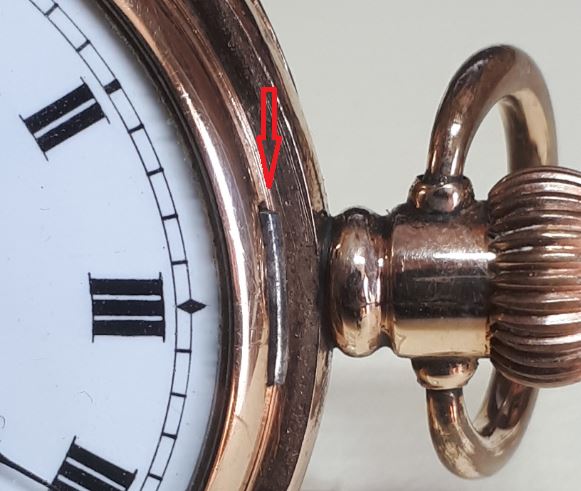
Hunter-case watches feature a hinged lid that protects the crystal. Improper handling can damage the latch or rim.
How to Open a Hunter-Case Watch
Press the crown gently downward. A spring-latch will release the lid. The lid pops open slightly. Lift the rest manually. Avoid prying with fingernails or tools.
How to Close It Safely
Lower the lid slowly and evenly. Never snap or slam it shut. Repeated force wears down the latch and case edge, leading to misalignment or permanent damage.
This applies to both single and double hunter models.
Avoid Overwinding: Myth vs. Reality
A common fear is whether you can overwind a pocket watch. The answer is nuanced.
You Cannot Overwind a Healthy Watch
Modern and most vintage mechanical movements have a slipping clutch (bridle system). When the mainspring is full, the winding mechanism disengages. Turning further has no effect. It won’t damage the watch.
You’d have to grab it with vice grips to break a healthy movement.
When Damage Can Occur
Forcing the crown after resistance may break the ratchet wheel, bridle, or mainspring. Vintage watches with dry oil or brittle springs are more fragile. A gritty or stiff winding feel indicates dirt or wear. Stop and seek servicing.
Warning Signs During Winding
| Symptom | Likely Cause | Action |
|---|---|---|
| Crown turns infinitely | Broken or unhooked mainspring | Stop; get professional repair |
| No ticking after winding | Disconnected gear train | Do not continue winding |
| Sharp resistance | Obstruction in winding train | Cease winding immediately |
| Grinding noise | Dirt or worn gears | Requires cleaning and lubrication |
If your watch won’t hold a wind or makes odd noises, consult a watchmaker.
Follow Best Practices for Longevity
Proper winding is just one part of maintaining your pocket watch. Consistent care ensures it runs accurately for decades.
Daily Winding Routine
Wind at the same time every day (e.g., every morning). This ensures stable amplitude and consistent timekeeping. Even if still running, full winding maintains isochronism (even power delivery).
Storage Tips for Non-Use
Let the watch run down completely before storing. This prevents mainspring fatigue and oil migration. Store in a dry, padded box away from moisture, dust, magnets, and temperature extremes. For long-term storage, wind once every few weeks to keep oils distributed.
Vintage watches with weak springs may benefit from twice-daily winding to maintain torque.
Service Every 3 to 5 Years
Like a car engine, your pocket watch needs regular maintenance.
What a Professional Service Includes
Full disassembly, cleaning of movement, re-oiling of pivots and gears, inspection for wear or corrosion, and replacement of worn parts (mainspring, stem).
Recommended interval: Every 3 to 5 years for regular use, every 5 to 7 years for occasional or vintage pieces.
Ignoring service leads to increased friction, wear, and eventual failure.
Troubleshoot Common Winding Issues
| Issue | Cause | Solution |
|---|---|---|
| Stops after a few hours | Underwound or power loss | Wind fully and observe |
| Runs fast/slow | Magnetization or dry oil | Demagnetize or service |
| Crown won’t turn | Fully wound or jammed train | Check resistance; if not full, seek repair |
| Crown spins freely | Broken mainspring | Professional repair required |
| Grinding noise | Dirt or lack of lubrication | Stop winding; send for service |
Listen for a consistent tick after winding. 18,000 to 21,600 beats per hour is normal for most antiques.
Final Checklist by Watch Type
Use this summary to quickly identify your watch and apply the correct method.
| Type | Winding Method | Time Setting | Tools Needed |
|---|---|---|---|
| Stem Set | Turn crown clockwise until resistance | Pull crown out, set, push in | None |
| Lever Set (Hunter) | Turn crown clockwise | Pull side lever, turn crown, release | None |
| Lever Set (Open Face) | Turn crown clockwise | Remove crystal, pull lever, set, reassemble | Careful handling |
| Key Wind / Key Set | Insert key in back, turn clockwise | Insert setting key under hands, turn | Proper-sized keys |
| Nail Set | Turn crown clockwise | Press side button, turn crown, release | None |
Frequently Asked Questions About Winding a Pocket Watch
How often should I wind my pocket watch?
Wind mechanical pocket watches once daily, preferably in the morning. Vintage models with weaker mainsprings may benefit from twice-daily winding to maintain consistent power.
Can you overwind a pocket watch?
You cannot overwind a healthy mechanical pocket watch. Modern movements have a slipping clutch that disengages when the mainspring is full. However, forcing the crown after resistance is felt can cause damage.
What happens if I don’t wind my pocket watch?
If left unwound, the mainspring gradually loses power and the watch stops. Extended periods without winding can cause oils to settle and migrate, leading to increased wear when you restart it.
Why does my pocket watch stop after winding?
Possible causes include a broken mainspring, disconnected gear train, dirt or dried oil in the movement, or insufficient winding. If the watch stops shortly after a full wind, consult a professional watchmaker.
How do I know if my pocket watch is mechanical or quartz?
Try turning the crown clockwise. If it resists after 20 to 40 half turns, it’s mechanical. If it spins freely or does nothing, it’s likely quartz and battery-powered.
Can I set the time on a pocket watch backward?
Avoid setting backward whenever possible. Backward adjustment may damage calendar mechanisms or the gear train in some models. Always set forward when you can.
Key Takeaways for Winding Your Pocket Watch

A pocket watch is more than a timekeeper. It is a mechanical heirloom that connects you to centuries of horological tradition. Proper winding keeps it alive, but gentle, consistent care ensures it lasts for generations.
Wind daily at the same time, stop immediately at resistance, and set time correctly after winding. Always identify your watch type first (mechanical vs. quartz, stem-wind vs. key-wind). Avoid forcing any part of the mechanism, and never slam hunter-case lids shut.
For valuable, antique, or railroad-grade watches, consult a certified watchmaker before any adjustment. With the right routine, your pocket watch can mark time for another century. Treat it with respect, and it will return the favor.