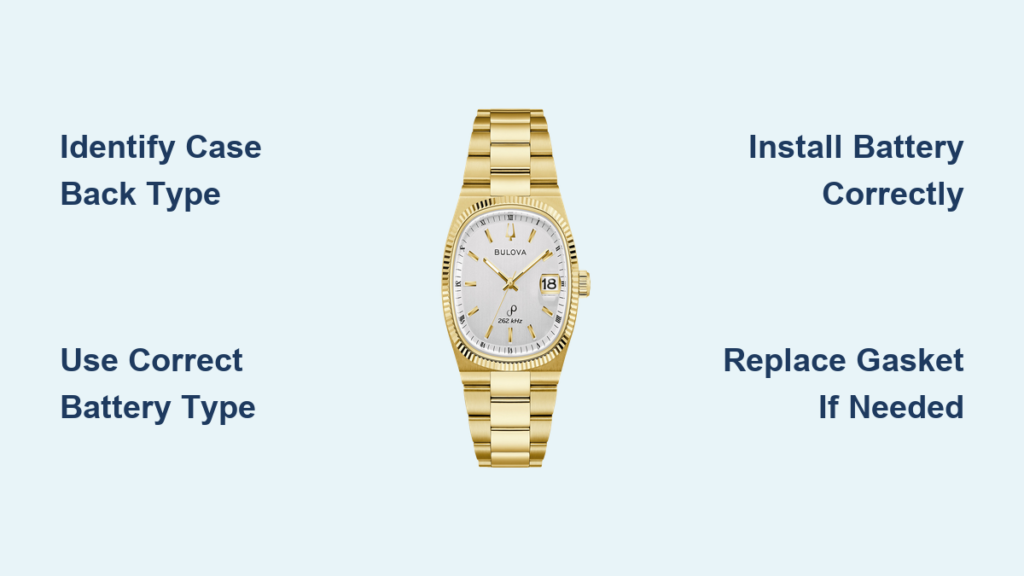
You’ve noticed your Bulova watch has stopped ticking. The hands are frozen, or the digital display is blank. Before you assume it is broken, consider the most common culprit: a dead battery. Replacing a Bulova watch battery is a straightforward process if you have the right tools and know your model’s design. Whether you own a classic Precision Timepiece or a high-performance Lunar Pilot, this guide walks you through every step to safely replace the battery, restore function, and preserve water resistance as much as possible.
Unlike generic watch battery guides, this guide is tailored specifically to Bulova’s unique case designs, battery types, and reset procedures. You will learn how to identify snap-on versus screw-down backs, choose the correct replacement battery, and avoid common mistakes that can damage your timepiece. From DIY basics to pro-level maintenance tips, you will gain the confidence to complete the job cleanly or know when to hand it over to a professional.
Identify Your Case Back Type
Before touching any tools, determine how your Bulova watch opens. Using the wrong method can scratch the case or strip screws. Bulova uses two main types: snap-on and screw-down backs.
Snap-On vs. Screw-Down Design
Snap-on backs are common on entry-level and dress models like the 98B15 Precision Timepiece. They rely on a tight friction seal and have small notches around the edge. No screws hold them in place. Screw-down backs appear on performance models like the Lunar Pilot and offer better water resistance. These come in two forms: fully threaded backs that unscrew with a wrench or models with tri-wing screws around the perimeter.
Check Under Magnification
Use a magnifying glass or jeweler’s loupe to inspect the back closely. Look for notches only, which indicates snap-on design. Look for cross-slots, pin holes, or tri-wing imprints, which indicate screw-down design. If uncertain, check your model number online or refer to the original user manual. When in doubt, assume it is snap-on unless clear screw indicators are visible.
Remove the Watch Strap
Clear access to the case back is essential. The strap can block tools and increase the risk of slipping during the battery replacement process.
Use a Spring Bar Tool
Insert the spring bar tool into the gap between the lug and spring bar. Press down to compress the bar and slide it out. Repeat on the other side. Store the strap safely. Avoid stretching or bending the spring bars. For metal bracelets, lay them flat. For leather, hang or coil gently.
Pro Tip: Removing the strap also prevents oils from transferring to the metal case during handling.
Open the Case Back Safely
Now that the back is exposed, use the correct technique based on your case type. The opening method differs significantly between snap-on and screw-down designs.
Open Snap-On Case Backs
Snap-on models require careful prying to avoid damaging the case edge. This process takes patience and the right tools.
Apply Painter’s Tape
Wrap blue painter’s tape around the case rim. This protects the finish from scratches when using metal or plastic tools during the prying process.
Insert Pry Tool at Notch
Locate the notch, usually opposite the crown. Gently insert a plastic pry tool or watch case knife into the gap. Apply steady upward pressure. Do not twist or force it. If resistance is high, work slowly around the edge, lifting slightly at each notch until the back releases.
Never use a utility knife. Its wide blade increases slippage risk and can gouge the case.
Once loose, lift the back off by hand. Set it aside on a soft surface like a Berson case cushion to prevent damage.
Open Screw-Down Case Backs
These require precision tools and controlled movement. The process is more involved but follows a logical sequence.
Remove Tri-Wing Screws (If Present)
Some Bulovas use tri-wing screws, three-pronged fasteners that resist tampering. Use a matching tri-wing screwdriver. Standard flathead or Phillips drivers will strip them. Turn screws counterclockwise and place them on a labeled tray or magnetic mat to avoid loss during reassembly.
Unscrew Threaded Backs
For fully threaded backs, use a case wrench. Align the pins with the notches and turn counterclockwise with even pressure. If the back is tight, do not force it. Slight resistance is normal. If stuck, consider professional help, especially on vintage or high-value models.
Best Practice: Begin threading by hand when reassembling to prevent cross-threading and damage to the case threads.
Access and Replace the Battery

With the case open, you are ready to remove the old battery and install the new one. This is the core of the procedure.
Locate the Battery Compartment
On most Bulovas, the battery sits under the movement or in a side tray. It may be held by a metal retaining clip or plastic cover. Use plastic tweezers to avoid scratching components or causing a short circuit that could damage the movement.
Remove the Old Battery
If a clip is present, gently lift it aside with non-metallic tools. Use tweezers to pull out the old battery. Note the orientation and model number. This is critical for correct replacement. Common Bulova batteries include CR2016, SR27W, and SR626SW.
Inspect for Corrosion
Check the compartment for white residue, leakage, or discoloration. Corrosion can damage contacts and prevent operation even with a new battery installed.
Clean with Isopropyl Alcohol
Dip a cotton swab in 90% or higher isopropyl alcohol and wipe the terminals and tray. Let it dry completely before installing the new battery. This ensures proper electrical contact.
Never use water or household cleaners. They can cause further corrosion and damage sensitive components.
Install the Correct Battery
Refer to your model’s specification before purchasing a replacement battery. Using the wrong type can damage your watch or cause it not to function.
| Model | Battery | Orientation |
|---|---|---|
| 98B15 Precision Timepiece | CR2016 | Positive side up |
| Lunar Pilot | SR27W | Upside down, under clip |
| Slim Dress Watches | SR626SW | Positive up |
| Chronographs | CR2032 | Positive up |
Handle with Care
Use plastic tweezers or nitrile gloves. Skin oils reduce battery life and can interfere with contact. For SR27W and SR399, insert negative side down so the positive terminal faces the case back. Hook the battery under the retaining clip to secure it. Ensure full contact with both terminals. A loose connection means the watch will not start.
Test Before Reassembly
After installation, wait 5 to 10 seconds. Check second hand movement for analog models, digital display activation for digital models, and chronograph function if applicable. If nothing happens, recheck battery orientation, clean terminals again, and verify battery voltage with a battery tester. Do not reassemble until the watch powers on.
Clean and Inspect Internal Components

A clean interior ensures long-term performance and helps maintain water resistance. This step is often overlooked but matters for longevity.
Check the Gasket (O-Ring)
The rubber gasket seals the case back. Over time, it can dry, crack, or deform, compromising water resistance. Remove it carefully and inspect for cracks or brittleness. Replace immediately if damaged. Check for flattened shape, which loses sealing ability. Replace every 2 to 3 years, even if it looks okay, as part of regular maintenance.
Clean Gasket and Groove
Wipe the gasket with a dry cloth. Use Roto cleaning compound on a cotton swab to clean the gasket groove in the case. This removes oxidation and debris that can prevent a proper seal. Apply a thin layer of silicone-based gasket lubricant to restore elasticity and improve sealing.
Never use oil or petroleum jelly. They degrade rubber over time and can cause gasket failure.
Blow Out Dust
Use an air blower to remove lint, hair, or particles from the case interior. Even tiny specks can interfere with the movement and cause erratic timekeeping. Avoid compressed air cans, as they may contain propellants that leave residue on internal components.
Reassemble the Watch Properly
Now that everything is clean and functional, reseal the case securely. Proper reassembly ensures your watch stays protected.
Re-Seat the Gasket
Stretch the gasket evenly around the case edge. Do not roll or twist it. Ensure it sits flat in the groove without gaps or twists. Reapply silicone lubricant if needed to maintain flexibility and seal integrity.
Close Snap-On Case Backs
Align the back carefully. Press down evenly around the perimeter with your thumbs. For a professional seal, use a case press tool to apply uniform pressure. This prevents edge distortion and improves water resistance. You should hear a firm click when fully seated.
Secure Screw-Down Case Backs
For threaded backs, start turning by hand to engage threads. Use the case wrench to tighten until snug. Do not overtighten, as this can damage threads or the gasket. For tri-wing models, reinstall screws with the correct driver and tighten gently, just enough to secure without stripping.
Pro Tip: Use a Horch Maxi Press to verify torque and seal integrity post-assembly. This tool is available at professional repair shops.
Reattach the Watch Strap
With the case sealed, it is time to remount the strap. This completes the physical reassembly of your watch.
Insert Spring Bars
Slide one end of the spring bar into the lug holes. Compress the other end with the spring bar tool and snap it into place. Ensure the buckle sits at the 12 o’clock position, which is the top of the watch, for correct orientation when wearing.
Perform a Tug Test
Gently pull on the strap to confirm the spring bars are fully seated. If loose, reinsert them properly. This prevents the strap from falling off during wear, which could result in loss or damage.
Reset the Chronograph (If Needed)
Some Bulova models lose chronograph hand alignment during battery replacement. This is common and easily corrected with the reset procedure.
Fix Lunar Pilot Chronograph Hands
If the second hand does not return to zero, pull the crown to the second position, which is two clicks out. Press and hold the reset button, usually at the 4 o’clock position. The hand should snap to 12 o’clock. Repeat for minute counter if misaligned.
Test all functions: start, stop, and reset after adjustment to ensure proper operation.
Maintain Water Resistance
DIY battery changes do not guarantee water resistance. Understanding this limitation helps you protect your watch from damage.
Limit Water Exposure
Even with a new gasket and lubricant, only professional pressure testing confirms seal integrity. Avoid submerging the watch unless it has been tested. Hand-washing or rain is usually safe, but no swimming or diving until professionally verified.
Replace Gasket Regularly
Change the gasket every 2 to 3 years or during each battery replacement if it shows wear. Store the watch in a dry environment to prevent gasket drying and cracking, which compromises protection.
Know When to See a Pro
Some situations call for expert hands. Recognizing when to seek professional help prevents costly mistakes.
Seek Professional Help If
The case back is stuck, corroded, or stripped and will not open with standard tools. You lack tri-wing screwdrivers or case wrench required for your specific model. The watch is vintage, collectible, or high-value and requires expert care. You want to maintain water resistance warranty or certification. Internal components appear damaged or corroded beyond simple cleaning.
Recommended Service Provider
KC Jewelry and Gift, located in Houston, TX, offers expert Bulova servicing. Technician Jacob Cho provides battery replacement, gasket replacement, and pressure testing services. Contact them at 281-842-2380 or visit KCJewelryGift.yolasite.com. Professionals use calibrated tools, avoid damage, and validate seals, which is ideal for peace of mind.
Troubleshoot Common Issues
Even careful attempts can go wrong. Here is how to fix frequent problems that arise during battery replacement.
Watch Will Not Start
The cause is incorrect polarity, dirty contacts, or wrong battery type. Recheck orientation, especially for SR27W, which installs upside down. Clean terminals with alcohol and verify you have the correct battery for your model.
Tri-Wing Screws Stripped
The cause is using flathead or incorrect driver on tri-wing screws. Replace with a proper tri-wing screwdriver. If already damaged, seek a watchmaker to extract the broken screw.
Chronograph Hand Off-Center
The cause is power loss during replacement, which resets the movement memory. Perform reset procedure via crown and pusher as described earlier in this guide.
Case Back Will Not Close
The cause is misaligned gasket or debris in the groove. Clean the groove, reseat the gasket, and ensure no tools or lint are trapped inside the case before closing.
Extend Battery Life
Maximize time between replacements with smart habits and proper care.
Expected Lifespan by Model
| Model Type | Battery Life |
|---|---|
| Standard Analog | 2 to 3 years |
| Chronograph | 1.5 to 2.5 years |
| Illuminated Dials | 1.5 to 2 years |
| Digital Displays | 2 to 3 years |
Tips to Save Power
Minimize use of backlight or chronograph functions, as these drain power quickly. Store in a cool, dry place, as heat accelerates battery drain. Keep spare CR2016 batteries on hand. They cost approximately $5 for two on Amazon and are readily available.
Final Checklist
Before declaring the job complete, run through this list to ensure nothing was missed.
Confirm battery type matches your model requirements. Remove strap for clear access. Use correct tools for your case back type. Protect case with painter’s tape if prying. Remove old battery safely with plastic tweezers. Clean compartment and check for corrosion. Install new battery with correct orientation. Verify watch powers on before reassembly. Inspect and lubricate gasket. Reassemble case back securely. Reattach strap with buckle at 12 o’clock. Reset chronograph if applicable. Avoid water exposure until professionally tested.
Frequently Asked Questions About Bulova Watch Battery Replacement
Can I change the battery in my Bulova watch myself?
Yes, you can change the battery yourself if you have the right tools and follow proper procedures. You will need a spring bar tool, plastic tweezers, case opener or wrench, and the correct battery type for your model. The process takes 15 to 30 minutes for most models.
What battery does a Bulova Precision Timepiece use?
The Bulova Precision Timepiece 98B15 uses a CR2016 lithium coin cell battery. This battery installs with the positive side facing up. It provides 3 volts and is commonly available at electronics stores.
Why does my Bulova watch not work after battery replacement?
If the watch does not work after replacement, check the battery orientation first. Many Bulova models, especially the Lunar Pilot with SR27W battery, require upside-down installation. Also clean the battery contacts with isopropyl alcohol to remove any residue or corrosion that could interfere with electrical contact.
How do I open a Bulova watch with a screw-down case back?
Use a case wrench for threaded backs and turn counterclockwise. For models with tri-wing screws, use a tri-wing screwdriver and turn counterclockwise to remove. Never use standard screwdrivers, as they will strip the special screws.
Does battery replacement affect water resistance?
Yes, DIY battery replacement typically voids water resistance unless you replace the gasket and perform pressure testing. Professional jewelers can test and certify water resistance after replacement. For everyday wear, avoid submerging the watch unless it has been professionally tested.
How often should I replace the gasket on my Bulova watch?
Replace the gasket every 2 to 3 years during battery replacement, even if it appears intact. Rubber degrades over time and loses sealing ability. Regular replacement ensures continued protection against moisture and dust.
Key Takeaways for Changing Your Bulova Watch Battery
Replacing a Bulova watch battery is a manageable DIY project when you understand your specific model requirements. The most critical steps are identifying the correct case back type, using the proper tools, and installing the battery in the right orientation. Snap-on backs pry open gently, while screw-down backs require the appropriate wrench or tri-wing screwdriver. Always note battery orientation before removal, especially for models like the Lunar Pilot that require upside-down installation.
The gasket deserves attention during every battery change. Replacing and lubricating this rubber seal maintains water resistance, though professional pressure testing remains the only way to guarantee protection against moisture. Clean the battery compartment with isopropyl alcohol to remove corrosion, and test the watch before reassembling to avoid repeating the process.
Know when to seek professional help. High-value vintage pieces, stuck case backs, and models requiring tri-wing screwdrivers may benefit from expert service. Professional technicians also provide gasket replacement and water resistance testing that DIY methods cannot guarantee. For most Bulova owners, following this guide delivers a successful battery change that keeps your timepiece running reliably for years to come.