Getting lost without a compass doesn’t mean you’re directionless. If you’re wearing an analog watch, you already have a tool that can help you find north, south, east, and west using only the sun and time. This classic survival skill has saved hikers, scouts, and adventurers when GPS fails and traditional compasses are unavailable. The technique relies on the predictable movement of the sun across the sky and how it aligns with local time.
This guide walks you through every step to turn your watch into a functional compass. You’ll learn the exact procedures for both hemispheres, how to adjust for daylight saving time, and tips to maximize accuracy in different conditions.
Northern Hemisphere: Find South

In the Northern Hemisphere, the sun arcs across the southern sky, making it possible to locate south using your watch. This is the foundation of the method.
Point Hour Hand at the Sun
Hold your watch flat with the dial facing up. Rotate your body until the hour hand points directly at the sun. Never look straight at the sun. Instead, use shadows to align the hour hand. Place a stick upright near your watch and adjust until the shadow of the hour hand points away from you, confirming proper sun alignment.
Bisect Hour Hand and 12 for South
The key to direction lies in the midpoint between the hour hand and the 12 o’clock mark. This bisecting line points approximately south.
If it’s before noon, measure the angle clockwise from the hour hand to 12. If it’s after noon, measure counterclockwise instead.
At 4:00 PM, the hour hand is at 4. The midpoint between 4 and 12, measured counterclockwise, falls at the 2:00 position. The 2:00 mark on the dial points south.
Once you identify south, face it. North is behind you, east is to your right, and west is to your left.
Southern Hemisphere: Find North

In the Southern Hemisphere, the sun moves through the northern sky, so the method flips completely.
Point 12 at the Sun
Hold the watch horizontally with the dial facing up. Instead of aligning the hour hand, point the 12 o’clock mark directly at the sun. Use shadow cues to avoid looking at the sun directly.
Bisect 12 and Hour Hand for North
The midpoint between the 12 and the hour hand now indicates approximate north.
At 10:00 AM, the hour hand is at 10. The midpoint between 10 and 12, measured clockwise, falls at the 11:00 position. The 11:00 mark points north.
Once you have north, south is behind you, east is to your right, and west is to your left.
Adjust for Daylight Saving Time

Daylight saving time shifts clocks forward one hour, throwing off the 12 o’clock reference. You must compensate to maintain accuracy.
In the Northern Hemisphere, use 1 o’clock instead of 12 when finding the midpoint. At 5:00 PM DST, point the hour hand at the sun. The midpoint between 5 and 1 falls at the 3:00 position, which indicates south.
In the Southern Hemisphere, point the 1 o’clock mark at the sun instead of 12, then find the midpoint between 1 and the hour hand.
Alternatively, manually set your watch back one hour to standard time and use the original method without any adjustments.
Using a 24-Hour Watch
Watches with a 24-hour dial offer greater precision because they eliminate AM/PM ambiguity and better match the sun’s 24-hour cycle.
Northern Hemisphere: 24-Hour Method
Hold the watch flat and align the hour hand with the sun using shadow alignment. The 12 o’clock mark on the 24-hour dial points south. During DST, use the 13 o’clock mark as the south indicator instead.
Southern Hemisphere: 24-Hour Method
Hold the watch flat and align the 12 o’clock mark with the sun. The hour hand now points to north. During DST, align the 13 o’clock mark with the sun; the hour hand still indicates north.
Digital Watch: Make a Clock Face
No analog watch? No problem. You can simulate an analog dial using natural materials.
Draw a Clock on the Ground
Trace a circle in dirt, sand, or snow using a stick or stone. Mark the hours like a clock face with 12 at the top and 6 at the bottom. Use your digital time to place a stick at the current hour position.
At 3:00 PM, place a stick at the 3 o’clock spot on your drawn circle.
Simulate Hour Hand Alignment
Rotate the entire circle so the hour stick points at the sun. In the Northern Hemisphere, the midpoint between the hour stick and 12 points south. In the Southern Hemisphere, align the 12 mark with the sun, then find the midpoint between 12 and the hour stick; this points north.
Accuracy Tips and Fixes
Small errors can send you off course. These tips improve reliability significantly.
Use a shadow stick for precision by placing a vertical stick in the ground and aligning your watch so the tip of the shadow points to the hour hand in the Northern Hemisphere or to 12 in the Southern Hemisphere. This avoids estimation errors from diffuse sunlight.
Avoid midday errors between 11:00 AM and 2:00 PM when the sun is near its peak. The angle between the hour hand and 12 is minimal, making bisecting difficult. Wait until earlier or later in the day for clearer results.
Adjust for time zone edges. If you’re far east or west in your time zone, local solar time may differ by up to 30 minutes. For better accuracy, adjust time by 4 minutes per degree of longitude from your time zone center.
Cross-check with terrain using known landmarks like rivers, roads, or mountain ridges to verify your direction. If you know a trail runs east-west and your watch says you’re facing north, you’re likely correct.
Limitations to Know
This method isn’t perfect. Understanding its limits keeps you safe.
The technique works only in daylight. It fails at night, in heavy clouds, or under dense tree cover. No sun means no direction.
It’s less accurate near the equator within the tropics where the sun can pass directly overhead or shift between north and south seasonally. The standard hemisphere rules break down, especially during solstices.
In polar regions, the method is not viable. The sun may not rise for weeks during polar night or stays above the horizon during midnight sun, making the watch method useless for much of the year.
The method gives solar south or north, not true or magnetic north. This differs from geographic true north and magnetic north, which varies by location. Always adjust if using a map and compass together.
Watch Models That Help
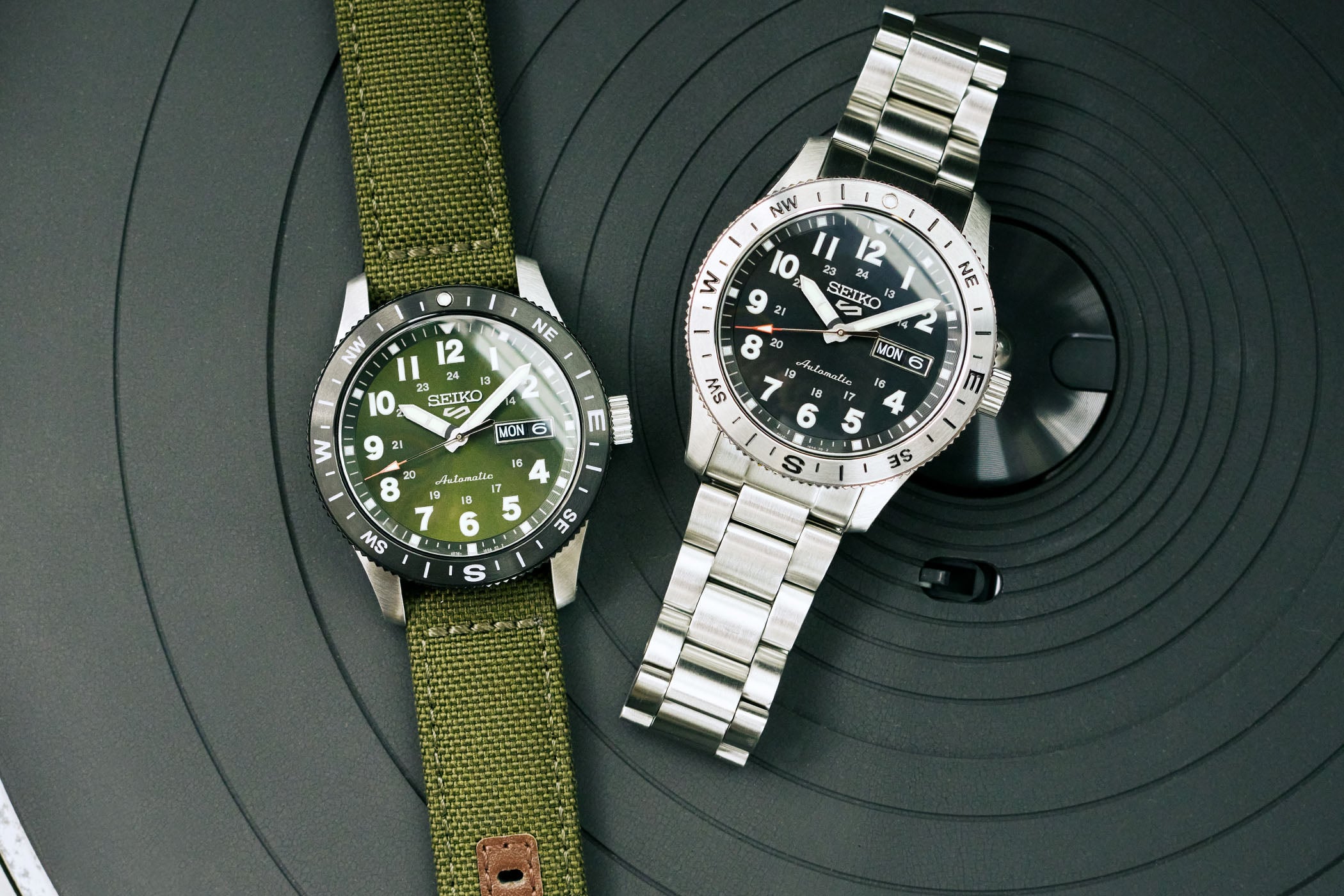
Some watches are built for navigation and make this method easier.
The Seiko Alpinist features a compass bezel that lets you lock in direction after finding south. High-contrast dial and lume markers aid visibility in low light.
The Citizen Eco-Drive with Navigation Guide includes sun-compass instructions in user manuals. Solar-powered construction means no battery worries during extended outdoor trips.
The Seiko Prospex SRPD33K1 is durable, legible, and water-resistant with clear hour markers designed for precise sun alignment.
The Montblanc 1858 and Breitling Hercules are inspired by expedition watches with rotating bezels and robust dials ideal for survival navigation.
Common Mistakes to Avoid
Even small errors reduce accuracy. Watch for these common pitfalls.
Holding the watch at an angle distorts the angle between the hour hand and 12. Always keep it flat with the dial facing up.
Using the wrong hemisphere method sends you in the opposite direction. Confirm your hemisphere first before proceeding.
Ignoring daylight saving time introduces a 15-degree error. Either use 1 o’clock or set the watch back one hour.
Assuming the sun rises due east is only true on equinoxes. Otherwise, the sun rises north or south of east depending on season and latitude.
Frequently Asked Questions About Using a Watch as a Compass
Can I use a digital watch to find direction?
Yes. Draw a clock face in the dirt, mark the hours, place a stick at the current hour, and align it with the sun. Then apply the same midpoint method used with analog watches.
Does the watch compass method work at night?
No. The technique requires a visible sun and cannot be used after sunset. At night in the Northern Hemisphere, find Polaris (the North Star) instead by extending a line from the Big Dipper’s bowl stars.
How accurate is a watch compared to a magnetic compass?
The watch method provides moderate accuracy, typically within 15 to 30 degrees of true direction. Magnetic compasses are far more precise but can be affected by interference.
Why does the method give solar direction instead of true north?
The method points to where the sun is located at a given time, not Earth’s axis. Solar south in the Northern Hemisphere is where the sun appears at solar noon, which differs slightly from geographic true north.
What if I’m near the equator?
The standard method becomes less reliable near the tropics where the sun passes overhead or shifts between northern and southern positions seasonally. Use terrain landmarks or carry a compass for better accuracy.
Can I use this method during daylight saving time?
Yes, but you must adjust. In the Northern Hemisphere, use 1 o’clock instead of 12 as your reference point. In the Southern Hemisphere, point the 1 o’clock mark at the sun instead of 12.
Key Takeaways for Using Your Watch as a Compass
Using a watch as a compass is a practical survival skill that works when modern tools fail. The method transforms your timepiece into a navigation tool by aligning the hour hand or 12 marker with the sun and finding the midpoint to locate cardinal directions.
Remember the core distinction: in the Northern Hemisphere, point the hour hand at the sun and bisect with 12 for south. In the Southern Hemisphere, point 12 at the sun and bisect with the hour hand for north. Always adjust for daylight saving time by using 1 o’clock instead of 12.
Practice this technique at home before you need it in an emergency. Combine it with terrain awareness and celestial navigation for even better results. In survival situations, every tool counts, even the one already on your wrist.