You’ve got a sleek watch with a smooth, seamless back no notches, no grooves, nothing for a tool to grip. You need to replace the battery or check the movement, but you are stuck: how do you open a flat-edge watch back without scratching it or breaking something? This is a common challenge, especially with water-resistant quartz watches from brands like Bulova, Seiko, Timex, and CK. Unlike screw-down backs, these snap-fit, hermetically sealed case backs rely on compression and precision, not mechanical access points.
But do not worry. There are proven, safe methods to open them without damage. Whether you are a DIY enthusiast or just trying to save a few bucks at the jeweler, this guide covers the best techniques, tools, and expert tips for removing a flat-edge watch back, starting with the safest, most effective options first.
Find the Hidden Seam Before You Pry
Many users fail because they are prying at the wrong ridge. The outer edge of a flat-back watch often has two concentric ridges. The inner one is part of the main case body. The actual back starts at the outer ridge, where a microscopic seam hides. Use a 10x jeweler’s loupe or bright light to inspect the perimeter, especially near 6 o’clock, where some models like vintage Omega Constellation hide tiny notches under grime.
Locate the True Separation Line
Clean the seam with isopropyl alcohol and a soft brush first. Dirt and corrosion can seal the back even tighter. The outer edge of a flat-back watch often has two concentric ridges. The inner one is part of the main case body. The actual back starts at the outer ridge, where a microscopic seam hides. Use a 10x jeweler’s loupe or bright light to inspect the perimeter, especially near 6 o’clock, where some models like vintage Omega Constellation hide tiny notches under grime.
Confirm It Is a Snap-Back, Not a Screw-Down
Flat does not always mean snap-on. Some screw-down backs are smooth but require friction tools like rubber balls. Use this quick test to identify what you are working with:
• No notches plus smooth edge plus tight fit equals likely snap-back
• Textured edge or slight rotation resistance equals likely screw-down
The rubber ball method does NOT work on flat snap backs. It only works on screw-down types with grip.
Use Hot Glue and Pencil Eraser: The Safest Method

This is the top-rated, non-destructive way to remove a flat-edge back. No scratches, no tools, no risk. This method uses hot glue and a pencil eraser to create an adhesive bond that lifts the case back safely.
Apply Glue to Pencil Eraser
Plug in a hot glue gun. Melt a small dab of glue onto the eraser end of a pencil, just enough to cover the tip. Press it firmly onto the center of the watch back. Hold for 30 to 60 seconds until fully cooled and bonded. Use minimal glue. Too much can overflow and stick to the case.
Pull Straight Up to Lift the Back
Once set, pull straight upward with steady pressure. The adhesive should lift the entire back in one motion. If it resists, reheat slightly with a hairdryer. Do not yank.
Clean Residual Glue
After removal, apply rubbing alcohol to the dried glue with a cotton swab. Let it soften, then press the back against a hard surface to peel off the glue cleanly. This method works perfectly with no scratches, and the back can be reused.
Pry with Case Knife and Plastic Shield
When glue is not enough, a single-edge case knife with protection is the next safest bet. This method requires more skill but offers precision control.
Inspect Seam with Magnifier
Use a 10x loupe to scan the entire edge. Focus on 6 o’clock. Look for any sign of a gap or notch. Clean with alcohol first.
Cover Case with Polythene
Cut a small square from a plastic grocery bag. Place it over the watch back. This acts as a scratch guard. The knife cuts through the plastic at the seam, but the case stays protected.
Insert Beveled Blade at 90 Degrees
Position the flat side of the knife against the case body, and the beveled edge into the seam. Push straight in, then lever outward, not downward, to lift the back. The knife cuts through the polythene at the joint, but the flat side never touches the case. Wear cut-resistant gloves. Slippage can cause serious injury.
Try Dual Razor Blade Lift for Tight Seals

If the seam is too tight for a knife, two razor blades can create initial lift. This method works well on ultra-thin cases like the Seiko Dolce.
Tap Blades at 3 and 9 O Clock
Gently tap a single-edge razor blade into the seam at 3 o’clock. Repeat at 9 o’clock. Wiggle both slightly to elevate the back just enough to insert a wider tool.
Switch to Case Knife
Once lifted, swap to a beveled case knife to rotate around the edge and fully release the back. Razor blades lift the back a little so you can get under it with a more substantial knife. Risk is high. Always wear gloves. Blades can snap or slip.
Use No. 11 Exacto Blade for Delicate Cases
For extremely thin or brittle backs, precision is key. This method requires experience and extreme care.
Insert Blade Straight, Then Twist
Slide a No. 11 Exacto blade straight into the seam. Once seated, gently twist to create lift. Avoid lateral force. This blade can shatter. Push it straight in, twist a little and walla. Only for experienced users. Use under bright light and magnification.
Try Fingernail or Plastic Pry Tool for Loose Fits
Not all flat backs are hermetically sealed. Some have slight gaps that make removal easier.
Test for Slight Gap
Hold the watch and slide your thumbnail along the edge. If there is even a tiny gap, apply slow upward pressure. Rotate as you go.
Use Plastic Tools for Safety
Try a guitar pick, expired credit card strip, or iFixit plastic pry tool. These will not scratch stainless steel. This method will not work on water-resistant or tightly sealed models. It works best on low-cost Timex Indiglo or basic Casio watches.
Upgrade to Lever-Style Bench Opener for Frequent Repairs
For those who work on watches regularly, a lever-type bench case opener provides superior control and mechanical advantage.
Secure Watch in Vise
Place the watch in a padded holder or soft-jaw vise. This keeps it stable and frees both hands.
Insert Blade, Then Lever Up
Turn the screw to slowly insert the blade at the seam. Once engaged, pull the lever arm to lift the back with even, controlled force. You have 180-degree leverage, not 90-degree like handheld tools. Avoid cheap alternatives like Horotec-style tools. They lack lever action and can bend or distort the back.
Reassemble Correctly to Preserve the Seal
Opening is half the job. Closing it right keeps your watch water-resistant.
Clean Gasket and Groove
Before reassembly, check the rubber gasket if present. Clean the groove with alcohol. Replace if cracked or stiff.
Press Evenly Around Edges
Align the back flush and press with thumbs or soft-jaw pliers. Apply even pressure around the perimeter until it clicks. Just because it pops back does not mean it is sealed. Finger pressure may not restore original waterproof rating.
Use a Watch Press for Full Seal
For true water resistance, use a multi-die watch press. It applies uniform compression, ensuring the gasket seals properly.
Avoid These Common Mistakes
Even the best tools fail if you skip the basics. Here is what not to do when removing a watch back with flat edge.
Do Not Pry at the Wrong Ridge
Many users waste time prying at the inner ridge, which is part of the case. Focus on the outer seam. The ridge closest to the face is still part of the main body. The second ridge is where the back actually starts.
Do Not Use Excessive Force
Snap backs require precision, not strength. Too much pressure can bend the back, damage the gasket, or crush internal parts.
Never Use Scissors or Dremel
Scissors lack grip. Dremel grinders permanently destroy the case and void all warranties. That tool is for bezels. You will likely cause damage.
Final Tips for Success
Work in a clean, bright area. Lose a tiny screw or gasket, and your watch will not run. Use a magnetic mat and well-lit workspace. Replace gaskets every 2 to 3 years. Even if the seal looks fine, rubber degrades over time. Replace it during battery changes.
Know when to stop. If the back will not budge after two methods, take it to a pro. Some watches like certain Bulovas are non-user-serviceable. If all else fails, removing the crystal from the front is a last resort, but only on non-valuable watches. Risk of dial damage is high.
Frequently Asked Questions About Removing Flat-Edge Watch Backs
Can I use a rubber ball to open a flat-edge watch back?
No. The rubber ball method only works on screw-down backs with texture, not on flat-edge snap backs. Using a rubber ball on a snap-back will waste your time and likely damage nothing.
What is the safest method to remove a watch back without scratches?
The hot glue and pencil eraser method is the safest. It is non-destructive, requires no special tools, and preserves the case finish. Apply hot glue to the eraser, press firmly, let it cool, then pull straight up.
How do I know if my watch has a snap-back or screw-down back?
Look for notches or grooves. Snap-back flat-edge watches have no visible notches, grooves, or slots. Screw-down backs often have subtle texture or knurling. If the edge is completely smooth and tight, it is likely a snap-back.
Why does my watch back keep slipping off after I reseat it?
Finger pressure alone may not restore the proper seal. The back may click into place but not compress the gasket sufficiently. Use a watch press for even compression, or accept that water resistance may be compromised.
What tools do I need to remove a flat-edge watch back at home?
Basic tools include a hot glue gun with pencil, a single-edge case knife, a 10x jeweler’s loupe, isopropyl alcohol, cotton swabs, and cut-resistant gloves. For frequent repairs, a lever-type bench opener and watch press are worthwhile investments.
Can I damage my watch by trying to open the back myself?
Yes. Using excessive force, wrong tools, or prying at the wrong spot can bend the back, damage the gasket, scratch the case, or break internal components. Always use proper techniques, work slowly, and stop if resistance is excessive.
Key Takeaways for Removing Your Flat-Edge Watch Back
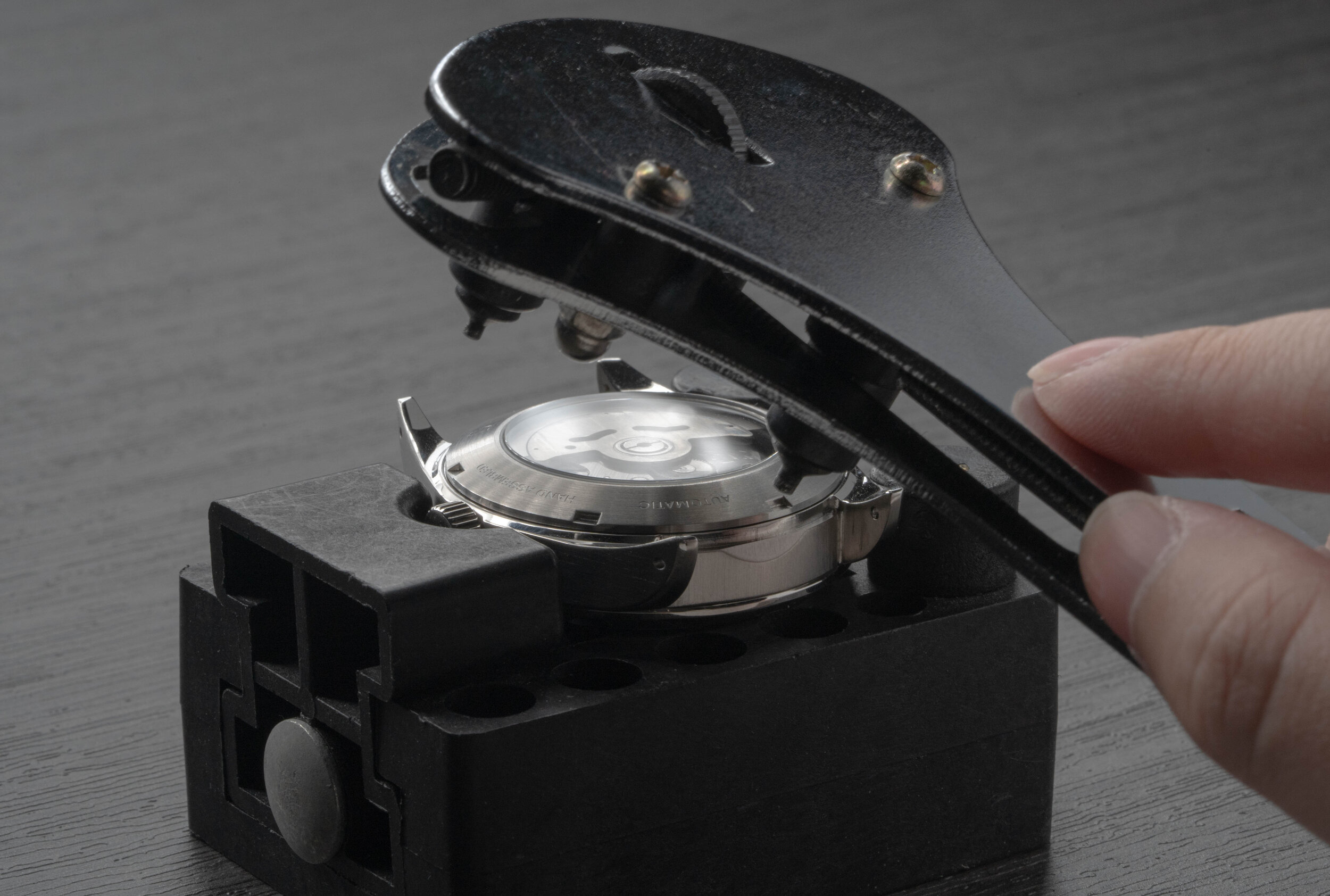
The hot glue method is your best starting point. It is safe, effective, and requires no special tools. If that fails, move to protected prying with a case knife and plastic shield. Always wear gloves, use magnification, and prioritize technique over force.
Identifying the true seam is critical. Most failures happen because users pry at the inner ridge instead of the outer ridge where the back actually begins. Clean the seam first and use a loupe to find the exact separation line.
Reassembly matters as much as removal. A watch back that clicks into place may not be properly sealed. Use a watch press for true water resistance, and replace gaskets every few years. With the right approach, you can open any flat-edge watch back without a scratch.