Choosing the right watch strap is about more than aesthetics. A poorly fitted strap causes discomfort, looks awkward, and can even damage your timepiece. The truth is, most strap sizing problems stem from one simple issue: inaccurate measurements. Understanding how to measure watch strap dimensions correctly ensures a comfortable fit, proper function, and a polished appearance on your wrist.
This guide covers everything you need to know about measuring lug width, determining strap length, selecting the right taper, and avoiding common mistakes. By the end, you will have the confidence to purchase straps that fit perfectly every time.
Measure Lug Width Correctly

Your watch lug width is the most critical measurement when selecting a strap. This dimension determines which straps will physically attach to your watch case, and getting it wrong means the strap simply will not fit.
Find the Inner Lug Distance
The lugs are the protruding horns on your watch case where the strap connects. To measure lug width correctly, you need to find the distance between the inner edges of these lugs.
Place your measuring tool between the inner edges of the lugs on one side of the watch case. Read the measurement in millimeters. This number represents your lug width and dictates which strap width you need to purchase.
Use digital calipers for the best accuracy. Place the inside jaws between the inner edges of the lugs and read the display. This method eliminates guesswork and provides precision to 0.01mm.
Use the Right Tools
Three tools work well for measuring lug width.
Digital calipers offer the highest precision and are the preferred choice for serious watch enthusiasts. Millimeter rulers work for quick checks but require steady hands and good lighting. Printable templates from brands like Nixon or Carl Friedrik provide visual guides when you align your watch with printed markers.
Always measure the watch case itself, not the old strap. Leather can shrink over time, and rubber can stretch. Relying on a worn strap leads to incorrect sizing.
Check Common Watch Brand Sizes
If you cannot measure immediately, use this reference for popular watch models.
| Watch Model | Lug Width |
|---|---|
| Rolex Datejust | 20mm |
| Omega Speedmaster | 20mm |
| Tudor Black Bay | 22mm |
| Grand Seiko Snowflake | 20mm |
| Apple Watch 40mm | 22mm |
| Apple Watch 44mm | 24mm |
Apple Watch straps are cross-compatible across generations. The 38mm and 40mm sizes both use 22mm straps, while 42mm and 44mm sizes use 24mm straps.
Avoid Common Mistakes
Do not measure the strap instead of the case. Do not eyeball the measurement, as small differences matter significantly. Do not assume vintage and modern models share the same lug width, as some older Submariners measure 20mm while newer versions are 21mm.
Strap widths are manufactured in whole numbers only. If you get a half-millimeter reading like 19.5mm, re-measure. This indicates a measurement error rather than an actual size.
Determine Correct Strap Length
Even with the correct lug width, a poorly sized strap creates problems. The strap may hang too long, leave excess tail visible, or fail to close comfortably around your wrist. Strap length must match your wrist circumference and your chosen clasp type.
Understand X/Y Length Format
Two-piece straps list their length using an X/Y format measured in millimeters. The first number represents the long end, measured from the lug to the tip including the holes. The second number represents the short end, measured from the lug to where the buckle attaches. The buckle itself is not included in these measurements.
For example, a 115/75mm strap has a 115mm long side and a 75mm short side. This format helps you match the exact dimensions of your current comfortable strap.
Measure Your Wrist Properly
Wrap a soft tape measure around your wrist at the point where you normally wear your watch. Keep the tape snug but not tight, allowing room for airflow. Record the circumference in millimeters.
If you lack a tape measure, use a piece of string. Wrap it around your wrist, mark the overlap point, then lay it flat and measure with a ruler. Convert inches to millimeters by multiplying the measurement by 25.4.
Match Wrist Size to Strap Length
Use this standard guide to find your starting point.
| Wrist Circumference | Recommended Length |
|---|---|
| 146-165mm (5.75-6.5 inches) | Short (105/70, 110/70mm) |
| 165-184mm (6.5-7.25 inches) | Regular (115/75, 120/80mm) |
| 178-203mm (7.25-8.0 inches) | Long (125/80, 130/85mm) |
For deployant clasps, subtract 5-10mm from the total length because these folding buckles take up significant strap space.
Measure an Existing Well-Fitting Strap
If your current strap fits perfectly, use it as a template. Lay it flat and measure from the lug hole to the tip on the long end. Measure from the lug hole to the buckle end on the short side. Use these exact numbers when purchasing a replacement to ensure consistent comfort and tail length.
Choose the Right Taper

Tapering affects how a strap looks and feels on your wrist. This subtle detail makes a significant difference in aesthetics and comfort, particularly for dress watches.
What Is a Tapered Strap
A tapered strap narrows from the lugs toward the buckle. The specification shows both widths, such as 22/20mm meaning 22mm at the lugs and 20mm at the buckle. A straight strap maintains the same width throughout, such as 20/20mm.
The taper represents the difference between these two measurements, typically ranging from 2-4mm.
Benefits of Tapering
Tapered straps create a sleek, refined look that transitions elegantly from the watch case to your wrist. The narrower buckle area reduces bulk under your wrist, improving comfort during extended wear. The strap drapes more naturally over the wrist curve.
Tapered straps work best with dress watches, slim cases, and formal attire.
When to Use Tapered vs. Straight
Choose tapered straps for dress watches, smaller case sizes around 36-40mm, and formal occasions. Choose straight straps for large watches around 44mm and above, sports and tool watches, and rugged casual wear.
The general rule is that taper suggests elegance while straight straps convey boldness.
Use the Best Measurement Tools
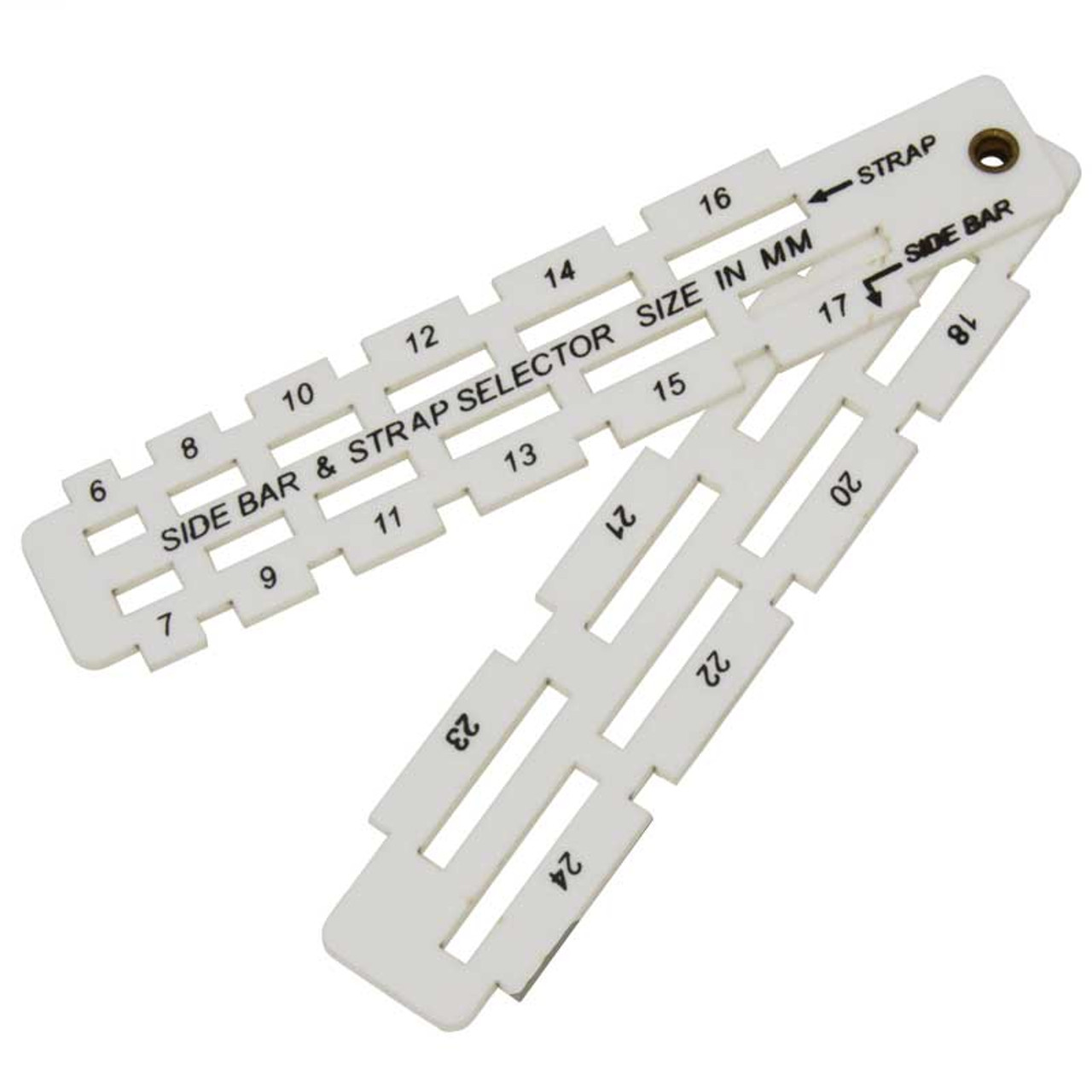
Your choice of tools directly impacts measurement accuracy. Using proper equipment eliminates guesswork and ensures you get the right size the first time.
Digital Calipers for Precision
Digital calipers provide accuracy to 0.01mm, making them the gold standard for watch measurements. Use the inside jaws to measure lug width. These tools also measure strap thickness and spring bar diameter accurately.
Zero the calipers before measuring to eliminate any offset errors. Rechargeable and battery-powered options are both available.
Millimeter Ruler for Quick Checks
A millimeter ruler offers affordability and accessibility for quick measurements. Use it with good lighting and align the ruler edge precisely with the inner lug for accurate reading.
Rulers struggle with recessed or curved lugs, so verify with a second measurement when possible.
Printable Templates for Beginners
Printable templates from brands like Nixon or Carl Friedrik provide visual guides for beginners. Print at 100% scale with no resizing, then align your watch case with the printed guides for an instant match.
Paper can expand or shrink with humidity, so use these templates for estimation rather than precision measurement.
String and Ruler for Wrist Size
When no tape measure is available, wrap string around your wrist, mark the overlap, then measure the straight length with a ruler. Convert to millimeters for consistency with strap sizing charts.
Decode Strap Sizing Labels
Many brands use S, M, L, XL labels, but these sizes vary widely between manufacturers. Relying on these labels leads to incorrect purchases.
Why Size Labels Are Unreliable
The term medium might mean 115/75mm with one brand and 120/80mm with another. No industry standard exists for length categories. Some brands include the buckle in their measurements while others exclude it.
Always prioritize exact millimeter dimensions over generic size labels.
Verify Before Buying
Check product specifications for exact millimeter dimensions. Confirm the taper specification, such as 20/18mm versus 20/20mm. Note clasp compatibility including tang, deployant, or butterfly styles.
A 20mm strap may not fit if your watch has tight lug spacing, even if the width technically matches.
Fix Common Fit Issues
Even with correct measurements, fit problems can arise. Understanding how to diagnose and fix these issues ensures your strap works perfectly.
Strap Too Tight or Too Loose
If you cannot fit a finger under the strap, it is too tight. Try a longer length or adjust the hole position. If the strap slides or rotates on your wrist, it is too loose. Shorten the long end or choose a smaller size.
The ideal fit allows comfortable securing with 1-2 fingers of slack.
Tail Extends Past Second Keeper
The strap tail should pass through the first keeper and end near or just enter the second keeper. If the tail extends past the second keeper, choose a shorter long end. If the tail barely reaches the first keeper, upgrade to a longer size.
A clean, minimal tail looks more polished and professional.
Deployant Clasp Does Not Close
Deployant buckles take up 6-10mm of effective strap length. If your strap barely reaches the clasp, switch to a shorter X/Y size. For example, if a 120/80mm strap is too long with a tang buckle, try 110/70mm with a deployant clasp.
Follow Final Fit Tips
These expert recommendations help you avoid last-minute surprises and enjoy a perfect fit every time you purchase a new strap.
Do Measure the Watch, Not the Strap
Always measure lug width on the watch case using digital calipers when possible. Double-check with a second reading to confirm accuracy.
Do Consider Wrist and Watch Proportions
The strap width should be approximately 50% of the case diameter. A 40mm case typically pairs with a 20mm strap. Slim wrists suit narrower straps around 18-20mm, while thicker wrists need wider straps around 22-24mm.
Do Not Assume All Same-Width Straps Are Equal
Some watches have tight lug clearance. Aftermarket straps may have slightly oversized holes. Always test fit before finalizing your purchase.
Do Not Ignore Material Thickness
Thick leather or rubber straps can bulge at the lugs. Opt for slim-profile straps on watches with tight spacing to maintain a clean appearance.
Frequently Asked Questions About How to Measure Watch Strap
What tools do I need to measure watch lug width?
Digital calipers provide the best accuracy at 0.01mm precision. A millimeter ruler works for quick checks, while printable templates help beginners estimate size visually. Always measure the watch case directly rather than relying on an old strap.
How do I measure my wrist for watch strap length?
Wrap a soft tape measure around your wrist where you wear the watch. Keep it snug but not tight. Record the circumference in millimeters. If using a string, mark the overlap point, measure the length, and multiply inches by 25.4 to convert to millimeters.
What does the X/Y mm mean on watch strap packaging?
The X/Y format represents two measurements. The first number is the long end length from lug to tip. The second number is the short end length from lug to buckle attachment. The buckle itself is not included in these measurements.
Can I use any strap width for my watch watch?
No, the lug width must match exactly. Common widths range from 16mm to 26mm, with 20mm being the most popular for men’s watches. Using a strap that is too wide or too narrow risks poor fit or damage to the spring bars.
How do I choose between tapered and straight straps?
Choose tapered straps for dress watches and formal occasions for an elegant look. Choose straight straps for sports watches and casual wear for a bold, rugged appearance. The taper creates visual refinement while straight straps maintain presence on larger cases.
What if I am between wrist sizes when choosing strap length?
Choose based on your preference for appearance. A shorter strap provides a cleaner look with less tail. A longer strap offers more adjustment room and works better with thick clothing. When unsure, opt for slightly longer as excess tail can be tucked.
Key Takeaways for Measuring Your Watch Strap
Measuring a watch strap correctly requires three essential steps. First, measure lug width directly on the watch case using digital calipers, targeting whole millimeter values. Second, determine strap length by measuring your wrist circumference and matching to X/Y millimeter specifications, accounting for clasp type. Third, choose taper based on your watch style and intended use, selecting tapered for elegance and straight for boldness.
Always prioritize exact millimeter dimensions over generic size labels. Measure the watch, not the strap. Consider your clasp type when selecting length, as deployant clasps require shorter straps. Use this knowledge to purchase straps that fit perfectly and enhance your timepiece.
Now you are ready to measure any watch strap with confidence and precision.