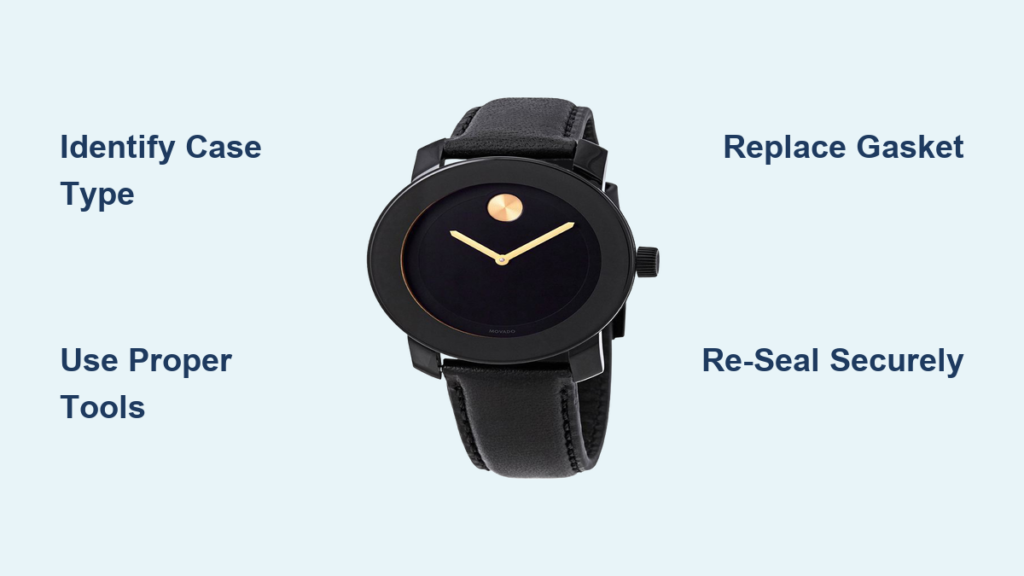
You’ve noticed your Movado watch has stopped ticking. Before rushing to a jeweler, you might be wondering: can I open a Movado watch myself? The answer is yes, if you know the case back type and use the right tools. This guide walks you through how to safely open any Movado watch, replace the battery, and reseal it like a professional, saving you $20–$50 per service.
Identify Your Movado Case Back Type

Before touching any tool, you must determine whether your Movado has a snap-back or screw-down case. Using the wrong method can cause permanent damage to the case, compromise water resistance, or scratch the crystal.
Look for Visual Clues
Examine the edge of the case back under bright light. Look for these indicators to identify the type correctly.
Visible notches or grooves around the perimeter indicate a screw-down back that requires a wrench. A smooth perimeter with a slight lip suggests a snap-back (press-fit) case. Shallow recesses can be misleading, so do not assume a case is press-fit just because the notches appear faint.
Common Movado Models and Their Case Types
| Model | Case Back Type |
|---|---|
| Movado Classic, Museum, Bold | Snap-back (press-fit) |
| ESQ by Movado, ESQ ONE | Screw-down with notches |
| Sport and dive-inspired variants | Screw-down |
Misidentifying the type is the number one cause of failed DIY attempts. When in doubt, assume it is screw-down and inspect more closely.
Gather the Right Tools for the Job

Using improper tools risks scratching the case, stripping threads, or cracking the crystal. Invest in these essentials before starting.
Essential Tools List
Case-back knife with wedge tip for snap-back models. Never use a flathead screwdriver as it will damage the finish. Three-point case wrench (LG brand preferred) for screw-down backs with notches. Genuine tools fit better than cheap clones. Two-lug Tianju wrench as an alternative for larger Movado cases. Watch press or clamper for resealing snap-back cases evenly. Soft cloth or rubber pad to protect the crystal during handling. Replacement rubber gasket to maintain water resistance. Plastic tweezers or spudger for battery removal without shorting the circuit.
Skip the generic “crab” tool. These often slip and damage Movado’s delicate notches.
Open a Snap-Back Movado Watch
Models like the Movado Classic and Museum use a press-fit case back held by friction and a rubber gasket, not screws. Follow these steps for safe removal.
Step-by-Step Prying Process
Remove the bracelet if possible. This lets you grip the case securely and prevents stress on the lugs. Place the watch face-down on a soft cloth in your palm. This keeps it stable and protects the crystal. Locate the seam at the 9 o’clock position where the case lip is most accessible. Insert the wedge-tip knife into the gap using gentle pressure. Do not force it. Squeeze your hand closed rather than pushing the blade. Your palm’s inward pressure eases the back off evenly. Listen for a click indicating the back has released.
Keep your palm open during this process to prevent blade slippage and reduce injury risk.
Open a Screw-Down Movado Case
The ESQ ONE and other sport models use a threaded case back that unscrews counterclockwise. Shallow notches can be misleading and trick you into thinking it is a snap-back.
Why Some Cases Feel Stuck
One user reported not being convinced it was a screw back because the recesses were very shallow. It turned out to be a screw-back requiring a sharp wrench with crisp teeth and no play in the jaws.
Safe Unscrewing Method
Use a three-point or two-lug wrench with no jaw play. Loose tools will slip and mar the case. Align the teeth with the notches perfectly. Even slight misalignment risks damage. Apply steady counterclockwise torque. Do not jerk or over-tighten.
If the case is stuck, try these solutions. Tap the wrench handle lightly with a soft mallet. Warm the case with a hairdryer for 10–15 seconds to expand the metal slightly. Use a rubber friction ball for extra grip without scratching the finish.
Avoid excessive force. Movado threads are fine and easily stripped if you force them.
Handle Stubborn Cases Safely
Some Movado watches are notoriously tight, especially if they have never been serviced. Try these methods before giving up.
Rubber Ball Method
Press a sticky rubber gummy ball onto the case back and twist firmly. This increases grip without damaging paint or enamel. This method is safer than glue and just as effective according to users who have tried it.
Superglue and Socket Method (Last Resort)
Only use this if all else fails and you accept the risk to the finish. Apply cyanoacrylate (super glue) to a metal socket, press it onto the case back, and wait 5–10 minutes for it to cure. Use a wrench to twist off. After removal, soak in acetone to dissolve the glue and clean with cotton swabs.
Caution: Acetone can damage enamel or cerakote finishes. Test on an inconspicuous area first.
Replace the Battery Step by Step

Once the back is off, the movement is exposed. Movado uses Swiss or Japanese quartz movements (Ronda, ETA, Miyota), and the battery sits openly on the circuit board.
Find and Remove the Old Battery
Locate the battery sitting on the circuit board. No screws or clips hold it down. Use plastic tweezers or a spudger to slide it out. Never use metal tools as they risk short-circuiting the board. Avoid touching any other components. One wrong touch can fry the movement and cost $80 or more to repair.
Install the New Battery
The correct type is SR927SW (395) or Renata 395. Insert with the positive side up unless marked otherwise. Press gently to seat the battery fully.
Buy batteries in bulk. They last 5–10 years on the shelf.
Replace the Rubber Gasket
Water resistance depends on a fresh gasket. The original dries out over time and loses its sealing ability.
Why This Step Matters
A cracked gasket allows moisture inside, leading to rust or a fogged crystal. Metal-to-metal contact does not seal. Always replace the gasket every time you open the watch.
Gasket Replacement Process
Remove the old gasket from the groove. Clean the channel with a dry cloth. Press the new gasket in evenly without twisting or pinching it. Lubricate lightly with silicone grease if desired for smooth seating.
This costs less than $1 and protects your investment.
Re-Close the Case Properly
A poorly sealed case can pop open unexpectedly or crack the crystal under pressure.
For Snap-Back Models
Place the watch in a tool with the large face plate over the crystal. Use a back plate that covers most of the case back. Add a soft cloth over the dial to prevent dust marks. Press straight down until you hear a click. Check alignment for gaps or tilting.
Never skip the press. Thumb pressure risks uneven sealing or crystal damage.
For Screw-Down Models
Align the back and hand-tighten clockwise. Use the wrench for final tightening just until snug. Do not over-tighten as the threads are delicate.
Final Steps: Test and Set Your Watch
Now that it is closed, bring your Movado back to life.
Set the Time Correctly
Pull the crown to the time-setting position. Turn to 14:06, a common recommendation that avoids stress on the date mechanism. Avoid setting the date between 9 PM and 3 AM as this can damage the movement.
Test Operation
Watch the seconds hand. It should move smoothly without stuttering. Listen for any irregularities. Check water resistance only if the gasket is new and the case is undamaged. For full water resistance testing, visit a professional with a pressure tester.
Common Mistakes to Avoid
Using a Flathead Screwdriver
This scratches the case and risks slipping into the crystal. Use only a wedge-tip case knife designed for watch work.
Skipping the Gasket
This kills water resistance. Moisture leads to fogging and movement failure.
Forcing a Stuck Case
This strips threads or cracks the back. Stop if it will not budge. Try heat, the rubber ball method, or consult a professional.
Touching the Movement
Oils from fingers or metal tools can short the circuit. Touch only the battery.
Frequently Asked Questions About Opening a Movado Watch
Can I open my Movado watch at home without special tools?
You need at least a case-back knife for snap-back models or a three-point wrench for screw-down models. Using the wrong tools risks scratching the case or stripping threads.
How do I know if my Movado has a snap-back or screw-down case?
Examine the edge under bright light. Visible notches or grooves indicate screw-down. A smooth edge with a slight lip indicates snap-back.
What happens if I force a stuck case back open?
Forcing it can strip the threads, crack the case back, or damage the crystal. Try the rubber ball method or apply gentle heat instead.
Do I need to replace the gasket every time I open my Movado watch?
Yes. The rubber gasket degrades over time and is critical for water resistance. Always replace it.
How much does it cost to replace a Movado watch battery professionally?
Professional battery replacement typically costs $20–$50 per visit. DIY costs under $6 after the initial tool investment.
Can I damage my Movado watch by opening it myself?
Yes, if you use improper tools, force the case, or skip the gasket. Following this guide minimizes that risk significantly.
Key Takeaways for Opening Your Movado Watch
Opening a Movado watch is straightforward when you understand the case back type and use proper tools. The process takes 5–10 minutes once you have the right equipment.
Identify whether you have a snap-back or screw-down case first. Use a wedge-tip knife for snap-back models and a three-point wrench for screw-down models. Never use a flathead screwdriver. Always replace the rubber gasket to maintain water resistance. Use a watch press to close snap-back cases, not your fingers.
The total investment in tools is under $40, and each subsequent battery replacement costs less than $6. This saves you $20–$50 every time the battery dies. Patience and precision beat force every time. When in doubt, stop and seek professional help rather than risk damaging your watch.