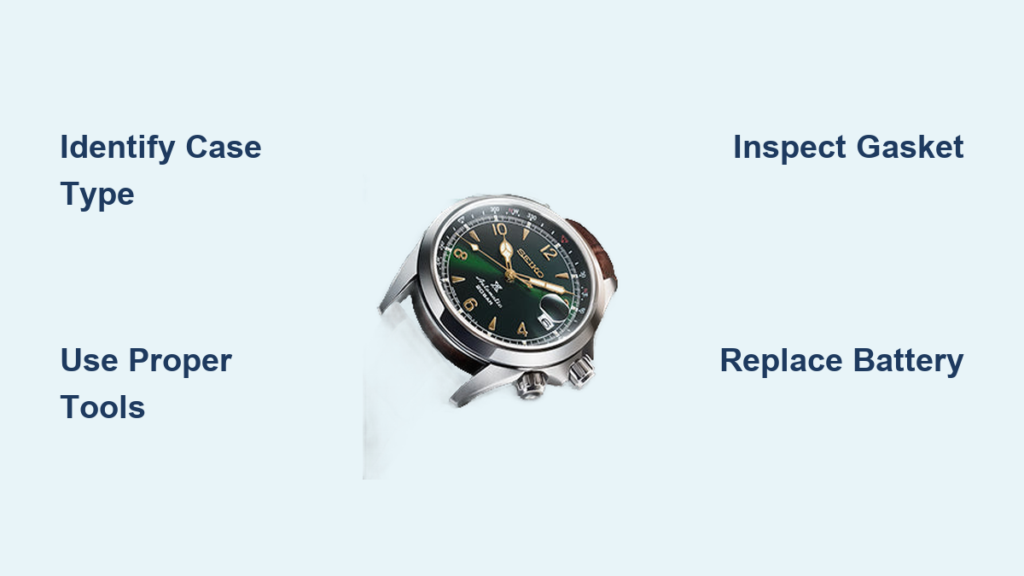
If you’ve ever asked, “How to open a Seiko watch?” you are not alone. Whether replacing a dying battery, inspecting the movement, or servicing a vintage diver, knowing the correct method for your specific model is essential. Seiko uses multiple case designs, each requiring unique tools and techniques. Opening the wrong way can scratch the case, damage gaskets, or ruin water resistance. This guide covers every step by case type, using only verified methods and proper tools.
Identify Your Seiko Case Type
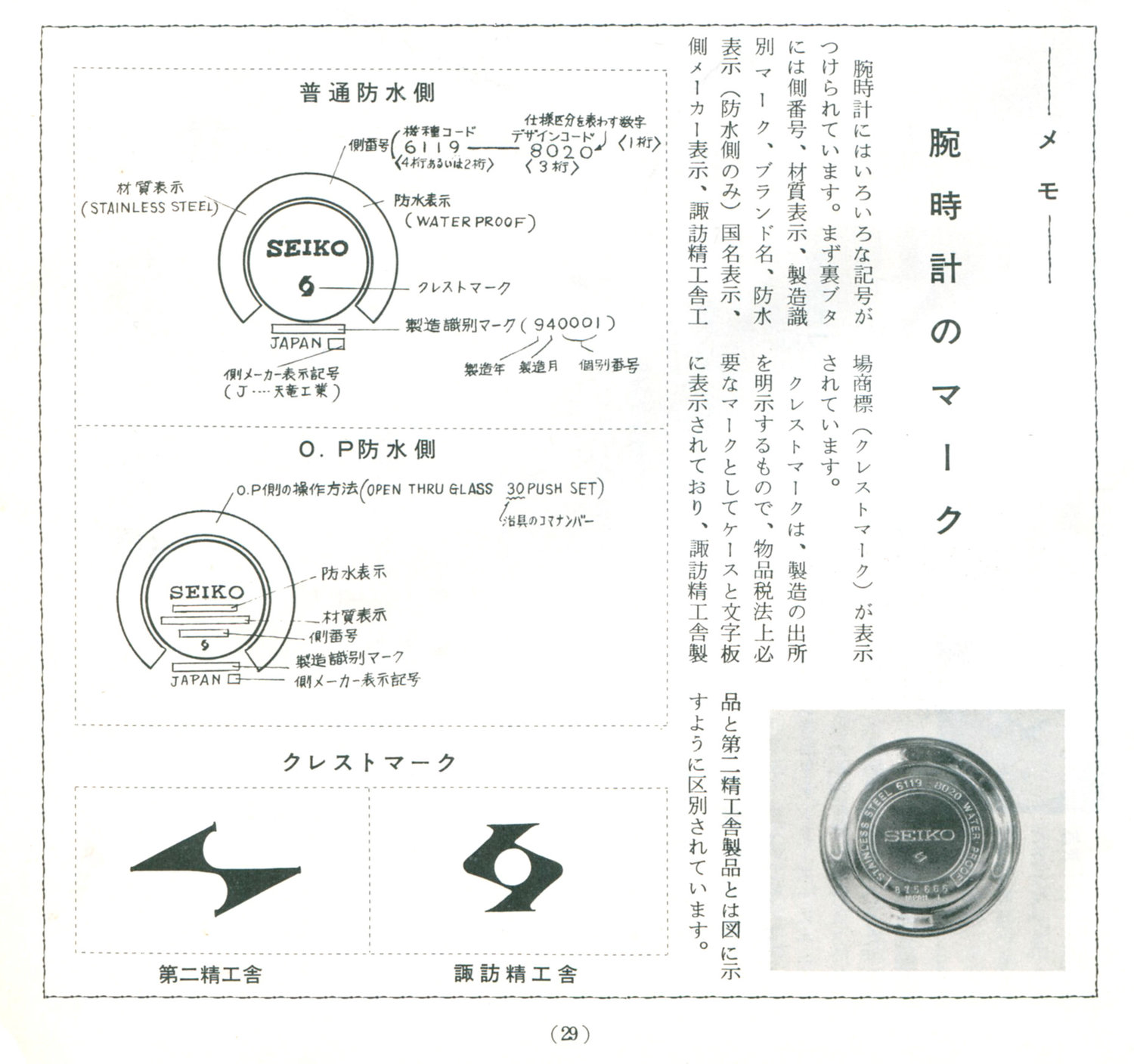
Before touching any tools, you must determine your watch case design. Using the wrong opening method risks permanent damage to the case or movement. Seiko uses four main case types across its product line.
Screw-Back Cases
These are common in modern quartz and Kinetic models. The case back has notches around the edge and threads onto the case like a jar lid. Turn counter-clockwise to open. Look for small indentations between the lugs where the case opener prongs fit.
Snap-Back Cases
Found in basic quartz watches, these backs are held by friction. A tiny notch between two lugs lets you insert a tool to pop it off. No threading is involved. If you see no visible screws or notches, use a loupe to find the micro-notch.
Monocoque One-Piece Cases
No removable back exists on these models. The movement comes out through the front. Common in vintage divers like the Seiko 3302-8080 or “Stingray” models. The bezel or crystal must be removed first. These are more complex and require precision handling.
Two-Piece Monocoque Cases
Rare designs like the Seiko 7018-5000 “Monaco” split horizontally via side tabs. Depress the tabs inward, then pry open. Mistaking this for a snap-back can bend the case permanently.
Gather the Right Tools

Using improper tools like a flathead screwdriver can gouge the case and ruin the finish. Always use purpose-built watch tools designed for this specific task.
Essential Tools
• Case-back opener (adjustable or fixed) fits into notches on screw-back or snap-back cases
• Spring-bar tool removes straps so you can work freely
• Case knife with dull-edged blade for prying bezels or snap-backs without scratching
• Fine-point tweezers (non-magnetic or plastic) handle batteries and capacitors safely
• Magnifying loupe finds tiny notches and inspects gaskets
Advanced Tools for Monocoque Cases
• Suction cup lifts crystals without causing damage
• Screw case opening tool removes internal retaining rings
• Crystal press reseats bezels evenly during reassembly
• Movement holder secures the watch during back removal
Open a Screw-Back Seiko Watch
Screw-back cases are common in Grand Seiko 9F and Kinetic models. They are secure but easy to open with the right tool and technique.
Remove the Strap First
Use a spring-bar tool to push out the spring bars. Removing the strap gives you better grip and unobstructed access to the case back. Place the watch in a movement holder if you have one to prevent slippage during the process.
Insert the Case Opener
Align the prongs of the case-back opener into the notches on the case back. Make sure they seat fully and fit snugly. If the tool wobbles, it may slip and scratch the case finish.
Turn Counter-Clockwise
Apply steady, even pressure and turn the tool counter-clockwise. Do not rush the process. Sudden force can strip the notches. Once the back is loose, finish unscrewing by hand to avoid dropping the back.
Inspect the Gasket
After removal, check the rubber gasket for cracks, flattening, or brittleness. Clean the sealing surface with a lint-free cloth. Before reassembly, apply a tiny amount of silicone-based grease to maintain water resistance. Never use petroleum-based products because they degrade rubber.
Open a Snap-Back Seiko Watch
Snap-back cases rely on friction rather than threads. One side has a tiny notch where you insert a tool to break the seal.
Find the Notch
Examine the edge of the case back near the lugs carefully. One side will have a thinner gap. This is the notch. Use a loupe and rotate the watch under good light. The notch is often extremely small and easy to miss.
Insert a Case Knife or Spring-Bar Tool
Use a dull-edged case knife or the tip of a spring-bar tool. Gently push it into the notch. Do not lever upward because this can bend the case. Instead, push inward to widen the gap gradually.
Work Around the Edge
Move the tool to different points around the back, gently prying at each spot. Continue until you hear a snap or feel the back loosen. Then lift it off with your fingers.
Open a Monocoque Seiko Watch
Monocoque cases have no removable back. The movement exits through the front. These are common in older Seiko divers and require careful handling.
Basic Monocoque Models
Prepare the Watch
Apply masking tape around the case edge to prevent scratches during work. Use only a dedicated case knife. Never use a pocketknife because slippage can damage the case.
Insert Blade at the Notch
Find the notch between the lugs. Gently push the blade in to create a gap. Work around the edge, inserting the blade at multiple points until the bezel pops off.
Remove Crown and Stem
Pull the crown off gently. If it is stuck, use a suction cup. Then locate the stem release lever between 2 and 4 o’clock. Push it with tweezers while pulling the crown.
Lift the Crystal and Movement
Use tweezers to lift the rubber gasket from under the crystal. Then remove the crystal. Once the stem is released, lift out the movement carefully.
Diver Monocoque Models
These are built for depth and durability, with internal retaining rings and pressed-in crystals.
Protect the Case
Apply masking tape, especially on titanium models which scratch easily. Take extra care with diver cases because they are designed for harsh conditions.
Remove the Bezel
Insert the case knife between the bezel and case near 6 o’clock to avoid the click-ball mechanism. Push in gently and work around until the bezel lifts.
Unscrew the Retaining Ring
Use a screw case opening tool to remove the internal ring. Turn anti-clockwise with steady pressure. If it slips, realign and try again.
Lift the Crystal
Use a suction cup to pull off the crystal. Make sure the hands and dial are clear before detaching.
Release the Stem
Unscrew the crown first. Then push the stem release lever (visible at 3 o’clock) while pulling the crown out.
Two-Piece Monocoque Models
This rare design splits horizontally via metal tabs on the case sides.
Locate the Tabs
Look for small metal tabs on both sides of the case. Clean any dirt with a toothbrush or toothpick before attempting to open.
Depress Both Tabs
Push each tab inward so it rests inside the case. Do not try to pry open until both tabs are fully depressed.
Pry Open the Case
Once tabs are in, gently pry up through the tab holes. Lift the upper half with your fingers.
Replace the Battery or Capacitor

Once open, you can replace the power source depending on your movement type.
Grand Seiko 9F Quartz Models
• Battery: SR920SW, 371, or 370
• Orientation: Positive side faces the stem
• Low battery sign: Second hand jumps every two seconds
Locate the battery in the movement. Use non-magnetic tweezers to remove the old one, noting the orientation. Insert the new battery with the positive terminal toward the stem. The second hand should resume normal ticking immediately.
Seiko Kinetic Models
Kinetic watches use a rechargeable capacitor, not a standard battery.
After opening the case back, unscrew the central rotor screw. Lift the rotor and gear wheel. Remove the metal plate covering the capacitor (two screws plus red insulator). Use plastic tweezers to replace the capacitor because metal tools can short-circuit it. Reinstall the plate, rotor, and screws. Test function before closing the case.
Maintain Gaskets and Water Resistance
Opening any Seiko watch compromises the factory seal. Even careful reassembly does not guarantee water resistance.
Inspect the Gasket
Look for cracks, flattening, or brittleness. Replace if damaged. Clean the sealing surface with a wooden toothpick or lint-free cloth. Never use metal tools on the sealing surface.
Re-Lubricate Properly
Apply silicone-based grease to the gasket before closing. This keeps it pliable and improves sealing. Never use petroleum-based grease because it breaks down rubber.
Hand-Tighten First
Screw the back on by hand until snug. Then use the case opener for a final quarter-turn. Over-tightening can strip the threads.
Pressure Test if Possible
For dive watches, consider professional pressure testing after reassembly. At home, you cannot verify water resistance reliably.
Choose the Right Battery
Using the wrong battery can damage the movement or cause poor performance.
How to Find the Correct Battery
Check the caliber code on the case back (e.g., 4J27-0010). The first part (e.g., 4J27) indicates the compatible battery (e.g., SR521SW). Do not confuse the 6-digit serial number with the caliber code.
Common Battery Types
• Silver Oxide: Standard quartz watches (SR920SW, SR521SW)
• Lithium: Chronographs (CR1616, CR2016)
• Rechargeable Capacitor: Kinetic watches
Battery Life Expectancy
• Standard Quartz: 2-3 years
• Chronograph: 1.5-2 years
• Solar: Up to 10 years
• Kinetic Capacitor: 10-15 years
Safety and Maintenance Tips
Before You Begin
Work in a clean, well-lit area. Use a soft pad or tray to hold parts. Keep a magnetic mat to track screws during the process.
During the Process
Never force anything. If something is stuck, check for hidden levers or debris first. Use non-magnetic tools to avoid affecting the movement. Handle capacitors by the edges and avoid touching terminals.
After Service
Test the watch by checking timekeeping, date, and hand alignment. Ensure the crown screws down properly if applicable. Dispose of old batteries properly because they are hazardous if swallowed.
When to Seek Professional Help
DIY is fine for simple battery swaps, but some situations demand a professional.
Seek Expert Service If
• The case is stuck or damaged
• You are working on a vintage or collectible model
• The watch is rated for water resistance over 100m
• You are unsure about stem or movement removal
Frequently Asked Questions About Opening Seiko Watches
What tools do I need to open a Seiko watch?
You need a case-back opener for screw-back models, a case knife for snap-backs, and specialized tools like a suction cup or screw case opening tool for monocoque designs. A spring-bar tool, tweezers, and loupe are also essential.
How do I identify my Seiko case type?
Look at the case back. Screw-back cases have notches around the edge. Snap-back cases have a tiny notch between the lugs. Monocoque cases have no removable back at all.
Can I damage my Seiko watch by opening it wrong?
Yes. Using the wrong technique can scratch the case, damage gaskets, strip threads, or ruin water resistance. Always identify the case type first.
How often should I replace the battery in my Seiko watch?
Standard quartz watches need battery replacement every 2-3 years. Chronographs last 1.5-2 years. Kinetic capacitors degrade over 10-15 years.
Do I need to re-seal my Seiko watch after opening?
Yes. Always inspect and lubricate the gasket with silicone-based grease. Professional pressure testing is recommended for water-resistant models.
Can I open a Seiko Kinetic watch at home?
Yes, but use plastic tweezers when handling the capacitor to avoid short-circuiting. Follow the proper procedure for screw-back removal first.
Key Takeaways for Opening Your Seiko Watch
Opening a Seiko watch is not a one-size-fits-all process. The most important step is identifying your case type first (screw-back, snap-back, or monocoque). Use the correct tools: a case-back opener for screw models, a dull case knife for snap-backs, and a suction cup or screw tool for monocoque divers. Always inspect and re-lubricate the gasket with silicone grease, and replace the battery or capacitor with the correct type. Never force any component because damage can be permanent.
For beginners, start with a basic snap-back quartz model. Save vintage Kinetic or diver models for later when you have more experience. If you are unsure or working on a valuable collectible, take it to a professional. Your Seiko is built to last decades. Handle it with care and it will keep ticking for years to come.