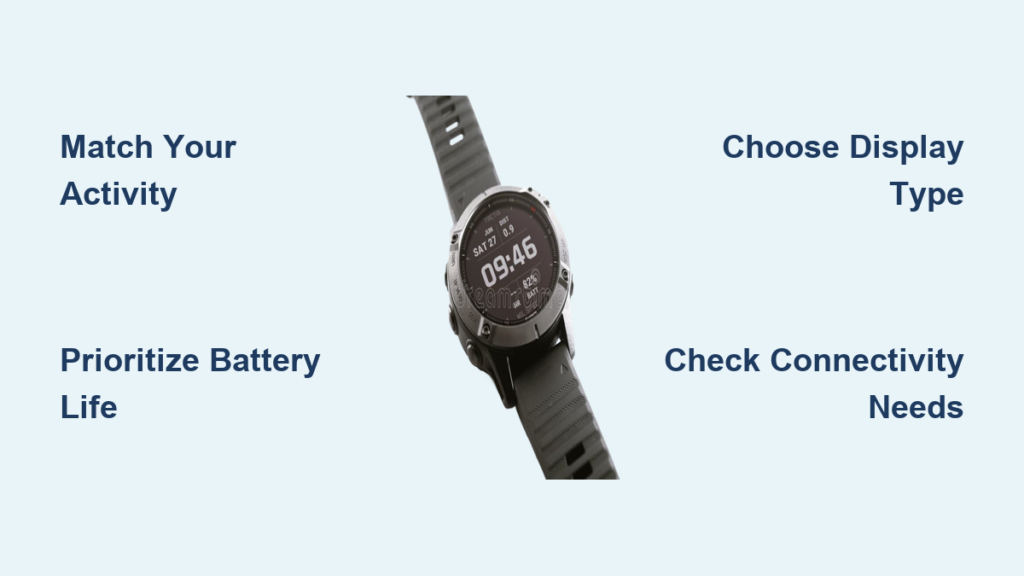
You’re in the market for a smartwatch that does more than just tell time. You want performance tracking, long battery life, rugged durability, and real health insights. That’s where Garmin stands out. Unlike flashy smartwatches focused on notifications, Garmin watches are built for action: running marathons, hiking remote trails, diving deep, or simply staying on top of your wellness. But with over a dozen models across running, outdoor, lifestyle, golf, diving, and tactical categories, how to pick the best Garmin watch can feel overwhelming.
The good news? You don’t need every feature. The secret lies in matching the right watch to your primary use, lifestyle, and budget. This guide cuts through the noise using real specs, user needs, and value comparisons to help you make a confident choice whether you are a beginner jogger, elite athlete, weekend adventurer, or someone who wants a stylish health tracker.
Match Your Activity First
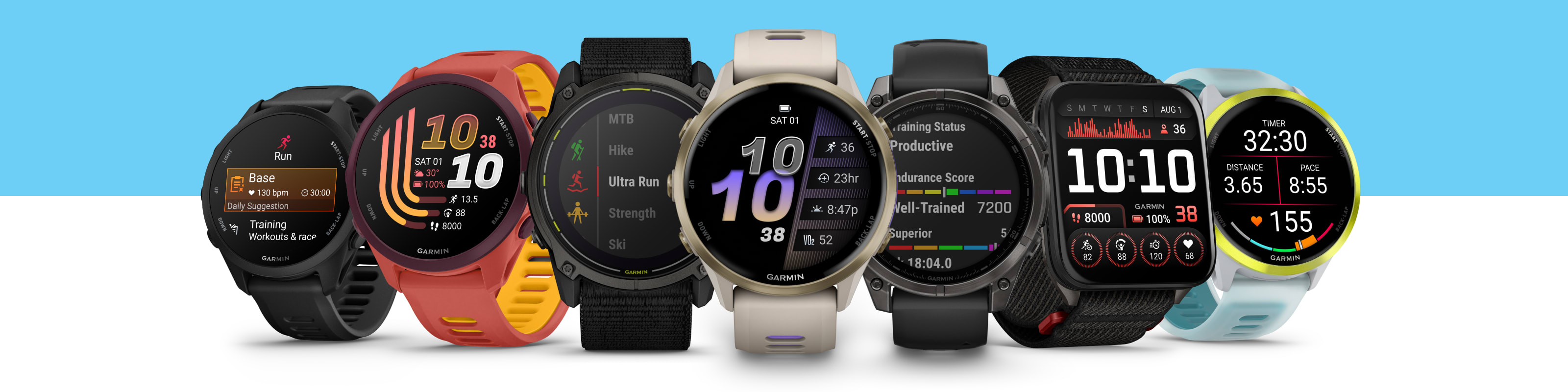
Your main activity should dictate your Garmin. The brand segments its lineup by purpose, and each model is engineered to excel in one domain. Choosing based on use case ensures you are not overpaying for unused features or missing critical tools.
Pick Based on Primary Use Case
Here is how to align your goals with the right series:
For Runners and Triathletes: Forerunner Series
If you log miles, train for races, or compete in triathlons, the Forerunner line is your best bet. These watches deliver precise GPS, training analytics, and sport-specific insights.
The best entry-level option is the Forerunner 165, featuring a color AMOLED display and daily fitness tracking. The top performer is the Forerunner 970, offering premium dual-band GPS, navigation, stamina tracking, and the longest battery in the series at 30 hours in GPS mode.
Key features include dual-frequency GPS for accuracy on trails and cities, training readiness score and recovery time, adaptive coaching through Garmin Coach, pool and open water swim tracking, bike dynamics with sensors, and transition timers for triathletes.
Pro Tip: Pair with a chest HR monitor like HRM-Run for advanced running dynamics including cadence, ground contact time, and stride length.
For Hikers and Outdoor Explorers: fēnix and Enduro
When you are off-grid, you need reliability. The fēnix and Enduro lines are built for extreme environments with topographic maps, ABC sensors, and multi-day battery life.
The best all-around option is the fēnix 8, offering solar charging, ClimbPro, route planning, and 29-day battery life. The best battery life belongs to the Enduro 3, delivering up to 320 hours in GPS mode with solar charging.
Key features include preloaded trail and ski maps, route navigation with back-to-start and go-to functions, red night lights and flashlight modes, and MIL-STD-810 durability for shock, water, and thermal resistance.
Avoid if: You want a sleek daily wear. These watches are large and heavy at 85g or more.
For Daily Health and Wellness: Venu and vívoactive
If your goal is step counting, sleep tracking, stress management, and some exercise, the Venu and vívoactive series offer style and smarts.
The best health-focused option is the Venu 4, featuring ECG, SpO2, menstrual tracking, Body Battery, and an AMOLED display. The best value lifestyle watch is the vívoactive 6, offering 11-day battery life and 60 plus sports modes.
Key features include 24/7 heart rate, stress, and sleep tracking, guided breathing and on-screen workouts, menstrual and fertility cycle logging, and Garmin Pay and music storage on select models.
Note: AMOLED screens look great but drain battery faster than MIP displays.
For Women and Smaller Wrists: Lily 2 Active
Style matters. The Lily 2 Active blends jewelry-like design with core health tracking, ideal for discreet all-day wear.
Weighing just 30g with up to 9 days of battery life, this watch includes menstrual tracking, stress monitoring, and step counting. It lacks GPS, music, and advanced sports modes.
Perfect for: Those who want health insights without a bulky watch.
For Golfers: Approach Series
Serious golfers need more than step counts. The Approach line gives you course maps, shot tracking, and pin positioning.
The best overall is the Approach S70, featuring full-color maps, shot dispersion analytics, and a ceramic bezel. The mid-range options include S44 and S50, showing distance to front, middle, and back of green with hazard views.
Key features include auto swing detection, club tracking via the Garmin Golf app, and green view with manual pin placement.
Skip if: You only play occasionally. A smartphone app may suffice.
For Divers: Descent Series
Scuba and freedivers need depth-rated precision. The Descent Mk3 is a full dive computer with gas time tracking and rebreather support.
The best model is the Descent Mk3 51mm, offering a 200m depth rating, freediving modes, and sonar networking. The Pro Bundle includes the Descent T2 for tank-to-watch gas monitoring.
Key features include no-decompression limits, dive logging, and multi-gas support.
Note: Not for casual snorkelers. This is overkill and expensive.
For Tactical and Military: tactix 8
Built for mission-critical scenarios, the tactix 8 includes stealth mode, night vision compatibility, and ballistic targeting.
Features include a kill switch that wipes data, MIL-STD-810 certification, and night vision display mode. This watch is best for law enforcement, military, and SAR teams.
Overkill for civilians unless you are in extreme off-grid professions.
For Aviators: D2 Series
Pilots get airspace alerts, flight plan integration, and HSI guidance on the D2 line.
Features include emergency locator beacon compatibility and VOR/LOC navigation. This is best for private and commercial pilots.
Niche use – only valuable if you fly regularly.
Maximize Battery Life

Battery life separates Garmin from competitors. Some models last weeks, others days, and the difference comes down to display type, GPS mode, and solar charging.
Choose Based on Power Needs
Compare battery performance across key models:
The Lily 2 Active delivers up to 9 days in smartwatch mode. The vívoactive 6 offers 11 days smartwatch and 14 days in GPS mode. The Venu 4 provides up to 12 days. The Forerunner 165 gives 11 days smartwatch and 26 hours in GPS mode. The Forerunner 970 extends to 15 days and 30 hours respectively. The fēnix 8 reaches 29 days and 72 hours with solar charging adding up to 48 days. The Enduro 3 dominates with 36 days and 320 hours in GPS mode, solar extending to 90 days. The Instinct 3 delivers 24 days and 2 weeks with solar offering unlimited battery in ideal conditions.
Solar Reality Check: Solar charging requires 3 or more hours per day in bright sunlight. It works best in deserts, mountains, or polar regions.
Battery Killers to Avoid
The always-on display cuts battery by 30 to 50 percent. Dual-frequency GPS drains power fast, so use smart mode for training. AMOLED screens offer high visual quality but poor efficiency. LTE on the fēnix 8 Pro drains battery quickly, so use it sparingly.
Pro Tip: Enable battery saver modes during long hikes or races.
Pick the Right Display
The screen type affects sunlight readability, battery, and user experience. Choose what matches your environment.
Balance Visibility and Power
AMOLED: Best for Style
This display type offers vibrant colors, touchscreen capability, and deep blacks. The drawbacks are poor sunlight visibility and high power draw. Models include Venu, Lily, Forerunner 165, and Approach S70. Best for daily wear and urban use.
Transflective MIP: Best for Outdoors
This option provides always-on functionality, sunlight readability, and low power consumption. The cons are limited color and lower resolution. Models include Forerunner 970, fēnix 8, Descent, and Instinct. Best for trail running, hiking, and endurance sports.
MicroLED: Best for Extremes
This technology delivers 4,500 nits of brightness, readable in snow and sun. The only drawback is availability on the fēnix 8 Pro. Best for mountaineering and polar expeditions.
Monochrome: Rugged Reliability
This type offers ultra-durability and minimal power. The cons are no color and a basic interface. Models include the Instinct series. Best for military and survival scenarios.
Rule of Thumb: If you spend lots of time outdoors, skip AMOLED.
Prioritize Connectivity
Most Garmins sync with your phone, but only a few offer independent connectivity. Choose what matches your safety needs.
Decide on LTE, Satellite, and NFC
Essential: Bluetooth and Wi-Fi
Bluetooth comes on all models for calls, music, and notifications. Wi-Fi appears on mid-to-high-end models for faster updates and cloud sync.
Useful: ANT+ and NFC
ANT+ connects to external sensors like HR straps and power meters. NFC enables contactless payments on Venu 4, Forerunner 970, and fēnix 8.
Critical for Safety: LTE and Satellite
Available only on the fēnix 8 Pro, LTE lets you make calls, send texts, and trigger SOS without your phone. Satellite messaging provides two-way emergency alerts via Garmin Messenger. Both require a subscription.
Worth it if: You hike solo, climb, or travel off-grid.
Fit and Comfort Matter
A watch that does not fit well will not get worn, no matter how advanced. Size, weight, and button layout all matter.
Size, Weight, and Button Layout
By Size
Small watches at 38 to 42mm include Lily 2 and Venu 4S, ideal for smaller wrists. Medium at 45 to 47mm include Forerunner 265 and Venu 4 for unisex fit. Large at 51mm include fēnix 8 and Descent Mk3 for larger wrists.
By Weight
Lightweight options under 50g include Forerunner 55 at 37g and Lily 2 at about 30g. Mid-weight between 50 and 80g includes Venu 4 at about 60g and Forerunner 165 at 47g. Heavy options at 80g or more include fēnix 8 at 85g and Descent Mk3 51mm at 108g.
Button vs Touchscreen
Physical buttons only appear on Instinct 3, working with gloves and in rain. Touch plus buttons on fēnix 8 offer flexibility but less reliability when wet. Touchscreen only on Venu X1 looks sleek but becomes slippery when sweaty.
Pro Tip: If you wear gloves often, avoid touch-only models.
Durability and Materials
Standard material is fiber-reinforced polymer. Premium options include titanium and sapphire crystal on fēnix, Marq, and Descent. MIL-STD-810 certification on fēnix, tactix, and Instinct ensures shock, water, and thermal proofing.
Understand Sensor Accuracy
Garmin uses a small set of physical sensors but applies advanced algorithms to generate rich insights.
It Is Algorithms, Not Just Sensors
Core Sensors
All Garmin watches include optical HR for heart rate monitoring, accelerometer for steps and sleep, barometer for altitude, GPS for multi-system tracking, pulse ox for blood oxygen, and thermometer for ambient temperature.
Key Derived Metrics
VO2 Max estimates your aerobic fitness. Body Battery combines sleep, stress, and HRV for an energy score. Training Load measures workout impact. Sleep Score tracks light, deep, and REM stages. ECG on Venu 4 and newer models detects atrial fibrillation for users 22 and older. Stress Score is based on HRV analysis.
Reality Check: Wrist-based HR is not perfect. Use chest straps for accuracy during intense training.
Navigate with Confidence
Not all Garmins can guide you back from the trail. Mapping depth separates entry-level from premium models.
Maps and Routing by Tier
Entry-Level includes Forerunner 55 and 165 with basic GPS tracking only, no turn-by-turn navigation, and no offline maps.
Mid-Tier includes Forerunner 265 and Venu 4 with limited navigation, no topographic maps, and back-to-start only on some models.
Premium includes fēnix 8, Forerunner 970, and Enduro 3 with full topographic maps, ClimbPro for elevation alerts, dynamic roundtrip routes, offline maps, and go-to and back-to-start navigation.
Best for Trail Navigation: Enduro 3 or fēnix 8. Best for Road Runners: Forerunner 970.
Evaluate Software and Ecosystem
Garmin’s ecosystem is powerful but can feel clunky. Know what you are getting into.
Garmin Connect and Updates
The Garmin Connect app tracks workouts, sleep, and stress while offering training plans through Garmin Coach. It syncs with Strava, Komoot, and MyFitnessPal. The downsides are slow UI and a separate Connect IQ store for third-party apps.
Firmware updates arrive regularly via Wi-Fi or USB, adding new sports, safety alerts, and performance fixes.
Third-Party Limits
No deep sync with Apple Health or Google Fit exists. ANT+ allows broad sensor compatibility. The app store is limited compared to Apple Watch.
Workaround: Use third-party tools like DC Rainmaker’s Comparison Calculator to analyze models.
Compare Prices and Value
Prices range from budget-friendly to premium. Know where your money goes.
Best Deals by Category
The Forerunner 55 at $200 to $250 is the best budget runner. The Forerunner 165 at $300 to $350 is great entry-level for triathletes. The Forerunner 970 at $600 is the premium running GPS. The Venu 4 at $450 to $500 is the top health tracker. The fēnix 8 at $750 is the best outdoor value, down from $1,000. The fēnix 8 Pro at $900 is only for LTE and satellite users. The Enduro 3 at $1,000 or more is the ultimate battery king. The Instinct 3 at $350 is the rugged bargain. The Approach S70 at $600 to $650 is the golfer’s dream.
Best Value Picks
Overall value goes to Forerunner 55 or 165. Luxury plus function goes to fēnix 8 Pro. Budget high-end goes to fēnix 6 Pro used at about $500.
Check Amazon, REI, and Garmin outlet for discounts.
Final Recommendations
The best Garmin watch depends on who you are and what you do.
Best Garmin by User Type
For beginner runners, the Forerunner 165 provides training guidance and solid battery. For marathoners, the Forerunner 970 offers GPS accuracy and stamina tracking. For ultrarunners, the Enduro 3 delivers 13-plus days battery, solar, and maps. For hikers and backpackers, the fēnix 8 provides navigation, durability, and solar. For casual fitness users, the vívoactive 6 offers 60-plus sports at an affordable price. For health trackers, the Venu 4 gives ECG, sleep, HRV, and Body Battery. For golfers, the Approach S70 delivers shot tracking and full-color maps. For divers, the Descent Mk3 51mm serves as a dive computer with 200m rating. For tactical users, the tactix 8 provides stealth and mission tools. For style seekers, the Lily 2 Active offers jewelry-like design and women’s health focus.
Make Your Decision
Use this seven-step framework to find your perfect match.
Use This Seven-Step Framework
First, define your primary activity whether it is running, hiking, golf, or daily health. Second, set a budget from $200 for Forerunner 55 to $1,000 or more for Enduro 3. Third, prioritize key features like battery, LTE, solar, AMOLED, or maps. Fourth, check wrist size by trying on watches or reviewing dimensions. Fifth, assess connectivity needs. Do you need SOS without a phone? Sixth, evaluate the ecosystem. Are you using Garmin marine, aviation, or golf systems? Seventh, look for deals. fēnix 8, Instinct 3, and Forerunner 970 often see discounts.
Pro Shortcut: Use DC Rainmaker’s Product Comparison Calculator to compare up to 10 models side-by-side.
Frequently Asked Questions About Picking a Garmin Watch
What is the best Garmin watch for a beginner runner?
The Forerunner 165 is the best choice for beginners. It offers guided training plans, a color AMOLED display, 11 days of battery life, and basic training metrics. At $300 to $350, it provides everything new runners need without overwhelming features.
Which Garmin watch has the longest battery life?
The Enduro 3 has the longest battery life, delivering up to 320 hours in GPS mode with solar charging. That translates to over 13 days of continuous tracking. For everyday use, it can last up to 36 days between charges.
Should I choose AMOLED or MIP display?
Choose AMOLED if you want vibrant colors and touchscreen convenience for daily wear. Choose MIP if you spend time outdoors and need sunlight readability and longer battery life. MIP displays are standard on outdoor and endurance watches.
Do I need LTE on my Garmin watch?
You only need LTE if you hike solo, climb, or travel off-grid where your phone might not have service. LTE lets you send SOS alerts, make calls, and send texts without your phone. It requires a subscription and drains battery faster.
Which Garmin watch is best for women’s health tracking?
The Lily 2 Active and Venu 4 both offer comprehensive women’s health tracking including menstrual cycles, fertility windows, and pregnancy logging. The Lily 2 Active is smaller and more stylish at 30g, while the Venu 4 offers more advanced health metrics including ECG.
Key Takeaways for Choosing Your Garmin Watch
The best Garmin watch is not the most expensive model. It is the one that fits your life. Whether you are chasing personal records, exploring wild places, or simply staying healthy, there is a Garmin that matches your mission.
Start by identifying your primary activity. Runners should choose Forerunner, outdoor adventurers should choose fēnix or Enduro, health-focused users should choose Venu, and golfers should choose Approach. Next, consider battery life. If you need weeks of power, look for solar models like Enduro 3 or fēnix 8. If you prefer vibrant displays and do not mind charging more often, AMOLED options work well.
Finally, set a realistic budget and stick to it. The Forerunner 55 at $200 delivers incredible value for casual runners, while the fēnix 8 at $750 offers the best overall outdoor performance. Pick by purpose, not specs, and you will wear your watch every day.