If your running belt bounces, slips, or pinches during a workout, the wrong size is almost always the culprit. The Salomon running belt size guide uses one specific measurement to lock in a secure fit: your hip circumference. Unlike waist-based sizing systems, Salomon designs its belts to sit on the widest part of your hips for maximum stability. Choosing the correct size prevents chafing, bounce, and constant readjustment mid-run. This guide walks you through every step, from accurate measurement to model-specific fit notes, so you can buy with confidence.
Measure Your Hips the Right Way

An accurate measurement is the foundation of the entire sizing process. A small error here leads to a belt that fails during your run.
Locate the Widest Part of Your Hips
Stand straight and relaxed in a neutral position. Wrap a flexible tape measure around the widest part of your hips, which sits below your waistline and above your thighs. Keep the tape parallel to the floor and snug against your body.
Measure in Centimetres Only
Salomon’s official chart uses centimetres (cm) as the exclusive standard. If you measure in inches, convert using the formula: inches × 2.54 = cm. For example, 30 inches equals 76.2 cm. Round to the nearest whole centimetre before comparing to the chart.
Match Your Running Conditions
Measure over the base layer or leggings you plan to wear on the trail. Fabric thickness changes your actual hip circumference during use. Measuring skin-to-tape while planning to run in compression shorts will result in a belt that feels too tight.
Check Tape Tension
The tape should sit snug but not tight. You should be able to slide one finger underneath without forcing it. Too tight inflates your number, while too loose underestimates it.
Official Salomon Running Belt Size Chart
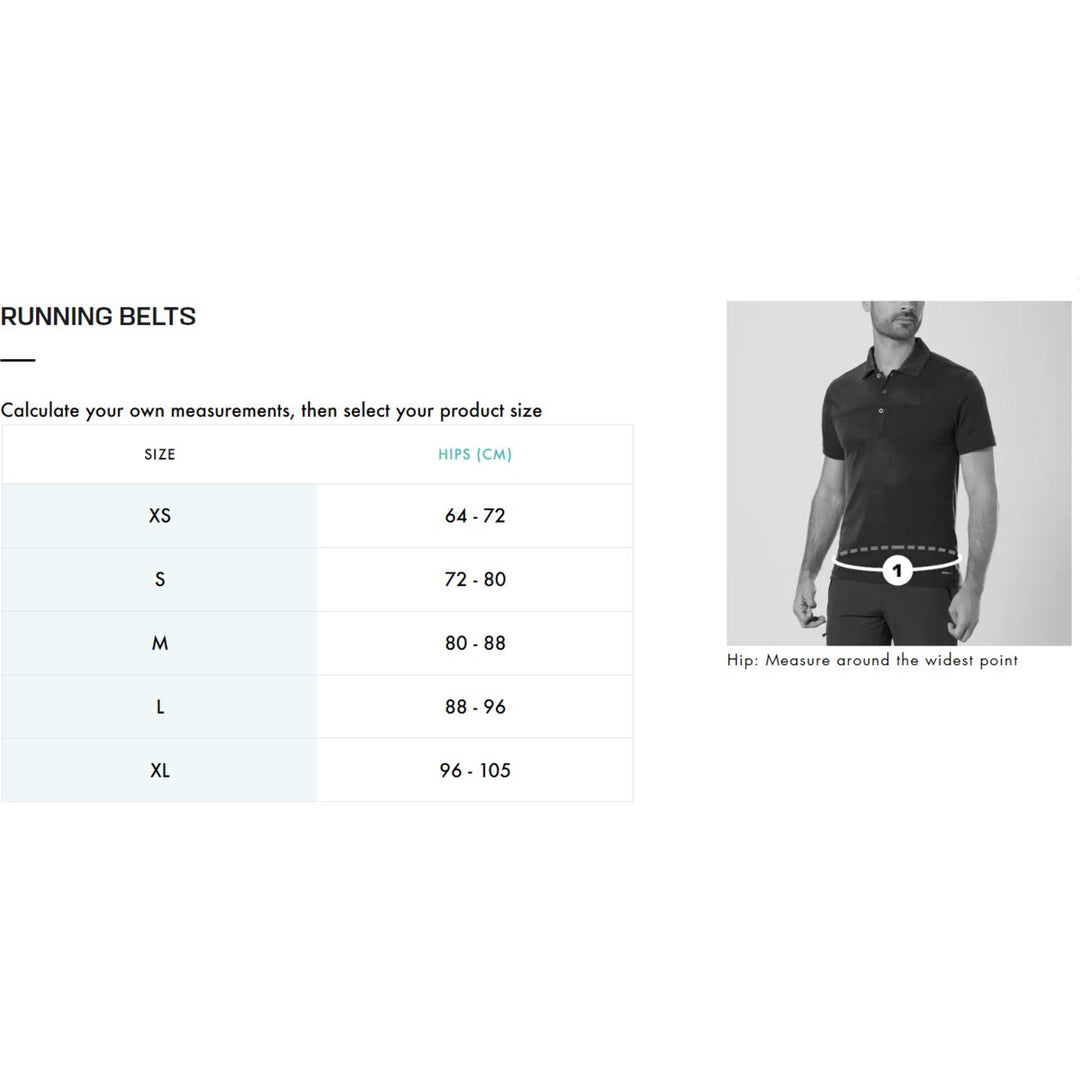
Salomon offers five standard sizes covering hip circumferences from 64 cm to 105 cm. Each range spans roughly 8 cm, with XL covering 9 cm.
| Size | Hip Circumference (cm) | Fit Profile |
|---|---|---|
| XS | 64 – 72 cm | Designed for slender frames; minimum 64 cm |
| S | 72 – 80 cm | Accommodates smaller to average hip sizes |
| M | 80 – 88 cm | Standard mid-range for average builds |
| L | 88 – 96 cm | Fits larger frames comfortably |
| XL | 96 – 105 cm | Maximum capacity up to 105 cm |
Understand the Overlap Rules
Salomon’s size ranges overlap at boundary points by design. If your measurement lands exactly on a borderline, you qualify for two sizes:
- 72 cm fits both XS and S
- 80 cm fits both S and M
- 88 cm fits both M and L
- 96 cm fits both L and XL
When you’re on the edge, your activity type and fit preference guide the choice. Smaller sizes deliver a tighter, compression-like hold. Larger sizes provide more flexibility and easier adjustment.
What to Do If You’re Between Sizes
.jpg)
Even with precise measurements, many runners land between two sizes. Here’s how to decide.
Match Size to Activity Type
Trail running and long distances benefit from a smaller size to minimize bounce and movement. Short runs, gym sessions, or casual wear often feel better in a larger size with extra room.
Account for Clothing Layers
If you run in thicker leggings or cold-weather layers, size up. Measure over those clothes to simulate real conditions. A belt that fits over running shorts may feel restrictive over thermal gear.
Consider Model Elasticity
Most Salomon running belts follow the same sizing standard, but specific models have different weaves and closure systems. Always check product-specific reviews for notes on stretch or fit quirks before finalizing your choice.
Common Sizing Mistakes to Avoid
Most sizing errors come down to a handful of recurring mistakes. Sidestep these pitfalls to get it right the first time.
Measuring at the Waist
This is the most frequent error. Salomon bases fit on hip width, not waist size. Since the waist is usually narrower, a waist-based measurement produces a belt that slips down during runs.
Ignoring Base Layers
Measuring bare skin while planning to wear compression shorts adds bulk you didn’t account for. Always measure as you run, wearing the same clothing you plan to use on the trail.
Skipping Unit Conversion
Guessing the conversion from inches to centimetres leads to errors. Remember that 30 inches equals 76.2 cm, which falls into the Small range (72–80 cm). A miscalculation could push you into Medium unnecessarily.
Assuming “One Size Fits All”
Some runners assume Salomon’s smaller belts are universal. In reality, XS starts at 64 cm (about 25 inches). Anything below that won’t fit securely. Runners under 64 cm should explore alternative brands or models.
How to Adjust Your Salomon Running Belt for a Bounce-Free Run
Once you’ve chosen the correct size, proper adjustment locks in performance.
Secure the Buckle First
Fasten the main buckle snugly but comfortably. The belt should sit low on the hips, not riding up toward the waist. A correctly positioned buckle prevents pinching and slippage.
Tighten the Drawcord
Use the elastic drawcord to fine-tune the fit. Pull evenly on both sides until the belt stays put during a test jump or jog in place. Even tension prevents one-sided pressure points.
Balance Your Load
Place water bottles, gels, and your phone symmetrically. Uneven weight causes shifting during movement. If you carry a flask on one side, balance it with keys or a card on the opposite side.
Model-Specific Fit Differences

While the core sizing standard applies across the line, certain models have unique characteristics worth noting.
Salomon Agile Belt
- Holds up to a 500 ml flask
- Best suited for S to L sizes
- Less stretch than other models, so size up if between sizes
Salomon ActiveBelt
- Minimalist design with a zippered pouch
- Highly elastic construction that runs true to size
- Ideal for storing phone, cards, and energy gels
Salomon Sensible Belt
- Built for maximum stability during long efforts
- Wider band reduces bounce significantly
- Recommended for long-distance runners seeking a locked-in feel
Care Tips to Maintain Fit Over Time
A well-maintained Salomon running belt keeps its sizing integrity across hundreds of miles.
Wash After Heavy Use
Hand wash with mild detergent after sweaty or muddy sessions. Rinse thoroughly and air dry away from direct heat. Machine washing can degrade elasticity and shorten the belt’s lifespan.
Store Unfastened
Always unbuckle and loosen the drawcord before storing. Keeping the belt compressed for long periods stretches the fabric and weakens the closure over time.
Inspect for Wear
Check the buckle and stitching every few months. If the belt slips despite correct sizing, worn elastic or a damaged clasp may be the cause rather than a sizing error.
Frequently Asked Questions About Salomon Running Belt Sizing
How do I measure my hips for a Salomon running belt?
Wrap a flexible tape measure around the widest part of your hips, keeping it parallel to the floor. Measure in centimetres while wearing the base layer you plan to run in. Stand relaxed in a neutral position for the most accurate reading.
What if my hip measurement is exactly 80 cm?
At exactly 80 cm, you qualify for both Small and Medium. Choose Small for a tighter, compression-style fit, or Medium for more flexibility and easier adjustment. Your activity type and personal preference should guide the decision.
Can I wear a Salomon running belt if my hips are under 64 cm?
The XS size starts at a minimum of 64 cm (about 25 inches). If your measurement falls below this threshold, the belt will not fit securely. Runners under 64 cm should consider alternative brands or models designed for smaller frames.
Does every Salomon running belt use the same size chart?
The core sizing standard applies across the Salomon running belt product line. However, individual models have different elasticity levels and closure systems. Always check model-specific fit notes before purchasing, especially if you fall on a size boundary.
What happens if my hips measure over 105 cm?
The maximum documented capacity is 105 cm in the XL size. Measurements exceeding 105 cm fall outside the provided sizing matrix. In this case, contact Salomon directly or explore specialty brands that accommodate larger hip circumferences.
Should I size up if I plan to run in cold-weather layers?
Yes. If you run in thicker leggings or thermal gear, size up and measure over those clothes. A belt that fits over shorts will feel restrictive over bulky winter layers, so simulate real conditions during measurement.
Key Takeaways for Choosing Your Salomon Running Belt Size
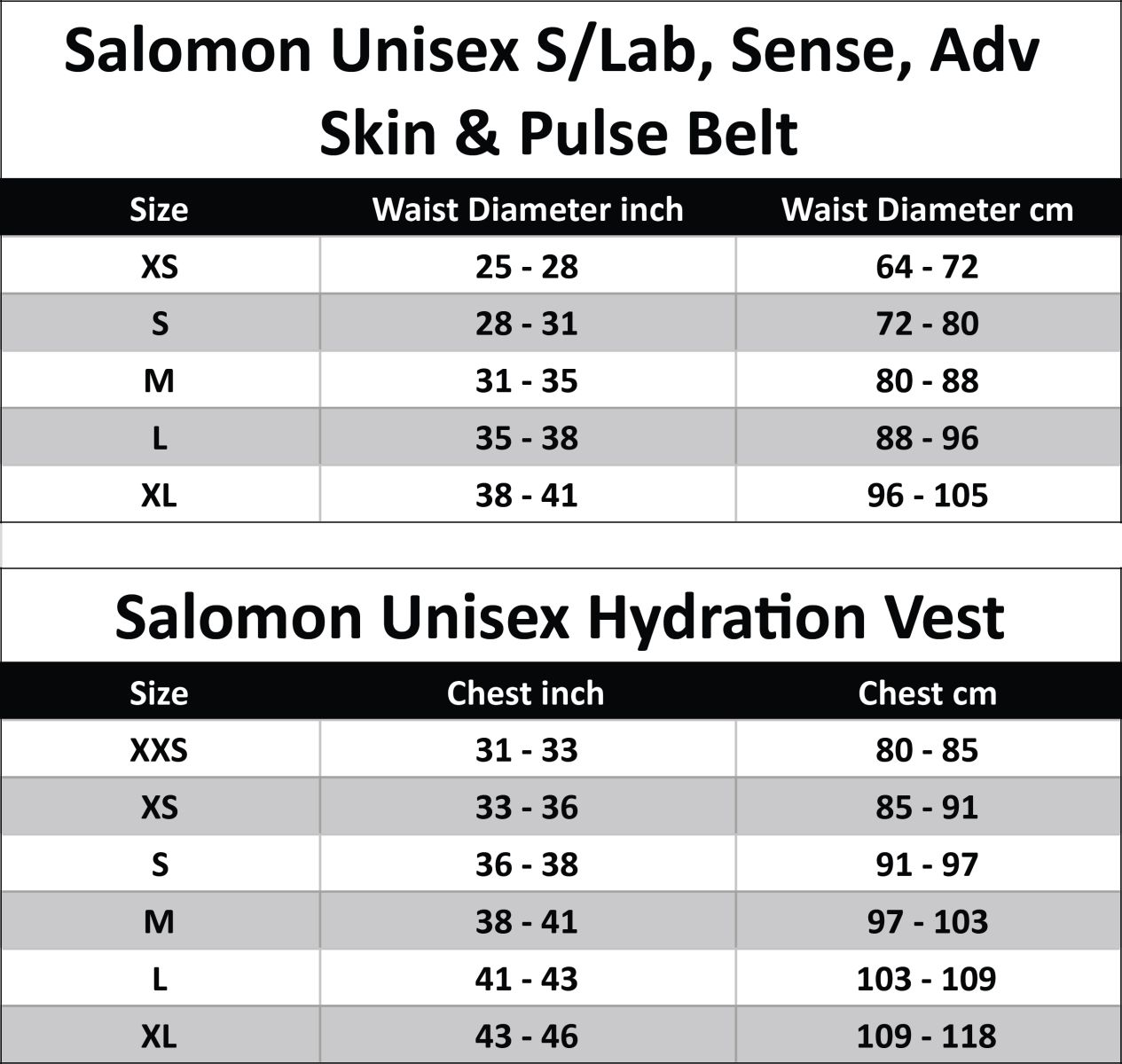
The Salomon running belt size guide works best when you measure accurately at the widest part of your hips, convert to centimetres, and account for your running clothing. Overlap rules at 72, 80, 88, and 96 cm give you flexibility when you’re on a boundary, but your activity type should drive the final call. Trail runners and long-distance athletes generally benefit from a tighter fit, while casual users often prefer more room.
Your next step: Grab a flexible tape measure, measure over your running clothes, and match your number to the chart above. If you fall on a boundary, decide between compression and flexibility based on how you train. With the right size locked in, your Salomon belt will move with you on every mile.