If your watch slips around your wrist or feels too tight, adjusting the band with spring bars is the solution. Whether you’re switching from a leather strap to a metal bracelet or resizing your current band, understanding how to work with spring bars gives you full control over fit and style. This guide covers everything you need to know about how to adjust a watch band with spring bars, including removal, installation, resizing, and pro tips to avoid common mistakes.
With the right tool and careful technique, you can safely change or resize your watch band in minutes. No trip to the jeweler required. This skill works on most watches with removable straps, from affordable Casio timepieces to luxury Rolexes.
Identifying Your Spring Bar Type for Watch Band Adjustment
Before making adjustments, confirm your watch uses spring bars. Most watches with removable straps do, but the design varies between models.
Standard Spring Bars
Standard spring bars are found on leather, rubber, and fabric straps. These are two small metal pins with internal springs that compress when pressure is applied. Each end fits into the watch lugs and expands to lock the strap in place. The ends often feature circular grooves or divots where your tool will engage.
End Link Spring Bars
End link spring bars are used on metal bracelets. They connect the end links (the first segment of the bracelet) to the watch case. They function like standard spring bars but are often harder to access due to tight spacing and additional hardware around the connection point.
Drilled vs. Closed Lugs
Understanding your lug type determines how you approach the adjustment.
Drilled lugs have small holes near the spring bar, allowing direct access for tools. This makes removal and installation straightforward. Closed lugs require inserting the tool from the side between the lug and strap, which is more common and slightly trickier.
Look between the lugs. If you see a small metal bar with a groove on each end, it’s a standard spring bar. If there’s a visible hole near the lug, your watch has drilled lugs.
Selecting the Correct Spring Bar Tool for Safe Removal
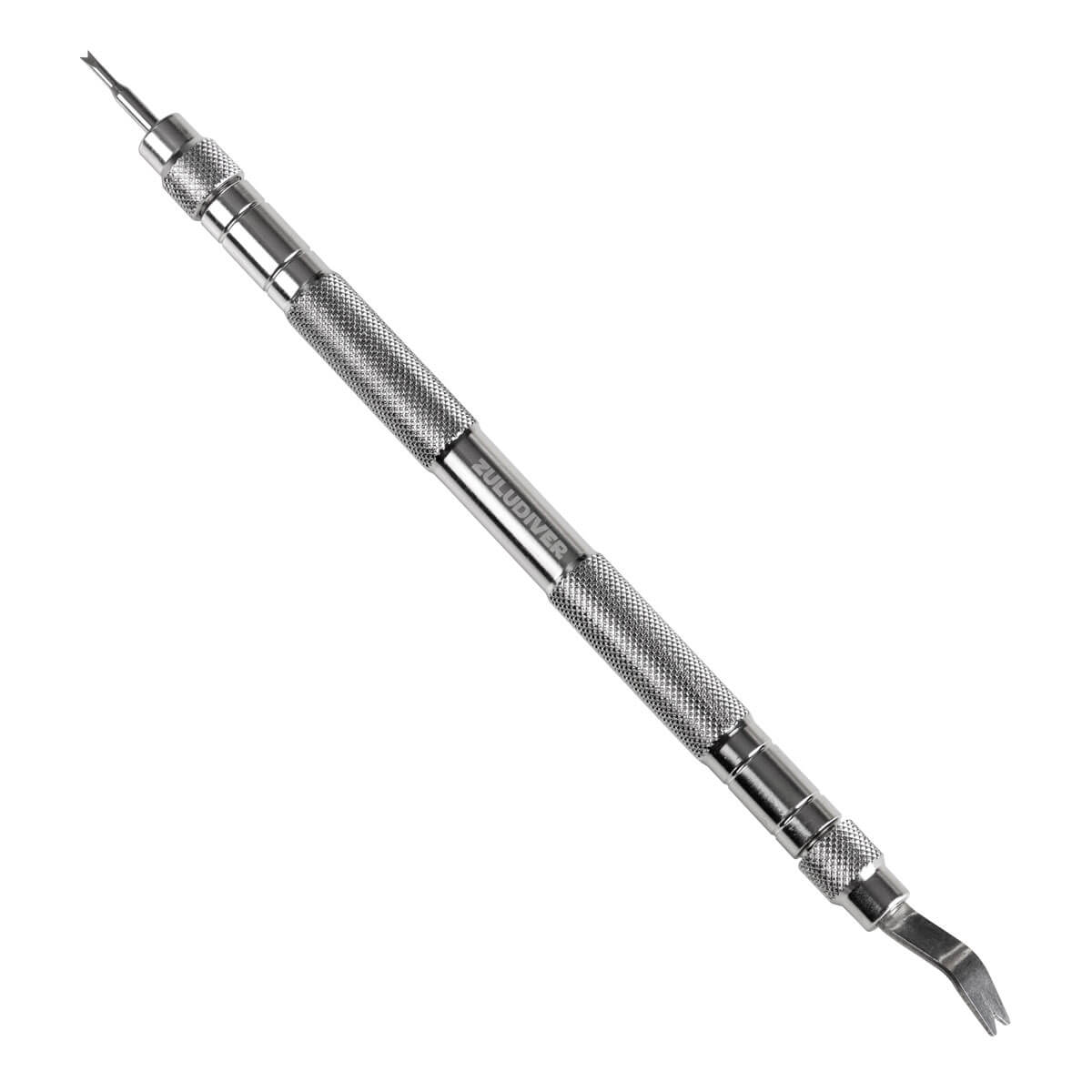
Using the correct tool prevents damage to your watch and ensures smooth operation. The right tool costs under $15 and pays for itself in protection.
Dual-Function Spring Bar Tool
Most professional tools have two ends designed for different tasks.
The V-groove end compresses both sides of the spring bar at once. This is ideal for removal because it engages both grooves simultaneously. The concave tip end depresses one side at a time. This is perfect for installation and working in tight spaces where you need precise control.
Recommended Tool Models
Several quality options exist for different needs and budgets.
Horotec MSA 10 offers Swiss-made precision with a durable red anodized finish. Precise or Presitech includes dual-scale rulers for quick sizing reference. ZULUDIVER provides interchangeable tips that work across various strap types including drilled lugs.
What to Avoid
Never use paperclips, screwdrivers, or tweezers as substitutes. These can scratch lugs, slip unexpectedly, or bend spring bars. Improvised tools frequently result in damaged watches that cost far more to repair than a proper tool.
Safe Watch Strap Removal Using Spring Bars
Follow these steps to remove any strap secured by spring bars. Work over a soft cloth or parts tray to catch flying components.
Standard Strap Removal
Position the watch face down on a soft cloth. Insert the V-groove end of the tool into the grooves of the spring bar. Press inward at a 90-degree angle until one end retracts into the lug. Slide the bar out while pulling the strap away. Repeat on the other side.
Use your free hand to catch the spring bar. It can fly out forcefully when released due to internal spring tension.
Metal Bracelet End Link Removal
Metal bracelets require slightly different technique due to additional hardware.
Locate the cut-away slot near the end link where the spring bar is partially visible. Slide the forked end of the tool behind the spring bar flange. Push inward to compress the bar. Slide the end link outward once the bar clears the lug. Retrieve the spring bar and end piece and store them together.
Some end links use short spring bars that may need tweezers to retrieve if they don’t release easily.
Drilled Lug Removal
Drilled lugs allow direct access but require precision to avoid internal scratches.
Use a flat pin attachment or the concave tip on your tool. Insert into the drilled hole in the lug. Push straight in to depress the spring bar. Slide the strap off once the bar clears.
Don’t force the tool. Let the spring tension do the work to avoid scratching internal lug surfaces.
Installing a New Watch Strap with Spring Bars
Putting on a new strap is simple once you understand the proper technique. The key is maintaining compression until both ends are seated.
Step-by-Step Installation
Insert one end of the spring bar into the lug hole on one side of the watch case. Compress the other end using the concave tip of your tool. Align the compressed end with the second lug hole. Slide it through the strap’s eyelet and into place. Release when you hear a click, which means it’s seated. Gently tug the strap to confirm both ends are locked.
If it won’t click, the bar may be misaligned. Recheck your angle and pressure before attempting again.
Installing Metal Bracelet with End Pieces
Metal bracelets with end pieces require connecting the end piece to the bracelet first.
Attach the end piece to the bracelet using a spring bar. Slide the assembly between the lugs. Align the spring bar with the lug holes. Use the forked end to depress the bar while sliding it under the upper lug. Push until it clicks into place. Repeat on the opposite side.
The connection should feel snug. If it’s too loose, the spring bar may be worn and needs replacement.
Resizing Metal Watch Bracelets with Spring Bars

Many metal bands can be adjusted without removing links permanently. This offers flexibility for seasonal changes or weight fluctuations.
Using Adjustment Pins
Some bracelets have sliding links with spring-loaded pins for temporary sizing.
Find the adjustment hole on the inner side of the link. Use the concave tip to press the pin inward. Slide the link to the desired position. Release the pin, and it will snap into the new hole.
This method requires no tools and loses no links. It’s ideal for temporary sizing adjustments.
Removing Permanent Links
For a lasting fit, remove excess links using proper technique.
Identify split pins or micro-screws on removable links. Use a pin pusher or jeweler’s screwdriver to remove them. Extract the unwanted link. Reconnect the bracelet with original pins or new spring bars. Store removed parts in a tray.
Count links removed on each side to maintain balance. Asymmetric removal looks uneven and affects bracelet drape.
Adjusting Digital Watch Straps with Spring Bar Mechanisms
Some digital or sports watches use spring-bar-like mechanisms for adjustment. The same tool works for these systems.
Sliding Adjustment System
Insert the rounded tip of your spring bar tool into the small hole on the strap. Push outward to release the lock. Slide the strap to your preferred length. Press the pin back in to secure.
These systems use internal springs similar to traditional spring bars, making the same tool effective.
Avoiding Common Spring Bar Mistakes
Even small errors can lead to strap failure or damage to your watch. Awareness prevents costly mistakes.
Common Errors to Prevent
Using the wrong tool leads to scratched lugs or bent spring bars. Incomplete seating means the bar can detach while you’re wearing the watch. Ignoring spring bar condition risks reuse of damaged components. Losing parts happens when you don’t work over a tray or cupped hand.
Security Verification Steps
After installation, perform these checks before wearing your watch.
Tug the strap firmly from both sides to test security. Confirm no wobble or movement at the lugs. Listen for the click during installation, which is a sign of proper seating.
A loose strap can result in a lost watch. Always test fit before relying on it.
When to Reuse or Replace Spring Bars
Spring bars are small but critical components. Making the right decision about reuse affects long-term security.
When Reuse Is Appropriate
Reuse spring bars if they are straight and not bent. Reuse if spring tension is strong, meaning the bar snaps back quickly when compressed. Reuse if ends are not worn or flattened.
Clean old bars with isopropyl alcohol before reuse to remove oils and debris.
When Replacement Is Necessary
Replace spring bars if you see visible bending or corrosion. Replace if the spring feels loose or sluggish during compression. Replace if you’re installing a new high-value strap where failure would be costly.
Replacement spring bars cost $5 to $10 for a pack of 10. Standard sizes include 1.8mm, 2.0mm, and 2.2mm. Match the size to your watch specifications.
Maintaining Your Tools and Watch After Adjustment
Proper care extends the life of your tools and ensures your watch remains in excellent condition.
Tool Maintenance
Wipe your tool clean after each use. Store in a protective case to protect the precision tips. Avoid moisture exposure, especially on aluminum tools which can corrode.
Watch Care After Adjustment
Inspect lugs for scratches or deformation after working on your watch. Ensure the crown and case back are secure after handling. Avoid wearing the watch immediately if you’re uncertain about strap security.
Take a few hours to verify everything feels right before trusting the watch to daily wear.
Practicing Spring Bar Adjustment on Inexpensive Watches
If you’re new to spring bar work, start with a cheap watch to build confidence without risk.
Practice on an inexpensive watch allows you to learn tool pressure and alignment. You’ll understand how different lug types affect access. You’ll develop the feel for proper spring bar tension.
Most beginners succeed after one or two attempts with the proper tool. Starting cheap means any mistakes cost little while you develop the skill.
Final Safety Checks Before Wearing Your Adjusted Watch
Before putting your watch back on your wrist, verify these critical points.
Both spring bars must be fully seated in their lug holes. The strap must lie flat without twisting. End links, if used, must be aligned and secure. No tools or small parts should be left behind.
A loose strap can be lost. Always test fit thoroughly before relying on your adjustment during daily wear.
Frequently Asked Questions About Adjusting Watch Bands with Spring Bars
Can I adjust my watch band without a special tool?
Using improvised tools like screwdrivers or paperclips is not recommended. These can scratch your watch lugs, slip unexpectedly, and damage both the case and spring bars. A proper spring bar tool costs under $15 and protects your watch from costly damage.
How do I know if my spring bars need replacing?
Replace spring bars if they show visible bending, corrosion, or weakened spring tension. If the bar feels loose or sluggish when compressed, it won’t hold your strap securely. New spring bars cost very little, so replacement is always the safer choice.
What happens if the spring bar flies out during removal?
Spring bars are spring-loaded and can eject forcefully. Always work over a soft surface and use your free hand to catch the bar. Placing a cloth over the watch during removal helps contain any flying components.
Can I adjust a metal bracelet without removing links?
Yes, many metal bracelets have adjustment pins that allow temporary resizing. Use the concave tip of your tool to depress the internal pin, slide the link to the desired position, and release. This works without permanent link removal.
Why won’t my new strap click into place?
If the spring bar won’t click, it’s likely misaligned with the lug hole. Remove and reinsert carefully, ensuring the bar is parallel to the holes. Apply steady inward pressure until the bar seats fully and you hear the click.
Is it safe to change watch bands myself?
Yes, with the proper tool and technique, changing watch bands at home is safe. Always double-check that spring bars are fully seated before wearing. Work slowly and carefully to avoid scratches or damage to your watch lugs.
Key Takeaways for Adjusting Watch Bands with Spring Bars
Adjusting a watch band with spring bars is a simple skill that puts you in control of your watch’s comfort and style. With a proper dual-function tool and careful technique, you can change straps, resize bracelets, and maintain your timepiece like a professional.
The most important points to remember are always use the right tool for the job, work slowly to avoid damaging your watch lugs, and verify that spring bars are fully seated before wearing your watch. Check spring bar condition before reuse and replace any worn components.
Whether you own a Casio or a Rolex, mastering spring bar adjustment is an empowering skill that saves money on professional service and lets you customize your timepiece whenever your style or comfort needs change.