A loose or tight metal watch band ruins the comfort and look of your favorite timepiece. Many modern and vintage metal bracelets use screw-held links, magnetic closures, or sliding buckles instead of traditional push pins. Knowing how to adjust a metal watch band without pins saves money, preserves your watch’s value, and gives you a perfect fit without visiting a jeweler.
This guide covers every non-pin band type, from screw-link bracelets to micro-adjust clasps. You’ll learn how to identify your band type, use the right tools or household substitutes, remove links safely, and fine-tune the fit without damaging your watch.
Identify Your Band Type First
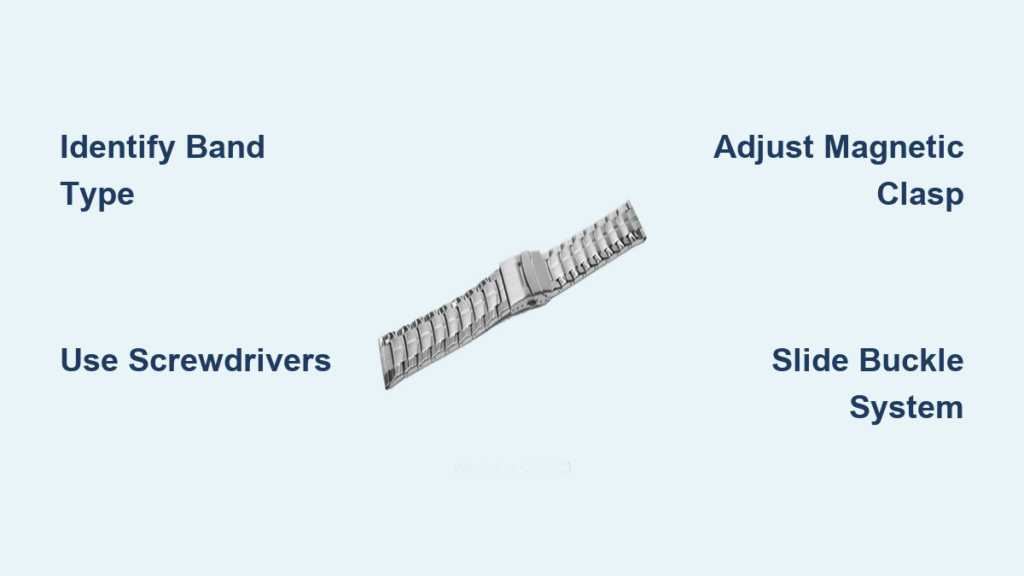
Before grabbing any tool, determine your metal band’s mechanism. Using the wrong method leads to stripped screws, bent links, or damaged clasps. Check these identifying features:
Look for Screw Slots
Flip your watch over and examine the inner side of the links. Small horizontal slots indicate a screw-held bracelet that requires two precision screwdrivers, not a pin pusher.
Check for Magnetic or Sliding Closures
Milanese mesh bands use magnetic clasps that slide through a loop. No tools are needed for these adjustments.
Examine the Clasp Mechanism
Butterfly or folding clasps with hidden levers or spring bars indicate a micro-adjust system. These allow fine-tuning in 1-2 mm increments without removing links.
Test for Sliding Buckles
Some bands, like NASA-style Forstner Komfit, let the entire clasp slide along the bracelet. Release a clip, shift position, and relock without disassembly.
Pro Tip: Take a photo of your band’s links and clasp before starting. Compare it to online reference images or consult your watch manual to confirm the type.
Adjust Screw-Held Bracelets at Home

Screw-held metal bands are common on luxury and vintage models like Omega, Citizen, and some Seiko watches. They use tiny screws instead of press-fit pins, so standard pin removers won’t work.
Tools Youll Need
Two 2.5 mm precision screwdrivers (JIS type for Japanese watches)
Soft microfiber cloth or watch mat
Magnetic tray to store screws
Magnifying glass for better visibility
Remove Links Step by Step
Open the bracelet and lay it flat on a soft surface.
Identify removable links, which are usually marked or located near the clasp.
Hold one screw steady with a screwdriver to prevent spinning.
Unscrew the opposite side counterclockwise using the second screwdriver.
Slide the link out gently once both screws are removed.
Repeat symmetrically, removing the same number of links from each side.
Warning: Never force a screw. If it resists, double-check that it is not a pin. Using the wrong tool can strip the head.
Reassemble the Bracelet
Align the link between adjacent pieces, ensuring smooth connection.
Insert one screw and hold it in place.
Tighten the opposite screw clockwise, snug but not over-torqued.
Test the movement. The link should flex naturally and sit flush.
Best Practices: Use JIS screwdrivers for Seiko, Citizen, or Casio watches. Standard flat-heads slip and damage slots. Store removed screws in a labeled bag for future resizing.
Resize Magnetic Mesh Bands Without Tools
Milanese and similar mesh straps offer infinite adjustability thanks to magnetic closures. No tools, no link removal, just slide and wear.
How to Resize
Unclip the magnetic clasp.
Slide the band through the adjustment loop to shorten or lengthen.
Reconnect the clasp. The magnet secures it automatically.
User Benefit: Ideal for temperature changes or wrist swelling. You can fine-tune the fit during the day without removing the watch.
Maintenance Tips
Clean the magnetic ends with a dry cloth to prevent debris buildup.
Avoid exposing the band to strong external magnets that could weaken the internal field.
Inspect the weave monthly for kinks or broken strands.
Fine-Tune With Micro-Adjustable Clasps

Many dive and sports watches feature hidden micro-adjust systems inside the clasp. These let you extend or shorten the band by up to 7 mm in small increments, perfect for wearing over jackets or wetsuits.
Tools Required
Spring bar tool or bent paperclip
Tweezers for optional assistance
Adjustment Steps
Unbuckle the watch and lay it flat.
Locate the micro-adjust lever inside the butterfly clasp.
Insert the spring bar tool into the small hole or slot.
Push the spring bar to release the locking mechanism.
Slide the clasp forward to extend or backward to shorten.
Release the tool. You will hear a click as it locks into place.
Test the fit on your wrist.
Example: Omega’s system allows 3-7 mm of extension in 1-2 mm clicks. Seiko’s 3-Link Extension works the same way.
Why It Is Better Than Removing Links: No permanent alteration occurs. The full bracelet stays intact for resale. Quick changes become possible for seasonal wear.
Use Sliding Buckle Systems for Infinite Fit
Forstner Komfit and mesh sliding buckles offer NASA-grade adjustability. Astronauts used them because they adapt instantly to suit thickness changes or arm swelling.
Forstner Komfit Adjustment (No Tools)
Unbuckle the watch.
Press the release clip on the buckle (often spring-loaded).
Slide the clasp along the band to desired tightness.
Release the clip to lock in place.
Mesh Sliding Buckle Adjustment (Spring Bar Tool Needed)
Insert spring bar tool into the top slot of the buckle.
Pop open the retaining clip.
Slide the buckle forward or backward.
Reengage the clip to secure.
Real-World Feedback: Users love these for all-day comfort, especially during travel or temperature shifts.
Universal Fit Tips for Any Band Type
Even after resizing, a few final checks ensure long-term comfort and safety.
Measure Properly
Wear the watch unadjusted.
Fasten the clasp and pinch excess band on both sides.
Count extra links. This tells you how many to remove.
Ideal fit: Watch should not slide more than 2 inches (5 cm) down your arm when raised.
Maintain Symmetry
On screw-held bands, remove equal links from both sides.
This prevents an off-center clasp and maintains visual balance.
Protect Your Watch
Work on a soft, clean surface to avoid scratches.
Use protective tape on polished links if using metal tools.
Keep small parts in a magnetic tray or container to prevent loss.
Troubleshoot Common Adjustment Problems
Screw Will Not Turn
Cause: Wrong screwdriver or stripped head.
Fix: Use a JIS screwdriver. Add a rubber band over the tip for extra grip.
Link Misaligned After Reassembly
Cause: Improper seating or bent link.
Fix: Disassemble, realign, and reinsert. Ensure flat contact on both ends.
Clasp Feels Loose
Cause: Micro-adjust not fully engaged.
Fix: Re-press the spring bar until you hear a clear click.
Scratches on Bracelet
Cause: Metal tools on polished surfaces.
Fix: Use plastic tweezers or wrap tools in tape. Work slowly.
Pin Will Not Budge (in Pin-Type Bands)
Caution: You may have a screw-type pin. Inspect for slots before pushing.
Maintain Your Band for Long-Term Use
A well-adjusted band lasts decades with minimal care.
Clean Regularly
Use a soft brush to remove dust from screw holes and clasp mechanisms.
Avoid water unless your watch is water-resistant.
Lubricate Moving Parts
Apply a tiny drop of watch-grade oil to micro-adjust levers annually.
Prevents stiffness and ensures smooth operation.
Inspect Every 6-12 Months
Check screws for looseness.
Look for wear on sliding tracks or magnetic ends.
Replace damaged links or screws promptly.
When to Skip DIY and See a Professional
Some watches demand professional handling.
High-End or Luxury Models
Rolex, Omega, and Audemars Piguet use high-compression pins or proprietary screws.
DIY attempts risk bent pins, stripped threads, or voided warranties.
Signs You Need Expert Help
Screws are deep-set or recessed.
Links do not separate easily after correct tool use.
The band feels overly tight or stiff after reassembly.
Cost vs. Risk: Professional adjustment costs $10-$20, a small price to protect a $1,000+ watch.
Warranty Note: Some brands do not void warranty for link removal, but tool-caused damage may disqualify free service.
Key Takeaways for Adjusting Your Metal Watch Band
Adjusting a metal watch band without pins is easier than you think with the right knowledge. Always identify your band type first: screw, magnetic, micro-adjust, or sliding. Use the correct tools: two screwdrivers for screw-held bands, a spring bar tool for clasps, and no tools for magnetic or sliding systems.
Remove links symmetrically to keep the clasp centered. Save all parts in a labeled bag for future resizing. Fine-tune daily fit using clasp holes or sliding mechanisms. Work slowly and patiently. Rushing risks permanent damage.
When unsure, stop and consult a watchmaker. Professional adjustment costs far less than repairing damage from improper tool use. With careful execution, you will enjoy a custom fit that lasts for years, no trip to the jeweler required.
Frequently Asked Questions About Adjusting Metal Watch Bands Without Pins
Can I adjust a metal watch band without any tools?
Yes, magnetic mesh bands and Forstner Komfit sliding buckles require no tools. Simply slide the clasp or magnetic closure to adjust the fit.
What tools do I need for screw-held watch bands?
You need two 2.5 mm precision screwdrivers. For Japanese watches like Seiko or Citizen, use JIS (Japanese Industrial Standard) screwdrivers instead of standard flat-heads.
How do I know if my watch has a micro-adjustable clasp?
Look for a butterfly or folding clasp with hidden levers. These clasps have small holes or slots that allow 1-2 mm adjustments without removing links.
Can I use household items to adjust my watch band?
Yes. A bent paperclip works as a spring bar tool. Tweezers can help with small parts. A rubber band over screwdriver tips adds grip. These work best on mid-tier watches.
Why should I remove equal links from both sides?
Removing equal links keeps the clasp centered on your wrist. Removing from only one side creates an off-center appearance and affects comfort.
When should I seek professional help for watch band adjustment?
Seek professional help for luxury brands like Rolex or Omega, deep-set or recessed screws, or if links do not separate after correct tool use. Professional adjustment costs $10-$20, worth the investment for high-value watches.