A rolex watch not working can be alarming, especially given the brand’s reputation for precision and reliability. But in most cases, a stopped Rolex is not broken. It is simply out of power. Over 90 percent of non-functioning Rolexes have merely exhausted their 48 to 72 hour power reserve from being left unworn. The good news is these watches often restart with just a few turns of the crown.
However, if winding does not help, deeper issues may be at play. Magnetization, water damage, impact shock, or decades of neglected servicing could be the culprit. This guide walks you through every possible cause, how to diagnose it, and when to seek professional help.
Restart a Dead Rolex in 4 Steps
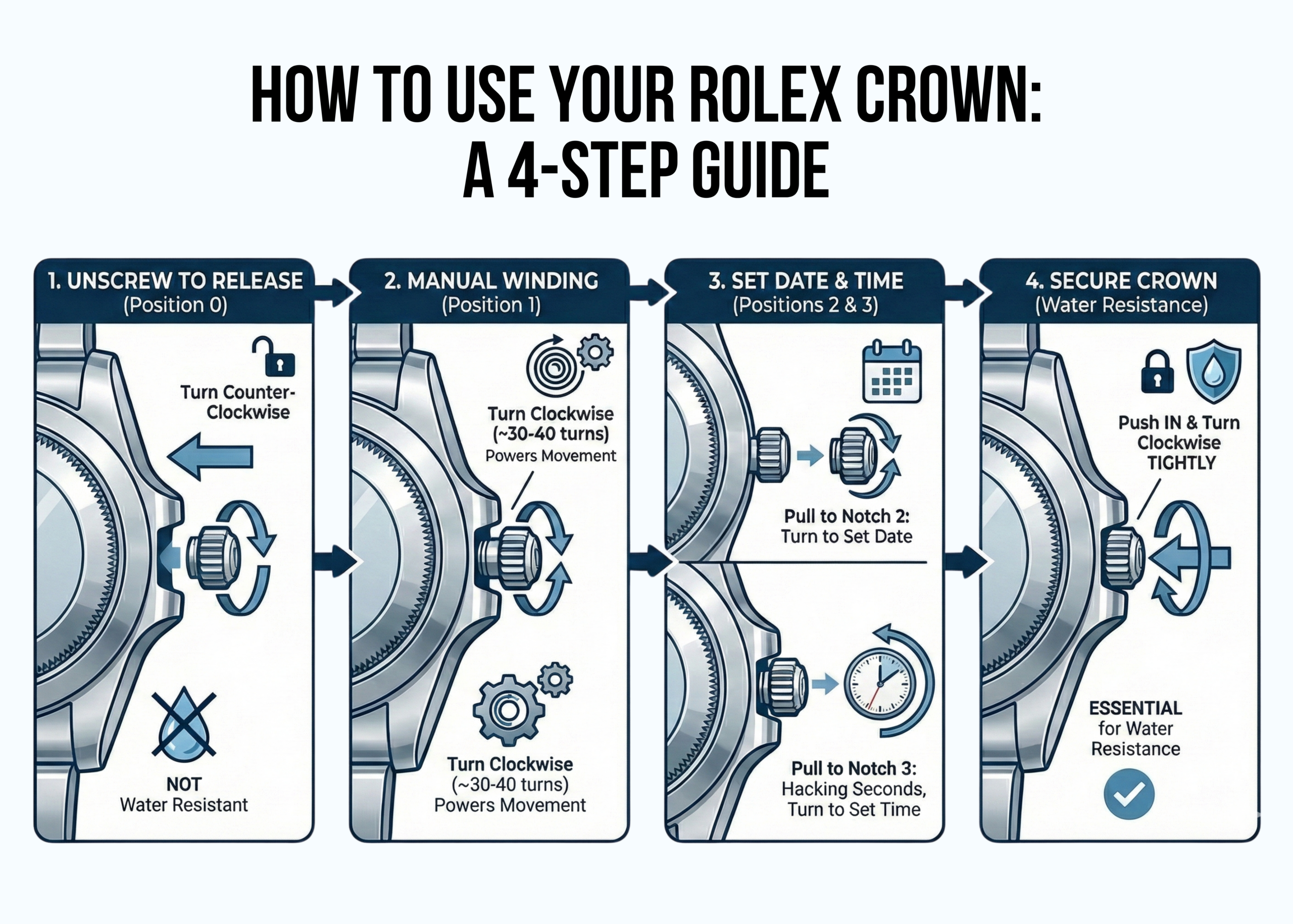
Most stopped Rolexes just need a power boost. Follow these steps to revive your watch safely.
Wind the Crown Properly
Automatic Rolexes can and should be manually wound. Use a clockwise rotation of the crown for 30 to 40 full turns. Do this with the crown in Position 1, which means unscrewed but not pulled out. You will feel slight resistance, which means the mainspring is engaging. Modern Rolexes have a safety clutch, so you cannot overwind it.
Common mistake to avoid: Pulling the crown out before winding. This prevents winding and confuses users.
Screw Down the Crown Fully
After winding or adjusting time or date, push the crown firmly against the case and screw it down clockwise until tight. This maintains the watch is water resistance. A loose crown risks moisture ingress, especially on models with Twinlock or Triplock seals.
Wear It Consistently
Once running, wear the watch for 24 to 48 hours. Normal wrist motion keeps the rotor spinning and the movement charged. If it stops again within a day, the issue is likely mechanical or due to insufficient movement.
Test for Timekeeping Accuracy
After restarting, monitor the watch for a full day. Use a timegrapher app or compare it to atomic time. If it runs fast, gaining minutes per hour, magnetization is likely. If it stops within hours, internal wear or a damaged mainspring may be to blame.
Why a Rolex Stops: 8 Common Causes

Power Reserve Ran Out
This is the most common cause. Automatic watches rely on motion to stay wound. If left idle for 2 to 3 days, the power reserve depletes and the watch halts. This is normal behavior, not a defect.
Fix: Wind 30 to 40 turns. No tools needed.
Not Enough Wrist Motion
Even when worn, some lifestyles do not generate enough movement to keep the rotor active. Desk workers, those with limited arm motion, or loosely worn watches may see chronic under-winding.
Fix: Wear snugly. Use a watch winder if rotating between timepieces.
Never Been Serviced Especially Vintage
Rolex recommends servicing every 8 to 10 years. Watches stored for decades, like a 1978 DateJust, often have solidified oils, worn bushings, or seized rotors. Without lubrication, friction stops the movement.
Fix: Full service by a certified watchmaker. Costs range from $850 to $1,500 USD.
Magnetization Slows or Stops Movement
Exposure to phones, laptops, or speakers can magnetize the hairspring, causing the watch to run fast or stop entirely.
How to check: Use a smartphone magnetometer app. For accuracy, a technician uses a gauss meter.
Fix: Demagnetization takes minutes and is inexpensive.
Water Damage From Loose Crown
Even waterproof Rolexes fail if the crown is not screwed down. Moisture enters, fogs the crystal, and corrodes steel components. Left untreated, this destroys the movement.
Warning signs include fog under the crystal, rust on hands, and discolored dial.
Fix: Immediate professional disassembly and drying. Prevent with regular gasket checks.
Shock or Impact Damage
Dropping the watch or hard impacts can bend the balance staff or damage the escapement. The watch may stutter, jump, or stop suddenly.
Clues include irregular ticking, hands moving in jumps, and grinding when shaken.
Fix: Balance staff replacement costs $300 to $600 by a specialist.
Internal Mechanical Failure
If the watch winds but stops within minutes, internal parts may be broken. Possible issues include snapped mainspring, loose gears or screws, and rotor grinding that creates metal debris which jams gears.
Clues include gritty crown, excessive play, or rattling noise.
Fix: Full disassembly, cleaning, and part replacement.
Vintage Model Quirks Confuse Owners
Older Rolexes, specifically pre-1980s models, lack quick-set date functions. To change the date, you must rotate the hands past midnight, sometimes twice per day increment. This can take 10 or more minutes, making owners think the watch is broken.
Fix: Patiently advance the time. No repair needed.
Can You Overwind a Rolex
No. Modern Rolex movements include a slipping clutch mechanism that disengages the winding system once the mainspring is fully charged. You can keep turning the crown, but it will not add more tension.
Pro tip: Wind until resistance increases, then stop. 30 to 40 turns is usually enough to restart a dead watch.
How to Tell If Your Rolex Is Magnetized
Magnetization is a silent killer. It does not damage parts permanently but distorts timekeeping by altering the hairspring is oscillation.
Symptoms to watch for include gains of 5 or more minutes per day, erratic rate, and complete stoppage in rare cases.
Quick test: Download a magnetometer app, hold the watch near your phone, and if the reading exceeds 50 gauss, it is likely magnetized.
Solution: A watchmaker uses a demagnetizer. It takes seconds and costs little.
Water Damage: Silent Watch Killer
Rolex is Oyster case is waterproof, but only if maintained. A degraded gasket or unclosed crown lets moisture in.
Red flags to look for include fog or condensation under the crystal, rust on screw heads or gears, and sticky hands or dial stains.
Emergency response involves stopping wear immediately, not operating the crown or pushers, placing in a sealed bag with silica gel, and taking to a watchmaker right away.
Prevention tip: Screw crown down after every adjustment. Replace gaskets during servicing.
Shock Damage: What Happens When You Drop It

A fall can bend the balance staff, the ultra-thin shaft that regulates timekeeping. Even a small bend stops the watch.
Signs of impact include the watch stopping suddenly after a drop, ticking sounds irregular or stuttering, and hands jumping forward erratically.
Repair options include balance staff replacement for $300 to $600 and full escapement rebuild for $600 to $900.
Never ignore shock damage. A bent staff can damage the pallet fork or escape wheel if left running.
When to Service a Vintage Rolex
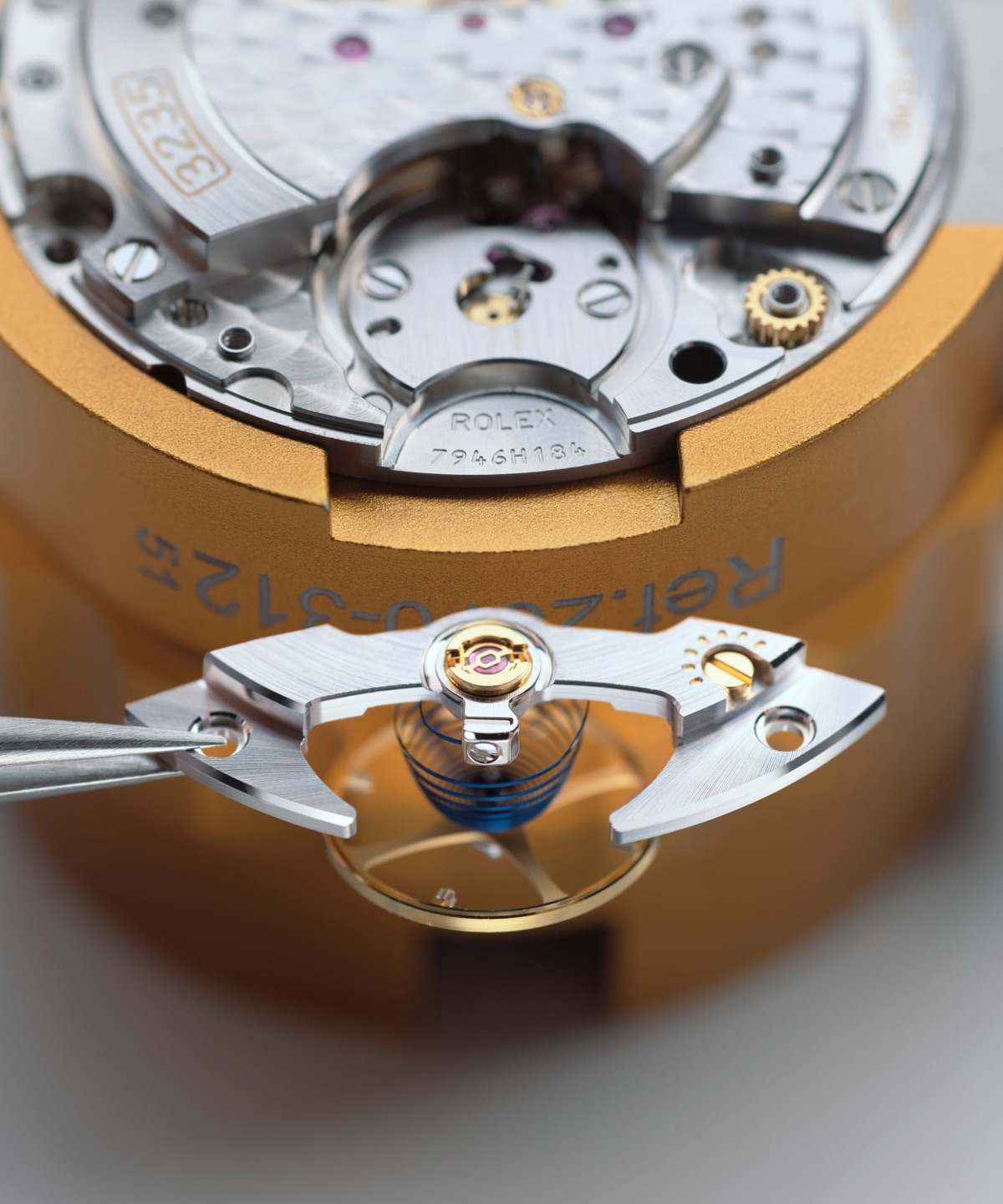
A Rolex that has not been serviced in 20 or more years is a ticking time bomb. Oils dry, metals corrode, and springs weaken.
Typical service includes full movement disassembly, ultrasonic cleaning, replacement of worn parts, re-lubrication with Rolex spec oils, regulation and timing calibration, and pressure testing.
Cost and timeline varies by region. In the USA, expect $850 to $1,200 and 4 to 8 weeks turnaround. In Canada, expect $1,300 CAD and about 2 months. In Europe, expect €800 to €1,500 and 6 to 10 weeks.
Warranty is 2 years from authorized Rolex Service Centers.
Should You Use a Watch Winder
Yes, if you rotate watches or wear it infrequently. A winder keeps the rotor moving, maintaining the power reserve and lubricant circulation.
Best uses include collectors with multiple automatics, vintage Rolexes stored long-term, and desk workers with limited motion.
Choose a winder with bi-directional winding, programmable cycles, and soft interior padding.
Avoid cheap winders. They can overwind or damage the movement.
Where to Get Your Rolex Repaired
Rolex Service Center
Pros include using genuine Rolex parts, factory-trained technicians, 2-year warranty, and full restoration options. Cons include long wait times of 4 to 8 weeks and possible push for polishing which affects vintage value.
Best for modern Rolexes, water damage, and complex repairs.
Certified Independent Watchmaker
Pros include faster turnaround, transparent pricing, and preserving originality without forced polish. Cons include must verify credentials and warranty varies.
Best for vintage models and cost-sensitive owners.
Specialty Jewelry Stores With In-House Experts
Examples include Golden Anvil Jewelers in Florida, which offers demagnetization and pressure testing, and Matheu is Fine Watches in Colorado, which offers certified pre-owned Rolex vetting.
Best for quick diagnostics and minor fixes.
Prevent Future Problems: 5 Watch Care Tips
Wind Weekly If Not Worn
Give it 10 to 15 turns every Sunday to keep the movement active.
Store Properly
Keep in a dry, temperature-stable place. Use a winder or padded box.
Avoid Magnets
Keep away from phones, laptops, speakers, and MRI machines.
Check the Crown
After setting time, screw it down fully. A loose crown is the number one cause of water damage.
Schedule Service Every 10 Years
Even if running well, lubricants degrade over time. A full service prevents sudden failure.
Frequently Asked Questions About Rolex Watch Not Working
Why did my Rolex stop after 2 days?
It ran out of power. Wind 30 to 40 turns and wear it daily.
Can a Rolex last a lifetime?
Yes. With servicing every 8 to 10 years, a Rolex can run for generations.
How do I know if my Rolex needs service?
Signs include stops frequently, runs erratically, fog under crystal, or has not been serviced in 10 or more years.
Is $1,200 too much for a Rolex service?
No. For a 40-year-old watch, it is standard. You are paying for precision labor and parts.
Can I wear my Rolex in the shower?
Only if the crown is fully screwed down and seals are intact. Still risky, so avoid hot water.
What if my Rolex will not keep time?
First rule out magnetization. Then consider service for regulation and lubrication.
Should I service an inherited Rolex?
Yes. Even if not worn, oils dry and parts corrode. A service restores function and value.
Final Thoughts on Fixing a Non-Working Rolex
A rolex watch not working is rarely the end of the story. In most cases, manual winding brings it back to life. But if it stops again, do not ignore it. Internal wear, magnetization, or water damage can escalate quickly.
Act fast by trying winding first, watching for warning signs, and using certified professionals. Never attempt DIY internal repairs.
For vintage or heirloom pieces, servicing is not just about function. It is about preserving history. With the right care, your Rolex can tick reliably for another 50 years.