You glance at your Citizen Eco-Drive watch, only to find it completely dead. No ticking second hand, no response to button presses, and despite sitting on your windowsill for hours, it won’t come back to life. This is a frustratingly common scenario for Eco-Drive owners. The good news is that most non-working Eco-Drive watches can be revived with the right approach.
The phrase eco drive watch not working is one of the most common search queries among solar-powered watch users. While it’s frustrating when your reliable timepiece suddenly stops, the cause is almost always related to power system failure, not mechanical breakdown. This guide gives you a complete, step-by-step recovery plan to bring your watch back to life.
Deep Discharge Recovery Protocol
Eco-Drive watches stop suddenly because of deep discharge, not permanent failure. If your watch hasn’t received sufficient light for months, the internal storage cell drains below operational voltage and the movement shuts down completely.
Why Eco-Drive Watches Stop Suddenly
Eco-Drive watches rely on a rechargeable lithium-ion cell charged by light. When that cell discharges too deeply or degrades over time, the watch halts. Unlike regular batteries that die once, Eco-Drive cells are designed to recharge thousands of times. But if left in darkness too long, they enter a sleep state that requires prolonged light exposure to reverse.
Standard 8-hour sunlight exposure may not be enough. Some cases need 5 to 14 days of continuous charging. The second hand frozen at a position like 7:15:21 is a classic indicator of deep discharge.
Charge With Direct Sunlight
Sunlight delivers the broadest spectrum and highest intensity, making it ideal for recharging an Eco-Drive.
Steps to follow:
• Remove the watch from shade or case
• Place face-up on a reflective surface like white paper or mirror
• Expose to direct sunlight for 48 hours or longer
• Avoid intermittent exposure, as consistency matters
South-facing windowsills in the Northern Hemisphere provide the strongest daily light. Light bounces off reflective surfaces and hits the edges of the dial, increasing total illumination and boosting charging efficiency by up to 30 percent.
Use Bright Artificial Light If Needed
When sunlight isn’t available, use a strong artificial source.
Recommended setup:
• Light type: LED or halogen at 60W equivalent or higher
• Distance: 2 to 4 inches from the watch face
• Duration: 24 to 48 hours continuously
• Bulb color: Daylight white at 5000 to 6500K
Avoid fluorescent tubes and old incandescent bulbs, as they lack sufficient intensity and spectrum. Ring lights used for makeup or photography, grow lights with full-spectrum LED, and desk lamps with magnifiers can serve as fast-charge alternatives. Some users report revival within 6 to 12 hours using high-output ring lights.
Jump-Start With Crown Pull Technique
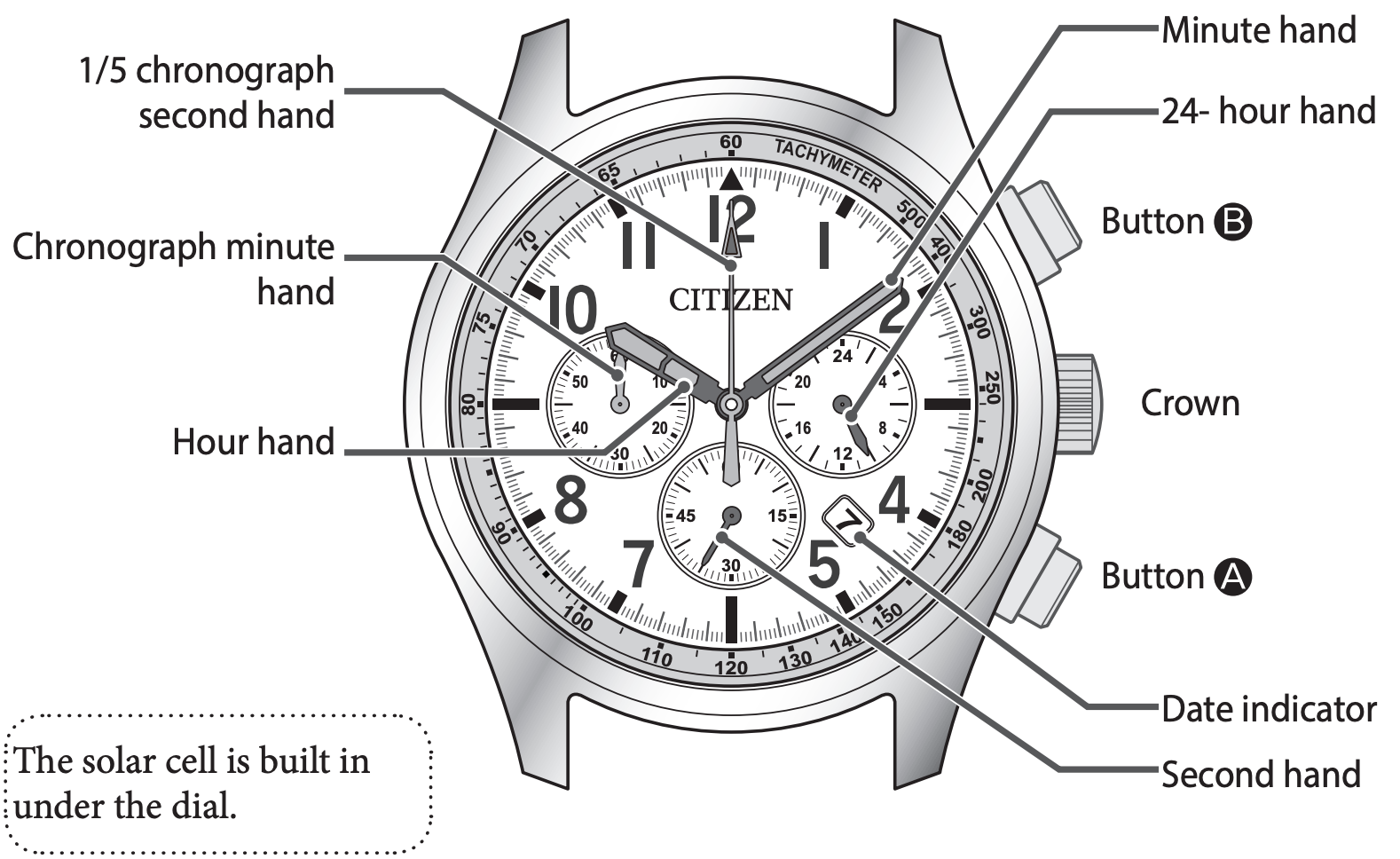
When an Eco-Drive is deeply discharged, its circuits may draw too much power to allow any charge accumulation. Pulling the crown out disables complex functions like date and chronograph, letting energy build in the cell.
Reduce Power Load to Enable Charging
This technique often works when standard charging fails, especially for older models or watches stored over a year.
How to perform the jump-start:
1. Pull the crown to the first or second click, which is the time-setting position
2. Leave it extended
3. Place under direct sunlight or bright lamp
4. Wait 1 to 2 hours minimum, but up to 14 days in extreme cases
5. Once movement resumes, push the crown back in
Citizen recommends this method in some service bulletins to reduce internal load during recovery. One user confirmed, “Pull out the stem as if setting the time. That’s recommended for Citizen watches to jump start.”
Reset Procedures After Charging
Once the watch starts moving, you must manually reset the time and date.
Basic Time and Date Reset
Steps to follow:
1. Wait until hands move normally with 1-second ticks
2. Pull crown to first or second position
3. Rotate to adjust time and date
4. Push crown back in
Some models require you to set the time to 12:00 before adjusting the date.
Perform an All-Reset for Multi-Function Models
Chronographs, alarms, perpetual calendars, and world-time models may need a full system recalibration.
How to do an all-reset:
1. Pull crown to setting position
2. Press and hold top right and bottom right buttons simultaneously
3. Watch hands will spin rapidly or reset to zero
4. Subdials and displays recalibrate
5. Release buttons and set correct time and functions
Never do an all-reset if the watch is low on charge, as it can cause permanent stoppage. As one user noted, “The manual says if ‘all reset’ is performed when not fully charged, it will completely stop.” However, if the watch is already dead, some users suggest trying it since there’s nothing to lose.
Diagnose Storage Cell Health
Watch starts but dies quickly? This is the number one sign of storage cell failure.
How to Test Cell Health
Test procedure:
1. Fully charge the watch with 72 or more hours in bright light
2. Remove from light and observe performance
3. If it stops within 24 hours, the cell is likely dead
4. If it runs for weeks or months, the cell is healthy
Typical lifespan is 10 to 15 years, with most failures occurring between 8 and 10 years. One user reported, “Both my eco-drives stopped after 8 to 9 years. In both cases, the battery was the problem.”
Even if revived temporarily, a degraded cell will fail again soon. Replacement is the only long-term fix.
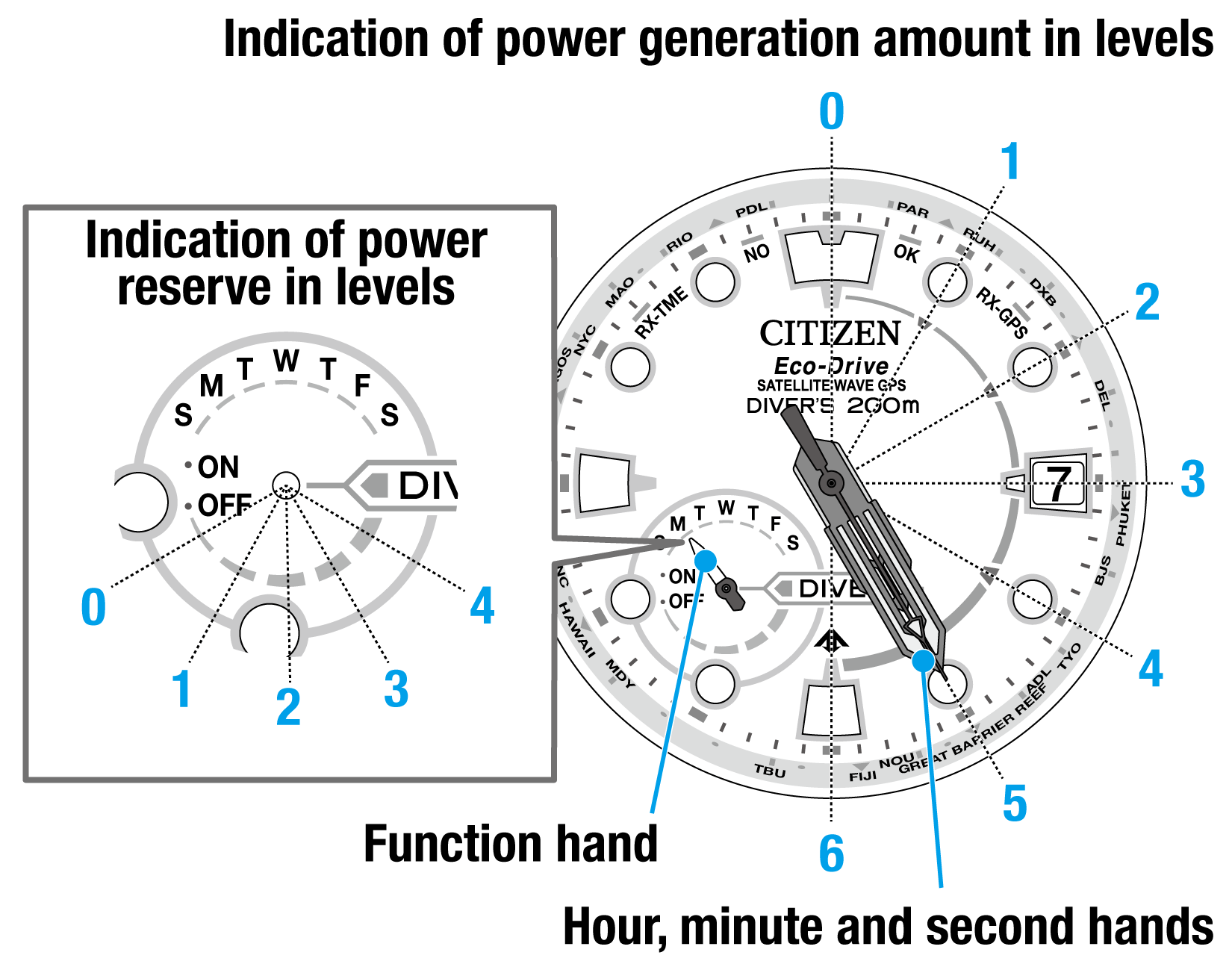
Check Power Reserve Indicator on E660 Models
Some Eco-Drive watches, especially those with the Miyota E660 movement, have a built-in charge gauge.
How to View Charge Level
Steps:
1. Use crown to switch to TME mode
2. Press lower pusher and release
3. The power hand moves to show charge level
4. Press upper pusher or wait 10 seconds to exit
Interpreting the gauge:
• Top of upper segment means full charge
• Doesn’t reach the very top is normal, so don’t worry
• Low or no movement indicates insufficient charge
This feature helps confirm whether charging is working or if the cell is failing.
When to Replace the Storage Cell

Signs You Need a New Cell
Watch charges but dies in less than 24 hours. Replace the cell.
No response after 2 or more weeks of light exposure. The cell is likely dead.
Rapid power loss after full charge indicates a degraded cell.
Watch older than 10 years with poor performance calls for preventive replacement.
Eco-Drive does not use capacitors. It uses a rechargeable lithium-ion battery. Replacing it is like changing a phone battery, not a capacitor swap.
Cost and Service Options
Professional replacement costs 50 to 100 USD at authorized Citizen service centers. This includes cell replacement, seal check, pressure test, and calibration.
Avoid third-party repairs unless certified, as poor work can damage circuits or compromise water resistance. If storing long-term, replace the cell before sealing it away.
Prevent Future Failures
Best Practices for Longevity
Practice regular wear to ensure consistent charging.
Expose to light every 2 to 3 months to prevent deep discharge.
Clean the crystal monthly to remove grime that blocks light.
Store near a window to maintain passive charge.
Replace the cell every 10 to 15 years to prevent sudden failure and leakage.
One user advised, “Even if it started working, I’d want a fresh battery in it so there’s no risk of leaking.”
Model-Specific Power Reserve Times
Different models have varying backup durations in darkness.
• E660 Movement: 7 to 10 months
• Standard Eco-Drive: 6 to 12 months
• Chronograph or Alarm: 3 to 6 months
• Perpetual Calendar E820: Up to 18 months
• Skyhawk models: 6 to 8 months
High-function models drain faster and need more frequent charging. One user noted, “My Skyhawk sat unused for months. Sunlight didn’t revive it. I think the battery needs replacing.”
Troubleshooting Flow: What to Do Now
Follow this step-by-step decision guide.
Step 1: Is the watch completely stopped? If yes, go to Step 2.
Step 2: Has it been unused for more than 6 months? If yes, expose to direct sunlight for 48 hours or longer.
Step 3: Still not working? Try pulling the crown out during charging for 1 to 2 weeks.
Step 4: Watch starts moving? Observe performance. If it dies in less than 24 hours, replace the storage cell. If it runs normally, reset time and functions.
Step 5: No movement after 2 weeks? The storage cell is likely dead. Seek professional service.
Real User Outcomes
Success Stories
Users have reported successful revivals after extended periods of storage. One user revived a watch unused for over 2 years with extended sunlight. Another keeps a 14-year-old model still running strong. An 18-year-old titanium Eco-Drive works perfectly according to its owner.
Failed Revivals
Not all attempts succeed. One user stored a watch for over 10 years with no response after one month in sunlight. Another with a 1995 model still runs but holds charge poorly, indicating degraded efficiency.
Age and storage duration are key factors. But even decade-old watches can come back with patience.
Final Checklist: Eco Drive Watch Not Working
Before seeking professional help, work through this checklist.
• Try 48 or more hours of direct sunlight
• Use bright LED or halogen lamp if no sun is available
• Pull crown out during charging
• Wait days, not hours, for response
• Perform reset after revival
• Test charge retention
• Replace storage cell if under 24-hour runtime
• Visit authorized service for replacement
Frequently Asked Questions About Eco Drive Watch Not Working
Why did my Eco-Drive watch stop working suddenly?
Your Eco-Drive likely experienced deep discharge. This happens when the watch hasn’t received enough light for an extended period, causing the internal lithium-ion cell to drain below operational voltage. The watch enters a sleep state and stops completely.
How long does it take to revive a dead Eco-Drive watch?
Recovery time varies significantly. Some watches respond within 48 hours of direct sunlight exposure. Others require 5 to 14 days of continuous light. If the watch has been stored for years, recovery may take even longer or require professional cell replacement.
Can I replace the Eco-Drive battery myself?
Eco-Drive uses a rechargeable lithium-ion cell, not a standard watch battery. While replacement is technically possible, it requires specialized tools and knowledge of watch movements. Professional service at an authorized Citizen center is recommended to avoid damaging the watch or voiding the warranty.
How do I know if my Eco-Drive storage cell is dead?
Test by fully charging the watch for 72 or more hours, then removing it from light. If the watch stops running within 24 hours, the storage cell is likely dead and needs replacement. If it runs for weeks or months, the cell is still functional.
Does pulling the crown help revive a dead Eco-Drive?
Yes. Pulling the crown to the time-setting position reduces internal power load by disabling complex functions. This allows energy to accumulate in the cell more easily. Leave the crown extended while exposing the watch to bright light for best results.
What is the lifespan of an Eco-Drive storage cell?
The average lifespan is 10 to 15 years. Many users report failures between 8 and 10 years of use. Factors like storage conditions, frequency of light exposure, and model type can affect longevity.
Key Takeaways for Fixing Your Eco Drive Watch Not Working
An eco drive watch not working is rarely permanently dead. Most are in deep sleep from lack of light, and with extended charging and the crown-pull trick, many come back to life. The key is patience. Don’t expect results in hours. Give the watch days to weeks of consistent light exposure before concluding the cell is dead.
If your watch is over 10 years old and won’t hold a charge after proper revival attempts, the rechargeable lithium-ion cell has likely failed. Replacement is both possible and cost-effective at 50 to 100 USD through authorized service centers. Don’t throw it away. Fix it and keep it running for another decade.
For future prevention, wear your Eco-Drive regularly or expose it to light every few months. Store it near a window rather than in a dark drawer. Consider preventive cell replacement every 10 to 15 years to avoid sudden failure. Your Eco-Drive can last 20 years or more with proper care.